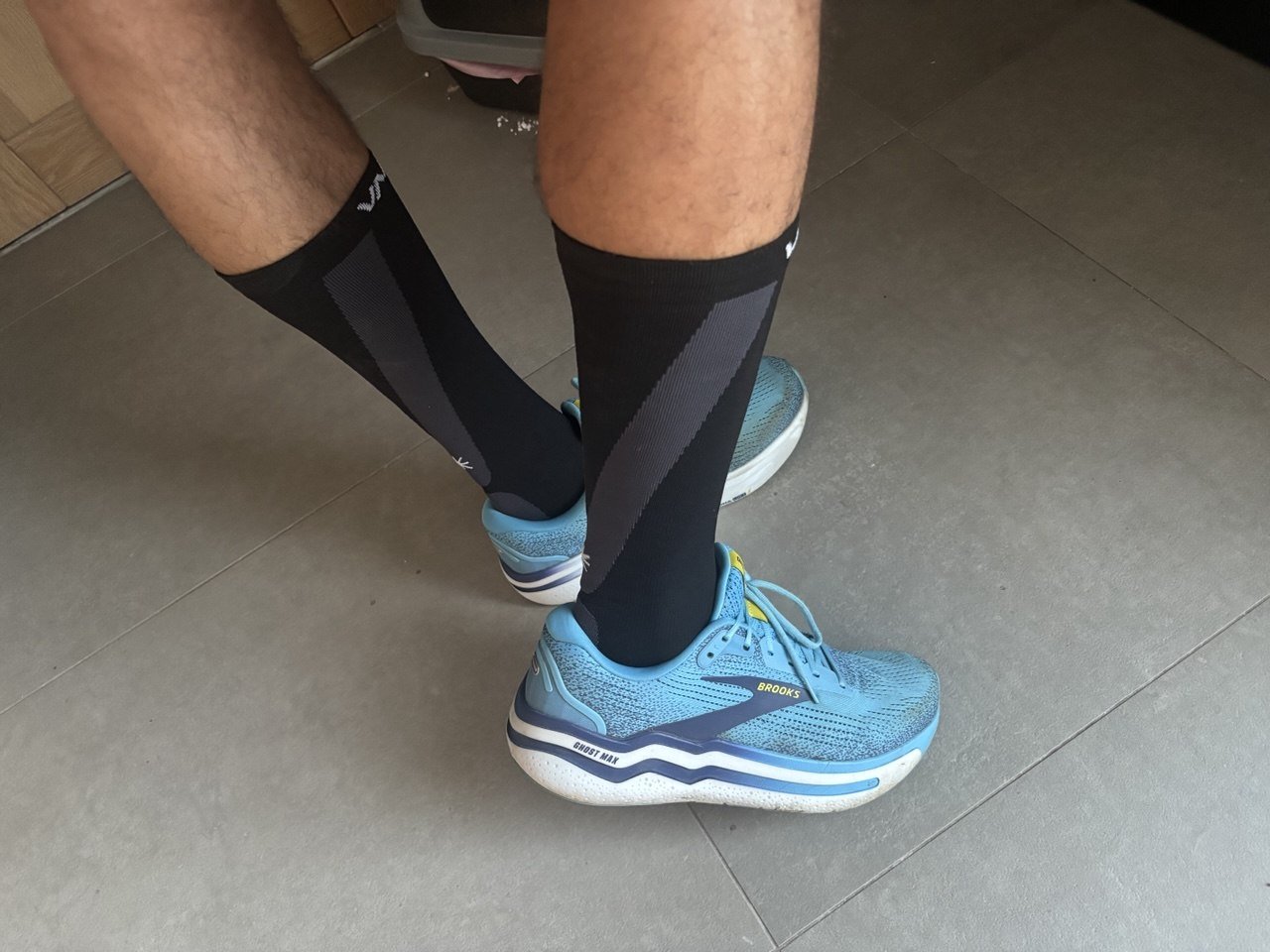
VALSOLE Compression Max Review: What 20–30 mmHg Feels Like While Running
Neither Jos nor Sarah regularly ran in compression socks before this test. That limits our ability to rank VALSOLE against specialist brands, but it makes one question easy to answer: what does moving from ordinary low running socks to a knee-high 20–30 mmHg sock actually feel like?
Disclosure: VALSOLE provided the products in this article for testing at no cost. The brand had no editorial control and did not review or approve our verdict.
Both testers used Compression Max mainly during runs lasting approximately one hour. This review covers feel and practical performance, not medical compression therapy. See the VALSOLE testing hub for the complete supplied-product test.
Jos tested Compression Max primarily during runs of around one hour.
What VALSOLE claims
VALSOLE Compression Max uses 20–30 mmHg graduated compression with targeted heel and forefoot cushioning zones. VALSOLE describes a breathable compression-knit blend intended for sports, travel, long days and recovery.
We confirmed the product identity and stated pressure range from the official page. We did not independently measure compression pressure, circulation, moisture transfer or physiological recovery.
Jos vs Sarah: where the fit differed
Jos
I expected a 20–30 mmHg knee-high sock to be awkward to pull on. In practice, the men’s pair was manageable as long as I worked it gradually over the foot and calf rather than pulling hard from the top.
During approximately one-hour runs, the compression felt firm but comfortable. The sock did not slide, bunch or fall down. I did not need to adjust it once moving.
The most obvious difference from my normal socks was warmth. I usually run in low ankle socks, so covering the entire lower leg with a dense, close-fitting knit naturally felt warmer. I did not find the fabric unpleasantly clammy, but I would still choose my low socks first on a hot day.
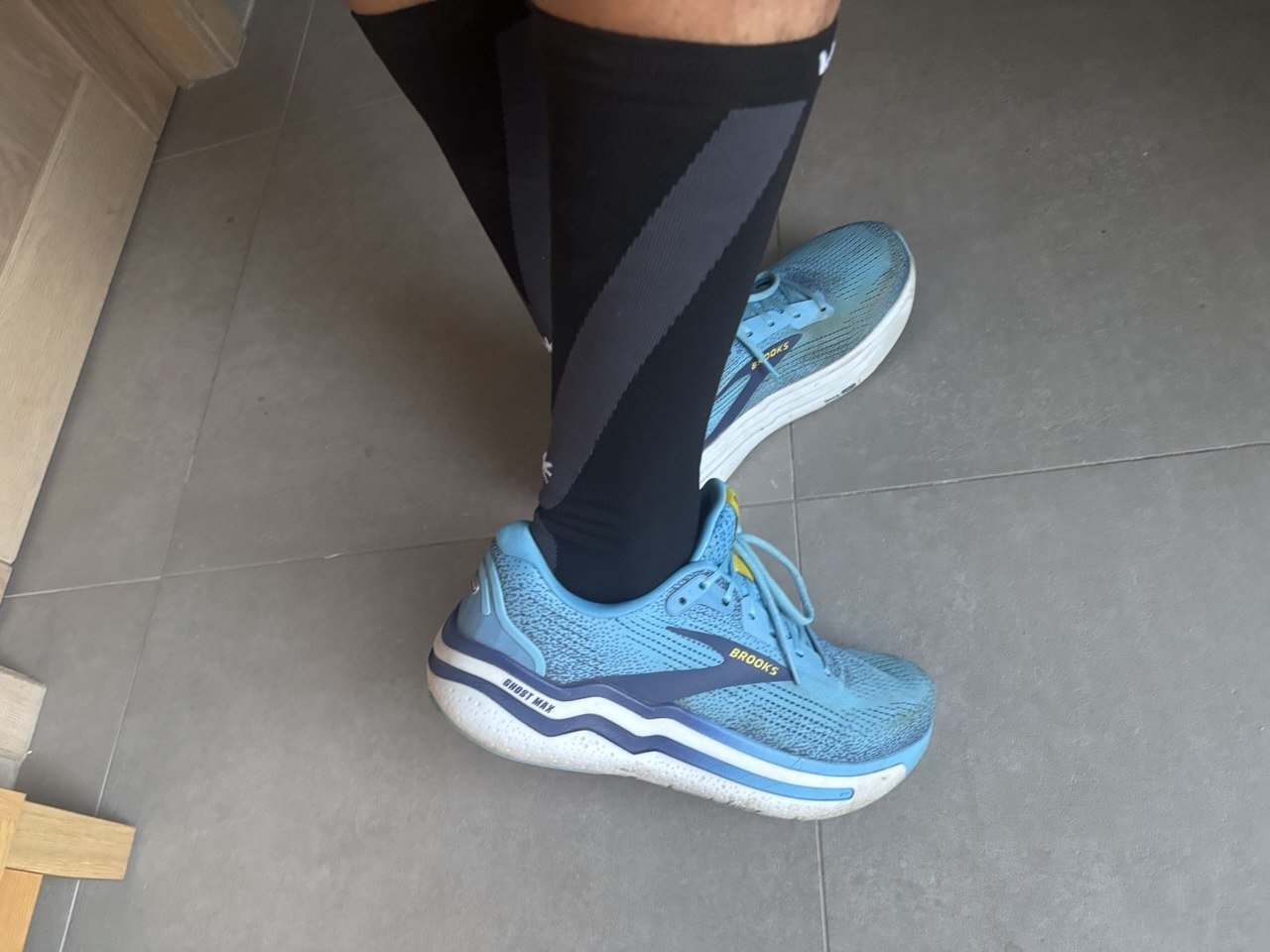
The knee-high socks stayed in place throughout Jos’s test runs.
Sarah
Sarah had the same overall result: secure compression with no slipping during her runs. She perceived the pressure more strongly than I did, especially around the top band.
Sarah has larger calves, so the cuff was a more obvious part of the fit. It was not evidence that the socks run small for everyone, but runners with fuller calves may notice the top band more and should check VALSOLE’s current size chart rather than relying only on shoe size.
Warmth was also more noticeable than in her usual low socks. As with my pair, the distinction was coverage rather than a claim that the fabric cannot breathe.
The main difference between testers was not whether the sock stayed in place—it stayed secure for both—but how strongly the compression and cuff were perceived. Both also found the knee-high coverage warmer than their usual low socks.
Washing and shape retention
After multiple runs and washes, neither pair showed a meaningful loss of shape or elasticity. The socks still stayed up during running. That is encouraging, but it is an early observation rather than a long-term durability conclusion.
Do compression socks improve running performance?
The current evidence does not justify promising faster running. A 2025 systematic review and meta-analysis covering 28 trials found low- to moderate-certainty evidence that compression socks did not improve physiological, performance or perceptual outcomes during running compared with regular socks. Another updated 2025 meta-analysis found no significant improvement in race time or time to exhaustion from compression garments.
Recovery evidence is less clean. Older reviews have reported possible small benefits for some soreness or strength-recovery outcomes, but results vary by exercise, garment and timing. The newer running-specific analysis did not find a meaningful soreness advantage during the running comparisons it pooled.
Our practical conclusion is narrower: the socks felt secure and supportive to both testers. We did not measure faster pace, reduced soreness, blood flow or recovery. Subjective support can be useful without becoming proof of a physiological benefit.
What does 20–30 mmHg mean here?
The number is the manufacturer’s stated graduated-compression range, expressed as millimetres of mercury. It describes intended pressure, generally stronger toward the lower leg and reducing higher up. We did not verify the delivered pressure on our bodies, and a sports sock with this label should not be treated as a substitute for prescribed medical compression.
Who might like Compression Max?
Good fit if
- you want a firm, secure knee-high sock for running;
- you dislike socks that slide or bunch;
- you are comfortable with more lower-leg coverage;
- cushioning through the foot is part of what you want.
Consider the limitations if
- you normally run hot or strongly prefer ankle socks;
- you have fuller calves and dislike noticeable cuff pressure;
- you expect a guaranteed performance or recovery improvement;
- you require clinician-prescribed compression for a medical reason.
Verdict
Compression Max stayed exactly where it should during our runs. The firm feel remained comfortable for Jos, while Sarah noticed the cuff more because of her calf fit. Both pairs retained their shape through the washing observed so far.
We can judge how these felt and performed for us, but we cannot credibly tell you they are better than established compression specialists because we have not tested those alternatives side by side. The evidence also gives us no basis to promise that they make runners faster or recover better.
Test limitations
- Neither tester is an experienced compression-sock comparator.
- Most test runs were approximately one hour.
- We made no physiological, circulation, soreness or performance measurements.
- Wash durability is still a relatively short-term observation.
For broader context, see our existing compression socks for shin splints guide and post-race recovery checklist.