VALSOLE Heavy Duty Insoles Review: Two Runners, Two Different Feet
The most useful insole review is not a list of foam layers. It is what happens when the same replacement footbed meets different shoes and different feet.
Jos ran roughly 90 km in the VALSOLE Heavy Duty across a Brooks Ghost Max 2, Adidas Adizero Evo SL and ASICS Novablast 4. Sarah tested the insoles in women’s Saucony Ride and Endorphin Speed shoes. Their verdicts overlap on support and softness, but diverge sharply on shoe volume.
Disclosure: VALSOLE provided the products in this article for testing at no cost. The brand had no editorial control and did not review or approve our verdict.
Tested by Jos, with additional fit feedback from Sarah. Read the complete VALSOLE testing overview for every supplied product and our testing boundaries.
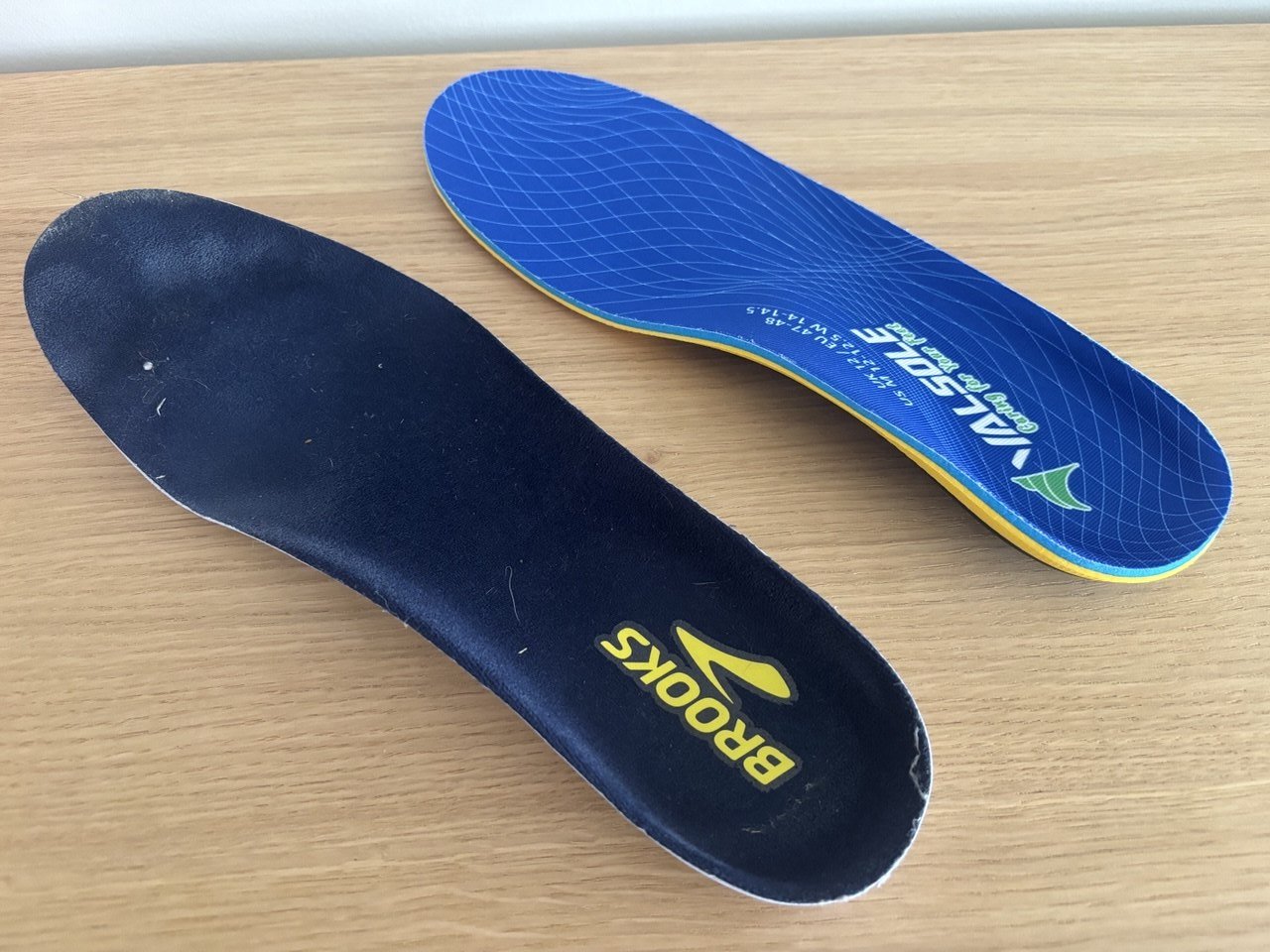
The fabric-covered top and structured underside of the Heavy Duty insoles.
What VALSOLE Heavy Duty is
VALSOLE Heavy Duty is the brand’s firmer insole for long standing, work boots and roomier daily footwear. VALSOLE lists a deeper heel cup, reinforced support shell and cushioning layers, with a composition of polyester, polyurethane, EVA and polyamide.
The company makes broader pain and alignment claims on its product page. Our review does not validate those claims. We assessed only fit, perceived support, comfort, stability and how the insole changed the feel of our shoes. VALSOLE itself states in its FAQ that Heavy Duty is not a medical device.
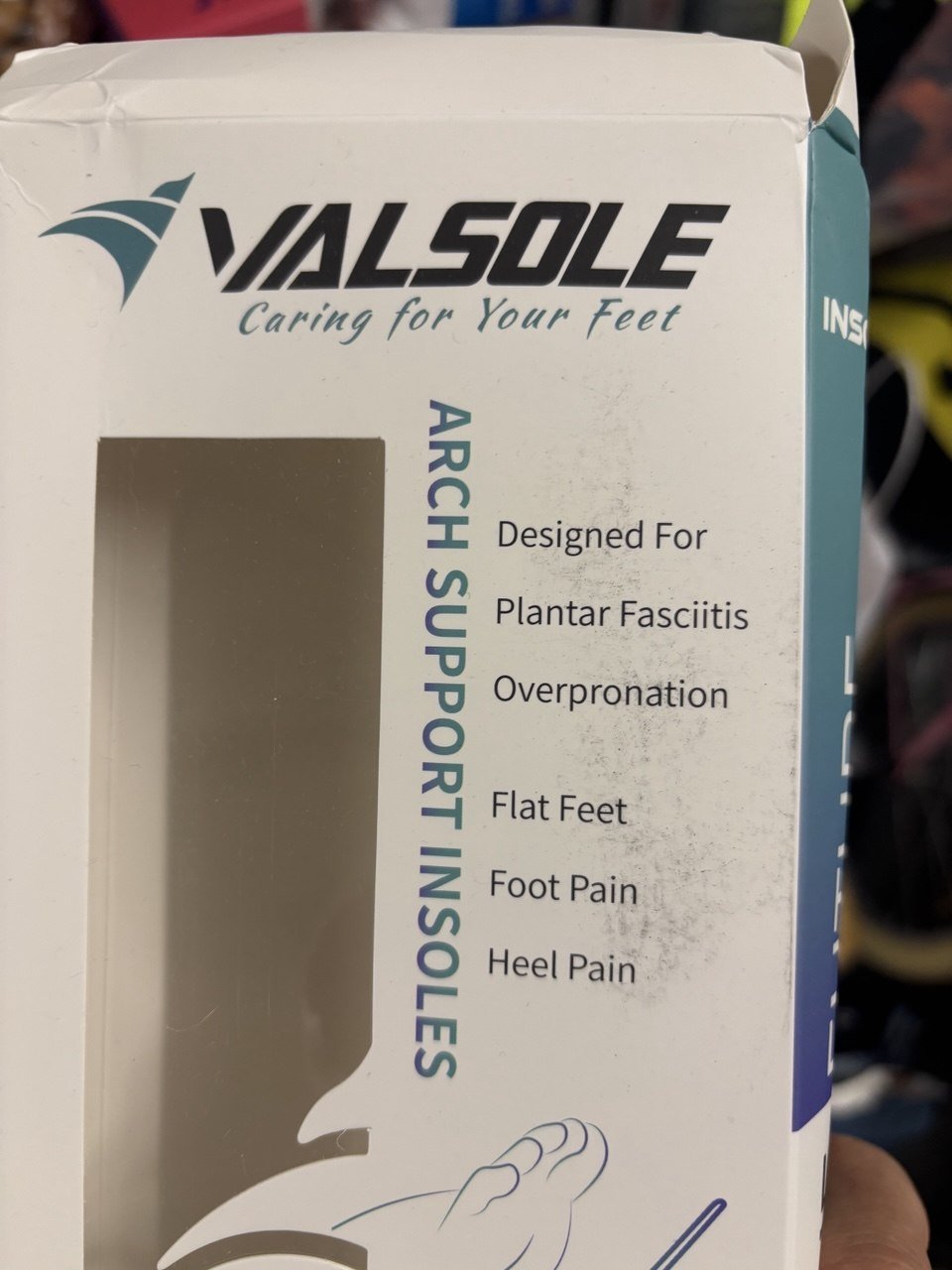
VALSOLE’s packaging makes support and pain-related claims; our testing did not evaluate these as medical outcomes.
How we tested the insoles
Jos used the same pair for roughly 90 km of running across three shoes, then also wore them during three high-volume walking days in Rome.
Sarah’s first run was approximately 8 km. She tried the insoles in a Saucony Ride and Endorphin Speed before moving them to roomier walking shoes.
This gave us two useful perspectives, but it was not a controlled biomechanics test. We compared comfort, perceived support, placement, shoe volume and whether the insoles moved or created new pressure points.
How the support felt to each tester
Jos — approximately 90 km of running
My first run was around 11 km. During the first roughly 2 km, the support pattern felt clearly different from the stock footbed. The sensation was not a sharp pressure point; it was a changed distribution of load under the foot. After about 2 km, it faded into the background.
The same thing happened in my first three runs. I noticed the different support most during the opening kilometres, then stopped thinking about it. My longest run so far was approximately 20 km, and I did not develop persistent discomfort.
That is my adaptation experience, not a universal timetable. I would personally start with a normal easy run rather than making the first test a 90-minute long run.
Across the whole test, I did not notice a meaningful difference in heat or sweating compared with the stock footbeds I normally use. That is an observation, not evidence that the materials actively cool or wick better.
Sarah — first runs and subsequent use
With flatter feet, Sarah perceived the added structure under the arch more clearly than I did. She also noticed the changed loading slightly in her knees during the early runs. It was not painful and became less noticeable over subsequent runs. We are not interpreting that as alignment correction or evidence of a biomechanical benefit.
The useful contrast is not that one tester adapted “better.” The same support structure was simply more noticeable to two different feet in different ways, and neither experience establishes a universal adaptation timetable.
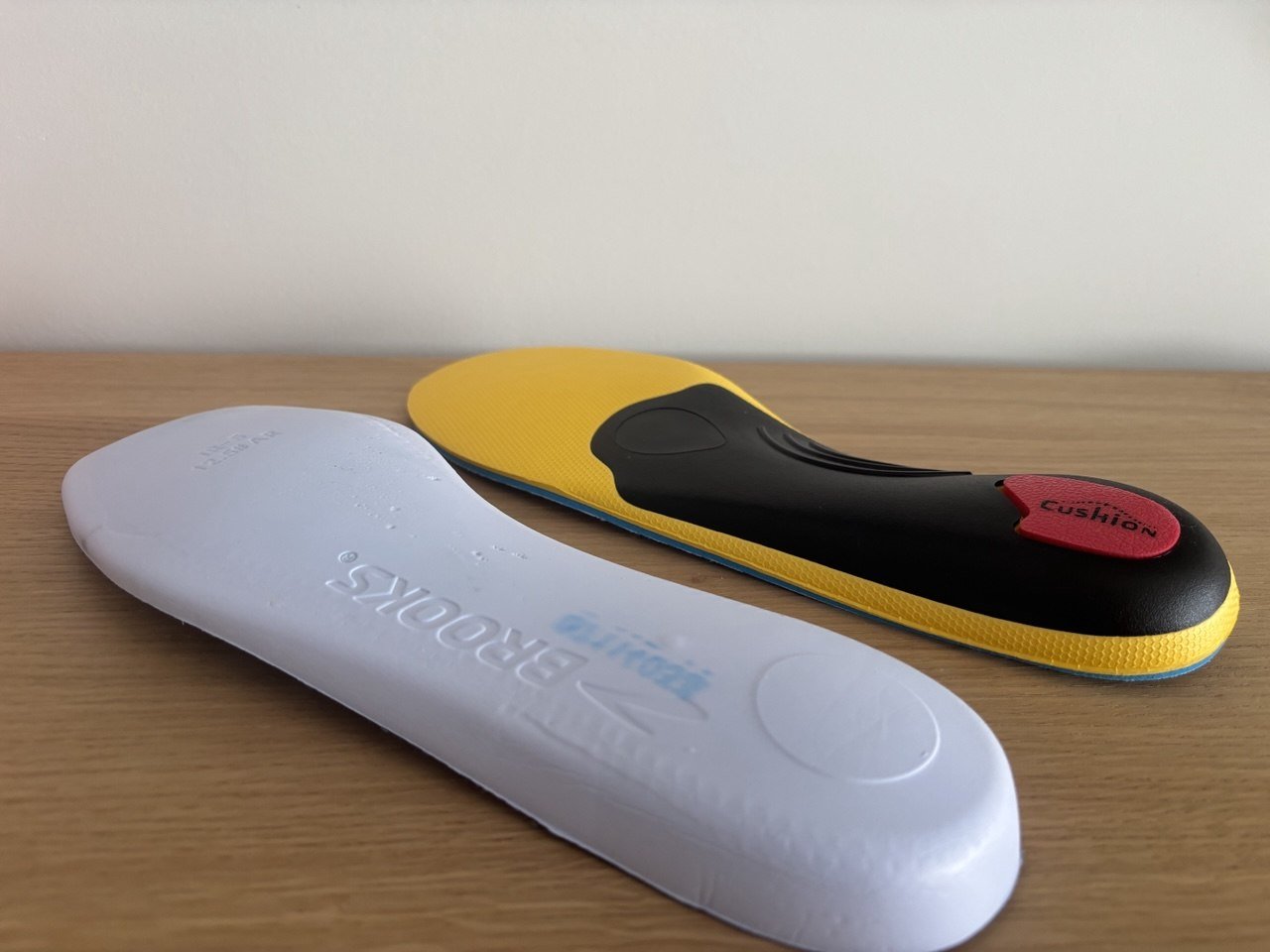
An angled view shows the structured underside and heel shape both testers experienced differently.
Fit comes first: placement and shoe volume
Neither Sarah nor I needed to trim our pairs. We both initially made the same placement mistake: seating the heel first and leaving the insole slightly too far back. Our toes then extended beyond the front edge, which looked like a sizing problem.
The fix was simple:
- Remove the original sockliner where possible.
- Guide the VALSOLE into the shoe from the toe end.
- Push the forefoot edge fully forward and make sure it lies flat.
- Seat the heel last.
Once positioned correctly, both pairs fitted and did not shift while running.
Jos
The Heavy Duty fitted my Ghost Max 2, Evo SL and Novablast 4 without trimming or movement once seated correctly. The Ghost Max produced the most positive change, but all three shoes had enough internal volume.
Sarah
Sarah immediately liked the combination of support and softness, especially on the foot without hallux valgus. For her, the limiting factor was not the support itself but the additional volume inside tighter shoes.
On the foot with hallux valgus, the VALSOLE took up slightly more space than her custom orthotic setup, which increased irritation around the forefoot in tighter shoes. On the other foot she found the same insole supportive and comfortable.
Her custom orthotics give her a better fit for that specific foot, so she limited VALSOLE use in tighter running shoes and now uses the pair comfortably in roomier walking shoes. VALSOLE Heavy Duty is not a replacement for prescribed medical orthotics.
The central fit lesson is simple: added support is only useful when the shoe still has enough room for the foot. Sarah’s experience was not a generic “bad fit”; it was a positive support experience constrained by forefoot volume in particular shoes.
What changed in Jos’s shoes and walking use
Brooks Ghost Max 2: the biggest surprise
I already owned the Brooks Ghost Max 2 and had run hundreds of kilometres in it, but I never particularly enjoyed it. In my 400 km Ghost Max 2 review, I described it as firm and unpleasant for my lower legs. The VALSOLE changed that experience more than I expected.
Replacing the stock footbed gave me more structure under the foot while also feeling softer and more comfortable underfoot. It did not make the Brooks midsole itself softer. It changed the layer between my foot and the shoe enough that I started enjoying the Ghost Max 2 more.
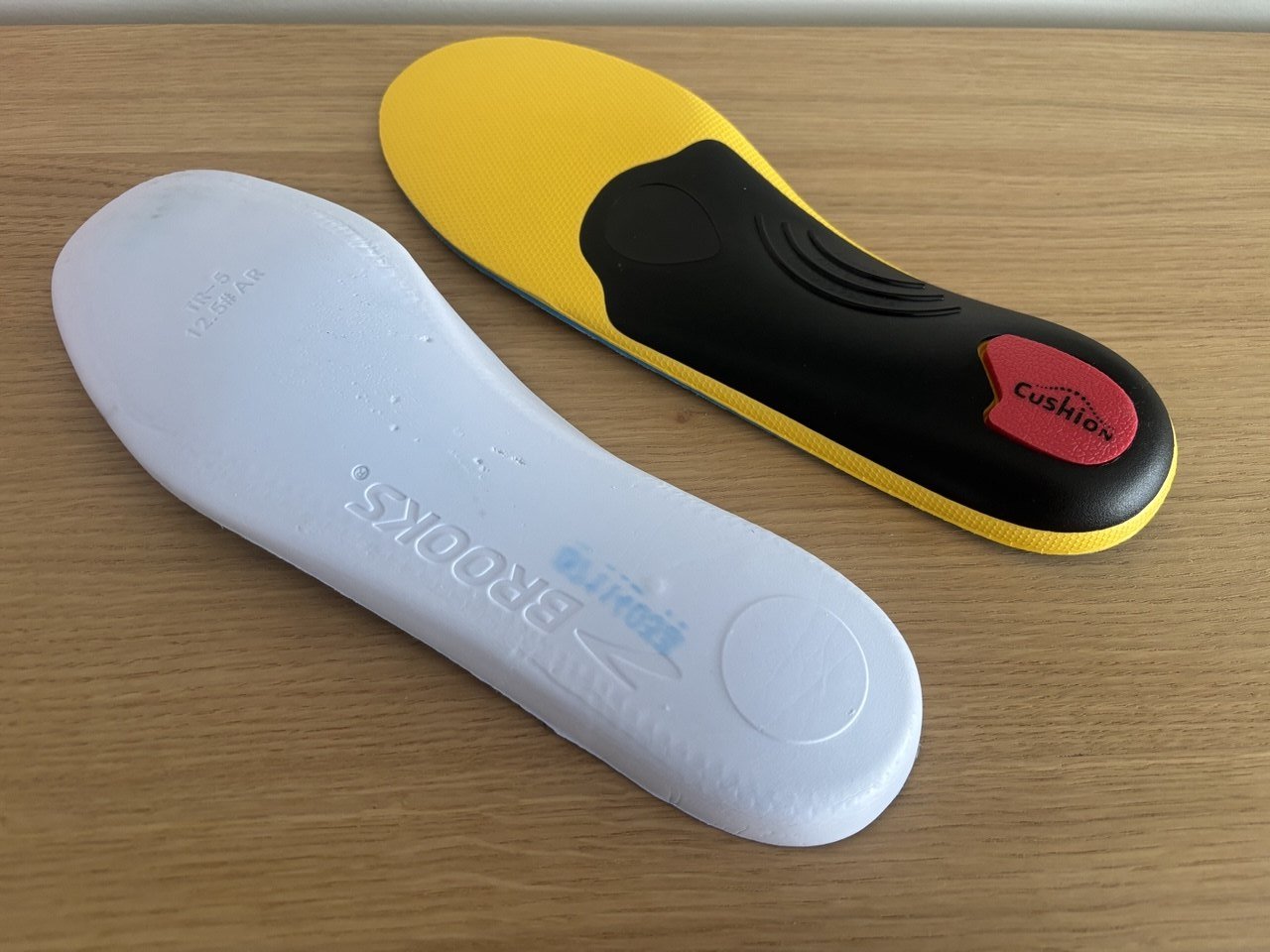
VALSOLE Heavy Duty beside the stock Brooks Ghost Max 2 sockliner.
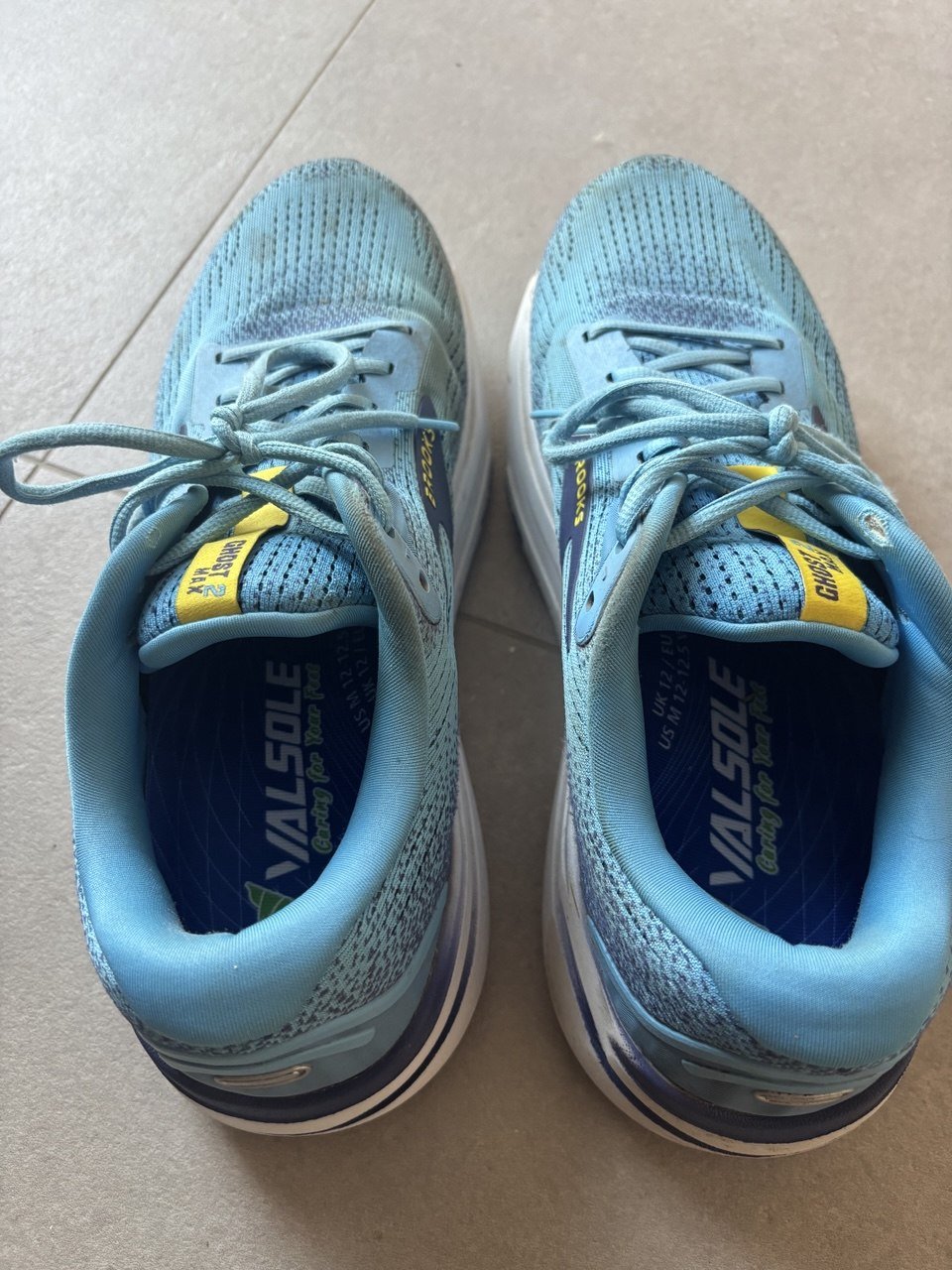
The Heavy Duty insoles installed in the Ghost Max 2, the shoe whose feel changed most during testing.
Evo SL and Novablast 4
The Heavy Duty also worked in my Adidas Evo SL and ASICS Novablast 4. The Evo SL matters because it shows that a faster shoe is not automatically incompatible with a replacement footbed. There was enough room in my pair, and the insole remained stable.
That does not mean every tempo or racing shoe will work. Snug uppers, low internal volume and glued sockliners can make an aftermarket insole impractical. They can work in faster shoes when there is enough internal volume, but that is exactly where fit deserves the most attention.
Seventy kilometres of walking in Rome
I also used the insoles during a trip to Rome: roughly 21 km walking on day one, 26 km on day two and 23 km on day three. That is about 70 km across three consecutive days.
I did not develop foot or leg discomfort during that stretch. I was already well conditioned, so I would not credit the insoles alone. What I can say is that they introduced no new comfort problems despite the unusually high walking volume.
CURREX RUNPRO context
I also used CURREX RUNPRO insoles in the past and remember them as feeling more structured and performance-oriented, with a little less softness underfoot. That test was much earlier, so this is a memory-based reference rather than a controlled side-by-side comparison.
CURREX currently describes RUNPRO as a thin, lightweight running insole offered in low, medium and high arch profiles, using a dynamic arch structure, decoupled heel and targeted cushioning. Those product-design facts help explain its positioning, but they do not turn my old memory into a current comparison result.
Where each tester would use it
Jos
- In the Ghost Max 2 and other roomy daily trainers.
- For long walking days.
- Potentially in faster shoes such as the Evo SL when internal volume allows.
Sarah
- In roomier walking shoes where forefoot space is not already limited.
- Not as a replacement for her custom orthotic setup.
Both testers liked the support itself. Their different use cases came from shoe volume and individual foot shape, not from a simple good-versus-bad verdict.
Who should consider them?
The strongest match is a runner who wants more perceived support and softness in a roomy daily trainer, walking shoe or another shoe with a removable sockliner. A faster shoe such as the Evo SL can also work, but only when it has enough internal volume.
It is less suitable when the forefoot already feels crowded, the stock footbed cannot be removed, or the shoe is particularly tight. Anyone who needs prescribed or custom medical orthotics should treat those as a separate fit requirement rather than replace them based on this review.
Verdict
Heavy Duty worked particularly well for me. It improved the feel of three shoes and genuinely rescued the Ghost Max 2 from the back of my rotation. The combination of structure and softness was more comfortable than I expected from VALSOLE’s “firmer support” positioning.
The value of testing with two runners is the caveat: both liked the support itself, but shoe volume and foot shape changed the outcome substantially. The same product can feel supportive on one foot and create a fit problem on the other. That contrast makes the review more useful, not less.
If you use prescribed orthotics or have a foot condition, discuss fit decisions with the relevant clinician rather than treating an online review as individualized advice.
Test limitations
- This is feedback from two testers, not a population study.
- We did not measure biomechanics, pressure or alignment in a lab.
- Sarah’s flat feet, hallux valgus and orthotic setup are individual fit context.
- The CURREX reference is memory-based, not side-by-side.
- We cannot yet make a multi-season durability judgment.
For broader category options, see our running-insole guide and insoles for runners with flat feet.