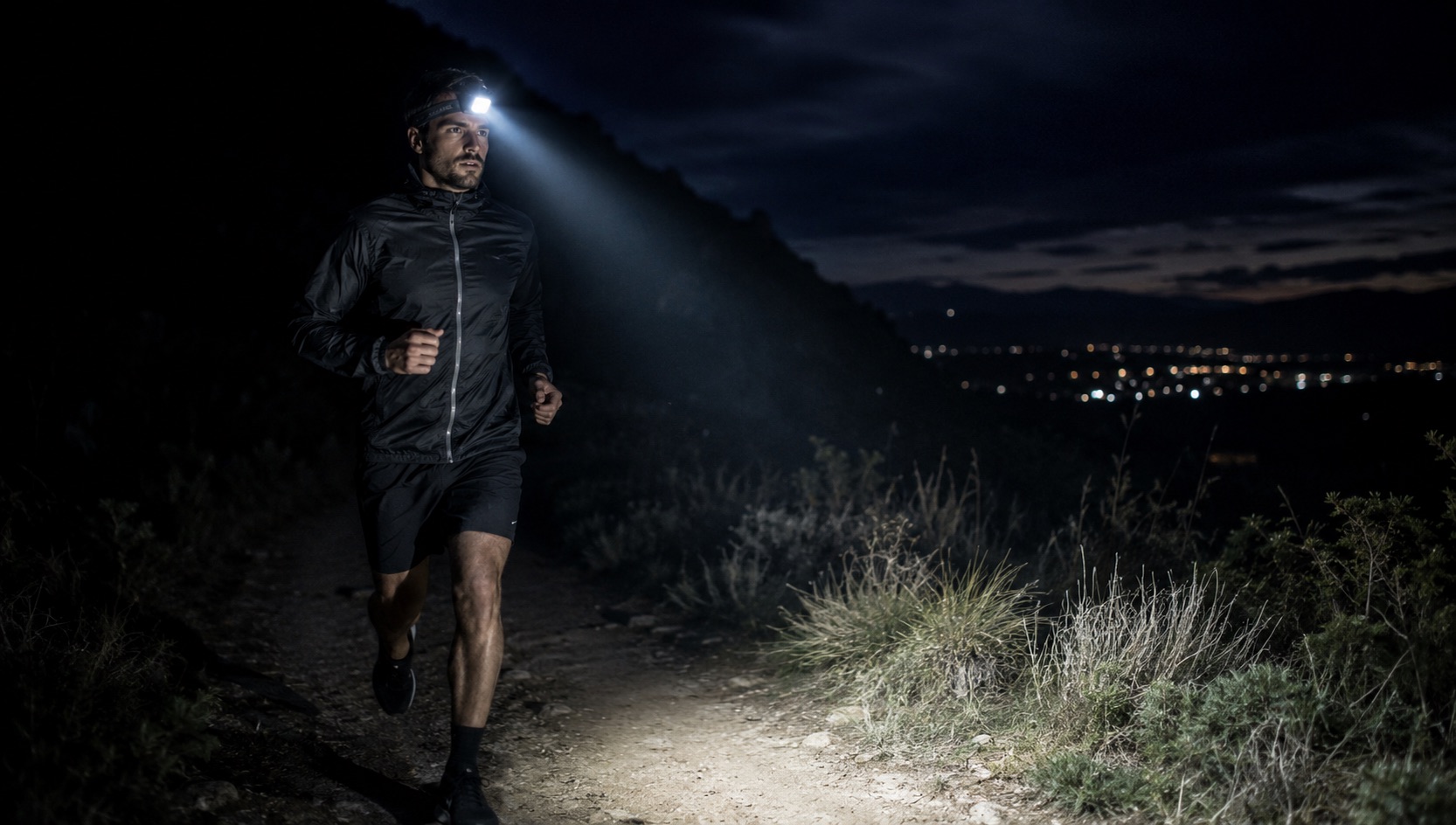
Best Running Lights for Night Running 2026
Running in the dark doesn’t have to feel sketchy. Whether you’re logging miles before sunrise, squeezing in an evening run after work, or hitting trails at dusk, a good running light keeps you visible to drivers and helps you spot uneven pavement, roots, and potholes before they ruin your week.
I’ve compared headlamps, chest lights, handheld options, and LED vests over the past year of early-morning and late-night runs. Here’s what actually works in 2026 - no gimmicks, no affiliate links, just honest picks.
Quick Comparison Table
| Light | Price | Type | Lumens | Battery | Weight | Visibility Angle | Waterproof |
|---|---|---|---|---|---|---|---|
| BioLite HeadLamp 800 | $100 | Headlamp | 800 | Rechargeable (Li-ion) | 150g | 120° flood + spot | IPX4 |
| Noxgear Tracer360 | $50 | LED Vest | N/A (LED strips) | Rechargeable (USB-C) | 140g | 360° | IPX4 |
| Knuckle Lights | $36 | Handheld | 280 | Rechargeable (USB) | 180g (pair) | 180° per light | IPX4 |
| Nathan Chest Light | $40 | Chest clip | 300 | Rechargeable (USB-C) | 95g | 180° | IPX4 |
| Black Diamond Sprinter 500 | $80 | Headlamp | 500 | Rechargeable (Li-ion) | 120g | 100° flood + spot | IPX4 |
Best For Each Use Case
- Best for trail running at night: BioLite HeadLamp 800 - 800 lumens lights up technical terrain so you can actually see roots and rocks ahead.
- Best for road visibility: Noxgear Tracer360 - 360-degree LED coverage means drivers see you from every angle.
- Best for simplicity: Knuckle Lights - slip them on your hands and go. No straps on your head, no bouncing on your chest.
- Best all-round option: Nathan Chest Light - lightweight, affordable, and the chest position eliminates the “deer in headlights” effect you get with headlamps.
Headlamp vs Chest Light vs Handheld
This is the first decision you need to make, and honestly, it comes down to how and where you run.
Headlamps point light exactly where you look. That’s great for trails where you need to scan the ground ahead and spot obstacles. The downside? They bounce with your stride (cheaper models are worse here), and oncoming runners or drivers get blinded when you look at them. They also make shadows look flat, which can hide dips in the terrain.
Chest lights sit lower on your body, which creates more natural shadows and depth perception on the ground ahead of you. They bounce less because they’re closer to your center of gravity. The tradeoff is you can’t direct the beam by turning your head - you see what’s straight ahead of your torso.
Handheld lights (like Knuckle Lights) give you the most natural arm-swing motion and let you point light wherever you want just by moving your hand. Some runners find them annoying to hold, but modern designs strap onto your knuckles so you barely notice them. They’re also the easiest to ditch if you suddenly don’t need them.
My recommendation: if you run roads and want to be seen, go chest or vest. If you run trails and need to see, go headlamp. If you want zero fuss, try handhelds.
Lumens Explained for Runners
Lumens measure total light output, but more lumens doesn’t always mean better for running. Here’s a rough guide:
- 50–100 lumens: Enough to be seen by others, but won’t light up the path ahead much. Fine for well-lit urban roads.
- 200–400 lumens: The sweet spot for most road runners. You can see the ground 10–15 meters ahead and drivers can spot you easily.
- 500–800+ lumens: Trail territory. You need this much light to pick out roots, rocks, and turns on unlit singletrack at pace.
Keep in mind that beam pattern matters as much as raw lumens. A focused spot beam throws light far but gives you tunnel vision. A flood beam spreads light wide but doesn’t reach as far. The best running lights (like the BioLite 800) combine both - a spot for distance and a flood for peripheral vision.
Battery life drops fast at max lumens. The BioLite HeadLamp 800 lasts about 3.5 hours at full blast, but 7+ hours at medium. Plan your brightness setting based on your run duration.
Reflective Gear vs Active Lights
Reflective vests, strips, and shoes only work when light hits them - meaning a car’s headlights need to be pointing at you already. That’s fine on straight roads, but at intersections, curves, or in areas with no street lights, reflective gear is basically invisible.
Active lights (anything that produces its own light) make you visible regardless of whether a car’s headlights are aimed at you. This is a huge difference at dawn, dusk, and on winding roads.
My take: use both. A reflective vest plus an active light gives you the best coverage. The reflective gear catches headlights from a distance, and the active light makes you visible in those gap moments when headlights aren’t directly on you.
If you’re already building out your running kit, check out our guide on the best running belts and vests for 2026 - some of them have built-in reflective elements that pair well with a dedicated light.
Top Picks: Pros and Cons
BioLite HeadLamp 800
Pros:
- 800 lumens is genuinely bright - lights up trails like daytime
- Moisture-wicking headband is comfortable for long runs
- Red rear light for visibility from behind
- Slim, low-profile design that barely bounces
Cons:
- $100 is steep for a headlamp
- At full brightness, battery drains in ~3.5 hours
- Can still blind oncoming runners if you look directly at them
Noxgear Tracer360
Pros:
- 360-degree visibility - drivers see you from every direction
- Multiple color modes and patterns
- Lightweight and doesn’t restrict movement
- Great for road running and group runs
Cons:
- Doesn’t illuminate the path ahead (it’s for being seen, not seeing)
- Sizing can be tricky - check measurements before buying
- LED strips can feel warm against skin in summer
Knuckle Lights
Pros:
- Dead simple - strap on and go
- $36 is the cheapest option here
- 280 lumens is plenty for road running
- Natural hand position, no grip fatigue
Cons:
- Your hands are occupied (awkward for gels or phone)
- Light bounces with arm swing (some find this disorienting)
- Not enough lumens for serious trail running
Nathan Chest Light
Pros:
- Chest position creates natural ground shadows for depth perception
- 95g is barely noticeable
- 300 lumens is solid for road and light trail
- Affordable at $40
Cons:
- Can’t direct the beam by turning your head
- Strap can shift on smaller frames
- Not bright enough for technical trails
Tips for Safe Night Running
-
Run against traffic so you can see oncoming cars and react. This is the single most important safety habit for road runners at night.
-
Use a front AND rear light. Being visible from behind is just as important. Many headlamps have a rear red LED, or clip a small blinker to your waistband.
-
Stick to familiar routes. Night isn’t the time to explore new trails or roads. You want to know where the potholes, curbs, and blind corners are.
-
Tell someone your route and ETA. Basic safety that too many runners skip. A quick text takes 10 seconds.
-
Wear light-colored clothing in addition to lights. A bright jacket reflects headlights and makes you a bigger visual target.
-
Reduce headphone volume or skip them entirely. You need to hear cars, bikes, and other runners approaching. Bone conduction headphones are a solid compromise.
-
Check battery before every run. Nothing worse than your light dying 3km from home. Most rechargeable lights have a battery indicator - use it.
If you’re just getting into running and building your gear collection, our beginner’s running gear guide covers all the essentials beyond just lights.
Related reading: Best Running Socks 2026
See how we compare products for our full research methodology.
FAQ
How many lumens do I need for night running? For road running where you mainly want to be seen, 200–300 lumens is plenty. For trail running where you need to see the ground ahead, aim for 500+ lumens. Urban runners on well-lit streets can get away with less - even 100 lumens works as a “be seen” light.
Are headlamps or chest lights better for running? It depends on your priority. Headlamps are better for seeing (especially on trails) because you can direct the beam. Chest lights are better for being seen and produce more natural ground shadows. For road running, many runners prefer chest lights. For trails, headlamps win.
Do I still need reflective gear if I have a running light? Yes. Reflective gear and active lights serve different purposes. Reflective gear catches headlights at long range and makes your full body outline visible. Active lights work independently of other light sources. Using both gives you maximum visibility from all angles.
How long do rechargeable running lights last? Most last 3–8 hours depending on brightness. At maximum lumens, expect 3–4 hours. At medium settings, 6–8 hours is typical. For marathon-length night runs, either bring a backup or use a medium setting. All five lights in this guide are rechargeable via USB.
Can I run with just a reflective vest and no light? You can, but it’s not ideal. Reflective gear only works when light from another source (like car headlights) hits it directly. At intersections, curves, or on streets with no traffic, you’re essentially invisible. An active light - even a small clip-on blinker - makes a significant difference in those situations.
Final Thoughts
You don’t need to spend a fortune to run safely at night. The Knuckle Lights at $36 or the Nathan Chest Light at $40 are both excellent entry points. If you run trails regularly, invest in the BioLite HeadLamp 800 - the 800 lumens genuinely transform night trail running from sketchy to enjoyable.
Whatever you choose, the important thing is that you’re visible. Too many runners go out in dark clothing with nothing but a prayer and good intentions. A $36 light could literally save your life.
For more gear recommendations, check out our roundup of the best running sunglasses for 2026 - because protecting your eyes matters in daylight just as much as lighting matters in the dark.
Stay safe out there.