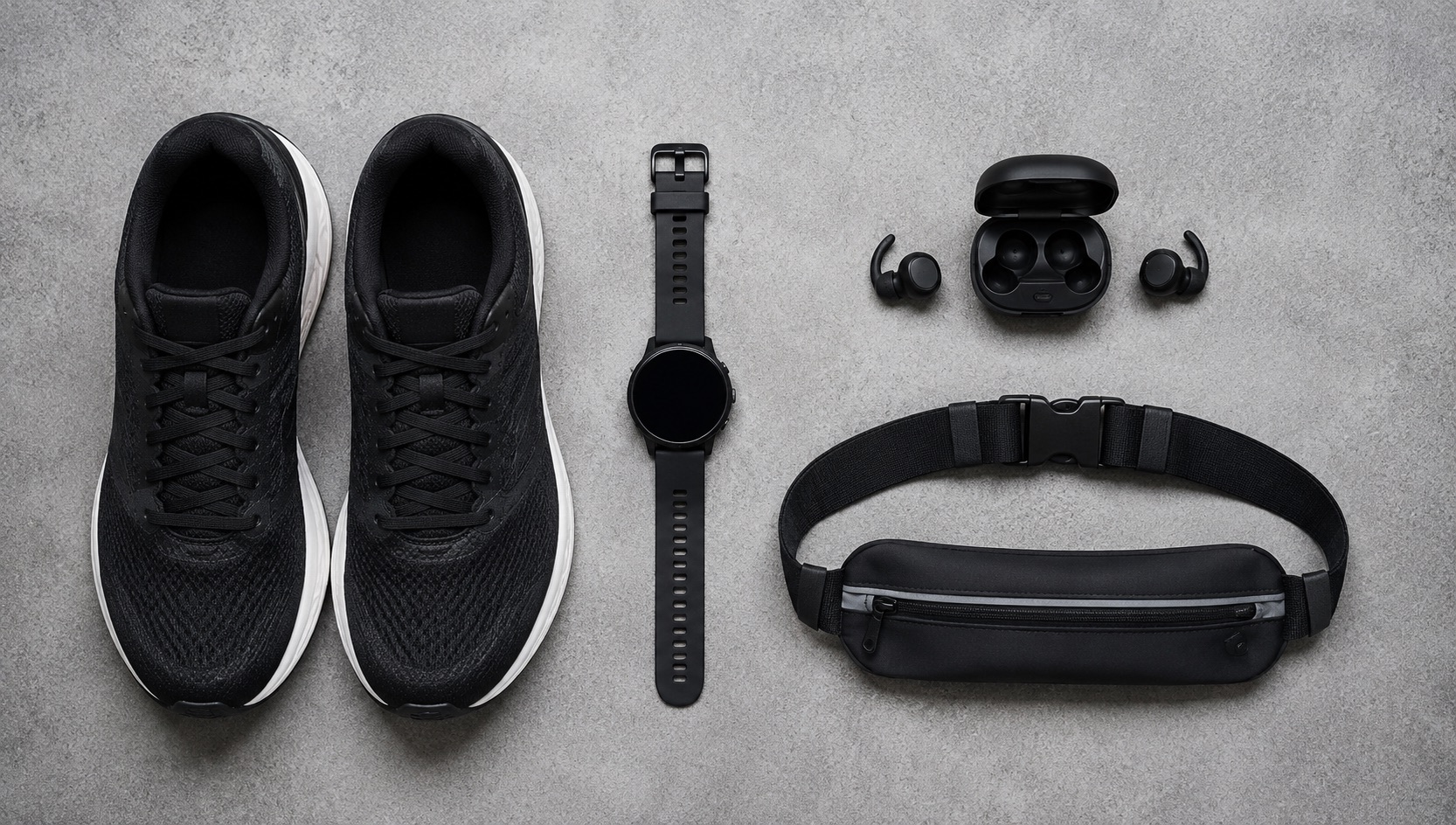
Run Commuting Gear List: Everything I Pack Daily
Every evening at 9:30pm, I pack my bag for the next morning’s run commute. The routine takes exactly 4 minutes. I know because I have done it roughly 450 times over the past two years and it has become muscle memory. Every item has a place, every gram has been questioned, and anything that does not serve a daily purpose has been eliminated.
My commute is 12 kilometers each way. I run to work in the morning and cycle or take public transport home (running both ways totals 24km of daily load, which is too much for sustainable recovery). That means my pack needs to carry everything I need for a full workday, and I need to transition from runner to professional in under 10 minutes at the office.
This article is my complete packing list, refined over two years of daily use. I will explain what I carry, why it is in the bag, and the system I built around it to make run commuting as frictionless as possible.
The Daily Pack
Here is everything that goes into my Osprey Duro 15 every morning:
| Item | Weight | Essential/Optional | Tip |
|---|---|---|---|
| Laptop (MacBook Pro 14”) | 1,600g | Essential | Place against back panel, centered |
| Laptop charger | 310g | Essential | Wrap cable with velcro strap |
| Rolled dress shirt | 180g | Essential | Roll, do not fold. Prevents creases. |
| Folded chinos/trousers | 350g | Essential | Fold along existing creases |
| Underwear | 60g | Essential | Stuff inside rolled shirt |
| Socks (dress) | 40g | Essential | Tuck into shoes or trouser fold |
| Deodorant (travel size) | 50g | Essential | Refill from full-size at home weekly |
| Microfiber towel (small) | 80g | Essential | Quick dry, packs tiny. Wipe down at office. |
| Belt (thin dress belt) | 120g | Mon only | Stays at office the rest of the week |
| Lunch container | 400g | Optional | Only when not buying lunch |
| Rain jacket (thin packable) | 150g | Weather-dependent | Check forecast, leave behind if clear |
Total typical weight: 2,840g (without lunch) to 3,240g (with lunch)
Add the backpack itself (580g) and total running weight is approximately 3.4-3.8kg. On Monday mornings when I carry extra items for the week, this can reach 4.5-5kg.
The System That Makes It Work
The gear list above is only half the story. Run commuting is sustainable because of the system around it, not just the items in the bag.
What Stays at the Office Permanently
These items live in my desk drawer and never travel home:
- Work shoes (leather oxfords)
- Spare deodorant
- Hair product
- Face wash (small bottle)
- Nail clippers
- Spare phone charger
- One emergency outfit (shirt, trousers, socks, underwear)
- Shoe brush
By keeping shoes at the office, I save roughly 900g of daily carry. Work shoes are heavy and bulky. They would eat a third of my backpack capacity. Leaving them at work was the single biggest optimization I made in my first month of run commuting.
The Sunday Evening Prep
On Sunday night, I plan my office wardrobe for the week:
- Select 5 shirts, 3 trousers (I repeat trousers mid-week), 5 sets of underwear and socks
- Roll shirts (rolling prevents creases better than folding)
- Fold trousers along existing crease lines
- Pack Monday’s outfit. Store rest in a designated “commute shelf” in the closet.
This means no morning decisions. I grab the pre-selected outfit from the shelf, stuff it in the pack, and go. Decision fatigue at 6:30am is real and dangerous for routine adherence.
The Office Arrival Routine
I arrive at the office at 7:15am after a 55-minute run. My transition:
- Unpack bag at desk (30 seconds)
- Wipe down with microfiber towel in bathroom (2 minutes)
- Apply deodorant, fix hair (1 minute)
- Change into office clothes (3 minutes)
- Hang running clothes on back of chair to air dry (they go in a plastic bag for the trip home)
Total transition: under 7 minutes. I am desk-ready by 7:22am. My colleagues who drive arrive around 8:00am. I have 40 minutes of quiet, productive work before they show up.
The Cool-Down Problem
The biggest challenge of run commuting is not the running. It is the sweating that continues for 15-20 minutes after you stop. No matter how good your office shower situation is, you will keep perspiring for a while.
My solutions:
- Finish the last 500m at walking pace. This brings heart rate down and reduces post-run sweating significantly.
- Cold water on wrists and neck immediately upon arrival. Cools the blood quickly.
- Microfiber towel wipe-down. Not a shower (my office does not have one), but enough to be socially acceptable.
- Dry-fit undershirt under dress shirt. Absorbs any residual moisture without showing through.
If your office has a shower, you are lucky. Use it. Mine does not, and I have made it work for two years without a single complaint from colleagues.
Clothing Strategy: What Works Under Compression
Not all professional clothing survives being rolled into a ball and bounced for 12 kilometers. Here is what I have learned about fabrics:
Shirts that work: Performance dress shirts (synthetic blends like Ministry of Supply or Uniqlo Airism). They are wrinkle-resistant, moisture-wicking, and roll without creasing. 100% cotton dress shirts are a disaster in a backpack.
Trousers that work: Technical chinos (again, synthetic blends). Straight from the pack to your legs with minimal creasing. Traditional wool trousers need a garment bag and more careful packing.
What does not work: Linen anything, heavy cotton, stiff collars, suits (unless you keep the jacket at office permanently).
I own about 8 work shirts specifically chosen for their pack-and-wear properties. They cost slightly more than regular shirts but the convenience is worth it. I have learned to invest in anti-chafe products for longer runs too, which is why I always keep some anti-chafe balm at the office.
Running Gear for the Commute
The gear I actually run in:
- Running shoes (currently ASICS Novablast 4, good cushion for loaded running)
- Running shorts or tights depending on season
- Technical t-shirt or long sleeve depending on season
- Running socks (check the best running socks guide for recommendations)
- Reflective vest in dark months
- Cap or buff depending on weather
I keep my running gear simple and functional. No expensive racing shoes for commuting because the repetitive loaded running wears them down faster than normal. I use a well-cushioned daily trainer and replace it every 4-5 months.
Safety Gear for the Commute
I run in a city (Amsterdam) starting at 6:15am. For six months of the year, it is dark or semi-dark when I leave home. Visibility is non-negotiable when you share roads with cars, cyclists, trams, and delivery vans.
My visibility setup:
- Reflective vest (always in dark months)
- Red clip-on blinker on the back of my pack
- Front-facing headlamp for unlit paths along the canal
This setup keeps me visible from all angles. I have written a dedicated article on lights and reflective gear for city running with specific product recommendations.
The Route Optimization
My commute route is not the shortest possible path. It is the safest and most pleasant path that happens to be close to 12 kilometers. Key considerations:
- Avoid major roads during rush hour (car exhaust at running breathing rate is unpleasant)
- Use canal paths and park routes where possible (softer surface, less traffic)
- Ensure good lighting along the entire route for dark months
- Include one water fountain near the halfway point for summer refills
- Know alternative routes for when construction blocks the main path
I planned three route variations in my first week and rotate between them to prevent monotony. The scenic canal route is 12.3km. The direct route through the park is 11.1km. The rainy-day route (maximum shelter under trees and awnings) is 12.7km.
Weather Adjustments
Run commuting happens in every condition. Rain, wind, cold, heat. Here are my adjustments:
Rain: Packable rain jacket for the run. Rain cover on the pack. Everything inside in a thin dry bag (30g, folds to nothing). Accept being wet and focus on keeping your work clothes dry.
Extreme cold (below 0C): Extra layer in the pack for the post-run cool-down. Gloves and buff for the run. Arrive earlier to allow longer transition time.
Heat (above 25C): Carry frozen water bottle (doubles as back cooling). Pack lighter fabrics. Extra deodorant. Consider arriving 15 minutes earlier to cool down properly.
Wind: Accept slower pace. Tighten pack straps to reduce drag. No adjustment to gear.
The Numbers
Two years of run commuting, some rough statistics:
- Distance covered: approximately 5,500km (450 commutes x 12km)
- Shoes used: 4 pairs (rotated by season and wear)
- Packs used: 2 (started with Salomon, upgraded to Osprey after 6 months)
- Days missed due to weather: approximately 15 (extreme ice, severe storms)
- Money saved on transport: approximately 3,200 euros (versus monthly transit pass at 130 euros/month for 24 months, minus the cost of gear)
- Time added to my day: approximately 15 minutes (commute takes 55 min running vs 40 min by transit, but I skip the gym entirely)
The time math is critical: run commuting replaces both a commute and a workout. I do not need a gym membership or dedicated training time. My commute IS my training. On a net basis, I actually gain time because the combined gym+commute alternative would take longer.
FAQ
How do you handle days when you have meetings or presentations?
On days with client meetings, I sometimes take public transport and carry my nicer outfit unwrinkled. This happens about twice a month. I keep a blazer permanently at the office for unexpected dress-up needs. For most meetings, my performance dress shirts look professional enough straight from the pack.
What do you do with sweaty running clothes at the office?
I hang them on the back of my desk chair to air dry during the day. By evening, they are dry enough to stuff in a plastic bag for the trip home. I wash running clothes every day (they go in that night’s laundry load). On Fridays, I sometimes run home as well since I can go straight to the washing machine.
How do you handle the return journey?
I cycle home (35 minutes) or take the metro (25 minutes). Running 24km daily is not sustainable for me alongside marathon training. The return journey lets me carry less in the morning since I bring my running clothes home in a small bag on the bike or transit.
Does the loaded running affect your regular training?
Yes, slightly. I treat the commute as an easy run and keep heart rate in Zone 2 regardless of pace. The extra weight (3-4kg) means my commute pace is about 15 seconds per km slower than my unloaded easy pace. I do not count it as a quality session, just aerobic volume. My actual training sessions (intervals, tempo, long runs) happen on evenings and weekends without a pack.
What if your office does not have a shower?
Mine does not. I manage with a microfiber towel wipe-down, cold water on wrists and neck to cool down quickly, and strong deodorant. The key is finishing the last 500m at walking pace to reduce post-exercise sweating. After two years, I can confirm it works. No colleague has ever complained.
Start Tomorrow
You do not need to plan for months. Pack a bag tonight with your work clothes, run to work tomorrow, and figure out the refinements over time. The first commute will be imperfect. The tenth will be routine. The hundredth will be the best part of your day.
The gear, the system, and the routine all optimize over time. But they only optimize if you start.