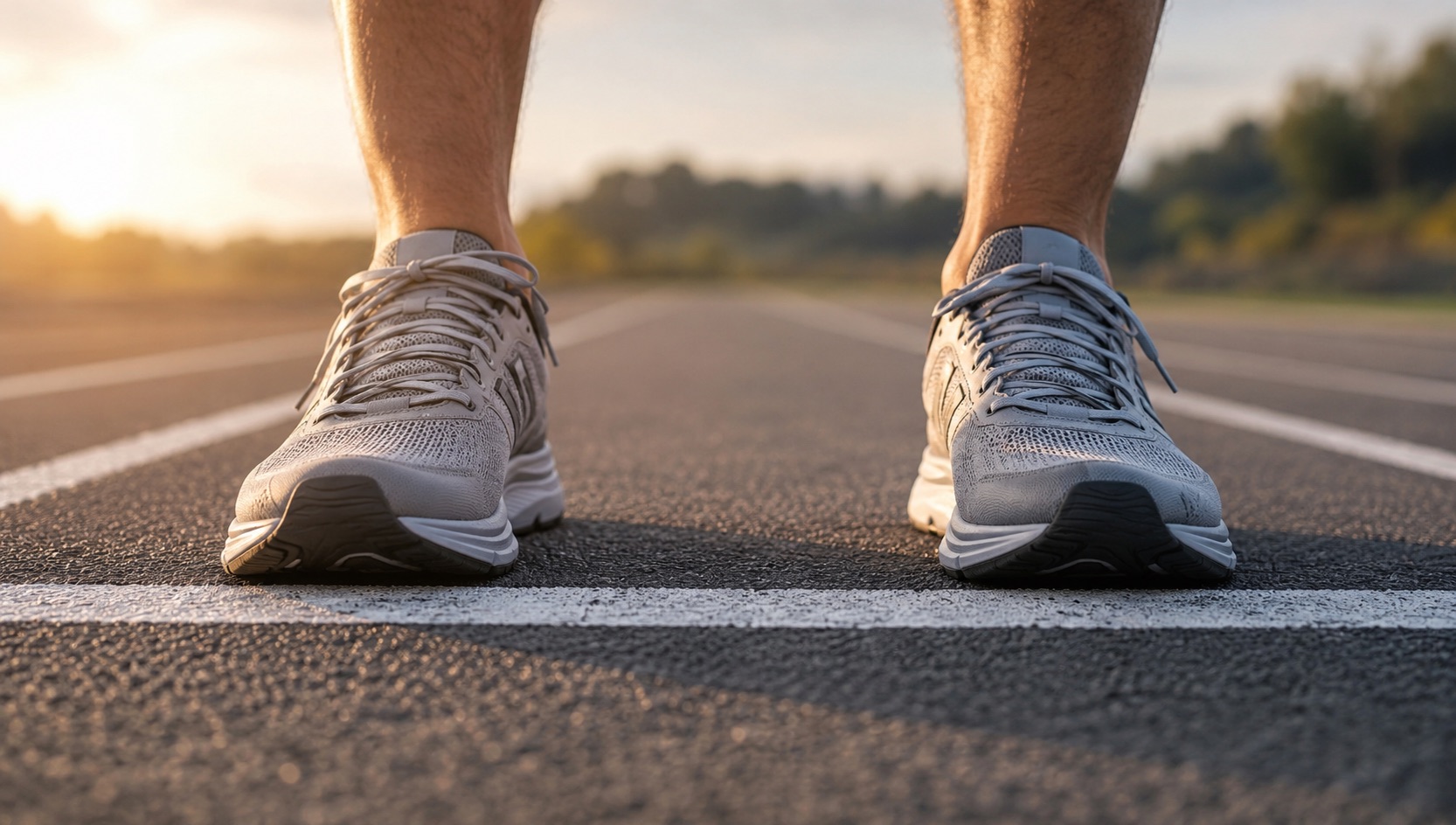
My 100km Training Week: What I Wear and Use
Running 100 kilometers per week is not something you stumble into. It takes years of progressive overload, careful periodization, and a level of attention to gear and recovery that borders on obsessive. I know because I live it. Every single week during peak marathon training, I hit triple digits in volume, and every session demands a specific shoe, a specific fueling approach, and a specific recovery protocol.
This is not a theoretical article about what a high-mileage week could look like. This is what my actual training week looks like during a marathon buildup. I track everything: kilometers, pace, shoe used, nutrition consumed, sleep quality, HRV readings. When you are running this much, the margin for error shrinks dramatically. One wrong shoe choice on a tempo day can cascade into a calf issue that costs you a week of training.
Let me walk you through the entire structure, day by day.
The Weekly Structure
My training week follows a pattern that has worked for me across three marathon cycles. The key principle: hard days hard, easy days genuinely easy. There is no middle ground at this volume.
| Day | Session | Distance | Shoe | Nutrition Needed |
|---|---|---|---|---|
| Monday | Easy | 12 km | Hoka Clifton 9 | Water only |
| Tuesday | Intervals (6x1000m) | 14 km | Nike Vaporfly 4 | Gel before, electrolytes during |
| Wednesday | Easy | 10 km | Nike Pegasus 41 | Water only |
| Thursday | Tempo (8km at MP+15s) | 16 km | Saucony Endorphin Speed 4 | Gel at 10km, electrolytes |
| Friday | Recovery | 8 km | Hoka Bondi 9 | Water only |
| Saturday | Long Run | 28-32 km | Adidas Adios Pro 3 | Full fueling protocol |
| Sunday | Easy | 12 km | Hoka Clifton 9 | Water only |
That is 100-104 kilometers depending on the Saturday long run distance. Let me break down each day in detail.
Monday: Easy 12km in the Clifton
I start every week the same way. Monday is about blood flow, not fitness gains. The Hoka Clifton 9 is my go-to here because it has enough cushion to protect legs that are still recovering from the weekend long run, but it is light enough (248g) that it does not feel like running in bricks.
Pace is strictly 5:15-5:30/km. If my heart rate creeps above 140bpm, I slow down. No exceptions. I have learned the hard way that “easy” means easy, not “moderate.”
No nutrition needed for 12km at this effort. I run fasted in the morning, coffee only.
Tuesday: Intervals in the Vaporfly
This is the day I earn my fitness. Typical session: 3km warm-up, 6x1000m at 3:30-3:35/km with 90 seconds jog recovery, 3km cool-down. Total volume around 14km.
I wear the Nike Vaporfly 4 for intervals because the energy return at high speeds is unmatched. Some runners save their carbon plates exclusively for race day. I disagree. You need to train your neuromuscular system at race pace, and the shoe you race in should be the shoe you do race-specific work in.
I take one Maurten Gel 100 about 20 minutes before the session starts, and sip on electrolytes (Precision Hydration 1000) during the recovery jogs.
Wednesday: Easy 10km in the Pegasus
Wednesday is a shorter easy day. I deliberately use a different shoe from Monday to vary the stimulus on my legs. The Nike Pegasus 41 is firmer than the Clifton, with a lower stack height. This means slightly different muscle engagement patterns, which I believe helps prevent overuse injuries.
This is also my “feel the legs” day. If Tuesday’s intervals left me more fatigued than expected, I notice it here and adjust Thursday accordingly.
Thursday: Tempo in the Endorphin Speed
Thursday is the second quality session of the week. The standard workout is a 4km warm-up, then 8km at marathon pace plus 15 seconds per kilometer, followed by a 4km cool-down. Total: 16km.
The Saucony Endorphin Speed 4 is perfect for this. It has a nylon plate (not carbon), so it gives you some pop without the full aggression of a carbon racer. I think of it as a 90% shoe. Fast enough to hold tempo pace comfortably, protective enough that my legs are not wrecked the next day.
I take one gel at the 10km mark and carry a handheld with electrolytes. At tempo effort, you burn through glycogen faster than you think.
Friday: Recovery in the Bondi
Friday is the softest day of the week. Eight kilometers at whatever pace feels effortless, usually 5:45-6:00/km. The Hoka Bondi 9 is absurdly cushioned, and that is exactly the point. My legs need maximum protection before Saturday’s long run.
I think of Friday as paying forward into Saturday. Every ounce of recovery I can squeeze out today pays dividends on the long run.
Saturday: Long Run in the Adios Pro
This is the centerpiece of the week. During peak training, my long run is 28-32km, and the last 10-14km are at or near marathon pace. This is where the marathon is built.
I wear the Adidas Adios Pro 3 because it is my race day shoe and I need to rehearse everything: the feel, the cadence, the fueling. The Adios Pro has a slightly different rocker geometry than the Vaporfly, and I have come to prefer it for efforts longer than 25km.
Fueling protocol for long runs mirrors race day: first gel at 5km, then every 20 minutes after that. I aim for 60-90g of carbs per hour depending on the intensity of the session. This is non-negotiable. You cannot train your gut to handle race day fueling without practicing it weekly.
I carry a Nathan handheld flask (500ml) with Precision Hydration 1000 and have a second bottle cached at my turnaround point.
Sunday: Easy 12km in the Clifton
Sunday closes the week. Same shoe as Monday, same easy effort. This run is about active recovery and logging the final kilometers. I often run with my training partner on Sundays because the pace forces me to keep it conversational.
The Shoe Rotation Logic
Running 100km per week in one pair of shoes would destroy them in 4-5 weeks and probably destroy your legs faster. I maintain a 6-shoe rotation where each shoe serves a specific biomechanical purpose. The variety in stack heights, drop measurements, and cushioning compounds means my feet and legs never adapt to one single stimulus.
If you are building toward higher mileage, start with at least three shoes: one cushioned easy day shoe, one uptempo shoe, and one for long runs. You can read more about building a rotation in my article on daily training shoes.
Recovery Tools I Use Daily
At this volume, recovery is not optional. It is training. Here is what I use:
Compression boots (Normatec): 30 minutes after every hard session. I notice a measurable difference in next-day leg freshness when I use them versus when I skip them.
Foam roller: 10 minutes every evening, focusing on quads, IT band, and calves. Nothing fancy.
Theragun: For specific trigger points, especially in my hip flexors and glutes after long runs.
Sleep: The most underrated recovery tool. I aim for 8 hours minimum and track it with my Garmin. If sleep drops below 7 hours for two consecutive nights, I modify the next hard session.
Nutrition Framework
Beyond the in-run fueling, daily nutrition at this training load is its own discipline. I eat roughly 3,200-3,500 calories per day during peak training. Carbohydrate intake sits around 7-8g per kilogram of body weight. I weigh 68kg, so that is 475-545g of carbs daily.
Protein targets are 1.6-1.8g/kg, so around 110-120g per day. I prioritize protein timing around the hardest sessions, with a 30g serve within 30 minutes of finishing intervals or long runs.
For more on marathon-specific volume, check my detailed breakdown of how many miles per week for marathon training.
What Makes This Sustainable
Three things keep me healthy at 100km/week:
- Strict easy/hard polarization. I never run medium effort. It is either very easy or very hard.
- Shoe rotation. Different mechanical loads on different days.
- Sleep discipline. Non-negotiable 8 hours.
I have been injured exactly once in the past two years, and it was because I violated rule number one. I ran a “slightly quick” easy day when my ego got the better of me. That turned into a posterior tibial issue that cost me three weeks.
Adjustments During the Training Cycle
This is my peak week structure. During base building (12-16 weeks out from race day), total volume is lower (70-80km) and the long run is shorter (22-24km). The shoe assignments stay the same, but I am less rigid about the carbon plate usage.
During taper (final 2-3 weeks), volume drops to 50-60km and the quality sessions get shorter but stay sharp. I still use the same shoes because consistency in feel matters for race day confidence.
FAQ
How long did it take you to build up to 100km per week?
About three years of consistent training. I went from 40km/week to 60, then 70, then 80, and finally 100. Each jump took 4-6 months of gradual building with no more than a 10% increase per week. Patience is everything.
Do you really need 6 different pairs of running shoes?
Need? Probably not. But at this volume, each shoe serves a distinct mechanical purpose. At 40-50km/week, you could manage with three shoes. Once you cross 80km, the diversity in cushioning and geometry becomes much more important for injury prevention.
What happens when you miss a session?
I never try to make it up by adding distance elsewhere. A missed session is gone. If I miss an easy day, it just becomes a rest day. If I miss a quality session, I assess why and move on. Chasing missed volume is how you get hurt.
How much does this shoe rotation cost per year?
Roughly 800-1000 euros. I replace each shoe based on mileage (race shoes at 300km, trainers at 600-800km). The Vaporfly gets replaced most frequently because I only use it for about 400km before the foam loses its responsiveness.
Is 100km per week necessary for a sub-3 marathon?
No. Many runners break 3 hours on 60-80km/week with better quality sessions. I run this volume because my body responds well to it and I have built the durability over years. More is not automatically better. It is about finding the highest volume you can sustain without breaking down.
Final Thoughts
A 100km training week is a system, not just a collection of runs. Every element connects: the shoe choice protects the body, the nutrition fuels the work, the recovery tools accelerate adaptation, and the structure ensures you arrive at each quality session ready to execute.
If you are working toward higher mileage, build gradually, invest in your shoe rotation, and respect the easy days. The fitness comes from consistency over months, not from any single heroic week.