Kiprun Enters the US Market: 3 Models That Could Disrupt Budget Running
Decathlon’s dedicated running brand Kiprun just launched in the US with three shoes priced between $150 and $160. That’s significantly less than what Hoka, Nike, and ASICS charge for comparable tech, and the early lab data suggests these aren’t just cheap knockoffs.
What Is Kiprun?
Kiprun is Decathlon’s performance running brand. If you’ve shopped at Decathlon in Europe, you’ve probably seen them alongside Decathlon’s other house brands like Kalenji and Evadict. But Kiprun is specifically positioned as the serious performance tier, not the “I need a pair of trainers for the gym” tier.
Their stated mission is to “democratize high performance running,” which sounds like corporate fluff until you look at the specs-to-price ratio of what they’re actually shipping. Decathlon has massive manufacturing scale, their own R&D labs, and zero brand tax. They don’t spend millions on athlete endorsements or flashy ad campaigns. That money goes into materials and construction instead.
The US launch happened in Spring 2026 via decathlon.com, making all three models available for direct shipping across the country. No retail markup, no middleman. Just Decathlon’s website and their growing network of US stores.
The 3 Models Launching in the US
Here’s what Kiprun brought to the American market, and who each shoe is for.
KIPRIDE Max ($160): The Daily Trainer
The KIPRIDE Max is Kiprun’s max-cushion daily trainer, aimed squarely at the segment dominated by the Hoka Clifton and Nike Invincible. It’s designed for runners who want plush cushioning for easy miles, long runs, and recovery days.
At $160, it undercuts the Nike Invincible 4 ($180) while matching the Hoka Clifton 10 ($145) in price. The difference is what you’re getting for that price point. Kiprun claims superior energy return and durability over competitors at this tier, and they’re backing it with lab data rather than marketing hype.
If you’re currently running in a Clifton, Novablast, or any max-cushion daily shoe and spending $150+ per pair, the KIPRIDE Max deserves your attention. It’s the kind of shoe that makes you question why you’ve been paying brand premiums. For more daily trainer options, check our best daily training shoes for 2026.
KIPSTORM Elite: The Road Racer
Details on exact US pricing for the KIPSTORM Elite are still emerging, but this is Kiprun’s road racing and speed shoe. Think of it as their answer to the Nike Vaporfly or Saucony Endorphin Pro category.
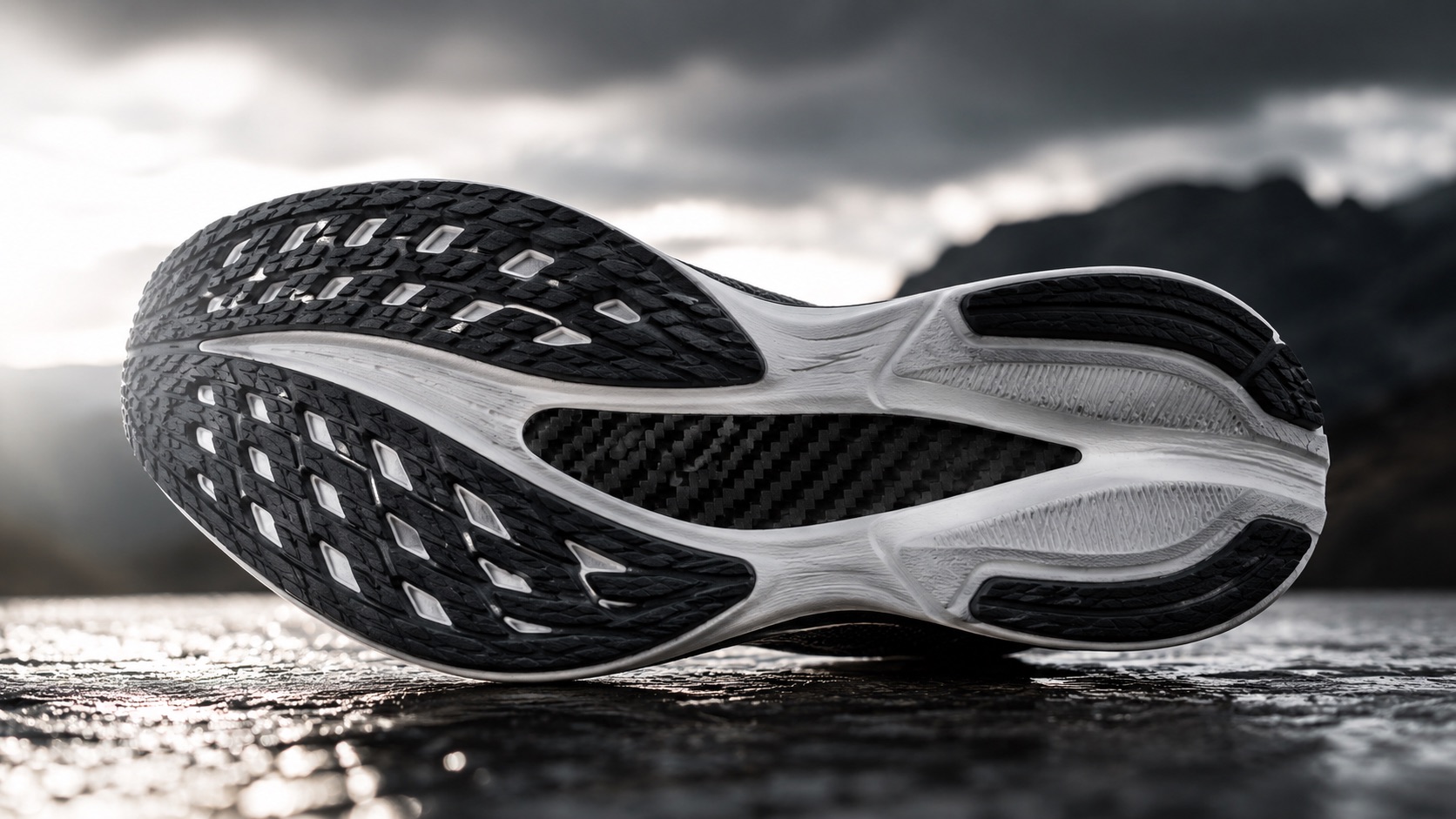
The KIPSTORM Elite is built for race day performance and uptempo training. Carbon plate, responsive foam, aggressive rocker geometry. It’s the shoe Kiprun wants you wearing for your next PR attempt, whether that’s a 5K or a marathon.
This is arguably the most interesting model in the lineup because it’s directly competing against shoes that cost $250+. If Kiprun can deliver 90% of a Vaporfly’s performance at 60% of the price, that changes the math for a lot of runners who can’t justify spending $260 on race-day-only shoes. For other affordable racing options, we’ve covered Chinese carbon plate shoes that play in this same value space.
KIPSUMMIT Max ($150): The Trail Crusher
The KIPSUMMIT Max might be the most impressive shoe in the lineup. It’s a max-cushion trail running shoe with Vibram Megagrip outsole and a supercritical A-TPU midsole, priced at just $150.
Let that sink in. Vibram Megagrip is the gold standard for trail outsole grip. It’s what Hoka uses on the Speedgoat ($155), what Salomon puts on their premium trail shoes. Getting it on a $150 shoe is unusual.
The supercritical A-TPU foam in the midsole is also noteworthy. This manufacturing process creates a lighter, more resilient foam compared to standard injection-molded TPU. It’s the kind of tech you typically see in shoes costing $180+.
RunRepeat gave the KIPSUMMIT Max excellent lab test scores, which matters because RunRepeat actually measures shoes in a lab rather than just running in them and sharing vibes. Their mechanical testing confirms the cushioning and energy return claims aren’t just marketing copy. If you’re shopping for trail shoes, see our full best trail running shoes 2026 roundup.
How Kiprun Compares to Established Brands
Here’s the direct comparison that matters. Same category, similar tech, but look at what you’re getting:
| Feature | KIPRIDE Max | Hoka Clifton 10 | KIPSUMMIT Max | Hoka Speedgoat 6 |
|---|---|---|---|---|
| Price | $160 | $145 | $150 | $155 |
| Category | Max-cushion road | Max-cushion road | Max-cushion trail | Max-cushion trail |
| Outsole | Rubber | Rubber | Vibram Megagrip | Vibram Megagrip |
| Midsole | Proprietary foam | CMEVA | Supercritical A-TPU | CMEVA |
| Drop | TBD | 5mm | TBD | 5mm |
| Weight | TBD | 250g (M9) | TBD | 295g (M9) |
| Lab tested | Pending | Yes | Yes (RunRepeat) | Yes |
| Where to buy | decathlon.com | Everywhere | decathlon.com | Everywhere |
The prices are remarkably close, which raises the question: why would Kiprun be disruptive if they’re priced similarly?
The answer is what you get for that money. Kiprun’s shoes use premium materials (Vibram, supercritical foam) at price points where competitors are using cheaper alternatives. A Clifton at $145 uses basic CMEVA foam. A KIPSUMMIT at $150 uses supercritical A-TPU with Vibram Megagrip. Dollar for dollar, you’re getting more shoe.
Why This Matters for Budget Runners
The running shoe market has been consolidating around premium pricing for years. A “normal” daily trainer now costs $140-$180. Race shoes cost $250-$275. Trail shoes with decent outsoles cost $160+.
Kiprun isn’t trying to be the cheapest option on the market. They’re not competing with $60 Amazon specials. They’re offering premium-tier technology at mid-tier prices, and doing it consistently across road, trail, and racing categories.
This matters because it forces other brands to either justify their pricing or drop it. When a runner can get Vibram Megagrip and supercritical foam for $150, Hoka and Salomon need a better answer than “but our brand is cooler.”
For runners who’ve been looking at even more affordable options, we’ve also covered running shoes under $100 that are worth considering for backup pairs and beater shoes.
The Decathlon Advantage
Decathlon is the world’s largest sporting goods retailer. They operate in 70+ countries with over 1,700 stores. Their house brands (of which Kiprun is one) account for the majority of their sales, giving them manufacturing volume that individual shoe brands can’t match.
This vertical integration is their secret weapon. Decathlon owns the design, manufacturing, distribution, and retail. There’s no wholesale margin, no retail partner markup, no athlete endorsement budget inflating the final price. Every dollar you spend goes more directly toward materials and construction.
It’s the same playbook that Costco uses with Kirkland products, or that IKEA uses with furniture. Cut out the middlemen, own the supply chain, and pass the savings on. The question is whether runners will trust a Decathlon house brand the way they trust Nike or Hoka. Based on the RunRepeat lab scores for the KIPSUMMIT Max, maybe they should.
Should You Buy Kiprun Shoes?
If you’re a runner who rotates through 2-3 pairs of shoes and replaces them every 400-500 miles, your annual shoe budget is probably $400-$600. Switching to Kiprun won’t cut that in half, but it could save you $20-$40 per pair, which adds up to $60-$120 per year.
The real value play is on the trail side. The KIPSUMMIT Max at $150 with Vibram Megagrip is genuinely hard to beat on specs-per-dollar. If you’re currently buying Speedgoats or Salomon Sense Rides, it’s worth trying a pair.
For daily trainers, the KIPRIDE Max at $160 is competitive but not dramatically cheaper than a Clifton. The value there depends more on whether the ride suits you than on price savings.
The KIPSTORM Elite is the wild card. If it delivers race-shoe performance at a significant discount to the Vaporfly, it could be the most compelling option in the lineup for competitive runners.
All three models are available now on decathlon.com.
Frequently Asked Questions
Where can I buy Kiprun shoes in the US?
Currently through decathlon.com for online orders, and at physical Decathlon stores in cities where they have locations. They’re not yet available at running specialty stores, REI, or other third-party retailers.
Are Kiprun shoes good quality or just cheap?
The early evidence says they’re legitimately good. The KIPSUMMIT Max received excellent lab test scores from RunRepeat, which uses mechanical testing rather than subjective reviews. The use of Vibram Megagrip outsoles and supercritical A-TPU foam indicates Kiprun is using premium materials, not cutting corners.
How does Kiprun compare to Hoka and Nike?
Kiprun competes directly on specs while matching or slightly beating competitor prices. The KIPSUMMIT Max ($150) offers similar features to the Hoka Speedgoat 6 ($155) but with arguably better midsole technology. They’re not trying to be cheaper, they’re trying to offer more value at the same price.
Is Kiprun the same as Kalenji from Decathlon?
No. Kalenji is Decathlon’s entry-level running brand aimed at beginners and casual joggers. Kiprun is their performance tier, designed for serious runners who train regularly and race. Think of Kalenji as Decathlon’s version of basic Nike running shoes, while Kiprun targets the Vaporfly and Speedgoat tier.
Should I wait for more reviews before buying Kiprun?
If you’re risk-averse, waiting for 3-6 months of user reviews is reasonable. But if the lab scores are strong and the materials spec sheet checks out, there’s limited downside to trying a pair. Decathlon typically has a generous return policy, so you can test them and send them back if they don’t work for your feet.