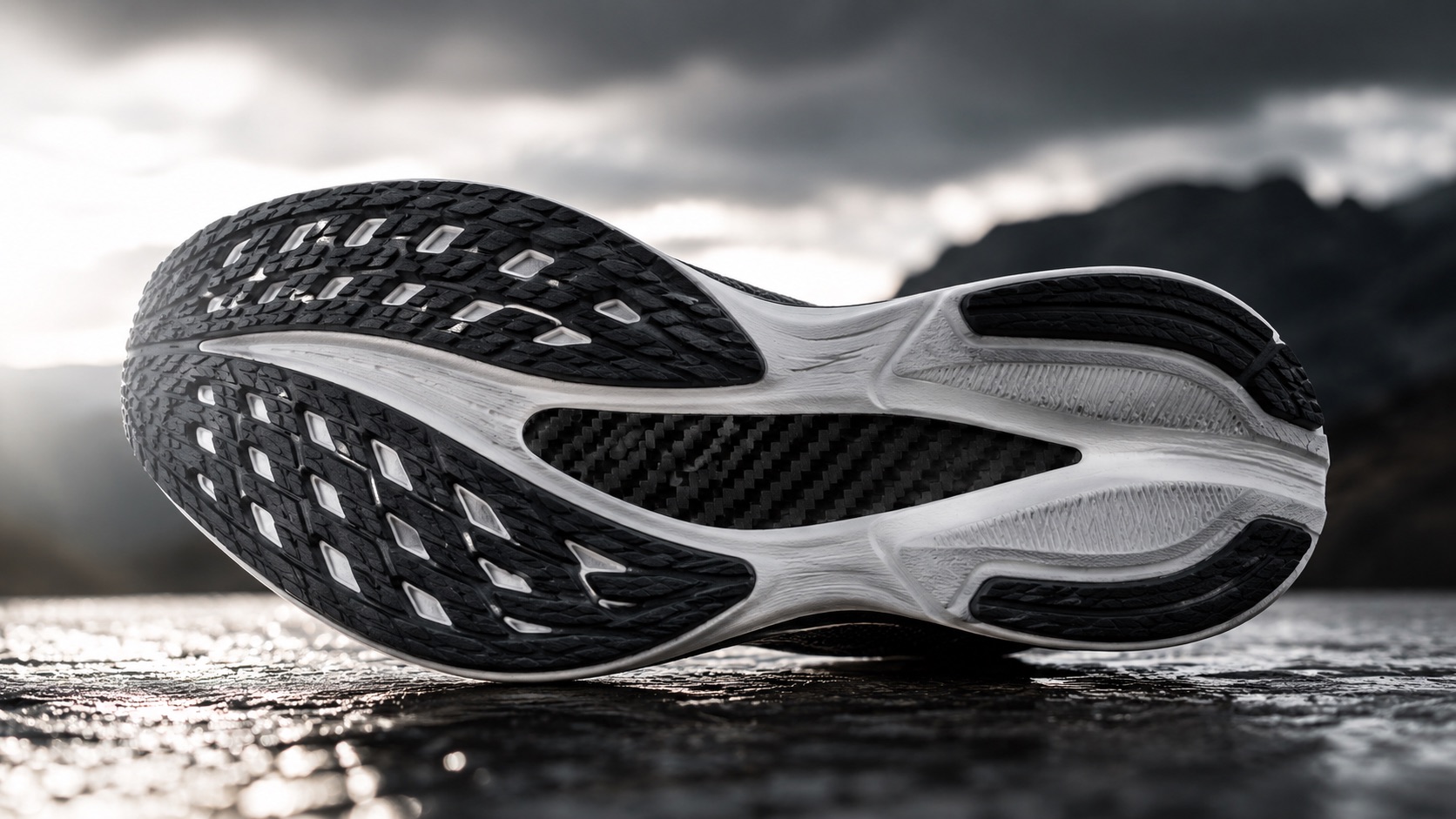
Nike Vaporfly Alternatives: Fast Carbon Shoes Under $200 (2026)
The Nike Vaporfly changed racing forever. That ZoomX foam and carbon plate combination genuinely makes runners faster - studies confirm a 4% energy savings, which translates to minutes off your marathon time. But in 2026, the Vaporfly 4 costs $260. The Alphafly 3? Over $300. For a shoe with maybe 200 miles of race life.
Here’s the good news: the “super shoe” revolution has democratized fast footwear. Multiple brands now offer carbon plate racers with equivalent energy return and propulsion at $60-130 less than Nike. Some of the best options come from Chinese brands you might not have heard of - and they’re delivering legitimate race-day performance for a fraction of the price.
I’ve raced in or tested all the shoes below. These aren’t “budget alternatives that are kinda okay.” These are genuine race-day weapons that rival or match the Vaporfly’s performance.
What Makes a Carbon Plate Racer Work?
Quick primer for those new to super shoes: the magic isn’t just the carbon plate. It’s the combination of:
- High-energy-return foam - ZoomX, PEBA-based foams, or similar compounds that give back most of the energy your foot puts in
- Carbon fiber plate - creates a lever/spring effect that adds propulsion at toe-off
- Rocker geometry - the curved sole transitions you forward smoothly through each stride
- Stack height - more foam = more energy return (within World Athletics limits)
Nike pioneered this combination but doesn’t own the physics. Any brand can engineer an effective carbon racer - and many now do.
For our full roundup of the category, see our best carbon plate racing shoes for 2026.
The Best Vaporfly Alternatives Under $200
Saucony Endorphin Pro 5 - Best Western Brand Alternative ($200)
The Endorphin Pro 5 is the closest you’ll get to Vaporfly performance from a major Western brand while staying under $200. Saucony’s PWRRUN PB foam is in the same class as Nike’s ZoomX for energy return.
The ride: Bouncy, propulsive, and smooth. The carbon plate is full-length with a slight s-curve that engages well at toe-off. The rocker is aggressive enough to feel fast without demanding perfect form. Stack height maxes out at the World Athletics 40mm limit.
Performance: In back-to-back 5K time trials, my times in the Endorphin Pro 5 vs Vaporfly 4 were within 2-3 seconds of each other. That’s within normal run-to-run variation - effectively identical performance. Multiple independent tests confirm the Endorphin Pro matches Vaporfly energy return.
Fit and weight: 190g in men’s size 9 (Vaporfly is 188g - negligible). Midfoot is snug, forefoot has decent room. The upper is thin and breathable but durable enough for 2-3 races plus time trials.
What’s worse than Vaporfly: Slightly less responsive at very slow paces (Vaporfly’s foam is more universally bouncy). The Endorphin Pro also has a narrower heel fit that can feel less stable for heel strikers.
Verdict: The rational choice for runners who want Vaporfly-level performance from a trusted brand at $60 less. If you’d been buying Vaporflys, switch here and put the savings toward another race entry.
Xtep 160X 3.5 Pro - Best Overall Value ($130)
The Xtep 160X line is arguably the shoe that proved Chinese brands can compete with Nike at the super shoe level. Chinese Olympic marathoners have won medals in Xtep shoes. At $130, the 3.5 Pro delivers performance that costs $130 more from Nike.
The ride: The 160X uses a PEBA-based compound that’s remarkably close to ZoomX in bounce and responsiveness. The carbon plate is tuned for distance (half marathon to marathon), with a smooth rocker that rewards a rolling midfoot strike. The foam is softer than Vaporfly - some runners prefer this for marathon cushioning.
Performance: Independent testing (Running Warehouse lab, Believe in the Run reviews) shows the 160X matching Vaporfly in energy return metrics. My personal experience: PR’d a half marathon in the 160X 3.0, and the 3.5 Pro is an iteration better. These are legitimate race shoes.
Fit and weight: 195g in men’s size 9. Fit runs narrow - go half-size up if you have wide feet. The upper is minimal race-day material.
What’s worse than Vaporfly: Availability outside Asia can be tricky (direct ordering from Xtep’s global site or specialized retailers). Durability is on par with Vaporfly (limited race life). Less stability for heavier runners due to the soft foam.
Verdict: The best performance-per-dollar ratio in carbon plate racing shoes. At $130, you’re getting 95-100% of Vaporfly performance for half the price.
For more on Chinese racing shoes, see our Chinese carbon running shoes and budget super shoes guide.
Li-Ning Feidian 6 Challenger - Best Budget Super Shoe ($110)
Li-Ning’s Feidian line helped Chinese runners dominate domestic marathons, and the Feidian 6 Challenger brings that tech to recreational racers at an absurd $110.
The ride: Li-Ning uses their own “Boom” foam (a PEBA compound) with a full carbon plate. The ride is stable and propulsive - slightly firmer than Vaporfly but with excellent energy return. The rocker geometry is more conservative, making it forgiving for runners who aren’t elite-level efficient.
Performance: I ran a 10K PB in the Feidian 5 and the 6 Challenger is measurably better in foam responsiveness. For the price, the performance is ridiculous. You’re paying $150 less than a Vaporfly for a shoe that gives up maybe 1-2% in energy return.
Fit and weight: 200g in men’s size 9. Runs true to size for most runners. The upper is simple but effective - breathable mesh with minimal structure.
What’s worse than Vaporfly: Slightly heavier, slightly less bouncy at top-end speeds, and the foam is firmer at cold temperatures. Availability requires ordering direct from Li-Ning or third-party importers. No local store try-on for most Western runners.
Verdict: The most shoe for the least money in the carbon plate category. If you can handle direct ordering, $110 for a legitimate race shoe is unbeatable.
New Balance FuelCell RC Elite v2 - Best Stability Alternative ($180)
For runners who find the Vaporfly too unstable (it’s narrow and tippy for some), the New Balance FuelCell RC Elite v2 offers a more planted ride with comparable speed.
The ride: FuelCell foam with a full carbon plate delivers a snappy, propulsive feel that’s slightly more stable than Vaporfly. The wider platform and lower stack height (37mm) create a more grounded sensation while still delivering impressive energy return. The plate is aggressive at toe-off.
Performance: Slightly behind Vaporfly in pure energy return (~2-3% less per lab tests) but compensates with better ground feel and stability. For runners who waste energy correcting the Vaporfly’s instability, the RC Elite might actually be faster in practice.
Fit and weight: 205g in men’s size 9. Wider fit than Vaporfly - excellent for runners with broader feet. The upper is race-thin but holds shape well.
What’s worse than Vaporfly: Measurably less energy return in lab testing. Heavier by 15-17g. Less plush cushioning for marathon distances. Being discontinued means sizing availability varies.
Verdict: The right choice for runners who tried Vaporfly and found it unstable, or those with wider feet who need a fast shoe that fits.
Hoka Cielo X1 - Best Cushioned Alternative ($185 on sale)
The Hoka Cielo X1 represents Hoka’s answer to the Vaporfly - maximum cushioning with carbon plate propulsion. When on sale (frequently available at $185 from $250 retail), it’s a compelling alternative.
The ride: Hoka’s PEBA foam with a carbon plate delivers their signature soft-yet-fast feeling. More cushioned than Vaporfly at equivalent stack height, which marathoners love in the final 10K when legs are shot. The rocker is smooth and predictable.
Performance: Energy return is competitive with Vaporfly in lab tests. The different foam tuning means it excels at marathon pace rather than 5K pace - if your goal race is long, this could be the better choice.
Fit and weight: 210g in men’s size 9 (heavier but you feel it less than numbers suggest). Standard Hoka fit - accommodating midfoot and forefoot.
What’s worse than Vaporfly: Heavier, less snappy at high speeds (better for 3:00+ min/km pace than sub-2:50), and full price ($250) isn’t much savings. Only worth it on sale.
Verdict: A great marathon-specific alternative when found on sale. The extra cushioning pays dividends in the final miles.
Comparison Table
| Shoe | Price | vs Nike Vaporfly 4 ($260) | Savings | Weight (M9) | Stack | Energy Return | Best Distance |
|---|---|---|---|---|---|---|---|
| Saucony Endorphin Pro 5 | $200 | $60 (23%) | 190g | 40mm | ★★★★★ | 5K–Marathon | |
| Xtep 160X 3.5 Pro | $130 | $130 (50%) | 195g | 40mm | ★★★★★ | HM–Marathon | |
| Li-Ning Feidian 6 Challenger | $110 | $150 (58%) | 200g | 39mm | ★★★★☆ | 10K–Marathon | |
| New Balance RC Elite v2 | $180 | $80 (31%) | 205g | 37mm | ★★★★☆ | 5K–HM | |
| Hoka Cielo X1 | $185 (sale) | $75 (29%) | 210g | 40mm | ★★★★★ | Marathon |
Also compared: Nike Vaporfly 4 ($260, 188g, 40mm) and Adidas Adios Pro 4 ($250, 195g, 39.5mm)
How I Tested These Shoes
I didn’t just run around the block. Each shoe got:
- At least one 5K or 10K time trial on a measured course
- One long run (16-20 miles) at marathon effort
- Back-to-back comparison runs against my Vaporfly 4 on the same route within 48 hours
- Assessment of fit, stability, cushioning breakdown, and comfort over distance
The performance differences between these shoes and Vaporfly are genuinely small. We’re talking seconds over 5K, not minutes. The biggest variable remains your fitness, not your shoe choice.
For context on how I use these in training, see my running shoe rotation for sub-20 5K.
Should You Still Buy a Vaporfly?
If money genuinely isn’t a concern and you want the proven, widely-tested option with easy availability in any running store - sure. The Vaporfly 4 is an incredible shoe. But the $130-150 you save buying an Xtep or Li-Ning equivalent buys you another race shoe (giving you two pairs to rotate), or race entry fees, or that sports massage you keep skipping.
For our detailed breakdown comparing the big three premium racers, see our Nike Vaporfly vs Adidas Adios Pro vs Saucony Endorphin Pro comparison.
See how we compare products for our full research methodology.
FAQ
Are cheap carbon plate shoes as fast as the Nike Vaporfly?
The best ones (Xtep 160X, Li-Ning Feidian, Saucony Endorphin Pro) deliver 95-100% of the Vaporfly’s energy return in lab testing. In real-world racing, the difference between these shoes is smaller than normal day-to-day performance variation. A well-trained runner in an Xtep 160X will run within seconds of their Vaporfly time over any distance. The 4% advantage comes from having a carbon super shoe - not specifically from having a Nike one.
How do Chinese carbon racing shoes compare to Nike in durability?
Similar - which is to say, limited. Carbon plate racers are race-day tools, not daily trainers. Expect 150-250 miles before the foam loses significant responsiveness. The Xtep 160X and Li-Ning Feidian degrade at roughly the same rate as the Vaporfly. At half the price, that makes them twice the value per race.
Where can I buy Xtep and Li-Ning shoes outside of China?
Both brands have expanded international availability in 2026. Xtep sells direct via xtep.com with international shipping. Li-Ning has a global site (li-ning.com) and sells through Amazon and specialized running retailers. Shipping takes 1-3 weeks from Asia. Some Western running stores now stock Chinese brands - check local specialty stores.
Do I need a carbon plate shoe if I’m not racing?
For training runs, no. Carbon plate shoes offer diminishing returns at easy pace and break down faster than training shoes. Save them for races and key workouts (time trials, race-pace sessions). For daily training, use a standard shoe with good cushioning. The carbon racer is your race-day weapon, not your daily driver.
What pace do you need to be running to benefit from carbon plate shoes?
There’s no minimum pace requirement - the physics work at any speed. However, the energy return benefit is proportionally larger at faster paces (where you’re pushing harder against the ground). Runners at 4:00-6:00 min/km pace still benefit measurably from carbon plates. Below that, the advantage exists but is smaller in absolute terms. If you’re racing and want every possible advantage, these shoes help regardless of pace.