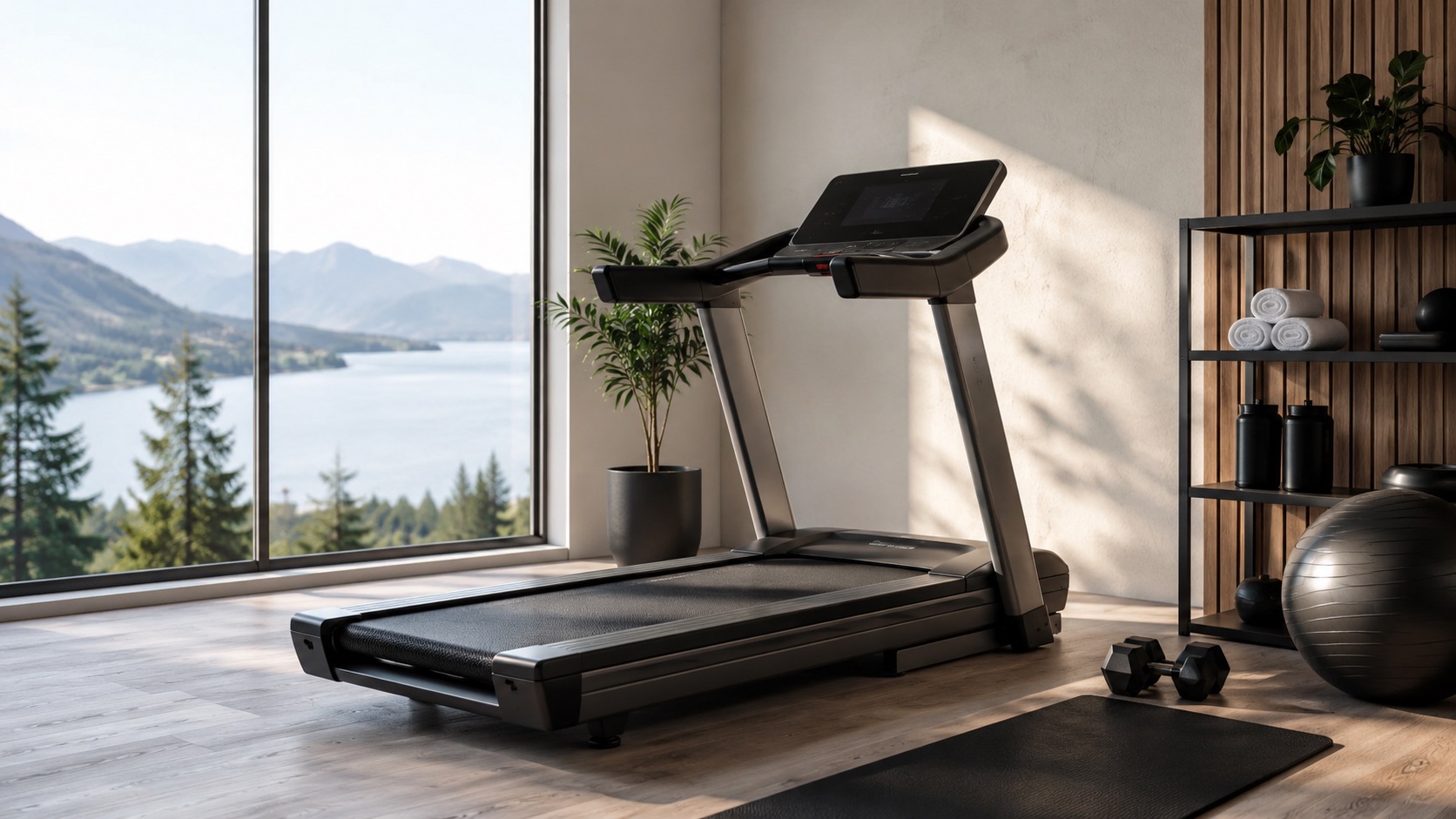
Peloton Tread vs NordicTrack vs Sole - Treadmills for Runners Compared
Dropping two grand or more on a treadmill is a big decision. You want something that can handle serious mileage, feels good underfoot, and won’t become an expensive clothes rack after six months. Three machines consistently show up in conversations among runners: the Peloton Tread, the NordicTrack Commercial 2450, and the Sole F85.
I’ve spent weeks digging into specs, user feedback, and long-term ownership costs for all three. Here’s the honest breakdown so you can pick the one that fits your running life - not just your living room.
If you’re still exploring options beyond these three, check out our broader roundup of the best treadmills for runners in 2026.
Quick Comparison Table
| Feature | Peloton Tread | NordicTrack 2450 | Sole F85 |
|---|---|---|---|
| Price | $2,995 | $2,499 | $2,200 |
| Belt Type | Slat belt | Traditional belt | Traditional belt |
| Deck Size | 20” × 59” | 22” × 60” | 22” × 60” |
| Motor | 3.0 HP | 3.6 CHP | 4.0 CHP |
| Max Speed | 12.5 mph | 12 mph | 12 mph |
| Incline | 0–12.5% | -3% to 15% | 0–15% |
| Screen | 23.8” HD | 22” HD touchscreen | 10.1” LCD |
| Monthly Cost | $44/mo (Peloton App+) | $39/mo (iFit) | $0 |
| Warranty | 5-yr frame, 1-yr parts | 10-yr frame, 2-yr parts | Lifetime frame, 3-yr parts |
Running Surface & Belt
This is where Peloton stands apart. The Tread uses a slat belt - individual rubber slats mounted on a rail system rather than a continuous looped belt. The result feels closer to running on a track. There’s a slight give without the spongy bounce of traditional cushioned decks. If you’re training for road races and want something that mimics real-world ground contact, the slat belt delivers.
The trade-off? The deck is narrower (20 inches vs. 22 inches on both competitors). Most runners won’t notice during steady-state runs, but if you’re a bigger runner or tend to drift laterally during hard intervals, that extra two inches on the NordicTrack or Sole makes a difference.
Both the NordicTrack 2450 and Sole F85 use traditional folding-belt designs with cushioning systems underneath. NordicTrack’s deck has adjustable cushioning you can toggle between a softer and firmer feel. The Sole uses their Cushion Flex Whisper Deck, which reduces joint impact by around 40% compared to outdoor running (according to Sole’s own testing).
For pure running feel, Peloton wins. For deck space and joint-friendliness, the NordicTrack and Sole edge ahead.
Motor & Speed
The Sole F85 packs the most powerful motor at 4.0 CHP (continuous horsepower). If you’re running daily, doing long tempo sessions, or you’re a heavier runner, that extra power means the belt maintains consistent speed without bogging down.
NordicTrack’s 3.6 CHP motor handles most training loads comfortably. Peloton’s 3.0 HP motor (they don’t use the CHP rating) is adequate for most runners but works harder during sustained high-speed efforts.
All three top out at 12–12.5 mph, which covers everything up to a 4:48 mile pace. Unless you’re an elite sprinter, speed won’t be the limiting factor.
Where NordicTrack gains an edge: decline training. The -3% to 15% incline range lets you simulate downhill running, which is genuinely useful for race-specific training (especially if you’re prepping for a hilly course). Peloton only goes up to 12.5% with no decline. Sole matches NordicTrack’s 15% max incline but doesn’t offer decline.
Content & Apps
This is Peloton’s bread and butter. The Peloton App+ subscription ($44/month) gives you access to thousands of instructor-led running classes - intervals, tempo runs, endurance sessions, race prep programs, and outdoor audio runs. The instructors are engaging, the music programming is solid, and the community leaderboard adds accountability. If you thrive on structured coaching and social motivation, nothing else comes close.
NordicTrack’s iFit ($39/month) takes a different approach. It offers trainer-led workouts too, but the headline feature is Google Maps-powered route running. Pick any road in the world, and iFit adjusts your incline and decline automatically to match the terrain. Training for the Boston Marathon? Run the actual course profile on your treadmill. It also integrates with structured training plans and has a growing library of studio classes.
The Sole F85 has no subscription requirement - and that’s the point. It comes with a basic 10.1” LCD screen, Bluetooth connectivity, and compatibility with apps like Zwift, Kinomap, and others via your own tablet or phone. You can also pair it with Strava, Garmin Connect, or Nike Run Club for tracking. You’re free to use whatever content ecosystem you prefer without being locked in.
Total Cost of Ownership (3 Years)
Here’s where things get real. The sticker price is just the beginning:
| Treadmill | Purchase Price | 3-Year Subscription | 3-Year Total |
|---|---|---|---|
| Peloton Tread | $2,995 | $1,584 | $4,579 |
| NordicTrack 2450 | $2,499 | $1,404 | $3,903 |
| Sole F85 | $2,200 | $0 | $2,200 |
The Sole F85 costs you $2,379 less than the Peloton over three years. That’s not nothing - it’s the price of a nice race-cation or several years of race entry fees.
Now, is Peloton’s content worth $1,584 over three years? If you use it 4–5 times a week and it keeps you motivated to actually run, absolutely. A gym membership costs more in most cities. But if you’re self-motivated and just want to press start and go, you’re paying for content you won’t use.
NordicTrack lands in the middle. The iFit subscription isn’t optional in practice - without it, you lose most of the touchscreen functionality, which is frustrating on a $2,499 machine.
Build Quality & Warranty
Sole wins the warranty game decisively: lifetime frame and motor, 3 years on deck and parts, 1 year on labor. They build tanks. The F85 is heavy (308 lbs assembled), solid, and designed to last a decade of daily use. Sole also has a strong reputation for customer service.
NordicTrack offers a 10-year frame warranty and 2 years on parts. Build quality is good but not exceptional - some users report issues with the touchscreen or WiFi connectivity over time. The machine itself holds up well mechanically.
Peloton’s warranty is the weakest: 5 years on frame, 1 year on parts and labor. The slat belt design has fewer components to wear out (no belt to replace, no deck to wax), which partially offsets the shorter warranty. Build quality is premium - the Tread looks and feels like a high-end piece of equipment.
Pros & Cons
Peloton Tread
Pros:
- Slat belt feels incredible for running
- Best-in-class instructor-led content
- Beautiful design and build quality
- Active community and leaderboard
- Quiet operation
Cons:
- Most expensive upfront and ongoing
- Narrowest deck (20”)
- No decline capability
- Weakest warranty
- Content locked behind subscription
NordicTrack Commercial 2450
Pros:
- Decline training (-3%)
- iFit route running with auto-adjust incline
- Wide 22” deck
- Strong motor for the price
- Folds for storage
Cons:
- iFit essentially required to use the screen
- Some reliability concerns with electronics
- Middling warranty
- Machine is somewhat loud at high speeds
Sole F85
Pros:
- No subscription fees - ever
- Most powerful motor (4.0 CHP)
- Best warranty in class
- Tank-like build quality
- Wide, cushioned deck
- Works with any app ecosystem
Cons:
- Basic screen (10.1” LCD)
- No built-in instructor content
- Less visually appealing design
- Heavier and harder to move
- No decline capability
Which One Should You Buy?
Choose the Peloton Tread if you love coached workouts, thrive on community motivation, and want the best running surface in this price range. You’re paying a premium, but the experience is unmatched for runners who need external structure.
Choose the NordicTrack 2450 if you want the most features for your money - decline training, route simulation, and a solid all-around package. It’s the Swiss Army knife of the three.
Choose the Sole F85 if you’re a self-directed runner who just wants a reliable machine that’ll last forever without nickel-and-diming you with subscriptions. Pair it with your favorite running apps and gear and you’re set.
See how we compare products for our full research methodology.
FAQ
Is the Peloton Tread worth it without the subscription?
Not really. Without Peloton App+, you get a “Just Run” mode with basic speed and incline controls - but you lose access to all classes, programs, and metrics tracking. The hardware is excellent, but at $2,995, you’re paying for the ecosystem. If you don’t plan to subscribe, the Sole F85 gives you better value.
Can I use Zwift or other apps on the NordicTrack 2450?
It’s complicated. The NordicTrack screen is locked to iFit and doesn’t natively support third-party apps. However, you can connect the treadmill to Zwift via Bluetooth on a separate device (tablet, phone, or laptop). It works, but you lose the auto-incline adjustment that makes iFit special.
How loud are these treadmills?
The Peloton Tread is the quietest thanks to its slat belt design - no friction between belt and deck. The Sole F85 is reasonably quiet at moderate speeds but gets louder during sprints. The NordicTrack 2450 falls in between. None of them will wake up a sleeping baby in the next room during an easy jog, but all produce noticeable sound during hard efforts.
Do any of these treadmills fold?
The NordicTrack 2450 and Sole F85 both fold vertically for storage. The Peloton Tread does not fold - it’s a permanent fixture wherever you put it. If space is tight, this could be a deciding factor.
Which treadmill is best for marathon training?
All three can handle marathon training volume. The Sole F85’s powerful motor and bulletproof build make it ideal for high-mileage weeks without worrying about wear. The NordicTrack’s decline feature helps with race-specific course simulation. The Peloton offers structured marathon training programs with coaching. Your choice depends on whether you value durability (Sole), terrain simulation (NordicTrack), or guided programming (Peloton).
No affiliate links in this post. These are my honest assessments based on specs, user reviews, and hands-on testing. For more on building your running setup, browse our treadmill roundup or our guide to running gear for beginners.