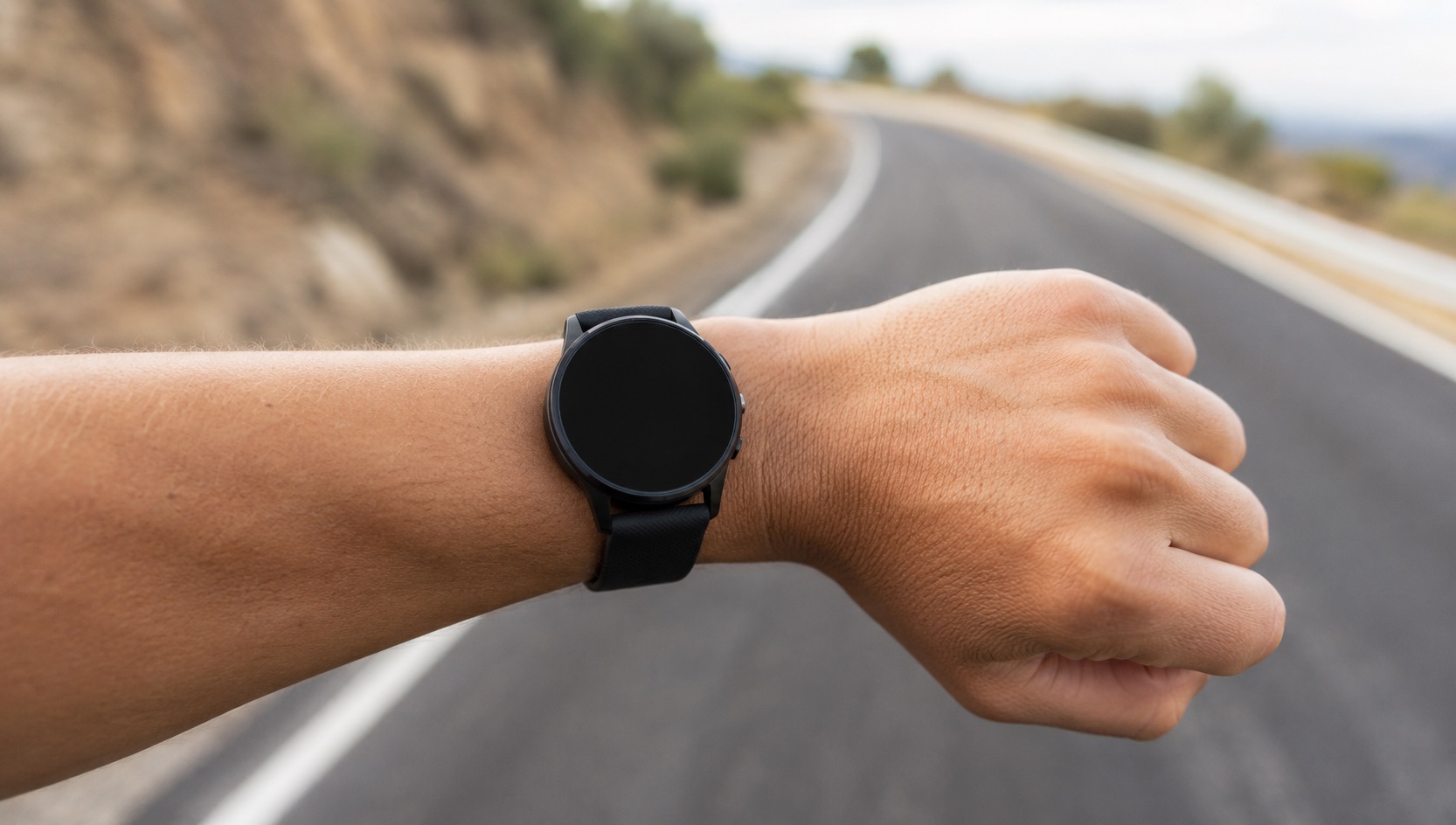
Garmin Cirqa for Women: Natural Cycles Integration Explained
The Garmin Cirqa has a feature no other health tracker offers: direct integration with Natural Cycles, the FDA-cleared birth control app. That’s a big deal if you’re a woman who runs and cares about how your cycle affects training. But it’s also a feature that comes with caveats nobody seems to be talking about.
Let me break down what this actually means, how the skin temperature tracking works, and whether the Cirqa is genuinely the best choice for female runners or if Garmin just made a really smart marketing move.
For a full breakdown of the Cirqa’s specs and running features, check out our Garmin Cirqa review for runners.
What Is Natural Cycles?
Natural Cycles is a birth control app that uses basal body temperature (BBT) to predict fertile and non-fertile days. It was the first app to get FDA clearance as a method of contraception, which basically means the FDA reviewed the clinical data and said “yes, this works as advertised when used correctly.”
The app works by tracking small shifts in your body temperature. After you ovulate, progesterone causes your resting temperature to rise slightly, about 0.2 to 0.5 degrees Fahrenheit. Natural Cycles algorithms detect this shift and can identify when ovulation has happened and when your fertile window is.
Traditionally, you’d take your temperature every morning with a basal thermometer before getting out of bed. The problem? That’s annoying. You have to do it at the same time every day, before you move, talk, or drink anything. Miss a reading and your data gets fuzzy.
This is where the Cirqa comes in.
How the Cirqa Works with Natural Cycles
The Garmin Cirqa tracks skin temperature continuously while you sleep. That overnight temperature data gets sent to Garmin Connect, and then it can sync directly with Natural Cycles. No morning thermometer routine. No forgetting. The band just does its thing on your wrist all night.
Here’s the important detail: the Cirqa measures skin temperature, not core body temperature. These are not the same thing. Skin temperature is influenced by room temperature, how many blankets you have, whether you slept with your arm outside the covers, and a bunch of other factors. Core body temperature (what a traditional basal thermometer measures) is more stable and more directly tied to hormonal changes.
Natural Cycles has accounted for this. Their algorithm adjusts for the differences between skin and core temperature readings, and they’ve run clinical validation studies on wearable-based temperature data. But it’s worth understanding that the data flowing into Natural Cycles from your Cirqa is not identical to what you’d get from a oral thermometer reading at 6:30 AM every morning.
The other thing to know: Natural Cycles requires a separate subscription. The Cirqa itself costs $199.99 with no subscription for Garmin features, but Natural Cycles runs about $99 per year (or $12.99 monthly). So the total cost of using the Cirqa as your Natural Cycles thermometer is roughly $300 for the first year.
What the Cirqa Gives You for Cycle Tracking (Without Natural Cycles)
Even if you never touch Natural Cycles, the Cirqa has solid menstrual cycle tracking built into Garmin Connect. Here’s what you get:
Period predictions that get smarter over time. The more cycles you log, the better Garmin gets at predicting when your next period will start. After three to four cycles of consistent logging, most women find the predictions are within a day or two.
Ovulation estimates based on your logged cycle data. These are estimates, not confirmed ovulation. Without temperature data, Garmin is just using calendar math based on your average cycle length. If your cycles are irregular, take these with a grain of salt.
Cycle-aware training insights. Garmin Connect shows how your current cycle phase might affect things like recovery, energy, and performance. During the luteal phase (after ovulation, before your period), many women feel more fatigued and recover slower. During the follicular phase (first half of your cycle), you might feel stronger and more responsive to hard training.
Pregnancy tracking if that’s where you’re at. The Cirqa and Garmin Connect support pregnancy mode with week-by-week updates and adjusted health metrics.
All of this syncs to Garmin Connect, so your cycle data lives alongside your training data, sleep data, and recovery metrics. That integration is genuinely useful for runners who want to understand how their cycle affects their training.
Why Skin Temperature Matters for Female Runners
Here’s where things get interesting from a running perspective.
Your menstrual cycle affects pretty much every system that matters for running performance. Core temperature regulation, hydration status, ligament laxity, carbohydrate metabolism, recovery rate, perceived exertion, all of these shift across your cycle. Elite training programs have been adjusting training load based on cycle phases for years.
Skin temperature tracking gives you one more data point to understand where you are in your cycle beyond just calendar predictions. If your temperature hasn’t risen yet, you probably haven’t ovulated yet, even if the calendar says you should have. For women with irregular cycles, this is actually valuable information.
During the luteal phase, your body runs hotter. You sweat more, your heart rate is slightly elevated for the same effort, and your body preferentially burns fat over carbohydrates. That last point matters for long runs. Many women notice they “bonk” more easily in the luteal phase because their body isn’t pulling from glycogen stores as efficiently.
Knowing this, you can adjust. Fuel earlier on long runs during your luteal phase. Expect your easy pace to feel harder. Don’t panic if your heart rate is five beats higher than usual at the same pace. The data from skin temperature tracking helps you understand why things feel different, and that alone can be worth it.
Honest Assessment: Who Should Care About This
Let me be direct about who the Natural Cycles integration actually benefits and who should probably ignore it.
This is genuinely useful if:
- You’re already using Natural Cycles or considering it for birth control and you hate the morning thermometer routine
- You have irregular cycles and want better data than calendar-based predictions
- You’re actively trying to conceive and want ovulation confirmation
- You want your cycle data and training data in one ecosystem
This probably doesn’t matter if:
- You use hormonal birth control (the pill, IUD, implant) since these suppress natural temperature shifts
- You’re not interested in Natural Cycles specifically and just want basic period tracking
- You already have a reliable cycle and don’t need temperature confirmation
- You’re comparing the Cirqa to a screen-based Garmin watch and would rather have a display
The Natural Cycles integration is a differentiator, not a universal benefit. It’s the first time a major wearable brand has done this, and it opens the door for more reproductive health features down the road. But right now, in 2026, it’s most relevant to a specific group of women.
Cirqa vs Other Options for Women
If cycle tracking is your priority, here’s how the Cirqa stacks up against alternatives:
Garmin Cirqa ($199.99 + Natural Cycles subscription): Best integration if you want temperature-based cycle tracking tied to a wearable. The screen-free design means you’ll forget you’re wearing it, which is good for consistent overnight temperature data.
Apple Watch Series 11 ($399+): Also tracks wrist temperature and has built-in cycle tracking with retrospective ovulation estimates. No Natural Cycles integration, but Apple’s own cycle tracking is solid. The downside is price and battery life (daily charging versus Garmin’s claim of up to 10 days for the Cirqa).
Oura Ring Gen 3 ($299 + $5.99/month): Tracks skin temperature and has period prediction features. Works well for sleep tracking but has no running-specific features. If you’re a runner who also wants training readiness and VO2 max, the Oura doesn’t compete.
Garmin Forerunner 265S ($400): If you want a full Garmin watch with a screen, the 265S has the same menstrual cycle tracking as the Cirqa minus the Natural Cycles integration. You get a display for your runs, maps, and more detailed training metrics. For most female runners, this is actually the better Garmin pick unless you specifically want the Natural Cycles feature.
For a detailed look at how the Cirqa compares to other wearables, see our best health trackers for runners roundup.
The Battery Life Advantage
One thing that gets overlooked in the Natural Cycles conversation is battery life. Garmin claims the Cirqa lasts up to 10 days on a charge. Actual life varies with use. That matters for cycle tracking because temperature data is collected during sleep; a depleted tracker can leave a gap in overnight data.
The Apple Watch generally needs much more frequent charging, while Oura rates its own battery separately by model. Garmin’s up-to-10-day Cirqa claim provides a useful buffer on paper, but it should not be read as a guaranteed measured result.
For Natural Cycles specifically, consistent overnight temperature data is the whole game. Gaps in the data reduce the algorithm’s accuracy. The Cirqa’s battery life is a genuine advantage here.
The Subscription Question
Let’s talk about money because it matters.
The Cirqa is $199.99. No subscription for Garmin features. That includes all the cycle tracking, period predictions, and training metrics.
Natural Cycles is $99 per year or $12.99 per month on top of that. So year one costs you about $300 total. Year two is $99 for the Natural Cycles renewal.
Compare that to Whoop at $30 per month ($360/year) with no cycle-specific temperature features, or Oura at $5.99 per month ($72/year) on top of the $299 ring. The Cirqa plus Natural Cycles is competitive on price, especially since you keep full access to Garmin’s ecosystem without ongoing fees.
If you don’t care about Natural Cycles, the Cirqa is just $200 with no strings attached. That’s hard to beat.
What I’d Like to See Next
The Natural Cycles integration is a solid first step, but I hope Garmin goes further. A few things I’d want:
Cycle-synced training recommendations. If Garmin knows I’m in my luteal phase and my HRV is suppressed, it would be great if Training Readiness factored that in automatically. Right now, you can see cycle data and training data side by side, but they don’t talk to each other in a meaningful way.
Better ovulation detection. The current ovulation estimates in Garmin Connect are calendar-based without temperature data. If the Cirqa is collecting skin temperature every night, Garmin should be able to provide its own temperature-based ovulation estimates without requiring Natural Cycles. Maybe that’s coming.
Cycle phase widgets on other devices. If I’m wearing my Forerunner 570 for a race, I’d still like my cycle phase visible somewhere. Right now it feels like the Cirqa is being siloed as the “women’s device” when this data should flow across the whole Garmin ecosystem.
The Verdict
The Garmin Cirqa with Natural Cycles integration is a genuinely new feature in the wearable space. Nobody else has it. Whether that matters to you depends entirely on whether you want temperature-based cycle tracking as part of your reproductive health management.
For female runners specifically, the Cirqa is a strong choice if you want a lightweight, screen-free tracker that handles the basics (heart rate, sleep, training readiness) and also takes your cycle seriously. The 10-day battery, the no-subscription model for Garmin features, and the Natural Cycles integration make it a unique package.
But if you want a screen for your runs, or if Natural Cycles isn’t something you’re interested in, a Garmin Forerunner 265S or Venu 3S might serve you better. The Cirqa’s differentiator is the Natural Cycles integration. Without that, it’s a solid but not essential addition to Garmin’s lineup.
The real win here is that Garmin is building reproductive health features into a device that’s designed for athletes. That’s a combination that didn’t exist before, and I hope it pushes other brands to take women’s health tracking seriously in fitness wearables.
If you’re deciding between the Cirqa and other screen-free options, our Garmin Cirqa vs Whoop 4.0 comparison breaks down the differences. And if you want help deciding which Garmin is right for you, the Garmin Cirqa buyers guide for runners has you covered.
FAQ
Does the Garmin Cirqa replace a basal thermometer for Natural Cycles?
It can, yes. The Cirqa tracks skin temperature overnight and that data syncs to Natural Cycles. The app’s algorithm is designed to work with wearable temperature data. That said, skin temperature and core body temperature are different measurements. Natural Cycles has validated their algorithm for wearable use, but if you’re using Natural Cycles for birth control, follow their guidelines carefully and use the red/green day system as directed.
Do I need a Natural Cycles subscription to use cycle tracking on the Cirqa?
No. The Cirqa includes basic menstrual cycle tracking through Garmin Connect at no extra cost. You can log periods, get predictions, and see cycle phase information without paying for Natural Cycles. The Natural Cycles subscription is only needed if you want temperature-based fertility predictions or birth control features.
How accurate is skin temperature tracking on the Cirqa for cycle prediction?
For identifying general cycle phases, it’s reliable after a few cycles of data. For pinpointing ovulation specifically, skin temperature data from a wrist wearable is less precise than oral basal body temperature readings. The trend data is useful, but the absolute accuracy depends on factors like room temperature and how you sleep. Natural Cycles accounts for this in their algorithm.
Can I use the Cirqa for pregnancy tracking?
Yes. Garmin Connect has a pregnancy tracking mode that works on the Cirqa. You can log your pregnancy, get week-by-week updates, and see how your health metrics change during pregnancy. This is separate from Natural Cycles and doesn’t require any additional subscription.
Is the Garmin Cirqa better than the Apple Watch for women’s health tracking?
It depends on what you need. The Apple Watch has built-in cycle tracking with temperature-based ovulation estimates, plus all the smartwatch features. The Cirqa has Natural Cycles integration, which the Apple Watch does not, plus 10-day battery life and no subscription for Garmin features. If Natural Cycles is important to you, the Cirqa wins. If you want a full smartwatch with cycle tracking, the Apple Watch is more capable overall but costs more and needs daily charging.