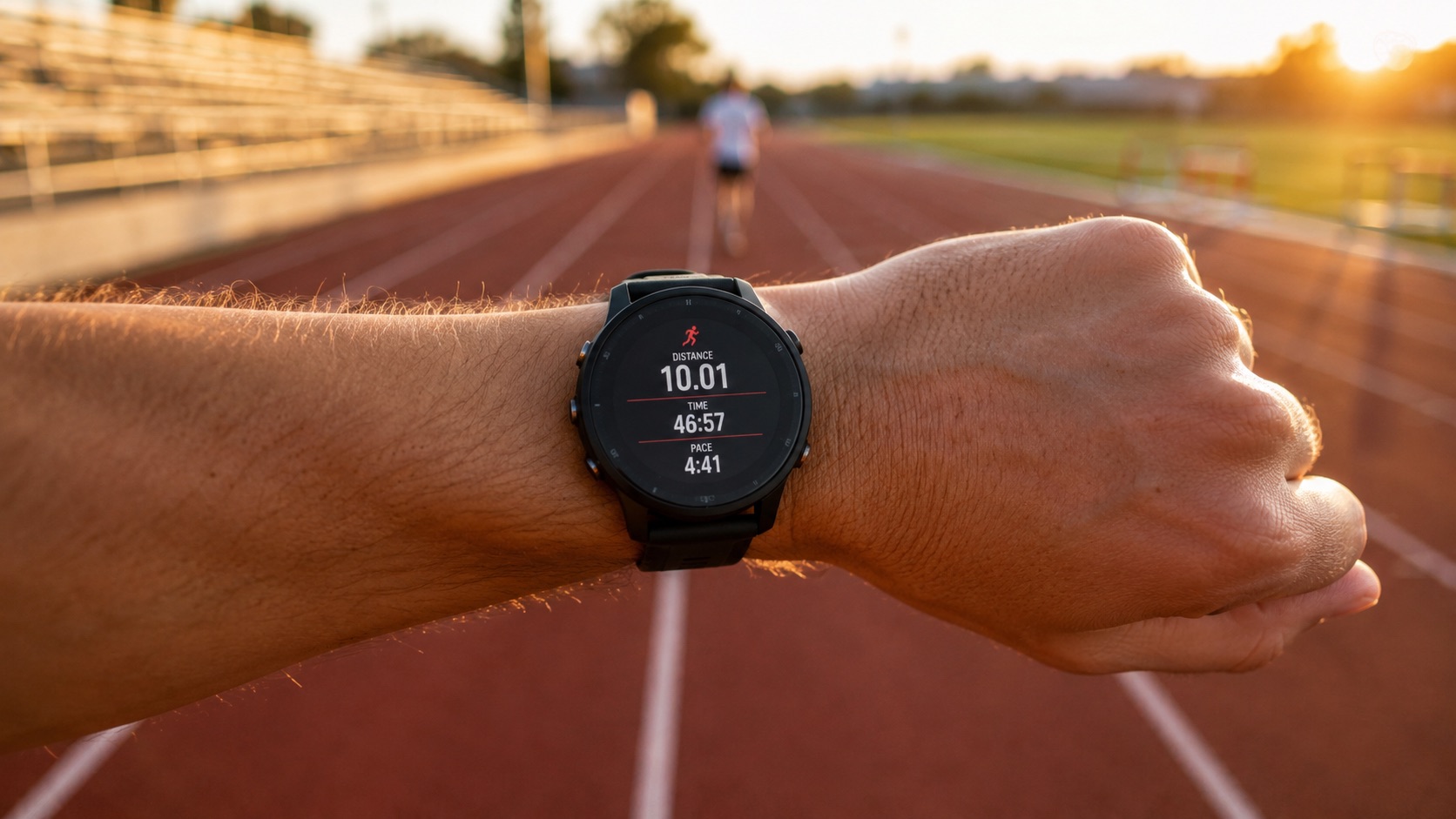
Garmin Cirqa + Your Garmin Watch: How to Use Both Without Wasting Money
You already own a Garmin Forerunner or Fenix. You spent good money on it. It tracks your runs, your intervals, your VO2 max, your training load. It’s the best running purchase you’ve made since your first pair of proper shoes.
So why is Garmin selling a $200 wristband that tracks a bunch of the same stuff?
That’s the question I kept getting asked when the Cirqa dropped. And honestly, it’s a fair question. The answer is that the Cirqa isn’t trying to replace your watch. It’s trying to fill the gaps your watch can’t fill. Specifically, the 23 hours a day you’re not running.
This research-based guide explains how Garmin intends Cirqa and a compatible Garmin watch to share roles in Garmin Connect. It is based on published product behavior, not a claimed multi-week RunnersPicks wear test.
The Problem With Wearing a Running Watch 24/7
Let’s be honest about something: wearing a Garmin Forerunner or Fenix to bed kind of sucks. The 265 is relatively slim for a GPS watch, but it’s still a chunky piece of hardware on your wrist when you’re trying to sleep. The Fenix 8 is worse. I’ve done it, and I always end up taking it off after a few nights because it digs into my wrist or wakes me up when I roll over.
That means you lose overnight heart rate, HRV, and sleep data. And those overnight metrics are exactly what Garmin uses to calculate Training Readiness, Body Battery, and recovery time. Skip the sleep data and those features become guesswork.
The Cirqa fixes this. It’s a slim, screen-free fabric band that weighs almost nothing. You wear it to bed without thinking about it. It captures all the overnight health data your watch would, if only you could tolerate wearing it.
How the Two Devices Work Together
Here’s the daily setup with both devices:
Cirqa (wears 24/7):
- Sleep tracking: stages, sleep score, overnight HRV
- All-day heart rate and stress monitoring
- Body Battery throughout the day
- Pulse Ox (blood oxygen)
- Skin temperature
- Recovery metrics
- Auto-detects 80+ activities for basic tracking
Forerunner or Fenix (wears for runs and workouts):
- GPS tracking with pace, distance, and route mapping
- Real-time workout data on your wrist
- Structured workouts and intervals
- Running dynamics (cadence, stride length, etc.)
- Race predictor and pace planning
- Music, maps, notifications (depending on model)
- Training load and performance metrics
Both devices feed data into the same Garmin Connect account. The app merges everything into one picture. Your overnight HRV from the Cirqa combines with your training load from the watch to give you an accurate Training Readiness score every morning. Your Body Battery reflects both your sleep quality and how hard you trained.
There’s no manual syncing, no duplicate data, no app juggling. You just wear the right device at the right time and the ecosystem handles the rest.
The Morning Routine
This is where the combo clicks. Here’s what a typical day looks like:
6:00 AM: You wake up. Check Garmin Connect on your phone. The Cirqa tracked your sleep overnight. You can see your sleep score, HRV trend, and Body Battery level before your feet hit the floor.
6:15 AM: Training Readiness score is waiting for you. It’s built from your Cirqa sleep data plus your recent training load from the watch. Today it says 72. That’s a green light for a solid workout.
6:30 AM: You strap on the Forerunner 265, leave the Cirqa on your other wrist, and head out the door. The watch handles everything GPS and workout related. The Cirqa keeps tracking heart rate and stress in the background.
7:15 AM: Run done. The watch syncs to Garmin Connect. Your training metrics update. The Cirqa’s all-day tracking continues.
Evening: Body Battery is at 35 after a long day. You check it and decide tomorrow should be an easy day. The Cirqa keeps tracking while you sleep, and the cycle starts over.
Which Watch Pairs Best With the Cirqa?
Honestly, any Garmin watch works. The Cirqa is ecosystem agnostic within Garmin’s lineup. But the value proposition changes depending on what you’re wearing.
Forerunner 265 ($450) + Cirqa ($200) = $650 total
This is the sweet spot for serious recreational runners. The 265 gives you everything you need for training: GPS, AMOLED screen, music storage, Training Readiness, training status, race predictor, and solid battery life. The Cirqa handles the recovery side. Together, you get a complete 24/7 health and training system for $650 with no subscription fees.
Compare that to Whoop 4.0, which costs $239 upfront plus $30/month. Over two years, Whoop costs $959 and still doesn’t have GPS, a screen, or any of the training features the Forerunner provides. The Garmin combo is cheaper and does more.
Forerunner 170 ($299) + Cirqa ($200) = $499 total
This is the budget-friendly combo. The Forerunner 170 handles GPS and basic training features at a lower price point. You lose the AMOLED screen, music storage, and some advanced metrics compared to the 265, but you still get a capable running watch. The Cirqa picks up the recovery slack. If you’re new to Garmin and not sure which watch to start with, our best Garmin watch for beginners guide breaks it down.
At $499 total, this combo is cheaper than a Forerunner 265 alone and arguably gives you better health tracking because the Cirqa captures sleep data more consistently than wearing a watch to bed.
If you’re choosing between the 170 and the 265, we have a full Forerunner 170 vs 265 comparison that breaks down what you actually get for the extra $150.
Fenix 8 ($799+) + Cirqa ($200) = $1,000+ total
The premium combo. The Fenix 8 is Garmin’s flagship with everything: multi-band GPS, topo maps, music, sapphire glass, titanium options, and every training metric Garmin makes. If you already own a Fenix, you probably don’t mind spending another $200 on the Cirqa. The real question is whether you need it.
The Fenix 8 already tracks sleep, HRV, Body Battery, and Training Readiness. If you wear it 24/7 (and the Fenix 8 is comfortable enough for that if you don’t mind the size), the Cirqa is redundant. But if you’re like me and can’t sleep with a big watch on your wrist, the Cirqa fills that gap. Your call.
Who Should Actually Buy Both?
The Cirqa plus watch combo isn’t for everyone. Here’s who benefits most:
Buy the combo if:
- You take your Garmin watch off at night and lose sleep data
- You want accurate Training Readiness scores that account for overnight recovery
- You hate the idea of wearing a bulky watch 24/7 but still want 24/7 tracking
- You want Body Battery to actually reflect your real energy levels (it needs sleep data to work properly)
- You’re training for a race and care about optimizing recovery between sessions
Skip the combo if:
- You already wear your watch 24/7 and it doesn’t bother you
- You don’t care about sleep tracking or recovery metrics
- You’re on a tight budget and the $200 is better spent on race entries or shoes
- You just run for fun and don’t look at training data beyond pace and distance
What About the Cirqa as a Standalone Device?
You can use the Cirqa without a Garmin watch. It tracks runs using your phone’s GPS (connected GPS), monitors heart rate and supplies Garmin recovery metrics. At a US MSRP of $199.99 with no subscription required for core features, it may suit a casual runner who already carries a phone. Regional price and availability vary.
But if you’re reading an article about pairing it with a Garmin watch, you probably already own the watch. And if you own the watch, the standalone Cirqa conversation is irrelevant.
The Value Question
Let’s talk money, because $200 on top of a watch you already paid for is a real ask.
The Cirqa costs $199.99. No subscription. That’s a one-time purchase. Over two years, your cost per day is about 27 cents.
Compare that to alternatives for 24/7 health tracking:
- Whoop 4.0: $239 + $30/month = $959 over two years
- Oura Ring Gen 3: $299 + $6/month = $443 over two years
- Apple Watch: $399+ but you already have a Garmin watch, so this is redundant
The Cirqa is the cheapest way to add 24/7 health tracking to your Garmin setup. It’s not even close. If you want the recovery data and you’re already in the Garmin ecosystem, the math works.
For a deeper look at how the Cirqa stacks up against other health trackers for runners specifically, check out our best health trackers for runners 2026 guide.
The Verdict
The Garmin Cirqa makes the most sense as a companion to a Garmin watch, not as a standalone device. Garmin clearly designed it that way. The whole point is to capture the health data your watch misses when you take it off, and feed that data into the same ecosystem.
If you already own a Forerunner or Fenix and you take it off at night, the Cirqa fills a real gap. Your Training Readiness scores become more accurate. Your Body Battery reflects reality. Your sleep data actually exists. All for $200 with no subscription.
If you wear your watch 24/7 without issues, skip it. You don’t need the redundancy.
But for most runners I know, the watch comes off at bedtime. And that means you’re missing 8 hours of the most important health data your Garmin can collect. The Cirqa fixes that for a reasonable price. That’s the whole pitch, and it’s a good one.
Want to dig deeper into the Cirqa’s standalone capabilities? Read our full Garmin Cirqa review for runners. Trying to decide if the Cirqa makes sense for your specific situation? Our Garmin Cirqa buyers guide for runners walks you through every scenario.
Frequently Asked Questions
Can the Garmin Cirqa fully replace my Garmin watch for running?
No. The Cirqa uses connected GPS, which means it borrows your phone’s GPS signal. You need your phone with you for run tracking, and you don’t get a screen for real-time pace data. A dedicated GPS watch like the Forerunner 265 or 170 gives you standalone GPS, wrist-based pace, structured workouts, and running dynamics. The Cirqa is a recovery companion, not a running watch replacement.
Will the Cirqa and my watch give duplicate heart rate data?
No. Garmin Connect is smart enough to merge data from multiple devices. When both the Cirqa and your watch are tracking simultaneously (like during a run), the app uses the watch’s data as the primary source and fills gaps with the Cirqa. You won’t see double entries or conflicting numbers.
Is it worth buying the Cirqa if I already wear my watch 24/7?
Probably not. If your watch doesn’t bother you at night and you’re getting consistent sleep data, the Cirqa adds very little. The main benefit is comfort. If you’re one of those people who sleeps fine with a watch on, save the $200.
Does the Cirqa work with older Garmin watches?
Yes. The Cirqa syncs with Garmin Connect, which is the same app your watch uses regardless of model. It works alongside the Forerunner 245, 255, 265, 955, 965, Fenix 6, 7, 8, Venu series, and basically any Garmin device that connects to Garmin Connect. Your data merges in the app regardless of how old your watch is.
How does this compare to just buying a Whoop instead?
The Cirqa plus a Garmin watch gives you everything Whoop offers (recovery tracking, sleep data, strain scoring) plus everything a GPS watch offers (GPS, pace, workouts, maps, music) for less money over time. Whoop has no GPS, no screen, and costs $30/month. Over two years, a Forerunner 170 plus Cirqa costs $499 total. A Whoop costs $959. The Garmin combo does more for less. See our Garmin Cirqa vs Whoop 4.0 comparison for the detailed breakdown.
FAQ
Is the Garmin Cirqa a full smartwatch?
No. It is a health-focused wearable designed for body monitoring, not notifications or apps. Pair it with a running watch for training.
Does it work with Garmin Connect?
Yes. All data syncs to Garmin Connect and integrates with your existing Garmin ecosystem.
How long does the battery last?
Garmin rates it at 7+ days depending on usage and features enabled.
Is it waterproof?
Yes, rated to 5 ATM. Safe for swimming and showering.