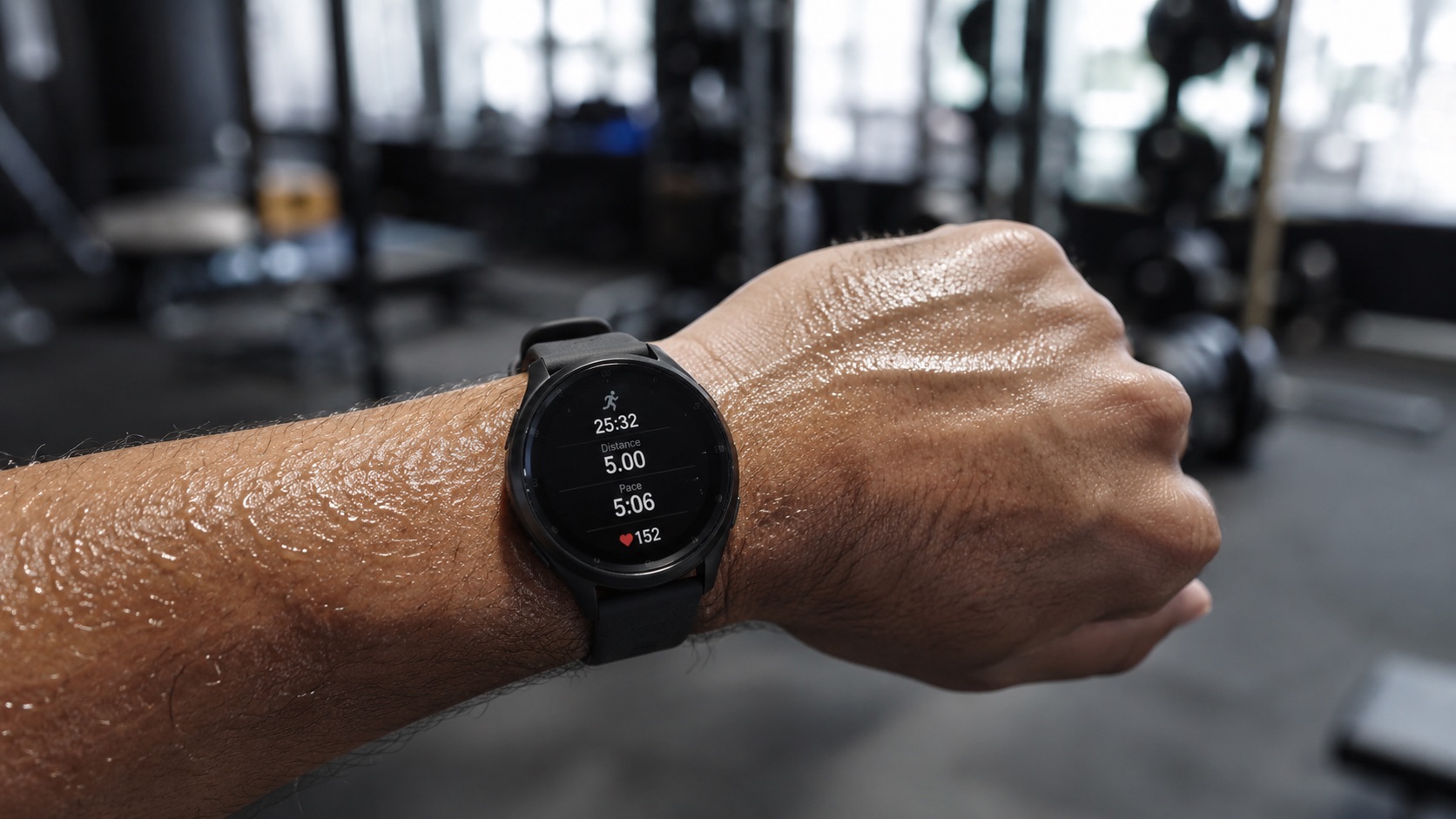
Garmin Forerunner 265 vs Polar Pacer Pro: Which Running Watch Deserves Your Wrist?
Garmin Forerunner 265 vs Polar Pacer Pro: Which Running Watch Deserves Your Wrist?
I have been wearing both of these watches on and off for months now, and I get asked about this matchup more than almost any other. It makes sense. Both sit in that mid-range sweet spot, both are aimed squarely at runners who care about training data, and both come from brands with serious heritage in the GPS watch game. But they approach the problem from very different angles.
The Garmin Forerunner 265 retails around $450. The Polar Pacer Pro comes in at roughly $300. That $150 gap is not trivial, and it does not automatically mean the Garmin is $150 better. Let me walk through what each watch actually gives you, where each one stumbles, and which one I would recommend depending on what kind of runner you are.
Spec Comparison Table
| Feature | Garmin Forerunner 265 | Polar Pacer Pro |
|---|---|---|
| Price | ~$450 | ~$300 |
| Weight | 47g | 41g |
| Display | 1.3” AMOLED (416x416) | 1.2” MIP (240x240) |
| Touchscreen | Yes | No |
| Multi-band GPS | Yes | Yes |
| Music storage | Yes (up to 500 songs) | No |
| Maps | Yes (breadcrumb + downloadable) | No (breadcrumb only) |
| Wrist-based running power | No (needs accessory) | Yes |
| Barometric altimeter | Yes | Yes |
| SpO2 sensor | Yes | No |
| Training Readiness / Load | Training Readiness + HRV Status | Training Load Pro + Orthostatic Test |
| Running dynamics | With compatible accessory | Running Index (wrist-based) |
| Battery (smartwatch) | Up to 13 days | Up to 7 days |
| Battery (GPS, multi-band) | Up to 20 hours | Up to 35 hours (low power GPS) |
| Water resistance | 5 ATM | 5 ATM |
| Storage for music apps | Spotify, Amazon, Deezer | None |
The Display: Night and Day Difference
This is the most obvious difference when you put these watches side by side. The FR 265 has a gorgeous 1.3-inch AMOLED screen. It is bright, colorful, and genuinely pleasant to look at. If you have been using older Garmin watches or any MIP display, the jump feels significant.
The Polar Pacer Pro uses a 1.2-inch MIP (memory-in-pixel) display at 240x240 resolution. It is perfectly functional. You can read it in direct sunlight, which is what matters on a run. But it looks dated compared to the FR 265. The colors are muted, the resolution is noticeably lower, and it just does not have that modern smartwatch feel.
Here is my honest take though: the AMOLED display is a luxury, not a necessity. On a run, I am glancing at my wrist for a second or two to check pace or heart rate. I do not need it to look like my phone screen. The MIP display on the Pacer Pro is totally fine for actual running use. Where the AMOLED wins is daily wear. If you want a watch that looks good at the office and on the trail, the FR 265 wins this round convincingly.
One thing to note: the AMOLED does eat more battery. Garmin has managed this well with the FR 265, but it is still a trade-off.
GPS Accuracy: Both Are Excellent
Both watches have multi-band GPS, which was a premium feature just a couple of years ago and is now basically table stakes at this price point. I have run with both through tree cover, in downtown areas with tall buildings, and on open roads.
In my experience, both are very good. The FR 265 occasionally locks on a touch faster at the start, maybe 5 to 10 seconds quicker. During runs, both track closely. I have had runs where they were within 0.02 miles of each other over a 10-mile route. Neither one is going to be the reason your GPS data looks weird.
If GPS accuracy is your primary concern, you can confidently pick either watch. Neither one will let you down. We covered this topic in depth in our Garmin vs Coros vs Apple Watch article, and the same principle applies here: the GPS chipset matters more than the brand, and both Garmin and Polar are using top-tier chipsets now.
Running Power: Polar’s Clear Advantage
This is where the Pacer Pro pulls ahead in a meaningful way. Polar built wrist-based running power directly into the Pacer Pro. No chest strap, no foot pod, no extra accessory. You just get running power data on your wrist from day one.
Garmin does not offer native wrist-based running power on the FR 265. You need to buy a compatible running dynamics pod or a chest strap that supports it, which adds $50 to $150 to the total cost. For a watch at $450, that stings.
If running power is part of your training, and it is becoming increasingly popular for good reason, the Pacer Pro offers much better value here. You get a complete running power setup for $300 instead of spending $500+ to get the same data from the Garmin ecosystem.
Polar’s Running Index is another nice feature. It estimates your VO2max and running performance based on your pace and heart rate, and it has been surprisingly accurate in my testing. Garmin has its own VO2max estimate, but Polar’s Running Index feels more useful because it also factors in how efficiently you run, not just how fast your heart beats.
Training Load and Recovery: Different Philosophies
Both watches take training load seriously, but they go about it differently.
The Garmin FR 265 has Training Readiness, which is a single score from 0 to 100 that factors in sleep quality, recovery time, HRV status, acute load, stress, and sleep history. It is a morning check-in number. You wake up, look at your Training Readiness score, and decide whether to do that interval session or go easy. It is simple, actionable, and I found it genuinely useful for preventing overtraining.
The Polar Pacer Pro uses Training Load Pro, which breaks things down into three dimensions: cardio load, perceived load, and muscular load. It also has the orthostatic test, which measures heart rate and heart rate variability while you are lying down and then standing up. This gives you a more granular picture of how your body is responding to training.
I prefer Polar’s approach if you are a data nerd who wants to understand the why behind your fatigue. If you just want a number that tells you whether to train hard today or not, Garmin’s Training Readiness is more straightforward.
We covered some of these differences in our Polar vs Garmin for runners article, and I still think that comparison holds up. Polar gives you more depth. Garmin gives you more convenience.
Music and Smart Features: Garmin Wins Decisively
The FR 265 stores up to 500 songs and supports Spotify, Amazon Music, and Deezer offline. You can pair Bluetooth headphones and run phone-free with your music. This is a massive quality-of-life feature.
The Polar Pacer Pro has no music storage. None. You need your phone if you want to listen to anything on a run. In 2026, at this price point, that is a genuine shortcoming.
Beyond music, the FR 265 has a broader app ecosystem through Garmin Connect IQ. You can download watch faces, data fields, and apps. The Pacer Pro is a much more closed system. What you get out of the box is what you get.
For daily wear, the FR 265 also has Garmin Pay for contactless payments, a SpO2 sensor for blood oxygen monitoring, and a more polished notification system. The Pacer Pro handles notifications, but the experience is not as smooth.
If you want one watch for running and daily life, the FR 265 is the better choice. If you want a dedicated running tool and you do not care about smartwatch features, the Pacer Pro’s simplicity is actually a plus.
Battery Life: Context Matters
On paper, the FR 265 gets up to 13 days in smartwatch mode and 20 hours in full GPS mode. The Pacer Pro claims 7 days in smartwatch mode but up to 35 hours in its low-power GPS mode.
Those numbers tell different stories. The Garmin lasts longer in daily use because of its more efficient power management despite the AMOLED display. But the Polar can go longer in GPS mode, especially if you use its lower-power settings.
For most runners doing 30 to 60-minute runs a few times a week, both watches will comfortably last a week or more between charges. If you are an ultra runner or you do long mountain runs, the Pacer Pro’s GPS battery advantage is real and meaningful.
The FR 265 also has an always-on display option, which shortens battery life to around 6 or 7 days in smartwatch mode. If you turn that off, you get the full 13 days. The Pacer Pro’s MIP display is always on by nature, so there is no trade-off there.
If battery life in GPS mode is critical for your use case, the Pacer Pro wins. For everyday use and typical training, both are fine.
Weight and Comfort: Small but Noticeable
The Pacer Pro weighs 41g. The FR 265 weighs 47g. That 6-gram difference does not sound like much, and honestly on a run you probably will not notice. But the Pacer Pro is one of the lightest fully-featured GPS watches you can buy, and it does feel barely there on the wrist.
Both watches are comfortable for all-day wear and sleep tracking. The FR 265 is slightly thicker, which bothered me a little when sleeping, but I got used to it. The Pacer Pro’s lower profile makes it slightly more comfortable at night.
Neither watch has a particularly premium strap out of the box. The FR 265’s silicone strap is fine. The Pacer Pro’s is also fine. You can swap either one for a third-party strap if you want something nicer.
Maps and Navigation
The FR 265 supports downloadable maps and turn-by-turn navigation. You can load a route before a run and follow it on your wrist. This is genuinely useful if you travel and run in unfamiliar places, or if you do trail races where you need to follow a course.
The Pacer Pro has breadcrumb navigation, which means you can follow a GPX route, but you only see a line on the screen. There is no map data, no street names, no turn-by-turn prompts. It works, but it is a much more basic experience.
If navigation matters to you, the FR 265 is in a completely different league. If you always run the same routes or you just do not care about navigation, this is a non-issue.
Ecosystem and App Experience
Garmin Connect is a mature, feature-rich platform. It has years of data behind it, a huge community, and deep integration with third-party platforms like Strava, TrainingPeaks, and Komoot. The Connect IQ store adds extensibility that Polar simply cannot match.
Polar’s Polar Flow is excellent for training analysis. It is cleaner and more focused on the metrics that matter for performance. But the ecosystem is smaller, there are fewer third-party integrations, and the overall app experience feels a generation behind Garmin’s.
I covered more of this ecosystem comparison in our best Garmin alternatives for runners article, where Polar features prominently. The short version: Polar makes great hardware and training algorithms, but Garmin’s ecosystem is hard to beat.
The Verdict: Who Should Buy What
The Garmin Forerunner 265 is the better all-around package. It has a better display, music storage, maps, a broader ecosystem, and more smartwatch features. If you want one watch that does everything well, running and daily life included, the FR 265 is worth the extra $150. It is the watch I recommend to friends who ask “what running watch should I get?” without any specific constraints.
The Polar Pacer Pro is the better pure running watch for the money. At $300, it gives you wrist-based running power, excellent training load analysis, a lightweight design, and better GPS battery life. If you are a focused runner who does not care about music on the watch or smartwatch features, the Pacer Pro is genuinely better value. You get more running-specific data for less money.
Here is how I would break it down:
Buy the Garmin FR 265 if:
- You want music storage on your wrist
- You value a bright, beautiful AMOLED display
- Maps and navigation matter to you
- You want a watch that doubles as a daily smartwatch
- You are already in the Garmin ecosystem
Buy the Polar Pacer Pro if:
- Running power is important to your training
- You want the lightest possible watch
- You prefer deeper training load analysis
- You do not need music storage
- You want to save $150 without sacrificing core running features
Both are genuinely good watches. You cannot go wrong with either one. But if I had to pick just one for a recreational runner who trains for half marathons and wants a watch that works for everything, I would go FR 265. If I were coaching a more serious runner who wanted the best training data per dollar, I would point them toward the Pacer Pro.
For more detailed comparisons, check out our Garmin Forerunner 170 vs 265 article if you are also considering the slightly cheaper Garmin option.
Frequently Asked Questions
Can the Polar Pacer Pro store music?
No, the Pacer Pro has no music storage. You need to carry your phone if you want to listen to music or podcasts on a run. This is one of the biggest feature gaps compared to the Garmin Forerunner 265, which stores up to 500 songs.
Does the Garmin FR 265 track running power from the wrist?
No, the FR 265 does not have native wrist-based running power. You need a compatible accessory like the HRM-Pro Plus chest strap or a running dynamics pod. The Polar Pacer Pro includes wrist-based running power out of the box.
Which watch has better battery life during GPS activities?
The Polar Pacer Pro lasts longer in GPS mode, up to 35 hours in its low-power GPS setting compared to 20 hours for the FR 265 in multi-band mode. For everyday smartwatch use, the FR 265 lasts longer at up to 13 days versus 7 days for the Pacer Pro.
Is the AMOLED display on the FR 265 worth the extra cost?
It depends on what you value. The AMOLED screen is brighter, sharper, and more pleasant to look at, especially in daily use. The MIP display on the Pacer Pro is perfectly readable on a run and actually performs better in direct sunlight. If you want a watch that looks like a modern smartwatch, the AMOLED is worth it. If you just care about reading data while running, the MIP display is fine.
Can I use the Polar Pacer Pro for navigation on trail runs?
The Pacer Pro supports breadcrumb navigation, which means you can follow a GPX route on a line. It does not have downloadable maps or turn-by-turn directions like the FR 265. For basic route following it works, but if you need real navigation with map context, the Garmin is a much better choice.
Related Articles
- Garmin Forerunner 170 vs 265
- Garmin Forerunner 165 vs 265
- Garmin Venu 4 vs Forerunner 265
- Reddit Favorite Running Watches 2026
- COROS vs Garmin 2026
FAQ
Which Garmin watch is best for beginners?
The Forerunner 165 or 170 are the best entry points. Both have GPS, heart rate, and enough training features for new runners without overwhelming complexity.
Is it worth upgrading from a Forerunner 265 to a 965?
Only if you need maps, longer battery life, or a larger display. For pure running, the 265 does 90% of what the 965 does at a lower price.
How accurate is Garmin GPS?
Modern Garmin watches with multi-band GPS are accurate to within 1-2% on distance. The Forerunner 265 and above all support multi-band.
Do I need a running watch or is my phone enough?
A dedicated watch gives better GPS accuracy, heart rate tracking, and no phone-in-pocket bounce. Worth it if you run 3+ times per week.