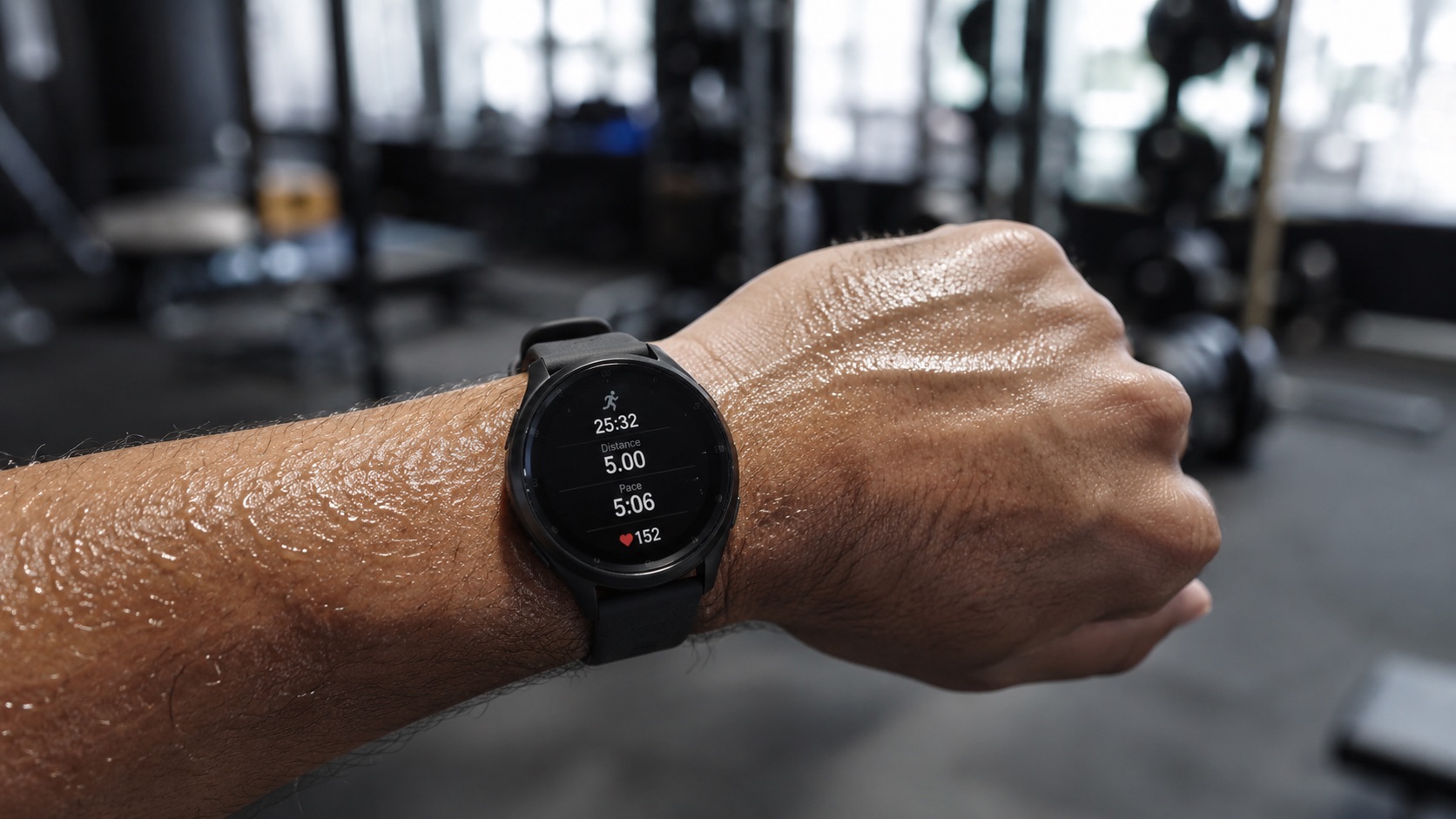
Garmin vs COROS vs Apple Watch - Which Brand for Runners?
Garmin vs COROS vs Apple Watch - Which Brand for Runners?
Choosing a running watch in 2026 isn’t just about picking a model - it’s about picking an ecosystem. Garmin, COROS, and Apple each bring a different philosophy to the table. Garmin is the established giant with decades of sports tech heritage. COROS is the scrappy upstart that’s won over ultrarunners and budget-conscious athletes. Apple is the tech behemoth that keeps making its Watch more capable for runners with each generation.
So which brand actually deserves your wrist space? Let’s break it down across every category that matters to runners - from training metrics to battery life to the apps you’ll use every day.
If you’re looking for specific model recommendations, check out our best GPS running watches for 2026 roundup.
Brand Comparison at a Glance
| Feature | Garmin | COROS | Apple Watch |
|---|---|---|---|
| Price Range | $250–$1,100 | $200–$600 | $399–$799 |
| Battery Life (GPS) | 20–60+ hours | 25–90+ hours | 8–18 hours |
| Training Metrics Depth | Excellent (deepest) | Very Good | Good (improving) |
| Ecosystem/App Quality | Excellent (Garmin Connect) | Good (COROS app) | Excellent (Apple Health/Fitness+) |
| Phone Compatibility | Android & iOS | Android & iOS | iOS only |
| Music | Spotify, Amazon, Deezer (offline) | No streaming, MP3 only | Apple Music, Spotify (streaming) |
| Maps | Full topo maps (select models) | Breadcrumb & topo maps | Apple Maps (turn-by-turn) |
Training Features
Garmin
Garmin’s training ecosystem is the most comprehensive in the running watch space - full stop. You get Training Readiness scores, Training Status, Training Load (across aerobic and anaerobic), Race Predictor, suggested daily workouts, HRV Status, Body Battery, and VO2 max estimates that are genuinely useful over time.
The Garmin Connect app offers structured workout creation, training plans, and deep analytics. For runners who love data, there’s nothing quite like scrolling through your weekly load trends and recovery metrics on a lazy Sunday morning.
Higher-end models like the Forerunner 965 and Enduro 3 add running power, stamina tracking, and real-time performance condition alerts mid-run.
COROS
COROS has rapidly closed the gap. Their EvoLab platform delivers Training Load, Fatigue, Base Fitness, Race Predictor, and structured training plans. The Training Hub feature is a standout - coaches can push workouts directly to athletes’ watches for free, which is a feature Garmin charges for through its coaching platform.
Running power is built into every COROS watch (no chest strap needed), and their recovery metrics are solid. Where COROS falls slightly short is in the granularity of some metrics - Garmin’s Training Readiness algorithm, for example, pulls in more data sources and feels more refined.
For a direct model comparison, see our Garmin Forerunner 265 vs COROS PACE 4 head-to-head.
Apple Watch
Apple has made massive strides with watchOS in recent years. You now get Training Load, running power (wrist-based), cadence, vertical oscillation, stride length, and ground contact time - all without extra accessories.
The Custom Workouts feature supports structured intervals, and the Fitness app on iPhone provides decent trend analysis. However, Apple still lacks the depth of recovery metrics, Training Readiness scores, and the predictive analytics that Garmin and COROS offer. It’s good for tracking - it’s less good at coaching.
Pros & Cons - Training Features:
| Brand | Pros | Cons |
|---|---|---|
| Garmin | Deepest metrics, best recovery insights, daily suggested workouts | Can feel overwhelming for casual runners |
| COROS | Free coaching platform, built-in running power, clean interface | Slightly less refined recovery algorithms |
| Apple | Native running dynamics, Apple Health integration, improving fast | No Training Readiness, limited predictive features |
Battery Life
This is where the three brands diverge dramatically.
Garmin
Garmin offers solid battery life across its lineup. The Forerunner 265 gives you around 20 hours in GPS mode, while the Enduro 3 and Fenix 8 Solar push past 40–60+ hours. In smartwatch mode, you’re looking at 1–4 weeks depending on the model.
For most runners doing daily training, even mid-range Garmin watches will last a full week between charges.
COROS
Battery life is COROS’s calling card. COROS rates the VERTIX 2S for up to 118 hours of full GPS and the PACE 4 for up to 41 hours in All Systems (High) GPS mode. Both are manufacturer maximums tied to their stated modes, not controlled cross-brand test results.
If you run ultras or simply hate charging your watch, COROS wins this category decisively.
Apple Watch
Here’s Apple’s Achilles heel for runners. Even the Ultra 2 maxes out around 17–18 hours in workout mode, and the standard Series models tap out around 8–10 hours. That’s fine for marathon distance (barely), but it’s a non-starter for ultrarunners or multi-day adventures.
You’ll also need to charge daily with regular use, which is a friction point compared to the “set it and forget it” experience with Garmin or COROS.
GPS Accuracy
All three brands use multi-band (dual-frequency) GNSS in their mid-range and premium models, which has dramatically leveled the playing field.
Garmin
Garmin’s SatIQ technology intelligently switches between single-band and multi-band GPS to balance accuracy and battery life. In testing, Garmin consistently delivers excellent track accuracy in open conditions and performs well in urban canyons and tree cover - though multi-band mode does eat more battery.
COROS
COROS watches with dual-frequency GPS are among the most accurate we’ve tested, particularly in challenging terrain. Their all-satellite tracking mode grabs signals from every available constellation simultaneously. For trail runners in deep valleys or dense forests, COROS is hard to beat.
Apple Watch
Apple Watch uses precision dual-frequency GPS on the Ultra models and the latest Series. Accuracy is excellent in urban environments - arguably the best for city runners thanks to Apple’s chip engineering. In backcountry conditions, it’s on par with the competition but doesn’t pull ahead.
Verdict: GPS accuracy is essentially a tie across all three brands in 2026, assuming you’re buying a model with multi-band support. The differences are marginal and often come down to specific environments rather than a clear brand winner.
Smart Features
Garmin
Garmin watches are smart-ish. You get notifications, Garmin Pay (NFC payments), music storage, weather, and basic app support through Connect IQ. But the interface is functional rather than elegant, and third-party app support is limited compared to a true smartwatch.
Music support includes offline playlists from Spotify, Amazon Music, and Deezer on select models - a genuine convenience for running without your phone.
COROS
COROS is the most stripped-down of the three when it comes to smart features. You get notifications, alarms, and a find-my-phone function. That’s about it. No NFC payments, no streaming music, no app store. You can load MP3 files for offline listening, but there’s no Spotify integration.
For many runners, this minimalism is actually a feature - fewer distractions, better battery life, a cleaner experience.
Apple Watch
This is Apple’s domain. Full notification management, Apple Pay, the App Store, Siri, cellular connectivity (on GPS + Cellular models), turn-by-turn navigation, and seamless music streaming. It’s a genuine smartwatch that also happens to be a solid running watch.
If you want one device for running and daily life as a smart wearable, Apple Watch is in a league of its own.
Value & Ecosystem
Garmin
Garmin’s ecosystem is mature and expansive. Garmin Connect is one of the best training platforms available, with deep integrations to Strava, TrainingPeaks, and dozens of other services. The Connect IQ store adds watch faces, data fields, and apps.
The price range is wide: you can get into a capable running watch (Forerunner 165) for around $250, or go all-in with the Enduro 3 at $900+. There’s something for every budget. Check our best GPS watch under $300 guide if you’re looking at the entry-level tier.
Garmin Pros:
- Deepest training ecosystem
- Widest model range for all budgets
- Works with both Android and iOS
- Offline music from streaming services
- Topo maps on mid-range and up
Garmin Cons:
- Premium models are expensive
- Software can feel cluttered
- Connect IQ apps are hit-or-miss quality
- Some features locked to higher-end models
COROS
COROS is the value champion. You get excellent hardware, outstanding battery life, and solid training metrics at prices that consistently undercut Garmin by $50–$150 for comparable feature sets. Their firmware update policy is generous - existing watches get meaningful new features for years.
The COROS app is clean and functional, though it lacks the depth of Garmin Connect and has fewer third-party integrations. The Training Hub coaching platform is a genuine differentiator for coached athletes.
COROS Pros:
- Best battery life in the industry
- Aggressive pricing / best value
- Free coaching platform (Training Hub)
- Generous firmware updates
- Simple, focused running experience
COROS Cons:
- Limited smart features
- No music streaming integration
- Smaller third-party app ecosystem
- Fewer model options at the high end
Apple Watch
Apple Watch lives within Apple’s walled garden - and if you’re already in that garden, it’s beautiful. Apple Health aggregates data from every source. Fitness+ offers guided workouts. The integration with iPhone, AirPods, and Mac is seamless.
The downside? It only works with iPhone. Battery life limits its usefulness for longer events. And while running features have improved dramatically, the watch is still a generalist trying to be a specialist.
Apple Watch Pros:
- Best smartwatch features by far
- Seamless Apple ecosystem integration
- Excellent build quality and display
- Cellular option for phone-free runs
- Running metrics catching up fast
Apple Watch Cons:
- iOS only - no Android support
- Worst battery life of the three
- Most expensive for running-specific value
- Still lacks advanced recovery/readiness metrics
- Have to charge daily
The Verdicts
Best for serious runners who want the deepest training insights: Garmin. The Training Readiness, recovery metrics, and Garmin Connect analytics are unmatched for data-driven training.
Best value for runners: COROS. You get 90% of Garmin’s training capability at 60–70% of the price, with better battery life thrown in.
Best for iPhone users who want a smartwatch that runs: Apple Watch Ultra 2. If you value smart features alongside running and don’t need 20+ hour battery, it’s an excellent daily companion.
Best for ultrarunners: COROS. The battery life alone makes this an easy call. Running 50–100 miles without worrying about your watch dying is priceless.
Related reading: Best Garmin Watch for Beginners 2026
See how we compare products for our full research methodology.
FAQ
Can I use Apple Watch with an Android phone?
No. Apple Watch requires an iPhone for setup and syncing. If you’re on Android, your choices are Garmin or COROS (or other brands like Polar or Suunto).
Is COROS as accurate as Garmin for running metrics?
For GPS accuracy and basic metrics (pace, distance, heart rate), yes - COROS is on par with Garmin. For advanced training analytics and recovery insights, Garmin still has a slight edge in depth and refinement, but COROS is competitive and improving with each firmware update.
Which brand has the best heart rate monitor?
All three use optical wrist-based heart rate sensors, and accuracy varies more by fit and skin tone than by brand. For serious training, a chest strap (like the Garmin HRM-Pro Plus or COROS HR Monitor) paired with any of these watches will give you the most reliable data.
Do I need maps on a running watch?
For road runners - probably not. For trail runners exploring new routes, topographic maps are genuinely useful for navigation. Garmin offers the most detailed mapping experience, COROS provides solid breadcrumb and topo navigation, and Apple Watch gives you Apple Maps with turn-by-turn directions (best for urban navigation).
How long do these watches last before needing replacement?
Hardware-wise, all three brands build durable products that last 3–5+ years with normal use. Software support varies: Garmin provides firmware updates for 2–3 years, COROS is known for supporting older models longer, and Apple typically provides watchOS updates for 4–5 years.
Still undecided? Start with what matters most to you: if it’s training depth, go Garmin. If it’s value and battery, go COROS. If it’s your iPhone lifestyle, go Apple. There’s no wrong answer - only the right watch for your running life.