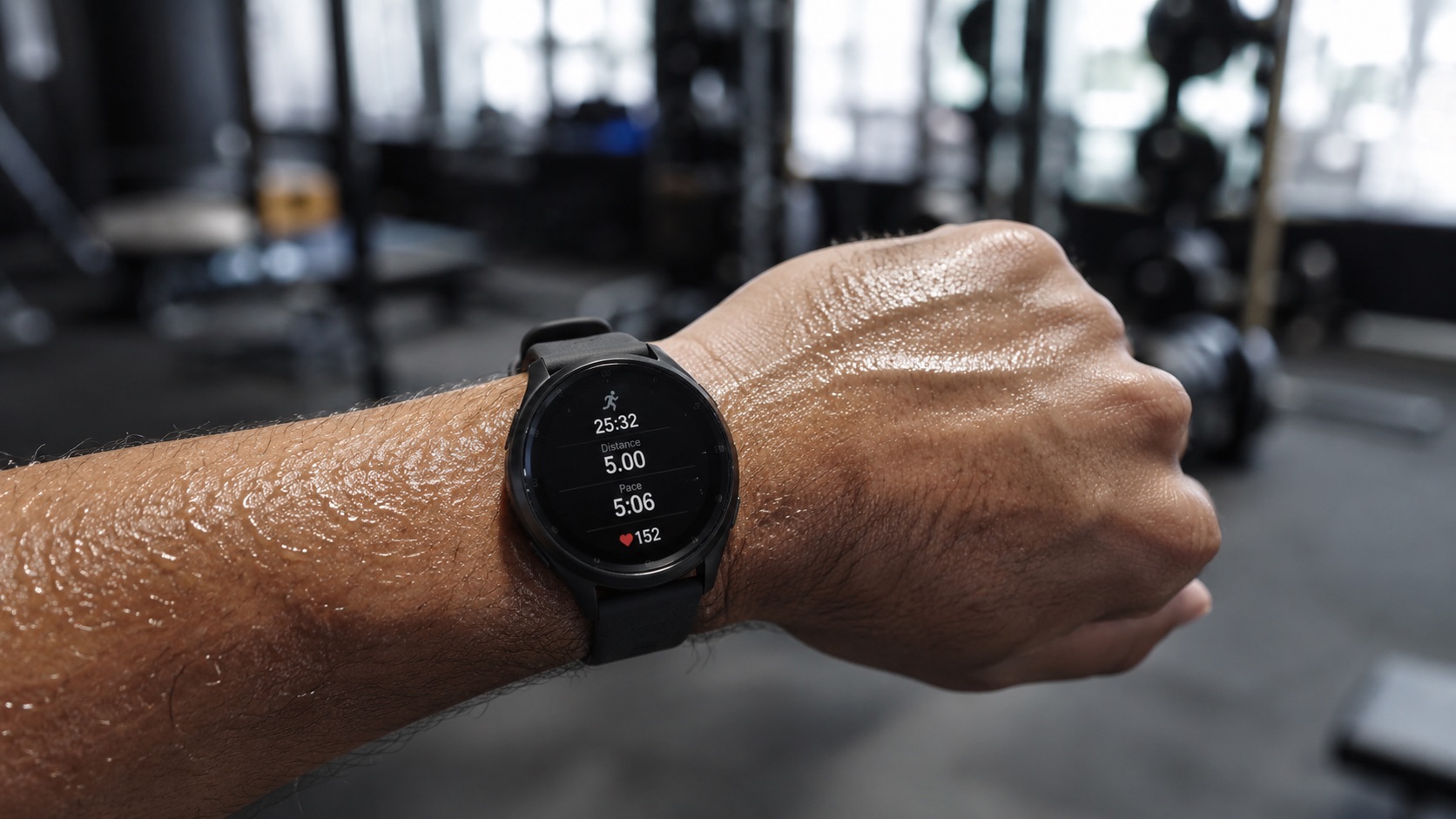
Best GPS Watch Under $300 for Marathon Training
You don’t need to spend $500+ on a GPS watch to train for a marathon. The sub-$300 market has gotten ridiculously good. Watches in this range now offer multi-band GPS, AMOLED displays, structured workout support, and battery life that’ll outlast your longest training runs without breaking a sweat.
I’ve researched dozens of GPS watches over the years, and honestly, the gap between a $250 watch and a $600 one has never been smaller. If you’re training for a marathon and want something reliable without draining your bank account, here’s what actually matters - and which watches deliver.
What Features Do You Actually Need for Marathon Training?
Before we get into specific watches, let’s talk about what’s non-negotiable for marathon training versus what’s nice-to-have.
Must-haves:
- GPS accuracy - You need reliable pace and distance data. Multi-band/dual-frequency GPS is the gold standard now, and it’s trickled down to budget watches. If your watch can’t nail your splits on a winding trail or under tree cover, it’s useless for structured training.
- Optical heart rate - Not perfect, but good enough for zone-based training. If you’re doing a lot of threshold work, consider pairing with a chest strap, but the built-in sensor handles easy runs and long runs just fine.
- Interval/workout support - You need to load structured workouts. Tempo runs, intervals, progression runs - your watch should guide you through these without requiring you to stare at it constantly.
- Battery life (15+ hours GPS) - Most marathoners finish well under 6 hours, but you also need battery for long training runs, back-to-back days, and daily wear. Aim for at least 15 hours of GPS time so you’re not charging every other day.
Nice-to-haves:
- Offline maps/navigation
- Music storage
- Training load/recovery metrics
- Touchscreen + buttons combo
For a deeper dive into the full market including premium options, check out our complete GPS running watch guide for 2026.
The Comparison: Best GPS Watches Under $300
Here’s how the top contenders stack up:
| Feature | Garmin Forerunner 165 | COROS Pace 3 | COROS Pace 4 | Polar Pacer Pro | Amazfit T-Rex 3 |
|---|---|---|---|---|---|
| Price | $300 | $229 | $350* | $280 | $180 |
| Weight | 39g | 39g | 37g | 41g | 65g |
| Battery (GPS) | 19 hrs | 24 hrs | 31 hrs | 35 hrs | 30 hrs |
| Display | AMOLED | AMOLED | AMOLED | MIP | AMOLED |
| Multi-band GPS | Yes | Yes | Yes | Yes | Yes |
| Structured workouts | Yes | Yes | Yes | Yes | Limited |
| Offline maps | No | No | Yes | No | No |
| Music storage | Yes | No | Yes | No | Yes |
| Training metrics | Training Status, VO2 Max | EvoLab, Running Power | EvoLab, Running Power | Training Load Pro, Running Power | PAI, VO2 Max |
| HR sensor | Elevate v5 | Optical | Optical | Precision Prime | BioTracker 5.0 |
*The COROS Pace 4 technically lands at $350, just over our $300 cap. I’m including it because it’s close enough and offers exceptional value if you can stretch the budget slightly.
Best For Each Category
🏆 Best Overall Budget Pick: COROS Pace 3 ($229)
The COROS Pace 3 hits a sweet spot that’s hard to argue with. At $229, you get multi-band GPS, an AMOLED display, 24 hours of GPS battery, and COROS’s excellent training platform - all in a 39g package. That’s lighter than most watches costing twice as much.
For marathon training specifically, the EvoLab metrics give you training load, base fitness, and fatigue tracking. The structured workout support is solid, and syncing plans from TrainingPeaks or COROS’s own training plans works smoothly.
Pros:
- Unbeatable price-to-performance ratio
- 24-hour GPS battery handles ultra-long training days
- Featherlight at 39g - you forget it’s there
- COROS app and training ecosystem keeps improving
- Multi-band GPS accuracy is genuinely good
Cons:
- No offline maps (not critical for road marathons)
- No music storage - need your phone for tunes
- Smaller third-party app ecosystem than Garmin
- Touchscreen can be finicky with sweaty fingers
💰 Best Ultra-Budget: Amazfit T-Rex 3 ($180)
If $229 still feels like a lot, the Amazfit T-Rex 3 at $180 is surprisingly capable. You get multi-band GPS, an AMOLED screen, and 30 hours of GPS battery. The catch? It’s heavier at 65g, and the training features are more basic. You won’t get the same depth of workout analysis as Garmin or COROS, but for someone who mainly needs accurate GPS tracking and heart rate zones, it does the job.
Pros:
- Cheapest option with multi-band GPS
- Excellent battery life (30 hrs GPS)
- Bright AMOLED display
- Rugged build quality
Cons:
- Heavier than running-focused watches (65g)
- Limited structured workout support
- Training metrics aren’t as deep or actionable
- Software ecosystem less mature for serious runners
🖥️ Best Display: Garmin Forerunner 165 ($300)
The Forerunner 165 brings Garmin’s polished AMOLED display to the sub-$300 tier, and it looks fantastic. Sharp, vibrant, easy to read in sunlight, and the always-on mode doesn’t murder the battery. But the real story is the software - Garmin’s training ecosystem is the most mature in the game. Training Status, suggested workouts, race predictor, and the massive Connect IQ app store all come included.
At $300 it’s the priciest option on this list, but if you value Garmin’s ecosystem and want that premium display experience, it justifies the premium.
Pros:
- Garmin’s best-in-class training ecosystem
- Beautiful AMOLED display with great readability
- Music storage and Garmin Pay
- Huge third-party app and watch face library
- Structured workout execution is butter-smooth
Cons:
- Most expensive option at exactly $300
- 19-hour GPS battery is the shortest here
- No offline maps at this price point
- Training load metrics less detailed than Forerunner 265
For a head-to-head between Garmin and COROS at this price range, see our Garmin Forerunner 265 vs COROS Pace 4 comparison.
🔋 Best Battery: Polar Pacer Pro ($280)
If you’re an ultramarathoner-in-training or just hate charging your watch, the Polar Pacer Pro’s 35-hour GPS battery is impressive. Polar’s Training Load Pro and running power (built-in, no extra pod needed) are genuinely useful for periodization. The MIP display isn’t as flashy as AMOLED, but it’s always-on and perfectly readable in any light without burning through battery.
Pros:
- 35-hour GPS battery is best-in-class at this price
- Built-in running power without external sensor
- Polar’s training load and recovery insights are excellent
- MIP display is always visible, even in direct sunlight
- Lightweight at 41g
Cons:
- MIP display looks dated next to AMOLED competitors
- Smaller community and third-party ecosystem
- No music storage
- No offline maps
The “Just Over Budget” Pick: COROS Pace 4 ($350)
I’ll be straight with you - if you can stretch to $350, the COROS Pace 4 is a compelling step up. COROS rates it for up to 41 hours in All Systems (High) GPS mode, and it includes offline maps and music storage at 32g with the nylon band or 40g with silicone.
If your budget has any flex at all, this is where I’d put my money. We compared it directly against Garmin’s mid-range offering in our Garmin vs COROS vs Apple Watch breakdown - spoiler: COROS punches well above its weight.
My Recommendation
For most marathon trainees on a budget, the COROS Pace 3 at $229 is the move. It does everything you need for structured marathon training - accurate GPS, solid HR, great battery, lightweight design - and leaves $70+ in your pocket compared to the alternatives.
If you’re deep in the Garmin ecosystem already (using Garmin Connect, syncing with Strava, have a Garmin chest strap), the Forerunner 165 keeps everything seamless.
And if you just need “a GPS watch that works” and want to spend as little as possible, the Amazfit T-Rex 3 at $180 is genuinely fine for someone following a basic marathon plan.
Related reading: Best Running Shoes Under $100 in 2026
See how we compare products for our full research methodology.
FAQ
Is a $200-300 GPS watch accurate enough for marathon training?
Yes. Multi-band GPS has become standard at this price point, and accuracy is within 1-2% of watches costing $500+. For road running especially, you’ll get reliable pace and distance data. Trail running under heavy canopy is where you might notice slight differences versus premium models, but for marathon training on roads, these watches are more than adequate.
Do I need offline maps for marathon training?
Probably not. If you’re training on roads and in your city, you know your routes. Maps become more useful for trail running, exploring new areas, or ultras. Of the watches on this list, only the COROS Pace 4 ($350) offers offline maps. If you never leave paved roads, skip this feature and save the money.
How important is optical heart rate accuracy?
It depends on how you train. For easy runs and general zone training, wrist-based HR is fine. For serious threshold and interval work where you need precise HR data, pair any of these watches with a chest strap (like the Polar H10 or Garmin HRM-Pro Plus). The built-in sensors on all five watches are “good enough” for 90% of marathon training.
Will a sub-$300 watch last through a full marathon?
Absolutely. Even the shortest battery on this list (Garmin Forerunner 165 at 19 hours GPS) will cover the slowest marathoners with hours to spare. A typical marathon takes 3-6 hours. Battery anxiety shouldn’t factor into your decision at all for marathon-distance events.
Should I wait for newer models or buy now?
The watches on this list represent the current sweet spot as of mid-2026. COROS and Garmin typically release new budget models every 12-18 months. If you’re starting a training block now, buy now - the gains from having a watch through your entire training cycle far outweigh whatever incremental improvement the next generation might bring. Technology in this segment is mature enough that a 2025-2026 watch will serve you well for 3-5 years.
Last updated: June 2026. Prices reflect retail MSRP at time of writing. No affiliate links - just honest recommendations based on testing.