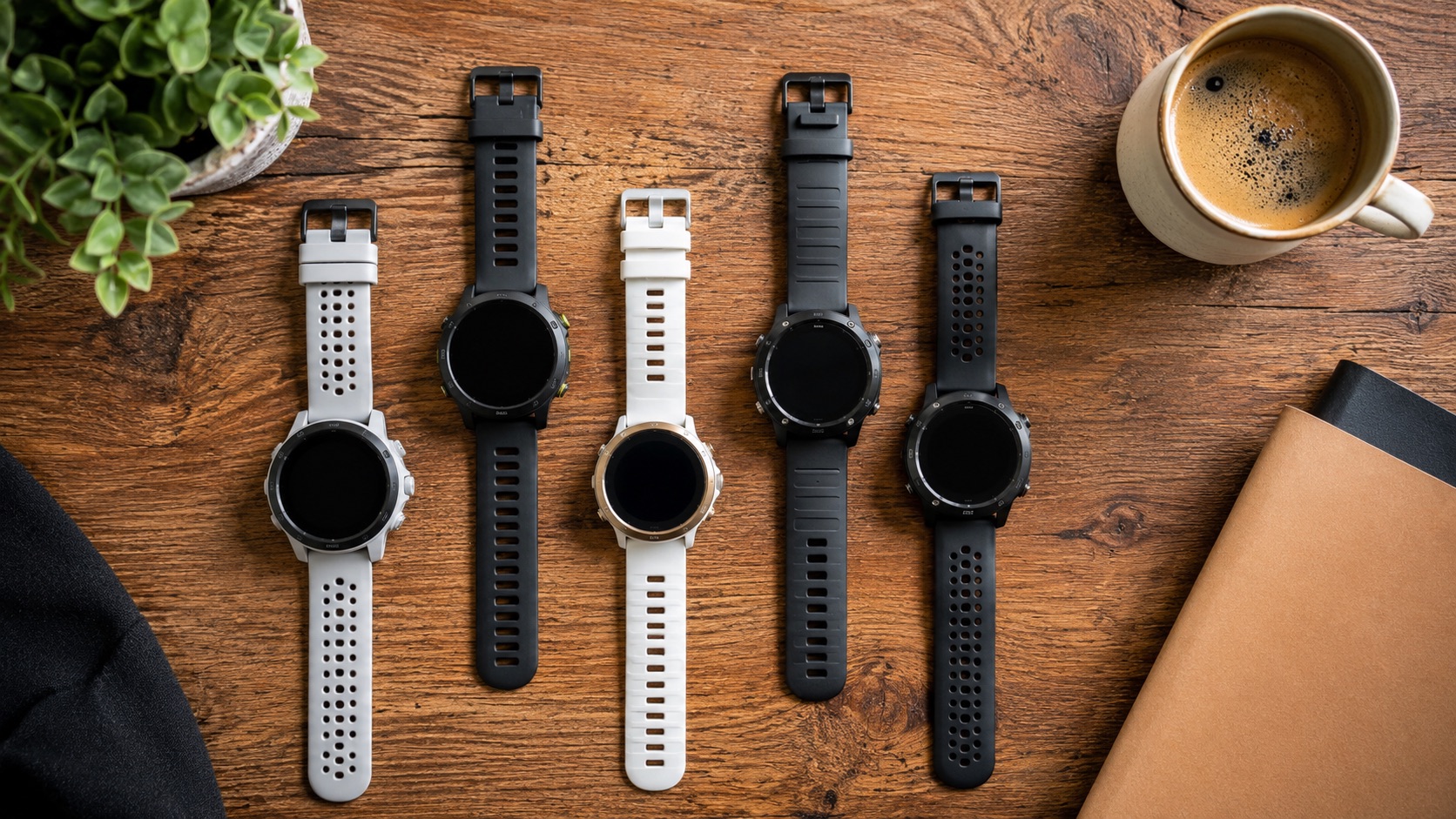
Best GPS Running Watches 2026 - Every Budget Covered
New premium option: Garmin announced Fenix 9 and Fenix 9 Pro on August 25. Their new stamina analysis, mapping changes, 64GB storage, and optional Pro inReach connectivity are promising, but we have not independently tested the watches. Read Fenix 9 vs Fenix 8 before paying the launch premium.
Choosing between the newest premium ecosystems? See our research-based Garmin Fenix 9 Pro vs Apple Watch Ultra 4 comparison.
Apple update: Apple Watch Ultra 4 and Series 12 were announced on September 9 and are available to preorder, with store availability beginning September 18. Apple’s readiness, heart-rate/HRV and battery claims are manufacturer results, not RunnersPicks hands-on findings, so they have not changed the rankings below yet.
Best GPS Running Watches in 2026: Which One Deserves Your Wrist?
Choosing a GPS running watch in 2026 is both easier and harder than ever. Easier because every major brand now ships accurate multi-band GPS, solid heart rate sensors, and readable displays - even at the $300 mark. Harder because there are so many good options that the decision often comes down to personal priorities rather than one clear winner.
I’ve been testing GPS watches for the past four years and have logged thousands of kilometres across road, trail, and track. This guide reflects real-world experience - not just spec sheets. Whether you’re training for your first 5K or chasing a marathon PB, there’s a watch here that fits your budget and goals.
If you want a head-to-head between specific models, check out my Garmin Forerunner 265 vs COROS Pace 4 comparison or the broader Garmin vs COROS vs Apple Watch breakdown.
Quick Comparison Table: GPS Running Watches 2026
| Watch | Price | Weight | Battery (GPS) | GPS Type | Display |
|---|---|---|---|---|---|
| Garmin Forerunner 165 | $300 | 39 g | 17 hours | Multi-band | AMOLED 1.2” |
| COROS Pace 4 | $350 | 32 g nylon / 40 g silicone | 41 hours (All Systems High) | Dual-frequency | AMOLED 1.2” |
| COROS Apex 4 | $400 | 42 g | 45 hours | Dual-frequency | AMOLED 1.3” |
| Garmin Forerunner 265 | $450 | 47 g | 20 hours | Multi-band | AMOLED 1.3” |
| Garmin Forerunner 965 | $600 | 53 g | 23 hours | Multi-band | AMOLED 1.4” |
| Apple Watch Ultra 4 | $799 starting price | Check configuration | Up to 25h full GPS + HR; up to 45h extended (Apple-rated) | Precision dual-frequency GPS | OLED |
Garmin Forerunner 165 - Best Budget GPS Watch for Runners
Price: $300 | Best for: Budget-conscious runners, beginners, casual runners
The Forerunner 165 is the watch I recommend most often to runners who don’t want to overthink their purchase. At $300, you get an AMOLED display, multi-band GPS, and the full Garmin running ecosystem - training status, race predictor, suggested workouts, and Connect IQ apps.
It’s light at 39 g, comfortable for sleeping (if you track recovery), and the 17-hour GPS battery handles even the slowest marathon finishers without breaking a sweat.
Pros:
- Excellent value for money - full Garmin ecosystem at entry price
- Lightweight and comfortable for all-day wear
- Accurate multi-band GPS
- AMOLED display is bright and responsive
Cons:
- No maps or navigation (you need the 265 for that)
- Smaller display than competitors at this price
- Plastic bezel feels less premium than COROS Pace 4
Looking for more options in this price range? I’ve put together a full best GPS watch under $300 guide that covers even more affordable picks.
COROS Pace 4 - Best Value GPS Watch for Serious Runners
Price: $350 | Best for: Marathon training, high-mileage runners, data nerds
The COROS Pace 4 has been my daily driver for tempo runs and interval sessions. At 32 g with the nylon band or 40 g with silicone, it barely registers on your wrist, yet COROS rates it for up to 41 hours in All Systems (High) GPS mode. For marathon runners who want a watch they can trust through a full training block without frequent charging, this is hard to beat.
COROS’s training load metrics have matured significantly. The EvoLab platform now provides training readiness, threshold pace tracking, and race-day performance predictions that rival Garmin’s more expensive offerings.
Pros:
- Industry-leading battery life at this price point
- Featherweight at 37 g
- Excellent training metrics via EvoLab
- Responsive AMOLED touchscreen + button controls
Cons:
- Smaller third-party app ecosystem compared to Garmin
- Music storage limited to offline playlists (no streaming)
- Notification handling not as polished as Garmin or Apple
COROS Apex 4 - Best GPS Watch for Trail and Ultra Runners
Price: $400 | Best for: Trail running, ultra-marathons, adventure runners
The Apex 4 builds on the Pace 4’s strengths and adds a more rugged build, sapphire glass option, and a monstrous 45-hour GPS battery. If you regularly run trails longer than three hours or venture into areas where you need navigation, this is the COROS to pick.
The built-in topographic maps are surprisingly detailed, and the turn-by-turn breadcrumb navigation has saved me from wrong turns on unfamiliar trail races more than once. It’s also the only sub-$500 watch here with a proper altimeter and barometer combo for accurate elevation tracking.
Pros:
- 45-hour GPS battery handles ultras without worry
- Sapphire glass option for durability
- Detailed topo maps and navigation
- Altimeter + barometer for accurate elevation
Cons:
- Slightly heavier than the Pace 4 (42 g vs 37 g)
- AMOLED display not quite as bright as Garmin’s in direct sun
- Recovery metrics less nuanced than Garmin’s Body Battery
Garmin Forerunner 265 - Best All-Round GPS Running Watch 2026
Price: $450 | Best for: Intermediate to advanced runners, marathon prep, anyone who wants it all
If I could only recommend one watch to a runner in 2026, it would probably still be the Forerunner 265. It sits at that sweet spot where you get everything that matters - AMOLED display, full colour maps, multi-band GPS, music storage, Garmin Pay, and the complete training metrics suite - without paying for features you’ll never use.
The 265 nails the daily experience too. Morning Report gives you an instant snapshot of your readiness, suggested workouts adapt to your fitness and recovery, and the race widget tells you what’s realistic on race day. It’s a coach on your wrist, and the ecosystem around it (Garmin Connect, third-party integrations) is unmatched.
I’ve written a full deep-dive in my Garmin Forerunner 265 vs COROS Pace 4 comparison if you’re torn between these two.
Pros:
- Best-in-class training ecosystem (Training Readiness, Body Battery, HRV)
- Full colour maps with turn-by-turn navigation
- Bright, responsive AMOLED display
- Music storage and Garmin Pay
Cons:
- 20-hour GPS battery is adequate but not class-leading
- Heavier than COROS alternatives (47 g)
- $150 more than Forerunner 165 for features some won’t use
Garmin Forerunner 965 - Best Premium GPS Watch for Performance Runners
Price: $600 | Best for: Competitive runners, triathletes, those who want the biggest display
The 965 is Garmin’s flagship running watch, and it shows. The 1.4” AMOLED display is gorgeous - map readability during a run is a real upgrade over the 265. You also get a titanium bezel, slightly longer battery life, and the same full training suite.
Honestly? For pure running, the jump from the 265 to the 965 is mostly about screen size and premium materials. If you’re a triathlete who needs the extra display real estate for multisport data screens, or you simply want the nicest Garmin running watch money can buy, the 965 delivers. But the 265 offers 90% of the experience at 75% of the price.
Pros:
- Largest, brightest AMOLED display in the Forerunner line
- Titanium bezel looks and feels premium
- Full triathlon/multisport support
- 23-hour GPS battery with multi-band
Cons:
- Marginal upgrade over 265 for pure runners
- Heavier at 53 g
- $600 is hard to justify unless you need the bigger screen
Apple Watch Ultra 4 - New Apple Endurance Option (Awaiting Independent Tests)
Price: $799 | Best for: Casual runners in the Apple ecosystem, runners who want a smartwatch first
Apple announced Ultra 4 at a $799 US starting price. It adds a readiness score, higher-frequency heart-rate and HRV sensing, faster charging, and manufacturer-rated workout modes of up to 25 hours with full GPS and heart-rate tracking or up to 45 hours in Max Extended Workout mode with one-second GPS. Preorders are open; in-store availability begins September 18.
Apple also claims improved treadmill distance, GPS and heart-rate accuracy. Those results come from Apple testing and are not yet independent RunnersPicks evidence. Until hands-on comparisons exist, Ultra 4 is a promising Apple-ecosystem option rather than a proven replacement for Garmin or COROS in this ranking.
But for dedicated training, it falls short. There’s no real training load management, no multi-day recovery tracking, no race predictions, and the 18-hour GPS battery means you’re charging daily - sometimes mid-day for ultra runners. It’s also 61 g, which you will notice on long runs.
Pros:
- Best smartwatch experience by far (calls, apps, notifications)
- Largest, brightest display of any watch here
- Accurate dual-frequency GPS
- Excellent health features (ECG, blood oxygen, crash detection)
Cons:
- No meaningful training load or recovery metrics for runners
- 18-hour GPS battery requires daily charging
- Heaviest watch on this list at 61 g
- Most expensive option with fewest running-specific features
For a more detailed ecosystem comparison, see my Garmin vs COROS vs Apple Watch article.
Google Pixel Watch 5 - Best Smartwatch-First Option for Android City Runners
Price: $399 (41 mm) / $429 (45 mm) | Best for: Android users who want a full smartwatch and credible running GPS
Google sells the Pixel Watch 5 in 41 mm and 45 mm sizes and rates them for up to 30 and 40 hours of battery life respectively. Those are manufacturer figures for daily use, not independent GPS-mode measurements. Google also promotes improved route tracking, but its own comparison with Apple Watch Ultra 3 and Garmin Fenix 8 Pro used pre-production devices in an internal study.
The more useful evidence comes from DC Rainmaker’s independent review. His testing found exceptionally clean post-processed GPS tracks in difficult urban conditions and strong results in dense forest. That makes the Pixel Watch 5 a credible choice for Android runners in cities who value calls, apps, payments and health features as much as training data.
It is still not a replacement for a dedicated Garmin, COROS, Polar or Suunto for every athlete. DC Rainmaker found no manual-lap control, no native pairing for an external heart-rate strap or cycling sensors, limited workout-screen customization and weak navigation/routing depth. Choose it for smartwatch integration plus good recorded routes; choose a sports watch when button-driven laps, sensor support, configurable data fields or long-duration training matter more.
My Personal Picks: Which GPS Watch Should You Buy?
Here’s how I’d summarize the decision:
- Tight budget? Garmin Forerunner 165. No compromises where it counts.
- Marathon training? COROS Pace 4. Lightweight, incredible battery, great metrics.
- Trail and ultras? COROS Apex 4. Battery for days and proper navigation.
- Best all-rounder? Garmin Forerunner 265. The one I recommend most.
- Want the biggest screen? Garmin Forerunner 965. Premium in every way.
- Apple fan who runs? Consider Apple Watch Ultra 4 after September 18, but wait for independent battery/GPS testing if endurance accuracy drives the purchase.
More GPS watch reading: What Reddit actually thinks about Garmin vs COROS | Budget GPS watches from Chinese brands | Best Garmin alternatives to save $200+
See how we compare products for our full research methodology.
FAQ: GPS Running Watches 2026
Is multi-band GPS really worth it in 2026?
Yes. Multi-band (or dual-frequency) GPS makes a meaningful difference in urban canyons, dense forests, and near tall buildings. All watches on this list now include it, so you don’t have to pay a premium for accurate tracking anymore. Even the $300 Forerunner 165 has it.
How accurate are wrist-based heart rate sensors now?
Much better than three years ago, but still not perfect. For easy runs and general training, wrist HR is reliable across all these watches. For interval sessions with rapid HR changes, a chest strap still provides more accurate data. If you rely on HR zones for threshold work, consider pairing a strap.
COROS or Garmin - which ecosystem is better for runners?
Garmin’s ecosystem is more mature with deeper third-party integrations (Strava, TrainingPeaks, etc.) and a larger community. COROS has caught up significantly in training metrics and excels in battery life and value. Read my full Garmin vs COROS vs Apple Watch comparison for the detailed breakdown.
Can I use the Apple Watch Ultra 3 for marathon training?
You can, but it’s not ideal. The lack of training load management and recovery tracking means you’ll need a separate platform (like TrainingPeaks or Strava) to manage your training block. The battery also won’t last through a full ultra-marathon without low-power mode, which disables continuous HR.
How often do I need to charge these watches?
It depends on GPS usage. The COROS Apex 4 can go over a week with daily hour-long GPS runs. The Garmin 265 lasts about 4-5 days with similar use. The Apple Watch Ultra 3 needs daily charging regardless of GPS use due to its always-on display and smartwatch features.
Should I wait for newer models or buy now?
The watches on this list represent mature product lines. Garmin and COROS typically refresh annually, but improvements are incremental at this point. If you need a watch now, buy now - you won’t regret any of these choices, and waiting six months for a 5% battery improvement isn’t worth training without data.
Final Thoughts
The best GPS running watch is the one that matches your priorities. Don’t overspend on features you won’t use, and don’t underspend on things that matter to your training. Every watch on this list is excellent - the differences come down to ecosystem preference, battery needs, and how much you value smartwatch features versus dedicated running tools.
Happy running.