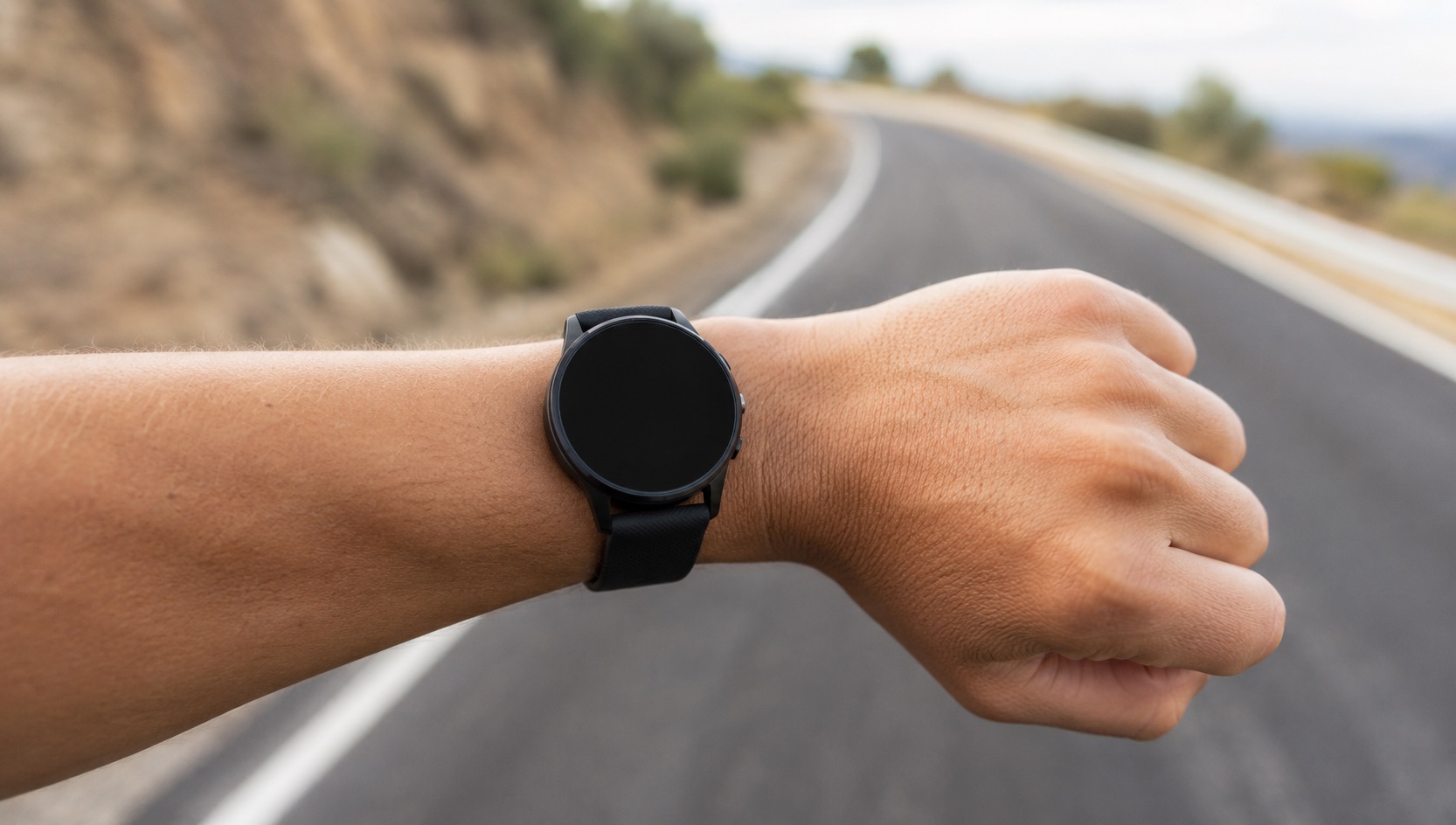
Amazfit Bip 6 and Active 2: Budget GPS Watches Just Got Better
Amazfit just dropped the Bip 6 at $79 with dual-band GPS, a 1.97” AMOLED display, and 14-day battery life. That combination of specs at that price makes the Apple Watch SE and Garmin Forerunner 165 look expensive for what they offer.
The Amazfit Bip 6: $79 for Dual-Band GPS
The headline spec is dual-band GPS (L1+L5) in a $79 watch. Two years ago, dual-band GPS was a premium feature found in $400+ watches. Now Amazfit is putting it in a watch that costs less than a single pair of running socks from some brands.
Dual-band GPS matters because it dramatically improves accuracy in urban environments with tall buildings, under tree cover, and in mountainous terrain. Single-band GPS bounces signals off buildings and gives you tracks that zigzag across streets. Dual-band corrects this by receiving on two frequencies simultaneously.
The rest of the Bip 6 spec sheet reads like a $200 watch from 2024:
- 1.97” AMOLED display (bright, colorful, great outdoor visibility)
- 14-day battery life (with typical usage, less with always-on GPS)
- 46mm case size
- Bluetooth calling directly from the watch
- AI-powered features for health insights
- 140+ workout modes including running, cycling, swimming
- 5 ATM water resistance (swimproof)
- Free offline maps
- 4GB internal storage for music
Tom’s Guide ran a direct comparison between the Bip 6 and the Apple Watch SE 3 ($249) and came away impressed with how much Amazfit delivers for $170 less. The Apple Watch wins on app ecosystem and integration with iPhone, but for pure running features and battery life, the Bip 6 is arguably better.
For our broader take on budget GPS watches, check our best GPS watch under $200 guide.
The Amazfit Active 2
The Active 2 slots above the Bip 6 in Amazfit’s lineup, targeting runners and fitness enthusiasts who want a slightly more premium build without spending Garmin money.
Key specs for the Active 2:
- 1.5” AMOLED display
- 4GB storage for podcasts and music (no phone needed for audio on runs)
- Free offline maps
- Sapphire glass on the Square version (scratch-resistant)
- Stainless steel construction
The Active 2 is positioned as the watch for runners who want onboard music, better build quality, and a slightly more refined design. If you run with earbuds and hate carrying your phone, the 4GB storage for podcasts is a genuine selling point. Load up a few episodes before your long run and leave the phone at home.
The Square version with sapphire glass is particularly interesting. Sapphire is what Garmin puts on their $700+ Fenix and Epix watches. Getting it in a sub-$200 Amazfit means you won’t scratch the face even after years of trail running, gym use, and general daily wear.
Comparison Table: Budget GPS Watch Showdown
| Feature | Amazfit Bip 6 | Apple Watch SE 3 | Garmin Forerunner 165 |
|---|---|---|---|
| Price | $79 | $249 | $299 |
| Display | 1.97” AMOLED | 1.78” OLED | 1.2” AMOLED |
| Battery Life | 14 days | 18 hours | 11 days |
| GPS | Dual-band (L1+L5) | Single-band (L1) | Dual-band (L1+L5) |
| Music Storage | 4GB | 32GB | Yes (Garmin Connect IQ) |
| Water Resistance | 5 ATM | 50m (WR50) | 5 ATM |
| Offline Maps | Yes (free) | Yes (Apple Maps) | Yes (Garmin) |
| Workout Modes | 140+ | Multiple | 30+ |
| Smart Features | Bluetooth calls, AI | Full smartwatch | Garmin Connect |
| Build | Plastic/aluminum | Aluminum | Fiber-reinforced polymer |
The Bip 6 wins on price, battery life, display size, and GPS type. The Apple Watch SE wins on ecosystem, apps, and overall smartwatch functionality. The Garmin FR165 wins on training metrics, running-specific features, and brand trust in the running community.
For a deeper dive into how Amazfit competes with COROS on the budget end, see our budget GPS watches from Chinese brands comparison.
GPS Accuracy: Can a $79 Watch Compete?
Dual-band GPS at this price is the real story. But does Amazfit’s implementation actually deliver accurate tracks? Based on early reviews and Amazfit’s track record with recent models, the GPS hardware is solid. The chipset they’re using (likely a newer Airoha AG3335M or similar) is the same family of chips used in watches costing 3-4x more.
Where cheap watches historically failed on GPS wasn’t the chip itself but the antenna design and firmware processing. A tiny antenna in a small case with aggressive power management could produce garbage tracks even with a good chipset. Amazfit seems to have solved this in their recent generations. The T-Rex Ultra and GTR 4 both showed competitive GPS accuracy in independent testing, and the Bip 6 uses similar technology in a smaller package.
That said, don’t expect Garmin-level accuracy in truly challenging conditions (deep canyons, dense urban cores). Garmin has decades of GPS algorithm refinement that budget brands can’t fully replicate. For most running situations (suburban neighborhoods, parks, open trails), the Bip 6 should produce perfectly usable tracks.
Battery Life: The Killer Feature
Fourteen days of battery on the Bip 6. That’s not a typo, and it’s not “with GPS turned off.” That’s Amazfit’s claim for typical mixed usage. With GPS active on every run, expect 7-10 days depending on run frequency and duration.
Compare this to the Apple Watch SE, which needs charging every single day and won’t last through an ultramarathon even starting at 100%. The Garmin FR165 gets 11 days in smartwatch mode, which is competitive, but costs nearly 4x more.
Battery life might seem like a minor convenience feature until you travel for a race weekend and forget your charger. Or until you want to track sleep for a full week without interruption. Or until you realize you’ve spent more time managing watch battery than actually looking at your data.
Who Should Buy the Bip 6?
The Amazfit Bip 6 at $79 is perfect for:
New runners who want GPS tracking without spending $300 before they know if they’ll stick with running. It does everything a beginning runner needs: tracks pace, distance, heart rate, and route. You’ll get accurate-enough data to guide your training for the first year.
Budget-conscious runners who want a backup watch or a beater for trail runs where they might destroy expensive gear. At $79, you can afford to bang it around without wincing.
Runners who prioritize battery life over ecosystem features. If you don’t need to respond to texts from your wrist or use third-party apps, the Bip 6 offers better battery and a bigger screen than watches costing 3x more.
People who want a fitness watch but don’t identify as “runners.” With 140+ workout modes, Bluetooth calling, and a large AMOLED display, it’s a capable general-purpose smart fitness watch.
For runners who care about data accuracy above all else and want training load metrics, recovery advisors, and detailed running dynamics, the Garmin FR165 or even a COROS PACE 3 is still the better choice. You’re paying for software depth that Amazfit can’t match yet. Our Apple Watch SE vs Garmin Forerunner 165 comparison goes deeper on this trade-off.
Who Should Buy the Active 2?
The Active 2 makes sense if you specifically want:
- Onboard music/podcast storage without carrying a phone
- Better build quality (stainless steel, sapphire glass option)
- A slightly more premium look for daily wear
If you run with your phone anyway and don’t care about sapphire glass, the Bip 6 at $79 is the smarter buy. The Active 2’s advantages are real but situational.
The Bigger Budget Watch Trend
Amazfit, COROS, and other brands are systematically eroding the price premium that Garmin and Apple have enjoyed. Features that were $400+ exclusive two years ago (dual-band GPS, AMOLED displays, offline maps) are now available for under $100.
This doesn’t mean Garmin and Apple are dead. They still offer superior software ecosystems, better training algorithms, and more refined user experiences. But for runners who primarily need “track my run, show my pace, don’t die in two days,” the value proposition of a $79 Bip 6 is undeniable.
Both the Bip 6 and Active 2 are available now on Amazon and amazfit.com. For runners who don’t need a watch at all and just want basic tracking, we’ve also covered fitness trackers for runners as an even cheaper alternative.
Frequently Asked Questions
Is the Amazfit Bip 6 accurate enough for running?
For most running situations, yes. The dual-band GPS provides significantly better accuracy than older single-band budget watches. You’ll get reliable pace and distance data for road runs and open trails. In dense urban areas or heavy tree cover, expect occasional GPS drift, but nothing that ruins your training data.
Can I use the Amazfit Bip 6 for marathon training?
Yes, with caveats. It tracks distance, pace, heart rate, and route accurately enough for structured training. What it lacks compared to Garmin or COROS is advanced training load analysis, recovery suggestions, and detailed running dynamics (cadence, ground contact time, vertical oscillation). If you follow a training plan and just need to hit prescribed paces, the Bip 6 is fine.
Does the Amazfit Bip 6 work with Strava?
Yes. Amazfit watches sync with the Zepp app, which can auto-export activities to Strava, Apple Health, and Google Health Connect. The sync isn’t always instant (sometimes a 5-10 minute delay), but your runs will appear in Strava without manual effort.
How does Amazfit battery life hold up over time?
Amazfit watches generally maintain good battery performance for 2-3 years before noticeable degradation. The 14-day claim for the Bip 6 might drop to 10-11 days after two years of regular use, which is still excellent. Lithium batteries degrade with charge cycles regardless of brand.
Is the Amazfit Active 2 worth the extra money over the Bip 6?
Only if you specifically want onboard music storage for phone-free runs, sapphire glass protection, or the premium stainless steel build. For pure running features and GPS tracking, the Bip 6 offers nearly identical functionality at a lower price. The Active 2 is more of a lifestyle/smartwatch upgrade than a running upgrade.