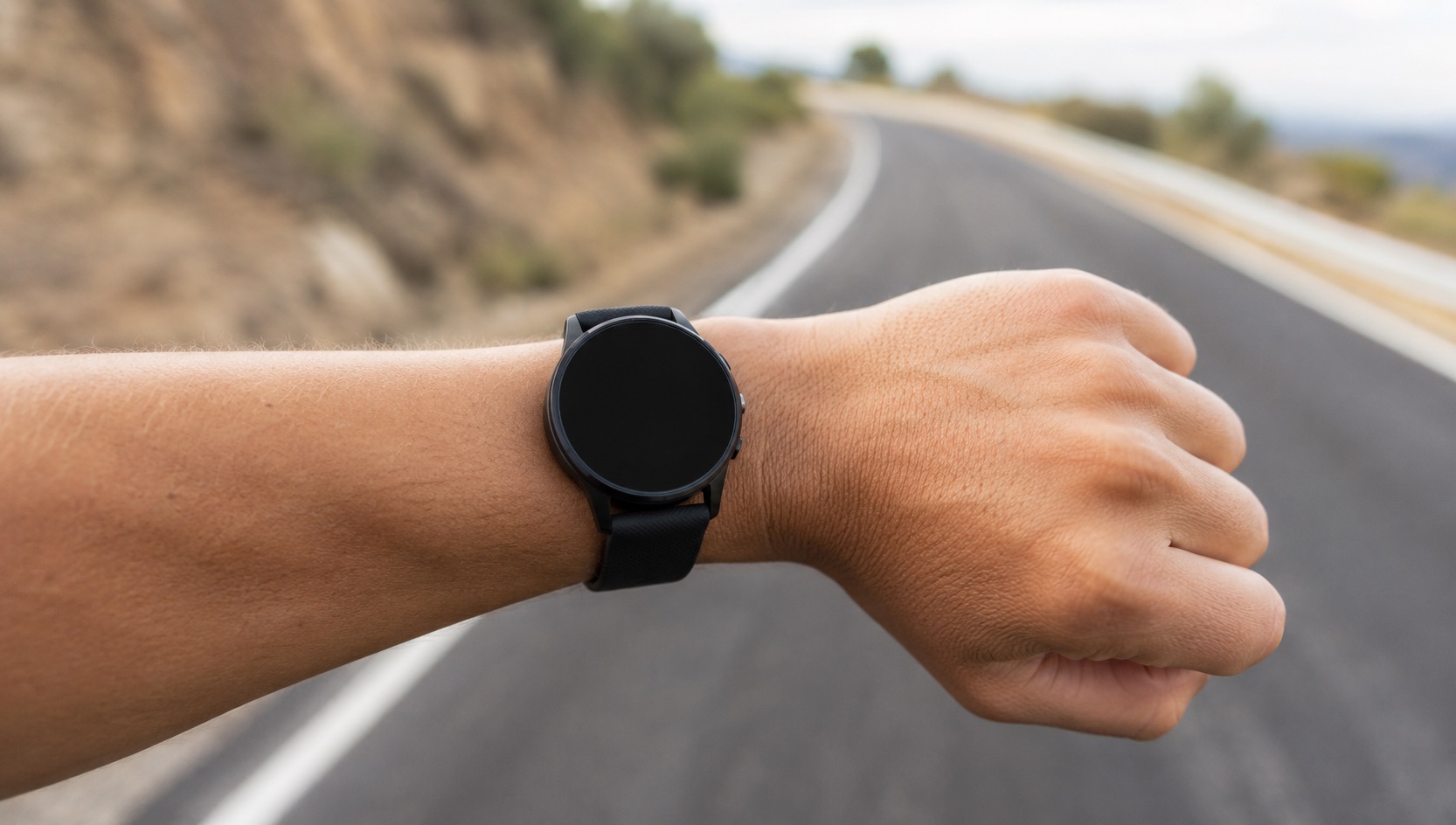
Best GPS Watch for Triathlon 2026
Triathlon watches aren’t just running watches that happen to be waterproof. You need a device that tracks three sports seamlessly, handles chaotic transitions without fumbling, and survives hours of open water swimming followed by a full day on the bike and run course. I’ve compared the top multisport watches through pool sessions, open water swims, and full race simulations to find what actually works on race day.
Here’s what’s worth your money in 2026 - whether you’re doing your first sprint tri or grinding through Ironman training blocks.
Comparison Table
| Watch | Price | Swim Tracking | Open Water GPS | Transition Timer | Bike Power Meter | Multisport Mode | Battery |
|---|---|---|---|---|---|---|---|
| Garmin Forerunner 965 | $600 | Pool + OW | Yes (multiband) | Auto-detect | ANT+ & BLE | Full tri mode | 23 hrs GPS |
| Garmin Fenix 8 | $1,000 | Pool + OW | Yes (multiband) | Auto-detect | ANT+ & BLE | Full tri mode | 48 hrs GPS |
| COROS Pace 4 | $350 | Pool + OW | Yes (dual-freq) | Manual + auto | Bluetooth | Full tri mode | 41 hrs All Systems GPS |
| Apple Watch Ultra 3 | $799 | Pool + OW | Yes (L1+L5) | Auto-detect | BLE only | Full tri mode | 18 hrs GPS |
| Suunto Race | $449 | Pool + OW | Yes (dual-band) | Manual | ANT+ & BLE | Full tri mode | 40 hrs GPS |
What Triathletes Actually Need
A triathlon watch has to do three things well that regular running watches don’t even attempt:
Quick transitions. You’re running out of the water, ripping off your wetsuit, and you don’t have time to fiddle with buttons. The watch needs to detect the sport change or let you advance with a single press - ideally while your hands are wet and shaking.
Open water swim tracking. Pool tracking is straightforward - count laps, detect strokes. Open water is a different beast. The GPS has to acquire signal the instant your wrist breaks the surface between strokes, then piece together a coherent track from those brief glimpses of sky.
Bike power integration. Serious triathletes train and race with power meters. Your watch needs to connect to your power meter via ANT+ (the standard for cycling sensors), display real-time power zones, and ideally calculate normalized power and IF for pacing strategy.
If you’re looking for a broader overview of GPS watches beyond triathlon, check out our best GPS running watches for 2026 guide.
Pool vs Open Water Tracking
These are fundamentally different challenges for a watch, and most devices handle one better than the other.
Pool swimming relies on the accelerometer. The watch detects your flip turns or wall touches to count laps, identifies stroke type, and calculates SWOLF scores. Every watch on this list handles pool tracking competently - it’s a solved problem in 2026.
Open water swimming is where watches diverge. GPS signals don’t penetrate water, so the watch only gets position fixes during the brief moments your wrist is above the surface on each stroke. Multiband/dual-frequency GPS makes a real difference here - the Forerunner 965 and Fenix 8 produce noticeably cleaner open water tracks than single-band watches from a few years ago.
The COROS Pace 4 surprised me with its open water accuracy. Its dual-frequency chip and aggressive signal acquisition mean it locks on quickly between strokes. The Apple Watch Ultra 3 is also strong here, though it occasionally overestimates distance in choppy conditions.
One tip: swim stroke rate matters for GPS accuracy. If you have a low stroke rate (fewer wrist surfaces per minute), even the best watches will produce slightly jagged tracks. That’s physics, not a product flaw.
Transition Features
This is where triathlon-specific watches earn their keep. Here’s how each handles the T1 and T2 chaos:
Garmin Forerunner 965 & Fenix 8: Both auto-detect transitions when you stop one activity and start moving differently. One button press advances to the next sport. The transition time is logged separately so it doesn’t pollute your swim, bike, or run data. You can also set up transition alerts and see cumulative race time at a glance.
COROS Pace 4: Offers both auto and manual transition modes. The auto-detection has improved significantly with recent firmware updates. The button placement is excellent for wet-hand operation - the large dial on the right side is easy to find without looking.
Apple Watch Ultra 3: The Action Button is perfect for transitions. One press advances the sport. Apple’s tri mode logs transitions cleanly, and the bright display is readable in full sunlight coming out of the water. However, the touchscreen can be finicky with wet hands if you need to access any menus.
Suunto Race: Manual transitions only via button press. It works fine, but the lack of auto-detection feels like a generation behind in 2026. The buttons are solid and tactile though - no complaints about hardware.
Bike Integrations
Triathlon is increasingly a power-meter sport, especially at 70.3 and Ironman distances where pacing is everything.
ANT+ compatibility is critical because most cycling power meters and speed/cadence sensors use ANT+. The Garmin watches, COROS Pace 4, and Suunto Race all support ANT+ natively. The Apple Watch Ultra 3 only connects via Bluetooth, which means some older power meters won’t work - check compatibility before assuming.
The Garmin watches go deepest on cycling metrics: real-time power, 3-second average power, normalized power, intensity factor, and TSS - all on your wrist. The Fenix 8 can even display your cycling dynamics if you have compatible pedals.
COROS shows power, cadence, and speed cleanly but doesn’t calculate NP or IF on the watch itself - you’ll see those post-ride in the app. For most age-groupers, that’s fine. For power-obsessed racers, Garmin still leads.
For a deeper comparison between the two biggest ecosystems, read our Garmin vs COROS vs Apple Watch breakdown.
Best For Each Type of Triathlete
Best Overall Triathlon Watch: Garmin Forerunner 965
The FR965 hits the sweet spot. Full triathlon mode, excellent open water GPS, deep cycling metrics, onboard maps for training in new locations, and a bright AMOLED display. At $600, it’s not cheap, but it does everything a triathlete needs without the Fenix 8’s weight or price tag.
Best Budget Triathlon Watch: COROS Pace 4
At $350, the Pace 4 delivers legitimate triathlon functionality. The tri mode works, open water tracking is accurate, and the battery life actually exceeds the Garmin options. You give up onboard maps and some cycling analytics depth, but for sprint and Olympic distance racing, it’s excellent value.
Best for Ironman: Garmin Fenix 8
When your race day is 10-17 hours long, battery life and durability matter most. The Fenix 8 gives you 48 hours of GPS, full maps for navigating unfamiliar Ironman courses, music storage for long training days, and the deepest cycling power metrics. It’s overkill for sprint tris but perfect for long-course athletes. See how it stacks up against other Garmin flagships in our Fenix 8 vs Enduro 3 vs Epix Pro comparison.
Best for Apple Users: Apple Watch Ultra 3
If your life runs on Apple - iPhone, AirPods, Apple Health - the Ultra 3 is a legitimate triathlon watch now. The tri mode works well, the depth gauge is a fun bonus for open water confidence, and the integration with your phone is unmatched. The BLE-only sensor limitation and shorter battery life are the trade-offs.
Pros and Cons
Garmin Forerunner 965
Pros:
- Best balance of triathlon features and weight
- AMOLED display readable in all conditions
- Deep cycling power metrics on-wrist
- Onboard maps for training in new cities
Cons:
- $600 is a lot for non-Ironman athletes
- Touchscreen can lag with wet hands
- No music storage (unlike Fenix 8)
COROS Pace 4
Pros:
- Best value triathlon watch at $350
- Outstanding published battery life (41 hrs in All Systems High GPS mode)
- Excellent button placement for transitions
- Lightweight and comfortable for racing
Cons:
- No onboard maps
- Cycling metrics less detailed than Garmin
- Smaller training ecosystem and community
Garmin Fenix 8
Pros:
- 48-hour GPS battery handles any Ironman
- Full mapping and navigation
- Music storage for training
- Most complete cycling integration
Cons:
- $1,000 is hard to justify for shorter races
- Heavier than dedicated tri watches
- Overkill feature set adds complexity
Related reading: Best GPS Watch Under $300 for Marathon Training
See how we compare products for our full research methodology.
FAQ
Can I use a triathlon watch for just running? Absolutely. Every watch on this list is an excellent running watch first. The triathlon features are additions on top of strong running fundamentals - GPS accuracy, heart rate, training load, and recovery metrics all work perfectly for run-only training.
Do I need a triathlon-specific watch for my first sprint triathlon? Not necessarily. Any watch with basic swim tracking and GPS will get you through a sprint. But if you want proper transition timing, automatic sport detection, and the data to actually improve across all three disciplines, a tri watch pays for itself quickly.
How accurate is open water swim GPS in 2026? Much better than even two years ago. Dual-frequency GPS on the latest watches typically tracks within 3-5% of actual distance in open water. You’ll still see some zig-zagging on the map, but total distance is reliably close to reality. Wrist-based GPS will never be as clean as a tow-behind GPS buoy, but it’s genuinely useful for pacing now.
Can I wear my triathlon watch with a wetsuit? Yes, but wear it over the wetsuit cuff, not under. This keeps GPS signal acquisition clean (no neoprene blocking the antenna) and means you won’t fumble with the watch during wetsuit removal in T1. Most triathlon watch bands are long enough for this.
Is the Apple Watch Ultra 3 a real triathlon watch or a gimmick? It’s legit. Apple’s multisport mode handles the full swim-bike-run sequence properly, transitions log correctly, and the GPS accuracy is competitive. The main limitations are BLE-only sensor support (check your power meter compatibility) and shorter battery life that could be tight for Ironman finishers over 14 hours.
No affiliate links on this page. Prices are approximate retail as of mid-2026 and may vary by retailer.