Garmin Venu 3S: A Non-Techy Runner's Perspective
Garmin Venu 3S: A Non-Techy Runner’s Perspective
I am not a tech person. I do not obsess over data screens, training metrics, or firmware updates. When I chose the Garmin Venu 3S, I picked it because it is beautiful, works as a normal watch, and can track my runs. After six months of wearing it daily, I love the watch. But if I am being completely honest, sometimes I wonder if I should have bought a Forerunner instead.
Why I Chose the Venu 3S
My husband Jos wears a Garmin Forerunner 570. That thing is a full-on running computer on his wrist. He stares at pace graphs, analyzes training load, checks HRV every morning. I watched him set it up and decided immediately: that is not for me.
I wanted three things:
- A watch I would actually wear to dinner, the office, everywhere
- GPS tracking for my runs
- Heart rate data during workouts
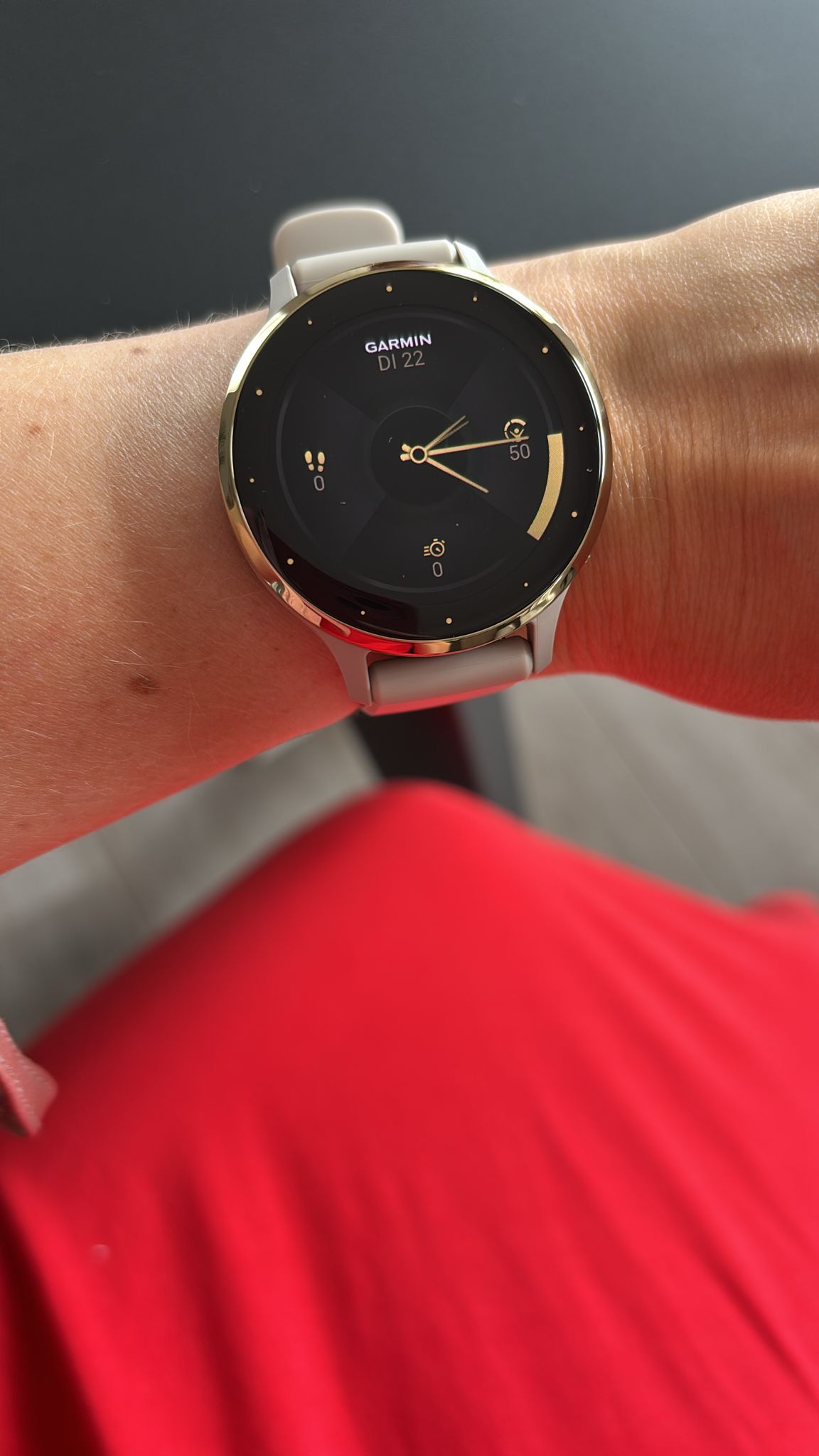
The Venu 3S checked all three boxes. The “S” is the smaller 41mm case, which fits my wrist perfectly. The AMOLED screen is gorgeous. It looks like a smartwatch you would choose for style, not just function. I get compliments on it regularly, which never happens with Jos’s Forerunner.
What I Love About It
The Design
This is where the Venu line earns its existence. The display is bright, sharp, and colorful. The watch faces look like something from a fashion watch brand, not a sport company. I wear it with dresses, with work clothes, running, sleeping. It never looks out of place.
The smaller case size matters more than people think. A women’s running watch needs to sit well on smaller wrists without looking like a hockey puck. The 3S nails this.
ECG and Health Features
Here is something interesting: my Venu 3S has an ECG feature that Jos’s Forerunner 570 does not. He was genuinely jealous when I showed him. The ECG measures heart rhythm on demand, which is useful for monitoring heart health. I have used it a few times after feeling palpitations during stress, and getting an “all clear” reading provided real peace of mind.
Sleep tracking, Body Battery, stress monitoring: all features I actually use daily. The Venu line treats health tracking as a primary function, not an afterthought bolted onto a running watch.
It Just Works
Setup was simple. Paired with my phone, synced to Garmin Connect, done. I did not need to configure data screens, choose metrics, or learn what VO2max means. The defaults are sensible for someone who just wants to start a run and see the basics.
What Frustrates Me (The Running Gaps)
Limited Running Metrics
When Jos talks about his training, he mentions things like running power, ground contact time, vertical oscillation, training status, race predictor updates based on his recent workouts. His watch gives him all of that on his wrist during runs.
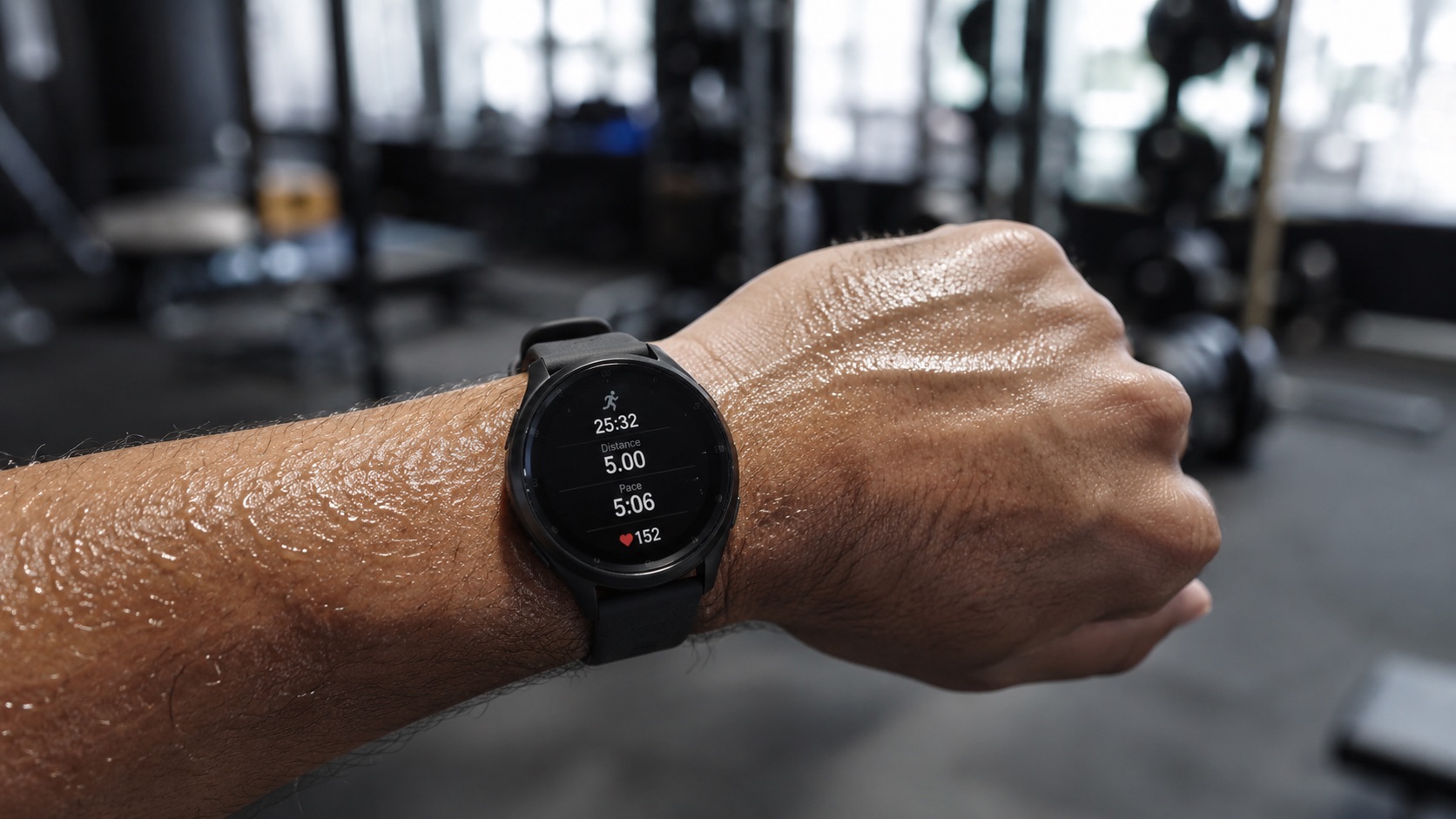
My Venu 3S gives me: pace, distance, heart rate, time. That is fine for basic run tracking. But as I have gotten more serious about running over the past year, I find myself wanting more. Specifically, I wish I had:
- Training Status (which the Forerunner shows natively)
- Suggested daily workouts based on my fitness
- More detailed pace analysis (current lap, average, rolling)
- Running dynamics if I ever get a chest strap or pod
The Venu has some of these buried in the Garmin Connect app, but not on the wrist during runs. And that difference matters when you are mid-workout trying to decide if you should push harder.
The Touchscreen in the Rain
The Venu 3S uses a touchscreen as the primary interface (with two buttons). In dry conditions, it is intuitive and responsive. In rain or when my hands are sweaty from a hard effort, the screen becomes unreliable. I have accidentally paused runs, scrolled to wrong screens, and dismissed notifications mid-stride.
Jos’s Forerunner is all buttons. He never has this problem. For a running-specific device, physical buttons are simply better.
Battery Life on GPS
The Venu 3S gets about 21 hours of GPS recording. That sounds fine, but the AMOLED display eats battery during normal use too. If I forget to charge on a busy week and then want to do a long run on Saturday, I sometimes find myself at 30% battery. The Forerunner line lasts significantly longer because those screens use less power.
For my typical runs (45-90 minutes), battery is never actually an issue. But the mental load of “is my watch charged enough” is something I did not expect to deal with.
The “Should I Have Bought a Forerunner” Question
I ask myself this roughly once a month. Usually after Jos shows me some training insight his watch gave him, or when I try to analyze a workout and the data is not as detailed as I want.
If I bought today with my current running knowledge and commitment, I would probably choose a Forerunner 265S. It has the AMOLED screen (so it is still pretty), but with the full running feature set. The Garmin Venu sits in a weird middle ground: too sporty for people who just want a smartwatch, not sporty enough for people who get serious about training.
But here is the other side: I wear this watch 24/7 because it is beautiful. If I had a chunkier Forerunner, I might leave it in a drawer on weekends and miss health data. The watch you wear consistently beats the watch you only put on for runs.
Who the Venu 3S Is Actually For
The Venu 3S is perfect for someone who:
- Runs 2-4 times per week casually
- Wants a single watch for all occasions (work, formal, sport)
- Values health tracking (sleep, stress, ECG) as much as sport tracking
- Does not need advanced training metrics on the wrist
- Wants a beautiful screen and design
It is NOT ideal for someone who:
- Trains seriously and wants suggested workouts
- Needs detailed running dynamics
- Runs long distances where battery matters
- Wants physical buttons for reliability in all conditions
- Plans to use structured workouts regularly
I started as the first type of person. After a year of running more consistently, I am slowly becoming the second type. The Venu grew with me to a point, but I can feel the ceiling approaching.
Comparison with What I Considered
Before buying, I looked at three options:
| Feature | Venu 3S | Apple Watch Ultra | Forerunner 265S |
|---|---|---|---|
| Daily wear style | Excellent | Good (large) | Good |
| Running metrics | Basic | Basic | Advanced |
| Battery (GPS) | 21 hours | 12 hours | 20 hours |
| ECG | Yes | Yes | No |
| Price | $400 | $800 | $400 |
| Touchscreen | Yes | Yes | Yes + buttons |
The Apple Watch tempted me for iPhone integration, but the battery life is genuinely problematic for anyone who runs and wants all-day wear. I have friends with Apple Watches who charge mid-day. Not for me.
The Forerunner 265S would have been the smarter “runner” choice, but at the time I did not think I would get this serious about training. Hindsight.
For a broader comparison of lifestyle vs. sport watches, there is a deeper breakdown available.
My Verdict After Six Months
I do not regret buying the Venu 3S. It is a beautiful watch that I wear every single day, it tracks my runs accurately, and the health features give me data I genuinely use. The ECG alone has been worth having twice when I had concerns.
But if you are reading this and already running 3-4 times per week with plans to improve, skip the Venu and get a Forerunner. You will outgrow the Venu’s running features within a year, just like I am doing. The Forerunner is not as pretty, but modern ones are good enough for daily wear and infinitely better for training.
For casual runners who prioritize a watch that does not look like a sport device, the Venu 3S remains excellent. Just know where it tops out.
FAQ
Is the Garmin Venu 3S accurate for GPS running?
Yes. GPS accuracy is essentially identical to Forerunner watches since they use the same chip and satellite systems. Pace data is reliable, distance is accurate, and GPS lock is fast. The differences between Venu and Forerunner are in software features and data display, not hardware accuracy.
Can the Venu 3S display structured workouts from Garmin Connect?
Yes, you can push structured workouts to the Venu 3S. It will show interval targets, warmup/cooldown phases, and heart rate zones. However, the experience is not as polished as on a Forerunner, and the daily suggested workout feature is limited compared to the Forerunner line.
Does the smaller 3S size compromise screen readability during runs?
The AMOLED display is bright enough to read in direct sunlight, and the resolution is excellent for the size. I can read pace and heart rate at a glance without issues. If you have vision concerns or want to display 4+ data fields simultaneously, the larger Venu 3 or a Forerunner with a bigger screen would be better.
Is the ECG feature medically useful or just a gimmick?
It is FDA-cleared for detecting atrial fibrillation, which makes it more than a gimmick. It is not a replacement for medical-grade ECG with 12 leads, but for spotting AFib between doctor visits, it is genuinely useful. I value having it for peace of mind, especially during periods of high training stress.
Should I get the Venu 3S or wait for the Venu 4S?
If you need a watch now, buy now. Garmin typically updates the Venu line every 18-24 months. The 3S is current and fully supported. Waiting means months without data tracking for an incremental upgrade that might just bring a slightly brighter screen or longer battery. The 3S hardware is already excellent.