How I Got Back to Running After Pregnancy (Timeline + Gear)
Let me start with the thing nobody tells you: getting back to running after pregnancy isn’t a straight line. It’s more like a wobbly circle with a lot of bathroom breaks.
I ran my last pre-pregnancy run at 28 weeks. It was more of a shuffle, honestly. Then I stopped, had a baby, and spent the next several months wondering if I’d ever feel like a runner again. Spoiler: I did. But it took longer than Instagram made me think it would.
Here’s my real, unfiltered timeline for returning to running postpartum, plus the gear that actually helped me get there.
The 6-Week Clearance (And Why It’s Just the Starting Line)
My OB cleared me at 6 weeks. I remember thinking, “Great, I’ll be back to 5Ks by 8 weeks.” That’s hilarious to me now.
The 6-week clearance doesn’t mean your body is ready to run. It means your incision or tears have healed enough that you probably won’t do damage. Your pelvic floor? Still a mess. Your core? Basically non-existent. Your energy levels on 3 hours of broken sleep? Let’s not talk about it.
What I actually did at 6 weeks: walked. That’s it. Fifteen-minute walks with the baby in the carrier, feeling like I’d completed an ultramarathon.
Pelvic Floor First (I Cannot Stress This Enough)
Before I ran a single step, I saw a pelvic floor physiotherapist. This was the best $150 I spent in my entire postpartum journey. She assessed my pelvic floor, gave me exercises, and told me honestly that I wasn’t ready to run yet.
Here’s what she checked:
- Could I hold a pelvic floor contraction for 10 seconds?
- Could I do 10 quick contractions in a row?
- Did I leak when I coughed, sneezed, or jumped?
I failed all three at 6 weeks. By 10 weeks, I could pass them. That’s when she gave me the green light to start walk-run intervals.
If you take one thing from this article: see a pelvic floor physio before you run. Not after you’ve already leaked through your shorts at the park. Learn from my mistakes.
My Actual Return-to-Running Timeline
Here’s what my comeback really looked like, week by week:
| Week | What I Did | How It Felt |
|---|---|---|
| 6-8 | Walking only, 15-20 min | Exhausting but good |
| 8-10 | Pelvic floor exercises, longer walks | Starting to feel human |
| 10-12 | Walk-run intervals (1 min run, 2 min walk) | Surprisingly hard |
| 12-14 | Walk-run intervals (2 min run, 1 min walk) | Getting easier |
| 14-16 | Continuous running, 15-20 min | Slow but steady |
| 16-20 | Building to 30 min continuous | Finally feeling like a runner |
| 20-24 | Adding a second run per week | Confidence returning |
| 24+ | Three runs per week, pace improving | Almost back to normal |
So yes, it took me about 3-4 months to feel like a runner again, and about 6 months to feel like myself. And I was someone who ran regularly before pregnancy. This isn’t a failure. This is normal.
The Walk-Run Method Saved My Sanity
I used to think walk-run intervals were for “not real runners.” Pregnancy humbled me quickly. The Couch to 5K approach is genuinely perfect for postpartum comeback because it takes the ego out of it.
My rules for early postpartum running:
- If anything leaks, stop and walk
- If anything hurts (not just tired, actually hurts), stop
- No pace goals for the first 2 months
- Run only on days I’ve slept at least 4 hours total (this eliminated more days than I’d like to admit)
The Gear That Actually Mattered
I’m not a gear person. I don’t care about GPS accuracy or shoe weight in grams. But there are three things that made postpartum running possible.
1. A Truly Supportive Sports Bra (Non-Negotiable)
My pre-pregnancy sports bras? Useless. I went up two cup sizes while breastfeeding, and the bounce was genuinely painful. I needed something with serious compression and ideally front-zip access for nursing.
I ended up with the SheFit Ultimate (around $70) and it changed everything. Full adjustability, zip front, zero bounce. I could nurse the baby in the car before a run without doing a complete wardrobe change. Worth every penny.
2. Comfortable, Cushioned Shoes
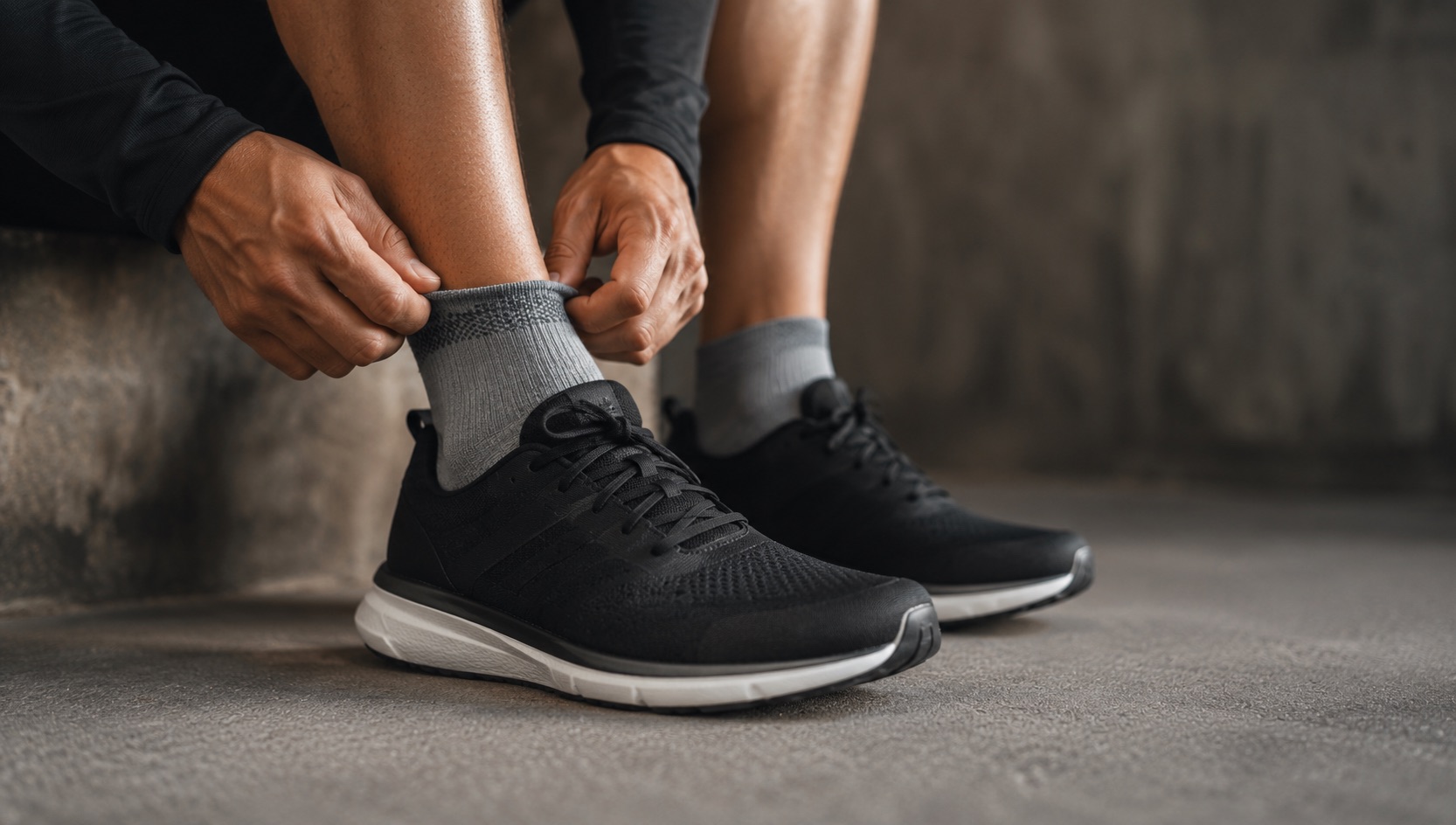
Your feet change during pregnancy. Mine went up half a size and my arches flattened slightly. My old shoes felt wrong. I got properly fitted at a running store and ended up in something with more cushion than I’d usually choose.
The extra cushion matters because postpartum running tends to be slower, which means more ground contact time, which means more impact per step. If you’re looking for options, the beginner running shoe guide covers the cushioned options well.
3. A Jogging Stroller (Eventually)
I didn’t start stroller running until baby was 6 months old (that’s the minimum for most jogging strollers due to neck support). But once I did, it was a game-changer. Suddenly I didn’t need someone else to watch the baby while I ran.
I’ll be honest: stroller running is harder than solo running. Your pace drops, you can only use one hand, and you’re pushing 30+ pounds uphill. But it means you actually get to run, which beats a perfect solo run that never happens.
Check out the full postpartum gear guide for more details on everything from leakproof shorts to nipple cream (yes, you need it for running while breastfeeding too).
What I Wish Someone Had Told Me
It’s not linear. I had great weeks followed by terrible weeks. A bad night of sleep could wipe out my running for days. That’s normal.
Your pace doesn’t matter yet. I was running 2 minutes per km slower than my pre-pregnancy pace. I wanted to cry the first time I checked. But pace comes back. Consistency comes first.
You need less than you think. I thought I needed an hour. Turns out, 20 minutes of running three times a week was plenty to start rebuilding fitness. That’s one nap time.
It’s okay to stop and walk. Every single run in those first months included walking. Walking is running. Anyone who disagrees has never tried to exercise on 4 hours of fragmented sleep.
Planning Your First 5K After Baby
Once I could run 30 minutes continuously (around 4 months postpartum), I signed up for a local 5K. Having that goal gave me something to focus on besides baby wake windows.
If you’re thinking about the same thing, the how to run your first 5K guide is a solid resource. Just add 2-3 weeks of buffer to any plan because, well, babies.
Frequently Asked Questions
How long after giving birth can I start running again?
Most doctors will clear you at 6 weeks, but running readiness depends on your pelvic floor recovery. I’d recommend seeing a pelvic floor physiotherapist before running. Most women aren’t truly ready to run until 10-12 weeks postpartum, and that’s completely fine. Walking is valuable exercise in those early weeks, and it builds the foundation for running later.
Do I need new running shoes after pregnancy?
Probably yes. Your feet often change size during pregnancy (relaxin hormone loosens ligaments), and many women go up half a size permanently. Even if your shoe size hasn’t changed, your arch structure might have shifted. Get refitted at a running store rather than just reordering your old shoes. It’s worth the trip.
Can I run while breastfeeding?
Absolutely. Running doesn’t affect milk supply (that’s a myth that won’t die). The main considerations are timing (run after feeding so you’re more comfortable), a supportive bra that minimizes bounce, and staying hydrated. Some women find that baby rejects milk immediately after a hard run due to lactic acid taste, but gentle running is usually fine.
What if I’m leaking urine when I run?
This is incredibly common and not something you should just accept as “normal now.” Leaking means your pelvic floor isn’t ready for the impact of running yet. Go back to walking, increase your pelvic floor exercises, and see a physio if you haven’t already. It’s fixable for most women with the right rehab.
How do I find time to run with a newborn?
This was my biggest challenge. My strategies: run during the first morning nap (even if it’s only 20 minutes), use a jogging stroller once baby is 6 months old, or swap with a partner if you have one. I also accepted that 2 runs per week was plenty in the early months. Something is always better than nothing, even if it’s a 15-minute shuffle around the block.
The Bottom Line
Getting back to running after pregnancy took me longer than I expected and was harder than I anticipated. But it was also one of the best things I did for my mental health as a new mom. Those 20 minutes of running, even slow, even interrupted by walk breaks, gave me back a piece of myself.
Be patient with your body. It grew a human. It deserves more than 6 weeks of recovery before you demand it runs a 5K.
Start slow, invest in a good bra, and remember that every runner you see out there had a day when they couldn’t run more than a minute. You’ll get there.