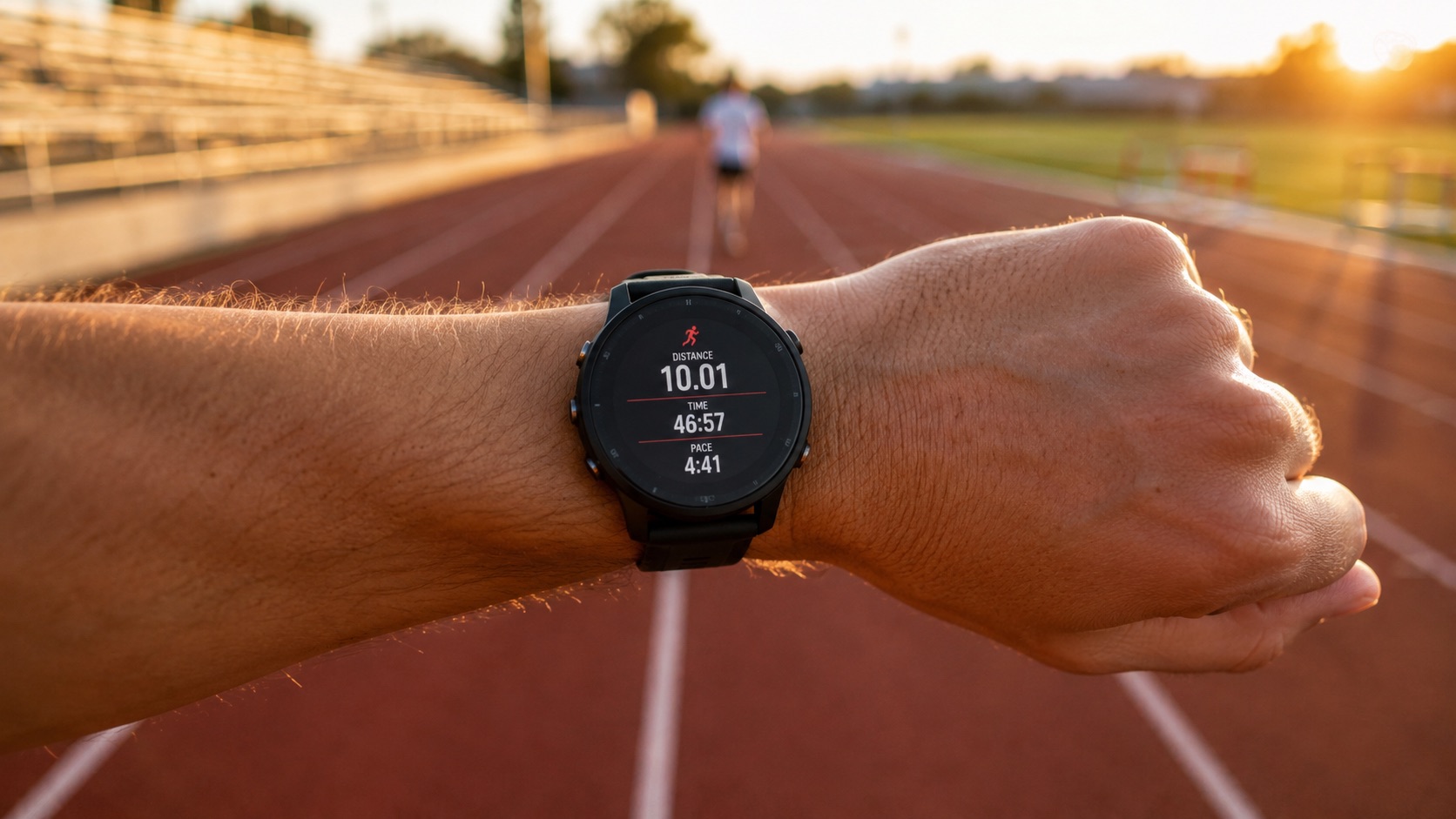
Garmin Forerunner Series Pricing Compared 2026
Garmin’s Forerunner lineup in 2026 spans from $299 to $600. That’s a $300 gap between the cheapest and most expensive, and the differences aren’t always obvious from spec sheets. Every model tracks runs accurately. Every model connects to satellites. So what exactly does each price tier get you - and where does the value sweet spot actually sit?
I’ve used multiple Forerunners over the years, and the answer isn’t simply “buy the most expensive one you can afford.” Some features justify their price premium. Others don’t. Let’s break it down model by model.
Forerunner Series Pricing and Feature Comparison
| Feature | FR170 ($299) | FR165 ($300) | FR265S ($400) | FR265 ($450) | FR965 ($600) |
|---|---|---|---|---|---|
| Display | AMOLED, 1.2” | AMOLED, 1.2” | AMOLED, 1.1” | AMOLED, 1.3” | AMOLED, 1.4” |
| GPS Chipset | Multi-band (SatIQ) | Multi-band (SatIQ) | Multi-band (SatIQ) | Multi-band (SatIQ) | Multi-band (SatIQ) |
| Training Status | ✅ | ✅ | ✅ | ✅ | ✅ |
| Training Readiness | ❌ | ❌ | ✅ | ✅ | ✅ |
| Training Load Focus | ❌ | ❌ | ✅ | ✅ | ✅ |
| HRV Status | ✅ | ✅ | ✅ | ✅ | ✅ |
| Maps/Navigation | ❌ | ❌ | ❌ | ❌ | ✅ Full topo maps |
| Music Storage | ✅ | ✅ | ✅ | ✅ | ✅ |
| Garmin Pay | ✅ | ✅ | ✅ | ✅ | ✅ |
| Stamina (Real-Time) | ❌ | ❌ | ✅ | ✅ | ✅ |
| Race Widget | ❌ | ❌ | ✅ | ✅ | ✅ |
| Up Ahead | ❌ | ❌ | ❌ | ❌ | ✅ |
| ClimbPro | ❌ | ❌ | ❌ | ❌ | ✅ |
| Battery (GPS) | ~18 hours | ~18 hours | ~20 hours | ~20 hours | ~31 hours |
| Battery (Smartwatch) | ~11 days | ~11 days | ~13 days | ~13 days | ~23 days |
| Storage | 4 GB | 4 GB | 8 GB | 8 GB | 32 GB |
| Weight | 37g | 39g | 39g | 47g | 53g |
| Materials | Polymer, silicone | Polymer, silicone | Polymer, silicone | Polymer, silicone | Titanium bezel, silicone |
| Touch + Buttons | Both | Both | Both | Both | Both |
| WiFi Sync | ✅ | ✅ | ✅ | ✅ | ✅ |
Features-Per-Dollar Analysis
| Model | Price | Key Features Over Previous Tier | Cost Per Upgrade Step | Value Rating |
|---|---|---|---|---|
| FR170 | $299 | Base model: AMOLED, multi-band GPS, Training Status, HRV, music | - | ★★★★☆ |
| FR165 | $300 | Nearly identical to FR170 (slightly older model, same features) | $1 more for minimal difference | ★★★★☆ |
| FR265S | $400 | Training Readiness, Training Load Focus, Stamina, Race Widget, longer battery | $100 for advanced training metrics | ★★★★★ |
| FR265 | $450 | Larger screen (1.3” vs 1.1”), larger case, same features as 265S | $50 for bigger display | ★★★★☆ |
| FR965 | $600 | Full maps, ClimbPro, Up Ahead, titanium bezel, 31h GPS battery, 32GB storage | $150 for maps + premium build + huge battery | ★★★★☆ |
The Value Sweet Spot: FR265S at $400
The Forerunner 265S offers the best value in the current lineup. Here’s why:
For $100 more than the entry-level FR170, you get Training Readiness, Training Load Focus, Stamina tracking, and the Race Widget. These aren’t gimmicks - they’re the features that genuinely guide training decisions. Training Readiness alone (the daily “should I go hard?” score) changes how you plan your week.
The smaller 1.1” screen is perfectly readable for running. Unless you have large wrists or specifically want a bigger display, the 265S gives you everything the 265 offers in a lighter, smaller package for $50 less.
For a deeper look at whether upgrading to the 265 makes sense from a previous model, check our FR265 pricing analysis.
Who Should Buy Each Model
Forerunner 170 ($299) - The Smart Entry Point
Best for: New runners, casual runners who want accurate GPS and basic training insights without paying for features they won’t use.
The FR170 replaced the FR165 in Garmin’s lineup but they now coexist at nearly the same price. It gets you multi-band GPS (excellent accuracy), an AMOLED display, Training Status, HRV monitoring, music storage, and Garmin Pay. That’s a tremendous feature set for under $300.
What you’re missing: Training Readiness, Training Load Focus, Stamina gauge, and the Race Widget. If you’re running 3-4 times per week without structured training, you won’t miss these. If you’re following a training plan and care about recovery optimization, spend the extra $100 for the 265S.
For more on picking a first Garmin, read our best Garmin watch for beginners guide.
Forerunner 165 ($300) - The Overlap Model
Best for: Only if you find it discounted below $280. Otherwise, the FR170 is the same watch with newer firmware support.
The FR165 and FR170 are essentially the same watch from a features standpoint. Garmin refreshed the numbering but didn’t significantly change capabilities. Buy whichever is cheaper when you’re shopping. At full price, they’re interchangeable.
Forerunner 265S ($400) - Best Value for Serious Runners
Best for: Dedicated runners training 4-6 days per week who want data-driven recovery guidance. Runners with smaller wrists. Anyone who cares about Training Readiness.
This is where Garmin’s training ecosystem fully unlocks. Training Readiness uses your HRV, sleep, recovery time, and stress to give you a daily readiness score. Training Load Focus shows whether you’re doing enough aerobic, anaerobic, and high-aerobic work. The Stamina gauge during runs prevents bonking.
For most runners, these features are worth the $100 upgrade over the FR170. They change behavior in useful ways.
Forerunner 265 ($450) - The Bigger Screen Option
Best for: Runners with larger wrists who find the 265S too small. People who value screen readability during runs.
Functionally identical to the 265S - same features, same training metrics, same GPS. The only differences: 1.3” screen (vs 1.1”), larger case (46mm vs 42mm), and slightly heavier (47g vs 39g). If you need the bigger display, it’s a fine $50 premium. Otherwise, save the money.
See our FR170 vs FR265 comparison for a more detailed breakdown of what the price gap gets you.
Forerunner 965 ($600) - The Do-Everything Option
Best for: Trail runners, ultramarathon runners, runners who navigate unfamiliar routes, and people who want premium materials.
The FR965’s killer feature is full topographic maps with turn-by-turn navigation. If you run trails in unfamiliar areas, navigate race courses without prior knowledge, or just want the peace of mind of always knowing where you are - maps are worth the premium.
Additional justifications: 31 hours GPS battery (vs 20 on the 265), titanium bezel (much more durable), ClimbPro (automatic climb detection with remaining gradient), and 32GB storage (space for extensive map data and music library).
But: If you only run on roads and familiar routes, maps provide minimal value. The 265/265S training features are identical to the 965. You’d be paying $150 extra primarily for maps, battery, and titanium.
What About the Full GPS Watch Market?
The Forerunner series isn’t your only option. For the full picture of what’s available across all brands at every price point, see our best GPS running watches 2026 roundup.
Price History and When to Buy
Garmin watches rarely get deep discounts, but there are patterns:
- Prime Day / Black Friday: 15-25% off current models
- New model launches: Previous generation discounts (FR255 dropped significantly when FR265 launched)
- REI sales: Member dividends and seasonal sales occasionally stack
The FR265 was $450 at launch and has been spotted at $380-400 during major sales. The FR965 has dipped to $500-530. If you can wait for a sale, you often get last year’s pricing on current hardware.
Frequently Asked Questions
Is the Forerunner 265 worth $150 more than the FR170?
For serious runners who train 4+ days per week with structure, yes. Training Readiness and Training Load Focus are genuinely useful for making daily training decisions. For casual runners doing 3 runs per week without a structured plan, probably not - the FR170 covers your needs.
Should I get the FR265 or FR265S?
Try them on if possible. The only difference is size (42mm vs 46mm case, 1.1” vs 1.3” screen). Features are identical. The 265S is $50 cheaper, lighter, and more comfortable on smaller wrists. The 265 is better for larger wrists and easier to read mid-run with older eyes.
Is the FR965 worth $600 for road running only?
Probably not. The main premium features (maps, ClimbPro, Up Ahead) are navigation-focused. Road runners on familiar routes won’t use them. The extra battery life is nice for ultra events, but if your longest run is under 5 hours, the FR265’s 20-hour GPS is more than sufficient. Buy the 265 and save $150.
Will Garmin release a Forerunner 275/975 soon?
Garmin typically refreshes the Forerunner line every 18-24 months. The FR265/965 launched in early 2023, meaning a refresh is possible in late 2025 or 2026. If you need a watch now, buy now. If you can wait 6 months and rumors are heating up, waiting might get you newer hardware or discounts on current models.
Can I use a Forerunner for triathlon?
The FR265 and FR965 both support multisport activities (swim, bike, run with transitions). The FR965 is better suited for full triathlon use due to its longer battery life and maps for cycling navigation. The FR170 supports open water swim but lacks seamless multisport transition mode.
The Verdict
For most runners, the Forerunner 265S at $400 is the best value in Garmin’s 2026 lineup. It unlocks the full training ecosystem without paying for maps and materials you might not need. The FR170 at $299 is excellent if you want to save money without sacrificing GPS accuracy or basic training insights.
Only step up to the FR965 if you genuinely need maps (trail runners, navigators) or the 31-hour battery (ultra runners). It’s a fantastic watch, but the premium over the FR265 is justified by specific use cases, not general superiority.