What I Learned Starting to Run (The Gear That Mattered)
Four years ago I started running. Not because I had always dreamed of being a runner. Not because I had a goal race in mind. I started because Jos ran all the time, and I thought maybe I would enjoy it too.
Spoiler: I did. Eventually.
The beginning was terrible. The first few months were all gasping, side stitches, and wondering why anyone does this voluntarily. But something clicked around month three, and now I run half marathons, train 3 to 4 times per week, and own more running shoes than regular shoes.
This article is about the gear journey from complete beginner to where I am now. What mattered, what did not, and what I wish I had known from the start.
The Starting Point
When I started running, I wore old gym sneakers, a cotton t-shirt, and whatever leggings were in the drawer. I ran 2 km and thought I was going to die.
Jos kept saying “you need proper shoes” and I kept thinking he was being dramatic. He is a gear person. I am not. Or at least I was not.
Within two weeks, the old gym sneakers gave me knee pain. That was the moment I accepted that maybe gear matters a little bit.
Year One: The Basics
First Real Running Shoes
My first proper running shoe was a Saucony Ride. I went to a running store, got my gait analyzed, and they recommended a neutral cushioned shoe. The Ride was comfortable from the first step, supportive without being heavy, and gentle on my joints during those early months when everything was new and achy.
The difference between old gym sneakers and actual running shoes was immediate and dramatic. Knee pain disappeared. Runs felt less punishing. I actually started looking forward to lacing up.
First Running Watch
I did not buy a watch immediately. For the first three months, I ran with my phone in my pocket using a free app. It worked, but I hated carrying the phone. It bounced, it was heavy, and I was constantly worried about dropping it.
Eventually Jos helped me pick a Garmin. More on that below.
First Proper Clothes
The cotton t-shirt lasted exactly two runs before I admitted defeat. Wet, heavy, chafing cotton is miserable. I bought two cheap technical shirts from Decathlon and the difference was night and day.
For women specifically: a proper sports bra is non-negotiable from run one. Not a light-support yoga bra. A high-impact, running-specific sports bra. This was the single most important gear purchase of my entire first year. Everything else is secondary.
The Setbacks
My running journey has not been linear. It has been interrupted twice by pregnancy and its aftermath.
First major break: A complicated pregnancy meant one full year off running. Zero running for twelve months. When I came back, it felt like starting from scratch. Fitness was gone. Muscle memory helped slightly, but the cardiovascular base had evaporated.
Six months of rebuilding: I ran for six months after that break, slowly building back. Things were feeling good again. I was running 3 times per week and covering real distance.
Second break: An abdominal injury related to the pregnancy forced me to stop again. Five months off. This one was harder mentally because I could feel the fitness I had just rebuilt slipping away again.
The gear lesson from these breaks: do not buy expensive race shoes during comeback phases. You do not know how your body has changed, what your gait is doing differently, or what distances you will be running for the first few months. Start with a comfortable daily trainer and reassess once you are consistently running again.
For more detail on my running after pregnancy timeline and what gear helped each phase, I have a dedicated article.
Finding My Favorite Shoe: Endorphin Speed 3
After the second comeback, I needed new shoes. My old Rides were worn out and I wanted something with a bit more energy. Jos had been talking about the Saucony Endorphin Speed non-stop, and eventually I tried a pair.
The Endorphin Speed 3 became my favorite running shoe immediately.
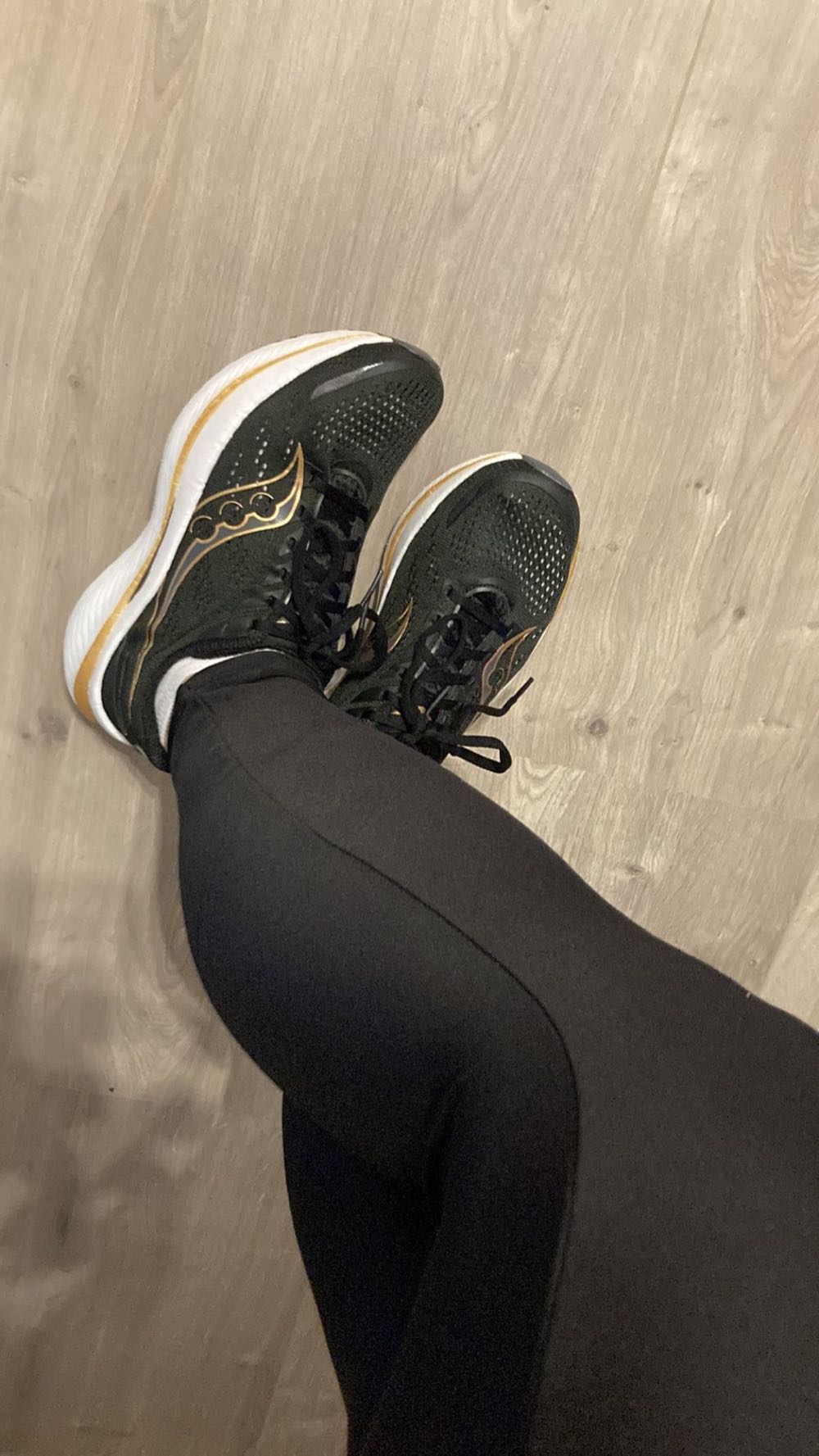
What I love about it:
- Light without feeling unstable
- The nylon plate gives a subtle push without being aggressive
- Works for easy runs AND faster sessions
- Comfortable from the first run, no break-in needed
- Looks good (this matters to me, even if Jos says it should not)
I ran my first half marathon in the Endorphin Speed 3. It was the shoe that took me from “jogger” to “runner” in my own mind. Not because of the technology, but because putting on that shoe made me feel like a real runner.
Now I am on the Endorphin Speed 5 and it maintains everything I loved about the 3. The Speed 4 review on this site covers the differences between generations.
Current Daily Trainer: Saucony Ride 18
For easy runs and recovery runs, I still use the Ride series. Now the Saucony Ride 18.
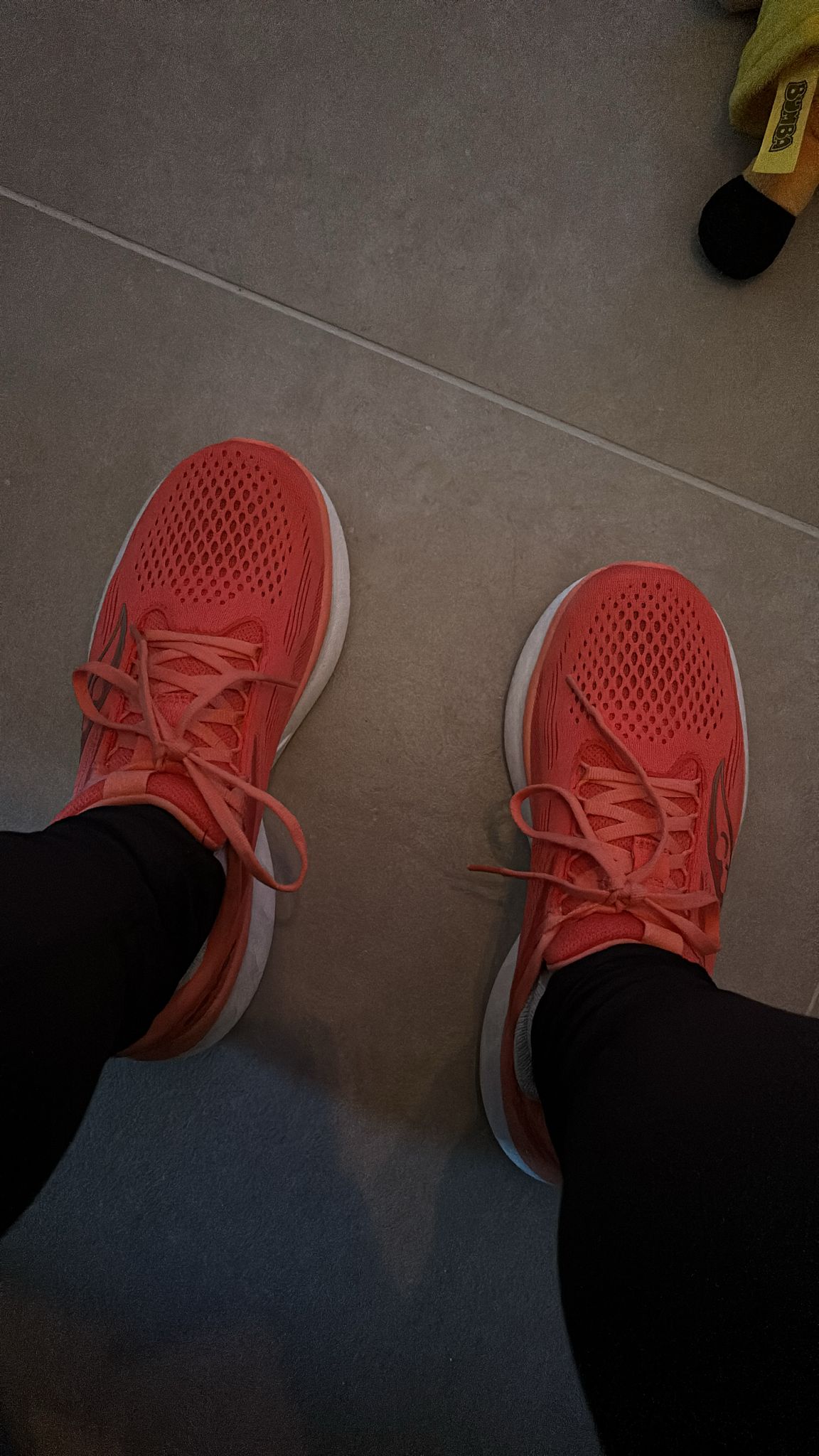
It is the same principle as my first ever running shoe, just updated. Neutral, cushioned, comfortable, protective. Not flashy, not techy, just reliable day after day. I have about 500 km on my current pair and they still feel great.
The Ride is my recommendation for beginners because it does everything well without any aggressive features that could cause problems for new runners.
My Race Day Shoe: Vaporfly 4
This year I made the jump to a carbon super shoe for racing. The Nike Vaporfly 4.
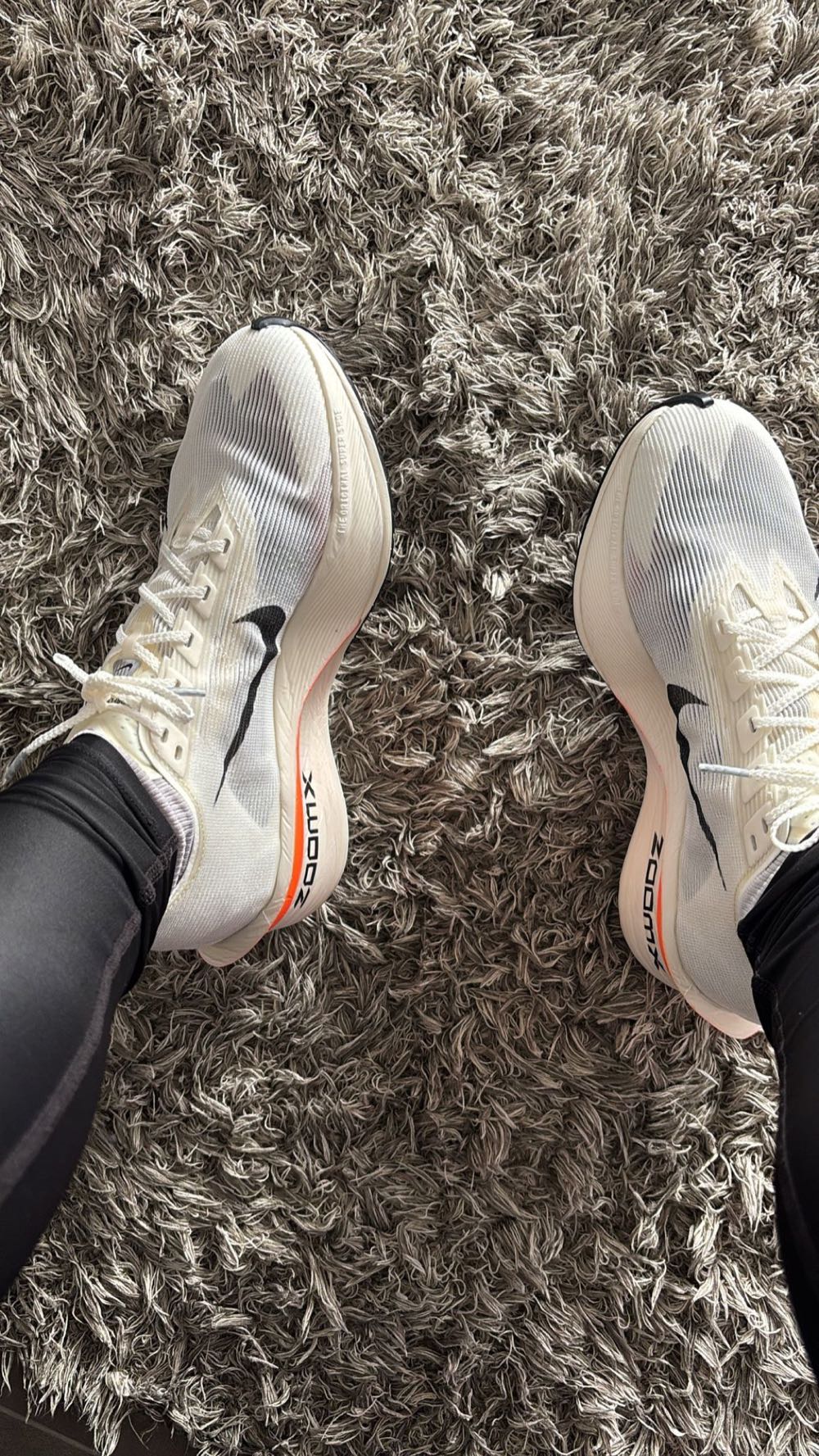
Jos was using one already and kept insisting I try it for my next half marathon. I was skeptical because I am not a fast runner and thought super shoes were only for elites. But the difference was noticeable from the first kilometer.
The Vaporfly feels like it is pushing you forward. Not aggressively, not unstably, just this subtle propulsion that makes holding pace feel easier. My heart rate was slightly lower at the same pace compared to the Endorphin Speed. For a 21 km race, that matters.
Do I think every runner needs a super shoe? No. But once you are consistently running half marathon distance and have a time goal, the investment makes sense.
The Watch: Garmin Venu 3S
My watch is the Garmin Venu 3S, and I have a complicated relationship with it.
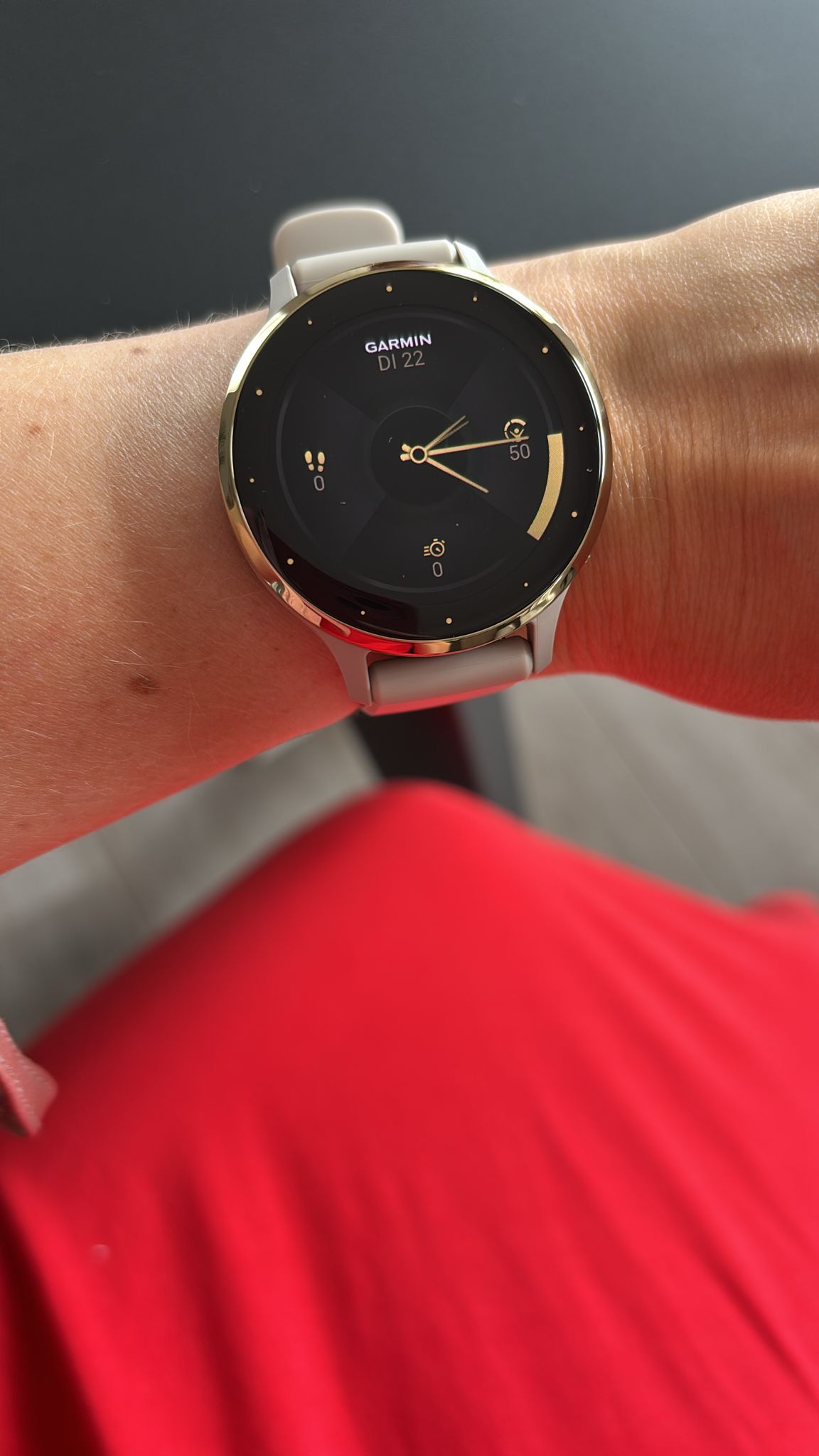
What I love:
- Beautiful AMOLED display (much nicer than Jos’s Forerunner)
- Small enough for my wrist (the “S” size is perfect)
- Tracks everything: sleep, HRV, stress, Body Battery, menstrual cycle
- ECG feature (which Jos’s FR570 does not have)
- Smart features: music storage, contactless payments, notifications
- Battery lasts 3 to 4 days with my usage
What I wish was different:
- Running-specific features are less detailed than the Forerunner line
- No multi-band GPS (accuracy is fine but not as precise as Jos’s watch)
- Training load and recovery metrics are simplified compared to Forerunner
- Sometimes I wish I had more data fields available during runs
The Venu 3S is designed as a lifestyle smartwatch that also runs, rather than a running watch that also does smart things. For my level and needs, it is great. But sometimes when Jos shows me his advanced training metrics, I feel like I am missing out on data that could help me train better.
If I was buying again today, I might look at the best running watches for women and consider a smaller Forerunner instead. Not because the Venu is bad, but because my needs have evolved as my running has gotten more serious.
The ECG feature is something I genuinely use and value, though. It is reassuring to be able to check heart rhythm if something feels off after a hard run. Jos sometimes jokes that he is jealous of that feature.
Gear That Did Not Matter
Here is what I spent money on that made zero difference to my running:
- Expensive headphones. Cheap ones work fine for running. They all get sweaty and need replacing eventually.
- Fancy water bottles. Regular soft flasks from any brand work identically.
- Running-specific sunscreen. Regular sport sunscreen is the same thing at half the price.
- Compression tights for recovery. Maybe there is science behind them, but I never noticed a difference personally.
- Multiple running jackets. One decent waterproof jacket covers all conditions.
Gear That Mattered Most (Ranked)
- Proper sports bra. More important than shoes. Non-negotiable.
- Running shoes fitted in a store. The foundation of injury-free running.
- Running watch. Tracking progress keeps motivation alive during the hard early months.
- Technical fabrics. Cotton is suffering. Any technical shirt is fine.
- Anti-chafe. Becomes essential once distances increase beyond 10 km.
What I Would Tell Beginner-Me
If I could go back four years and give myself gear advice:
- Buy real running shoes immediately. Do not wait for knee pain to convince you.
- Get a sports bra fitting, not just a sports bra. Proper fit changes everything.
- Start with a GPS watch early. The data motivation is real and helps you stick with it.
- Do not buy race shoes until you are racing. Build your base in comfortable trainers.
- One good outfit is enough to start. You do not need a full wardrobe on day one.
- Ignore what other runners wear. Dress for your comfort, not for looking the part.
Where I Am Now
Four years in. Two major breaks. Currently running half marathons and training 3 to 4 times per week. I have a shoe rotation (Speed 5, Ride 18, Vaporfly 4), a watch I mostly love, and the confidence that comes from surviving the early terrible phase and the comeback phases.
Running has become part of my identity in a way I never expected when I gasped through that first 2 km run. The gear evolved with me, and getting the right stuff at the right time made each phase a little smoother.
FAQ
What is the most important piece of gear for a woman starting to run?
A proper high-impact sports bra, without question. Ill-fitting or low-support bras cause pain, discomfort, and long-term tissue damage from repetitive impact. Get fitted at a specialist store if possible. Spend more here than on any other single item.
Do I need a running watch as a beginner?
You do not strictly need one, but I strongly recommend getting one within your first month. The progress tracking, pace data, and GPS routing significantly boost motivation. You can see yourself improving week by week, which helps enormously when the running itself still feels hard.
Is the Garmin Venu 3S good for running?
Yes, it is a capable running watch with accurate GPS, heart rate, and all the core running metrics. However, if running is your primary sport and you want maximum training data, a Forerunner might serve you better. The Venu excels as a daily smartwatch that handles running well.
How long did it take before running felt enjoyable?
For me, about three months. The first month was pure survival. The second month was slightly less terrible. Somewhere in month three, I had my first run where I actually felt good the entire time. That moment hooked me. Stick with it through the early pain.
How many pairs of running shoes do I need?
As a beginner: one. Once you are running 3+ times per week consistently, two (a daily trainer and a faster shoe for workouts). Once you are racing: add a race-specific shoe. My current rotation is three pairs and that covers everything from easy runs to half marathon racing.