My First Half Marathon: What I Wish I Knew
I ran my first half marathon before getting pregnant. It went fine. Nothing spectacular, nothing terrible. I finished, I got my medal, I ate a burger. I thought I knew what the half marathon was all about.
Then I took almost a full year off, had a baby, and signed up for another one. And let me tell you, coming back to race distance after pregnancy is a completely different experience. The race itself was the same 21.1 km, but everything around it was different: my body, my schedule, my priorities, my relationship with running.
This is what I wish someone had told me before I committed to that second half marathon. The stuff that actually mattered on race day and during the 12 weeks of training leading up to it.
The Training Was Harder Than the Race
This sounds obvious, but I did not fully appreciate it until I was in the middle of it. Race day is one morning. Training is three months of early alarms, tired legs, and negotiating with your partner about who gets to go run and who stays with the baby.
Before pregnancy, training was simple. I ran when I wanted, for as long as I wanted. After pregnancy, every single run required logistics. Is the baby fed? Did she nap? Do I have a two-hour window for my long run on Saturday or do we have a family thing? Can I squeeze in 45 minutes before work or am I deluding myself?
The half marathon training plan guide on this site has good structure, but none of those plans account for the fact that your baby might have been up four times the night before and you are running on caffeine and stubbornness.
How I Built My Mileage Back
I followed the 10 percent rule religiously. Maybe too religiously. But after almost a year off, I was not taking any chances with injuries.
My fitness comeback timeline covers the early months in detail, but here is the short version for the half marathon specifically:
I started my 12-week training block when I could comfortably run 8 km without stopping. That was about five months after I started running again. Some plans say you can begin half marathon training from 5K fitness, and maybe you can, but I wanted to feel solid before adding the stress of long runs.
My weekly mileage progression looked roughly like this:
| Week | Weekly Total | Longest Run | How I Felt |
|---|---|---|---|
| 1 | 18 km | 8 km | Good, cautiously optimistic |
| 2 | 20 km | 9 km | Fine, nothing special |
| 3 | 22 km | 10 km | Starting to enjoy it |
| 4 (cutback) | 16 km | 7 km | Needed this |
| 5 | 24 km | 11 km | First double-digit long run, felt strong |
| 6 | 26 km | 12 km | Good, but legs were heavy by Sunday |
| 7 | 28 km | 14 km | The point where it starts feeling real |
| 8 (cutback) | 20 km | 8 km | Grateful for the break |
| 9 | 30 km | 16 km | Longest I had run in over a year |
| 10 | 32 km | 18 km | Peak week. Tired but confident |
| 11 | 25 km | 13 km | Taper begins |
| 12 | 15 km | 8 km (race week shakeout) | Ready |
Nothing fancy. Three runs per week most weeks, sometimes four. One long run, one easy run, one moderate run. I skipped tempo work for the first eight weeks entirely because my body had enough to deal with just handling the distance.
What Went Well
Easy Running Saved Me
I ran almost everything at a pace where I could hold a conversation. My easy pace during training was around 6:00 to 6:30 per km, which is slower than my pre-pregnancy easy pace by about 30 seconds. I stopped caring about that pretty early on.
The temptation to push harder was constant. Every run where I felt good, my brain said “go faster, you used to be faster.” But I kept reminding myself that the goal was to finish a half marathon, not to impress anyone with my Tuesday evening 5K time.
This approach meant I arrived at race day without any niggles, without accumulated fatigue, and actually excited to run instead of dreading it.
The Long Runs Were Honest
I did not fake my long runs. When the plan said 16 km, I ran 16 km. When I felt terrible at km 12, I slowed down instead of quitting or pushing through recklessly. The long runs taught me that feeling bad at km 12 does not mean you will feel bad at km 20. You just have to keep going slowly and things often improve.
My longest training run was 18 km, three weeks before the race. I ran it at 6:15/km average and felt like I could have kept going. That was the confidence boost I needed.
Nutrition Was Simple
I did not overcomplicate fueling. For runs under 90 minutes, I brought water only. For runs over 90 minutes, I ate a gel at the 60-minute mark and another at the 90-minute mark. I practiced this on three long runs before race day.
I used the same gels I had used before pregnancy. My stomach handled them fine. The best running gels guide covers the options if you are still figuring out what works for you.
The one thing I did differently: I ate a real breakfast two hours before every long run. Toast with peanut butter and a banana. Before pregnancy I could run on an empty stomach. After pregnancy, not so much. My body needed fuel and I learned that the hard way on a 12 km run where I bonked at km 9 because I skipped breakfast.
What Went Wrong
I Underestimated Sleep Debt
Training with a baby means training tired. There is no way around it. My daughter was sleeping reasonably well by the time I started training, but “reasonably well” for a baby still means one or two wake-ups per night, most nights.
I did not adjust my training for sleep debt. I just followed the plan and pushed through. By week 7 or 8, I was exhausted. Not just physically tired, but genuinely run down. My resting heart rate crept up. My motivation dropped. I got a cold that took two weeks to shake.
If I did it again, I would build in an extra cutback week every three weeks instead of every four. The training plans you find online assume you are sleeping like a normal person. I was not.
My Shoes Were Wrong for the First Month
I started training in my old Saucony Rides, the ones I had worn for almost 500 km before I got pregnant. They were worn out, but I did not want to spend money on new shoes until I was sure I would stick with the training.
By week 3, my knees were aching. Not injury-level pain, but the kind of ache that makes you nervous. I finally went to a running store, got re-fitted (my feet had actually changed slightly after pregnancy, which nobody warns you about), and bought a fresh pair of Saucony Ride 18s. The ache disappeared within a week.
Lesson: do not be cheap about shoes when you are building mileage. Especially post-pregnancy when your body is still settling.
I Ran My Long Runs Too Fast
Not dramatically too fast, but enough to matter. My long run pace crept from 6:15/km in the early weeks to 5:50/km by week 9. That does not sound like much, but the difference between those paces over 18 km is significant in terms of recovery.
I felt good during those faster long runs. That is the trap. Feeling good is not the same as recovering well. I was more tired after my “good” long runs than after my slightly slower ones, and it took longer before I felt ready to run again.
The easy run pace I should have used for long runs was probably 6:15 to 6:30/km. I let ego creep in because Strava was watching.
Gear I Actually Used
My race day and training kit:
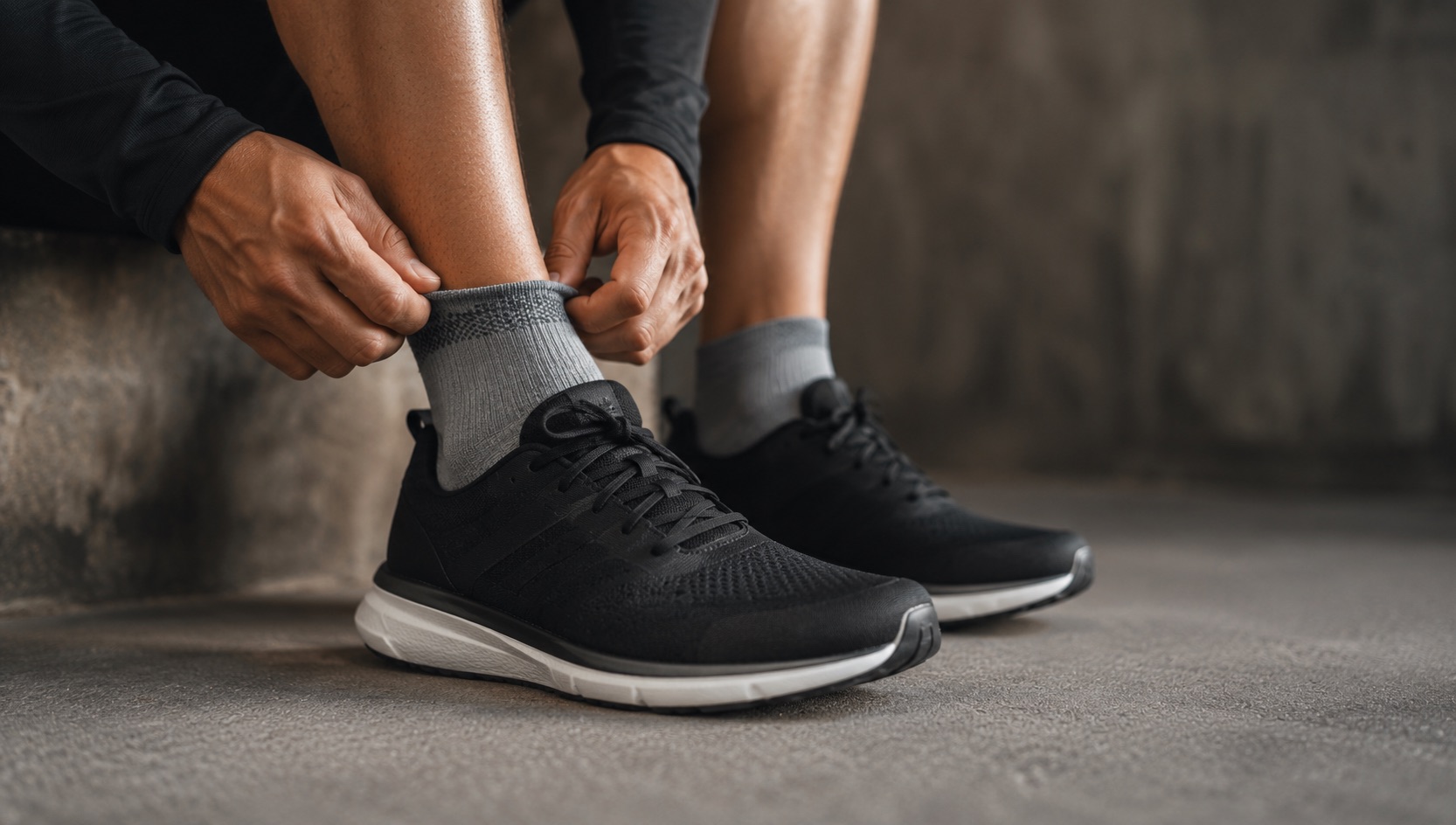
Shoes: Saucony Ride 18 for training and the race. I considered wearing my Endorphin Speed 5s for race day, but decided the extra cushion of the Ride was more important than the extra speed of the Speed for my first post-pregnancy half.
Watch: My Garmin Venu 3S. I used it for pace, distance, and heart rate. Nothing else. I turned off the auto-lap alerts because they stressed me out during long runs.
Bra: High-impact sports bra, non-negotiable. My post-pregnancy chest needed more support than pre-pregnancy. The sports bra guide for postpartum runners covers what worked for me.
Anti-chafe: Body Glide on my inner thighs and under my bra straps. I never needed this before pregnancy. Bodies change. Accept it and buy the stick.
Fuel: Two SIS gels, one in each shorts pocket. I practiced grabbing them while running so I did not have to stop.
Phone: In a running belt for safety, not for music. I ran the race without headphones. More on that below.
Race Day
I woke up at 5:30 AM, which is when my daughter wakes up anyway. So much for the “sleep well the night before” advice. I ate toast with peanut butter and banana at 6:00 AM, drank coffee, and was at the start line by 7:30 AM.
I seeded myself in the 6:00/km pace group. Conservative, but I had promised myself I would not go out too fast.
Km 1 to 7: Felt great. Almost too easy. The crowd energy helped. I kept looking at my watch and slowing myself down. My legs wanted to go faster, but my brain remembered the training.
Km 8 to 14: The real race began. I settled into a rhythm. Pace was around 5:55/km. I ate my first gel at km 8 and drank water at every station. I felt strong and steady. No drama.
Km 15 to 18: This is where the half marathon gets honest. My legs started to feel heavy. Not painful, just tired. I focused on form: upright posture, relaxed shoulders, quick feet. I ate my second gel at km 15.
Km 19 to 21.1: The last 2 km were the hardest thing I have done since labor. Not as painful, but the same “I want to stop but I cannot stop” feeling. I crossed the finish line at 2:03:42. Not fast by any competitive standard, but I burst into tears anyway.
My pre-pregnancy half marathon was 1:55. I was eight minutes slower. And I could not have cared less.
What I Would Do Differently
Start the training block one week earlier. Having 13 weeks instead of 12 would have given me a buffer for sick days, bad sleep stretches, and the inevitable “I just cannot run today” moments.
Buy new shoes immediately. Do not wait until your knees hurt. If your shoes have more than 400 km on them, replace them before you start a training block.
Take the cutback weeks seriously. I ran slightly more than prescribed during two of my cutback weeks because I felt good. Dumb. The cutback weeks are where fitness consolidates. Respect them.
Skip the headphones on long runs. I trained with music for most long runs and then raced without it (headphones were not allowed on part of the course). The silence was jarring for the first few km. Train the way you plan to race.
Tell fewer people I was training. The “how’s the running going?” questions from well-meaning friends and family added pressure I did not need. When training was going badly, I did not want to explain why. When it was going well, I did not want to jinx it. Next time I am keeping it quieter.
Advice for Other Post-Pregnancy Runners
If you are thinking about a half marathon after pregnancy, here is what I would say:
You are not starting from zero. Your body remembers more than you think. The cardiovascular fitness takes a hit, but the muscle memory and running mechanics come back quickly. I was surprised by how fast the long distance came back once I had a base of consistent running.
Be patient with the early weeks. The first month of training felt embarrassingly slow. I was running 6:30/km on runs that used to be effortless at 5:30/km. That is normal. It does not last forever.
Your body has changed and that is fine. My hips are wider. My feet are slightly bigger. My center of gravity is different. None of this stopped me from running a half marathon. It just meant I needed new shoes and a different sports bra.
Find a training partner or group. I ran most of my long runs alone because of scheduling, and it was lonely. On the few occasions I ran with a friend, the km flew by. If you can find someone to run with, do it.
Do not compare yourself to your pre-pregnancy self. I know this is hard. I did it constantly. But that person had eight hours of sleep every night, no childcare responsibilities, and could run whenever she wanted. You are training under fundamentally different conditions. Be kind to yourself.
For more on the early stages of coming back, my guide to running after pregnancy covers the first months in detail. And if you are pushing a stroller during training, the running stroller guide has everything I learned the hard way.
The Bottom Line
Running a half marathon after pregnancy was achievable for me. That does not make my timeline a template: recovery differs substantially, especially after complications or a Caesarean birth. The challenges were different—sleep, time and a body still recovering—but the feeling of crossing that finish line was the same.
Train easy. Buy new shoes. Respect the cutback weeks. And do not let anyone tell you that being a mom means you cannot be a runner too.
Frequently Asked Questions
How long after pregnancy should I wait before training for a half marathon?
This depends on your recovery. I waited about five months after giving birth before starting a structured block, after roughly two months of consistent running. That is only my timeline. NHS guidance advises a gradual return and discussing high-impact exercise at the postnatal check; specialist physiotherapy guidance commonly uses 12 weeks as an earliest guide for running, with symptom and strength checks and longer recovery where needed. Seek individual advice from a doctor or pelvic-health physiotherapist, particularly after complications or a Caesarean birth. See the NHS postnatal activity guidance and Royal United Hospitals return-to-running guidance.
Can I train for a half marathon while breastfeeding?
I trained while breastfeeding, but that experience does not establish what another person needs. Energy and fluid needs vary with training, feeding and the individual. Pay attention to recovery and feeding, and ask a doctor or registered dietitian for personal guidance if intake, milk supply, weight change or fatigue is a concern.
How do I find time to train with a baby?
I ran during nap times, early mornings before the baby woke up, and occasionally during my husband’s lunch break when he could work from home. The long runs were the hardest to schedule. We treated them like appointments: I put them on the calendar and my husband knew he was on baby duty. Communication is everything. You cannot wing it with a baby at home.
Should I follow a specific training plan or just run more?
Follow a plan. Specifically, a plan designed for beginners or returning runners. I used the structure from the half marathon training plan guide and adjusted the paces to my current fitness. A plan gives you permission to rest on rest days and accountability to run on run days. Without one, I would have either run too much or too little.
What if I miss a week of training due to illness or baby stuff?
Skip it and move on. Do not try to make up missed runs by doubling up the following week. That is the fastest route to injury. If you miss a whole week, just pick up where the plan says to go next. If you miss more than a week, consider pushing your race back or adjusting your goal time. One missed week will not ruin your training. Two weeks of cramming to catch up might.