How to Train for a Half Marathon on Holiday (My Mallorca Week)
How to Train for a Half Marathon on Holiday (My Mallorca Week)
Three weeks before my target half marathon, my family booked a week in Mallorca. Not ideal timing. You cannot just skip a full week of training that close to race day. But you also cannot turn a family holiday into a training camp without becoming the person nobody wants to travel with.
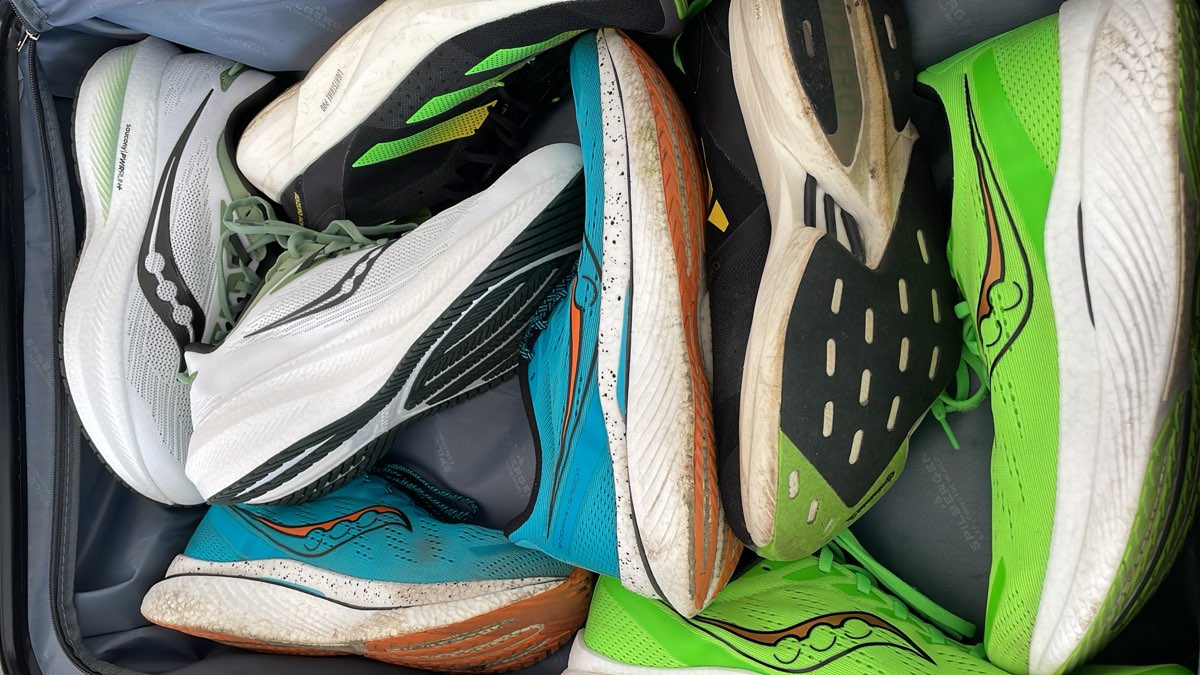
I packed four pairs of running shoes for a one-week holiday. Yes, four. That is excessive by any standard, and I normally travel much lighter (see my usual packing strategy). But Mallorca threw variables at me that justified it: hills, heat, trails, and road surfaces I did not know in advance.
Here is how I handled training for a half marathon while on holiday, without sacrificing family time or the holiday vibe.
The Challenge: What Mallorca Throws at You
Mallorca is not flat. Depending on where you stay, you are dealing with:
- Steep hills on almost every route
- Unpaved trails and rocky paths
- Heat (30+ degrees by mid-morning)
- No familiar routes or measured loops
- Limited shade on exposed roads
My training plan called for one tempo run, one long run, and two easy runs that week. A normal training week at home. But the terrain and conditions meant every session would need adaptation.
Why I Packed Four Shoes (The Exception)
My normal travel rule is two shoes maximum. For this trip, I brought:
- Daily trainer (Adidas Evo SL): For the easy runs on roads and mixed surfaces
- Trail shoes: For the inevitable off-road routes in the hills
- Tempo shoe (Boston 12): For the one quality session I needed to hit
- Recovery/walking shoe: Because I was not wearing my running shoes to dinner
Was this overkill? Maybe. But being three weeks from race day meant I could not afford an injury from running trails in road shoes or forcing a tempo session in heavy trainers on uneven ground. Having the right tool for each session let me train properly without taking unnecessary risks.
For shorter trips or when I am not in a critical training phase, I still stick to my two-shoe travel system. This was a deliberate exception.
The Schedule: Training Without Ruining the Holiday
Here is how I structured the week. The non-negotiable rule: no training during family activity time. Every run happened before the family was awake or during siesta.
Monday (arrival day): Rest. Long travel day, settling in. No running.
Tuesday: Easy 8km at 6:00 AM before breakfast. Used the Evo SL on a flat coastal path I scouted the evening before. Back by 6:45. Showered and at the breakfast table with the family.
Wednesday: Rest day. Beach day with the kids. Zero guilt because the plan accounted for it.
Thursday: Tempo session, 3x2km at half marathon pace. This was the important one. I found a relatively flat 1km stretch of road (slightly uphill one way, downhill the return). Ran 6:00 AM. The Boston 12 performed fine on the smooth tarmac. Had to adjust pace slightly for heat, but the effort was right.
Friday: Easy 10km on trails. This was the wildcard session. I took the trail shoes up into the hills behind our hotel. The route ended up being much steeper than expected (350m elevation gain in 5km). I adjusted from “easy pace” to “easy effort” and let the Garmin’s pace reading be whatever it was. Turns out easy effort uphill in heat is about 6:30/km. Fine.
Saturday: Long run, 16km. The key session of the week. I started at 5:30 AM to beat the heat. Ran along the coast on a paved cycling path I had identified during a drive earlier that week. Flat, shaded in sections, and I could carry water. Finished by 7:15 and the family was just waking up.
Sunday (departure): Rest. Travel day home.
Total: 4 sessions, about 40km. Not my highest volume week, but all the key sessions were there. The tempo and long run hit their targets. That is what matters three weeks out from race day.
Five Rules for Holiday Training
1. Scout Routes Before You Run Them
On the first day, I drove around and identified three routes: a flat coastal path, a hillier trail loop, and a smooth road stretch for speed work. Knowing exactly where I was going meant no time wasted searching at 5:30 AM.
Use Google Maps satellite view before the trip, or apps like Strava’s route explorer to see what other runners have done in the area. Mallorca has a strong running and cycling community, so routes were well-documented.
2. Run Before the Family Wakes Up
The 5:30-6:00 AM window is magic on holiday. It is cool enough to run hard, quiet, and you are done before anyone notices you were gone. I was back, showered, and drinking coffee by the time my kids opened their eyes. My wife uses the same strategy when she runs (we alternate who gets the early slot).
Trying to squeeze runs in during the day means either leaving your family at the pool or cutting activities short. Neither is acceptable on a family holiday.
3. Adapt Pace, Maintain Effort
Heat and hills make pace data meaningless. My normal easy pace is around 5:00-5:10/km. In Mallorca heat with elevation, it was 5:40-6:30/km. That is fine. What matters is effort and heart rate, not the number on your watch.
For the tempo session, I targeted heart rate zone rather than pace. My goal HM pace of 4:15/km corresponded to a heart rate of about 165bpm at home. In Mallorca heat, I hit 165bpm at 4:30/km. Same stimulus, different numbers. Trust the effort.
4. Reduce Volume, Protect Quality
A holiday week is not the time for your highest mileage. I dropped about 15% from my normal volume but kept the intensity sessions intact. The tempo run and long run were non-negotiable. The easy runs could be shorter or skipped entirely without affecting my race fitness.
If you are in a similar situation and your half marathon training plan calls for a big week, shift volume to the week before or after the holiday. One reduced week will not cost you fitness. Skipping quality sessions might.
5. Accept Imperfection
The trail run on Friday was supposed to be an easy 45-minute jog. It turned into a hilly sufferfest because I underestimated the terrain. My long run ended up at 15.8km instead of 16 because the path looped back earlier than expected. The tempo run was 10 seconds per km slower than target.
None of that matters. I trained. I maintained fitness. I did not get injured. I did not stress my family. Every box is checked.
Gear Adaptations for Heat
Mallorca in summer means adapting what you carry:
- Water: Essential for anything over 30 minutes. I used a small handheld bottle for the long run and pre-placed a water bottle at the midpoint.
- Sun protection: Running cap, sunscreen on exposed skin, and avoiding shade-free stretches when possible.
- Lighter clothing: My thinnest singlet and shortest shorts. Vanity goes out the window when it is 28 degrees at 6 AM.
- Phone/watch: Garmin handled navigation on unfamiliar routes. Having a loaded route on my watch meant I could explore without worrying about getting lost.
How This Week Affected My Race
Three weeks later, I ran my half marathon. The result: a PB. The Mallorca week did not hurt my preparation at all. If anything, the hill training and heat adaptation gave me a slight edge. My legs felt strong on the flat race course and the relatively cool race morning felt effortless compared to running in 30-degree heat.
The combination of maintaining quality sessions, adapting to conditions, and getting proper recovery (pool, sleep, relaxation) between runs might actually be better than a normal training week at home with work stress and poor sleep.
The Approach for Different Race Timelines
4+ weeks to race: Relax. You can miss a week entirely and be fine. Do whatever running feels fun.
2-3 weeks to race (my situation): Maintain key sessions, reduce volume, adapt to conditions. The fitness is already built. You are protecting it, not building it.
1 week to race: This is your taper anyway. Easy runs only. Actually easier to do on holiday because you are relaxed and well-fed.
Race week: Do not go on holiday the week of your race unless the race is at the destination. Obvious but worth stating.
The key insight that helped me stress less: my aerobic base was built over months of consistent training. One adapted week could not undo that. The risk of overtraining in heat and arriving at the start line tired was far greater than the risk of slightly reduced volume.
FAQ
Should I bring trail shoes on holiday even if I normally run roads?
If your destination has any off-road terrain, yes. Running rocky or unpaved surfaces in road shoes risks ankle injuries and wrecks the foam. If you only have space for one shoe and trails are optional, bring a versatile trail shoe that also handles pavement.
How do I adjust training paces for heat?
Add 15-30 seconds per kilometer for every 10 degrees above your normal training temperature. Or better, ignore pace entirely and train by heart rate or perceived effort. Your body does not care about the number on your watch; it cares about physiological stress.
Is it better to run early morning or late evening on holiday?
Early morning (5:00-7:00 AM) is usually better. Temperatures are lowest, it does not cut into family time, and you get it done before the day starts. Evening runs can work but you are often tired from activities, it is still hot from the day’s sun, and dinner timing gets complicated.
Will one week of reduced training hurt my half marathon preparation?
No. Research consistently shows that maintaining intensity while reducing volume for 1-2 weeks does not reduce fitness. You might actually benefit from the reduced load if your body was accumulating fatigue. The key is keeping one quality session (tempo or intervals) during the week.
How many running shoes should I pack for a holiday?
For most trips: two pairs maximum (one daily trainer, one versatile second shoe). The four-shoe approach I used is only justified when you are in a critical training phase with diverse terrain. For general holiday running with no race upcoming, a single versatile trainer is fine.