How I Got My Kids to Love Running (Without Them Realizing)
My 6 and 8 year old asked to go running again. Voluntarily. Without bribery. They literally said “Dad, when can we do the animal game again?”
That’s the result. Here’s how I got there, what games actually worked, what failed completely, and why I never once used the word “training” around them.
The Context
My wife and I are running a half marathon in April. At the same event, there’s a 1km kids run. Both our kids wanted to do it because they’d seen us running and wanted to be part of it.
I could have made a training plan. I could have told them “we need to practice running 1km.” I could have turned it into homework. Instead, I made it a game. Multiple games, actually. And the result was better than any structured plan could have delivered.
The Golden Rule: Never Make Running the Goal
This is the most important thing I learned. The moment you tell a kid “we’re going running,” you’ve lost half of them. Running is the activity that happens between the fun parts. The fun parts are the game.
Think about it from their perspective. They don’t care about distance. They don’t care about pace. They don’t care about cardiovascular fitness. They care about: winning, making rules, being silly, and making dad lose.
So that’s what I optimized for.
Game 1: Statue & Hunter (The Chase Game)
How it works: One person (the “statue”) runs ahead. After 5 seconds, the other person (the “hunter”) chases. If the hunter catches the statue before the next lamppost/tree/bench, they win. Then you switch roles.
Why it works: It’s a sprint game disguised as a tag game. The kids push hard because they want to either escape or catch. The 5-second head start means the statue runs at full effort (sprinting away) and the hunter does too (chasing).
The magic: You can adjust the head start. Sometimes I count fast (3-4 seconds). Sometimes slow (7-8 seconds). The kids don’t notice they’re doing repeated sprints with short recovery intervals. That’s basically fartlek training, but they think it’s just a game.
Distance covered: A LOT. Because between rounds, you’re walking to the next starting point. So the pattern becomes: sprint, walk, sprint, walk. That’s interval training. They have no idea.
Game 2: Follow the Leader
How it works: One person is the leader. Everyone else copies exactly what they do. Run? Run. Jump over that stick? Jump. Touch the bench? Touch it. Spin around? Spin.
Why it works: Kids love being in charge. When it’s their turn to lead, they sprint because they want to see if dad can keep up. When it’s your turn to lead, you can control the pace and add in fun movements (skipping, hopping, side shuffling).
The secret: Let them lead 70% of the time. Your turns are for recovery (run slow, do funny walks). Their turns are when the real running happens because they always go faster than they would if you told them to.
Game 3: Animal Runs (The Biggest Hit)
How it works: Someone calls out an animal and everyone runs like that animal:
- Turtle: Walk (recovery)
- Horse: Jog (easy pace)
- Cheetah: Sprint (full effort)
- Kangaroo: Hop/jump (plyometrics)
Why it’s the biggest hit: Because the kids invented their own animals. Within 10 minutes, we had:
- Crab: Sideways shuffle
- Snake: Low zigzag run
- Eagle: Arms out wide, sprinting
- Sleepy bear: Slow motion walk (their version of recovery)
- Rocket: The fastest sprint they could do while making rocket noises
The creativity element is what made this one magic. They weren’t just following instructions. They were designing the game. They owned it. And when kids own the game, they never want to stop playing it.
Distance covered without noticing: Easily 500-800 meters of actual running within a 15-minute session. Plus walking, hopping, and shuffling between animal calls.
Game 4: Simon Says (Sprint Penalty Edition)
How it works: Classic Simon Says rules. But when someone messes up (moves without “Simon Says”), the penalty is a 5-second sprint to the next tree and back.
Why it works: The penalty is fun, not punishing. They WANT to mess up because sprinting is exciting. And dad “accidentally” messes up a lot. I lose on purpose constantly. Nothing motivates a kid more than watching dad have to sprint while they laugh.
Key insight: Dad losing is the point. Every time I “fail” and have to do the sprint penalty, they’re entertained AND they see that running is fun, not punishment. The framing of running as a silly consequence rather than a goal completely changes their relationship with it.
What Motivated Them (The Pattern I Noticed)
After two sessions, the pattern was clear. My kids were motivated by:
- Making dad lose. Every game where I could “fail” was a hit. They’d strategize about how to make me mess up.
- Inventing their own rules. The moment I let them modify a game, engagement doubled. Their rules were often better than mine.
- Zero performance pressure. I never said “good job running fast.” I never timed them. I never measured distance in front of them. The only feedback was laughing and having fun.
- Stopping before they wanted to. This one is counterintuitive. I ended sessions while they were still having fun. Never let them run until exhausted. The result: they always wanted to come back for more.
What Didn’t Work (Learn From My Mistakes)
Talking about distance
The first time, I said “let’s try to run to that tree and back, that’s about 200 meters.” My 6-year-old immediately said “that’s too far.” Distance is abstract and scary to kids. Never mention it.
Letting them run until exhausted
The second session on day one, I let it go too long. My youngest got tired, grumpy, and said she didn’t want to run anymore. I almost ruined it. The fix: stop 5 minutes before they want to stop. Always leave them wanting more.
Structured anything
I briefly tried “okay, let’s do 3 rounds of the chase game” and got immediate pushback. Kids don’t want structure. They want flow. One game naturally transitions to another when the current one gets boring. Follow their energy, not a plan.
Running alongside them at “their pace”
Boring for everyone. If I’m just jogging slowly next to them, there’s no game. No competition. No fun. Either I’m chasing them, they’re chasing me, or we’re doing something silly. Never just plain running side by side.
The Results
Day 1: Two play sessions totaling about 3km of movement. Mostly walking between games with bursts of sprinting, jogging, and jumping. They had no idea they’d covered that distance.
Day 2: One session, 2.27km tracked on my watch (I wore it out of curiosity, never showed them the number). Slightly shorter because we started a bit later and I deliberately stopped early while energy was still high.
After both days: Both kids asked when they could go again. That’s the only metric that matters.
For the 1km kids run in April? They’ll crush it without a single “training” session. They’ve already run more than 1km in a single game of Animal Runs without realizing it.
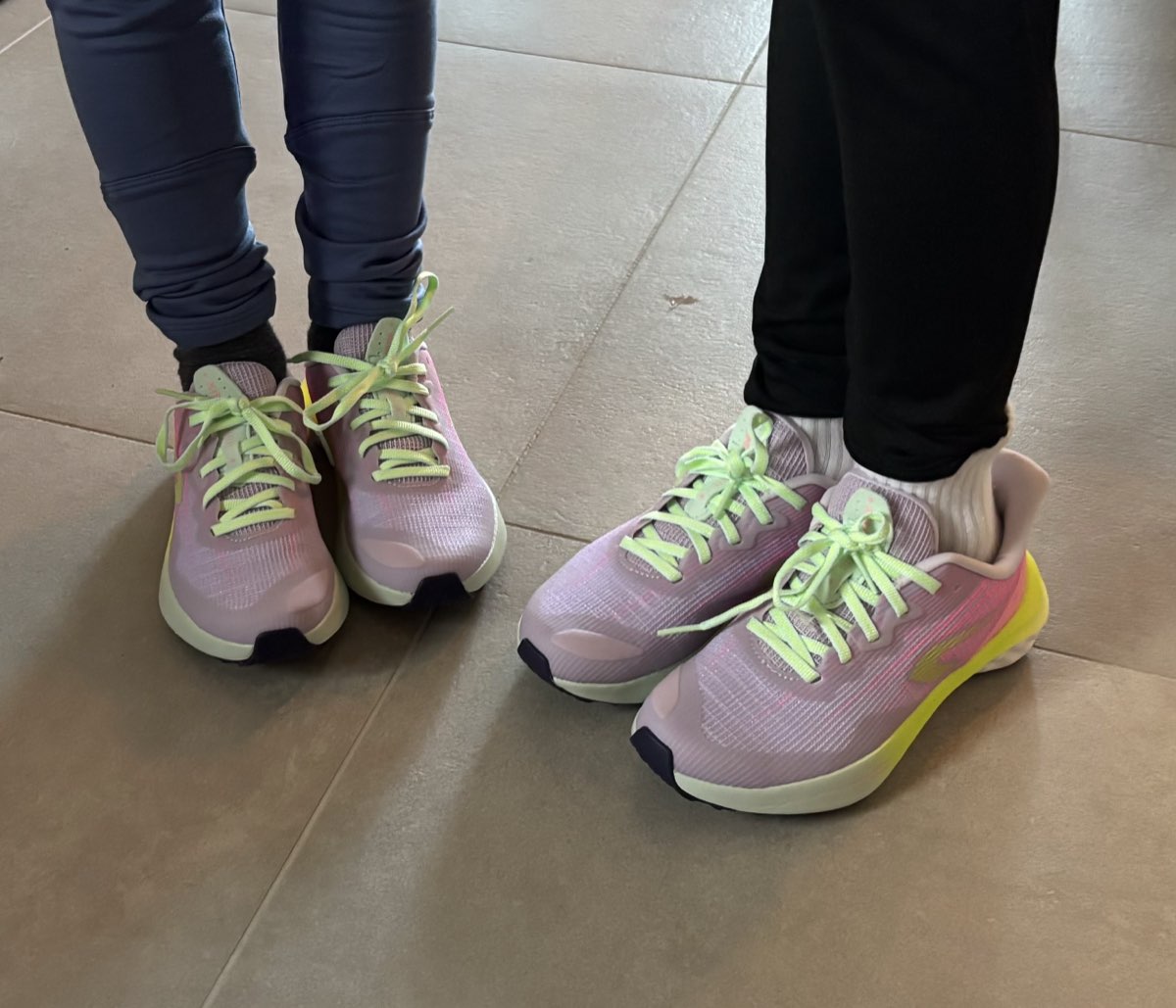
The Shoes: Kiprun K500 Fast
Both kids run in the Kiprun K500 Fast from Decathlon. EUR 35 each. They’re light, flexible, have a small amount of cushion, and the kids love the colors. That’s all that matters at this age.
I didn’t buy them “running shoes” in the sense adults think about it. I bought them shoes that are comfortable for running and that they think look cool. The “look cool” part is non-negotiable. If they don’t like the shoes, they won’t want to wear them.
Don’t overthink kids’ running shoes. Light, flexible, proper fit. Anything beyond that is marketing aimed at parents. If you’re looking at gear for new runners generally, keep it simple.
Tips If You Want to Try This
- Start with 15 minutes max. You can always do more next time. You can’t undo a bad first experience.
- Let them win. Lose on purpose. Be dramatic about it. They’ll love it.
- Never time or measure. The moment you introduce numbers, it becomes performance. Keep it play.
- Bring water but don’t make it serious. Quick sip, back to games.
- Match their energy. If they want to walk and look at bugs for 3 minutes, look at bugs for 3 minutes. Then suggest the next game.
- Stop early. I can’t stress this enough. End on a high note. Every single time.
- No warm-ups, no cool-downs. Kids don’t need them. They naturally start slow (walking to the park) and end slow (walking home). Don’t formalize it.
My Bigger Hope
I don’t want my kids to become competitive runners. I want them to associate movement with joy. If they grow up thinking of running as something fun that makes you laugh and feels good, they’ll stay active regardless of what sport they eventually choose.
The games are temporary. The relationship with physical activity is permanent. That’s what I’m really building here.
My own journey from complete beginner to sub-20 started because I genuinely enjoyed running. Not because someone made me train. I want the same foundation for my kids.
If you’re looking to start a running habit yourself, the same principle applies. Make it enjoyable first. Speed and structure come later. I’ve written about how to approach your first 5K with that same philosophy.
And if your local parkrun has a junior event, that’s a fantastic next step. Zero pressure, other kids, and free.
The Quote I’ll End With
“Children don’t get motivated to run by making running the goal. They get motivated when running is just part of a fun game.”
I didn’t read that anywhere. I learned it by watching my kids ignore my instructions and then sprint faster than I’ve ever seen them move when they were chasing me in the hunter game. The running was never the point for them. The game was.
Make the game good enough, and the running takes care of itself.
FAQ
What age can kids start running?
Mine are 6 and 8 and they handle these sessions perfectly. I wouldn’t structure anything before 5. Before that, just let them play freely at the park. The games I described work well from about age 5-6 onward when they can understand rules and take turns.
How far can kids run safely?
More than you think, when it’s play-based with natural walk breaks. My kids covered 2-3km in a session without any issues because they were alternating sprints with walking, hopping, and standing around making animal noises. Continuous running at a set pace is much harder for them and I wouldn’t push it.
Do kids need special running shoes?
They need lightweight shoes with a flexible sole and proper fit. They don’t need stability features, carbon plates, or expensive foam. The Kiprun K500 Fast at EUR 35 is perfect. Make sure there’s a thumb width of space at the toe and the shoe bends easily at the ball of the foot.
My kid says they hate running. Now what?
They hate the idea of running as exercise. They don’t hate sprinting after a friend, chasing dad, or being a cheetah. Change the framing completely. Drop the word “running.” Replace it with “let’s play a game outside.” If they still refuse, back off completely. Force creates negative associations that last years.
Should I sign my kid up for an athletics club?
Only if they ask. My kids enjoy running with me as play. If I signed them up for coached sessions with structure and performance goals, it might kill their intrinsic motivation. Let them lead. If they eventually ask to join a club because they want to race other kids, great. But let it come from them.