Getting My Kids Into Running: Shoes, Motivation, and When to Start
Getting My Kids Into Running: Shoes, Motivation, and When to Start
My 6-year-old and 8-year-old now voluntarily ask to go running with me. That did not happen by accident. It took deliberate experimentation with games, zero pressure, and the right moment. Here is what worked, what failed, and when your kids actually need proper running shoes versus when regular sneakers are perfectly fine.
The One Rule: Never Make It Feel Like Exercise
Kids have a natural urge to run. Watch any playground. They sprint, stop, sprint again. Running is play when kids choose it. The moment it becomes structured, scheduled, or obligatory, it stops being fun.
My approach: I never once said “let’s go for a run.” I said “want to come explore that path?” or “bet you can’t beat me to that tree.” The running happened naturally within games and adventures. The word “training” never entered the conversation.
The details of exactly which games worked and how I structured these outings are in my full guide to getting kids to love running. This article focuses on the gear and timing questions I get asked most.
When Do Kids Actually Need Running Shoes?
There is no universal weekly-frequency cutoff. For occasional playground running or short family outings, comfortable, well-fitting everyday athletic shoes may be enough. We considered dedicated shoes when our children entered an organized road event and their existing shoes were worn and poorly suited to it.
For occasional playground running, backyard sprints, or joining you once a week for 10-15 minutes, regular sneakers with flexible soles are fine. Kids’ feet are adaptable. Their joints have natural cushioning from undeveloped structures. They do not need foam technology or support systems for sporadic activity.
I bought proper running shoes for my kids when:
- My 8-year-old started asking to join me twice a week
- We signed up for a family event (parents half marathon, kids 1km race)
- Their runs exceeded 15-20 minutes regularly
Those were our buying triggers, not medical or training thresholds for other children.
The Kiprun K500 Fast: What We Bought
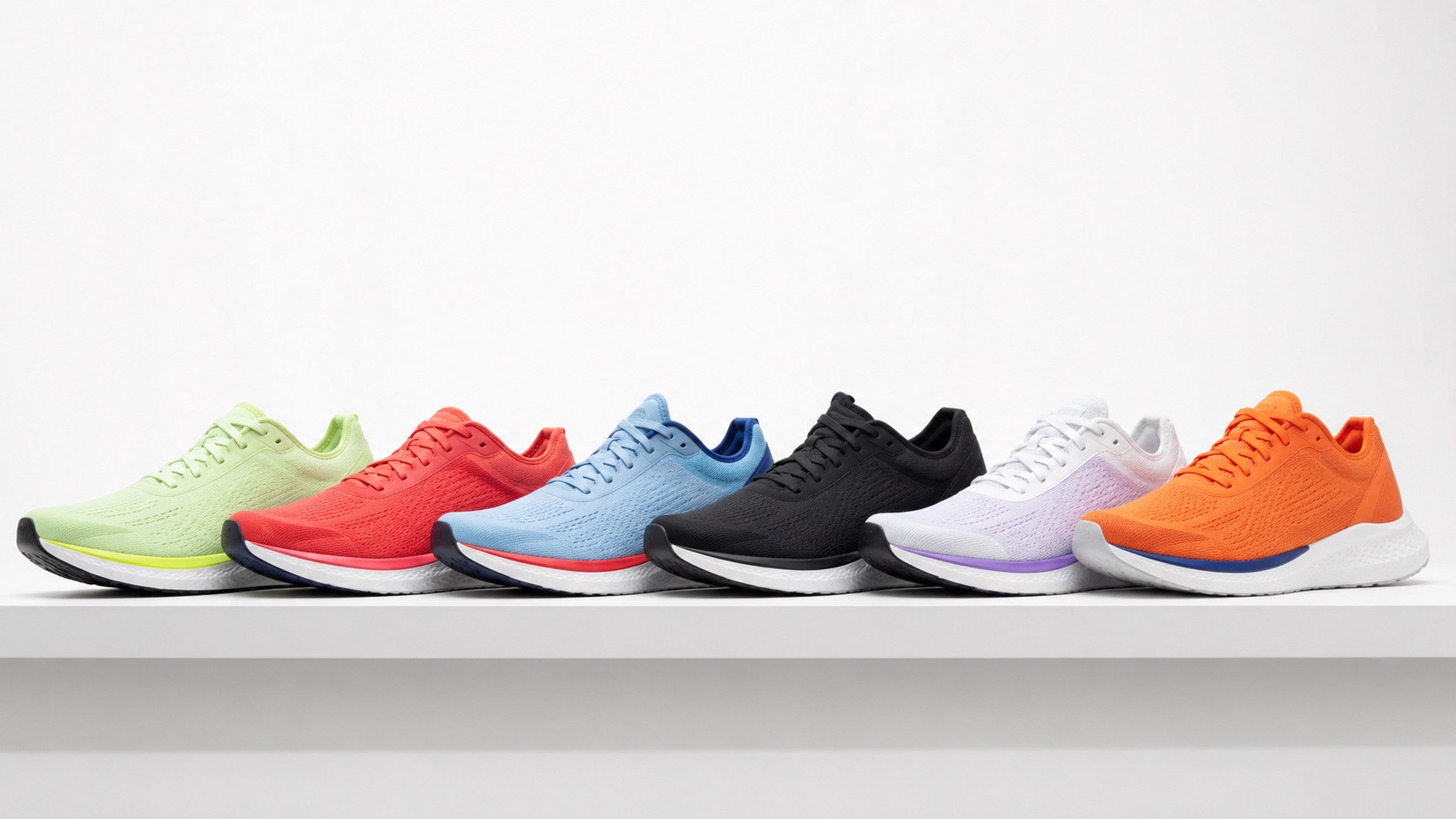
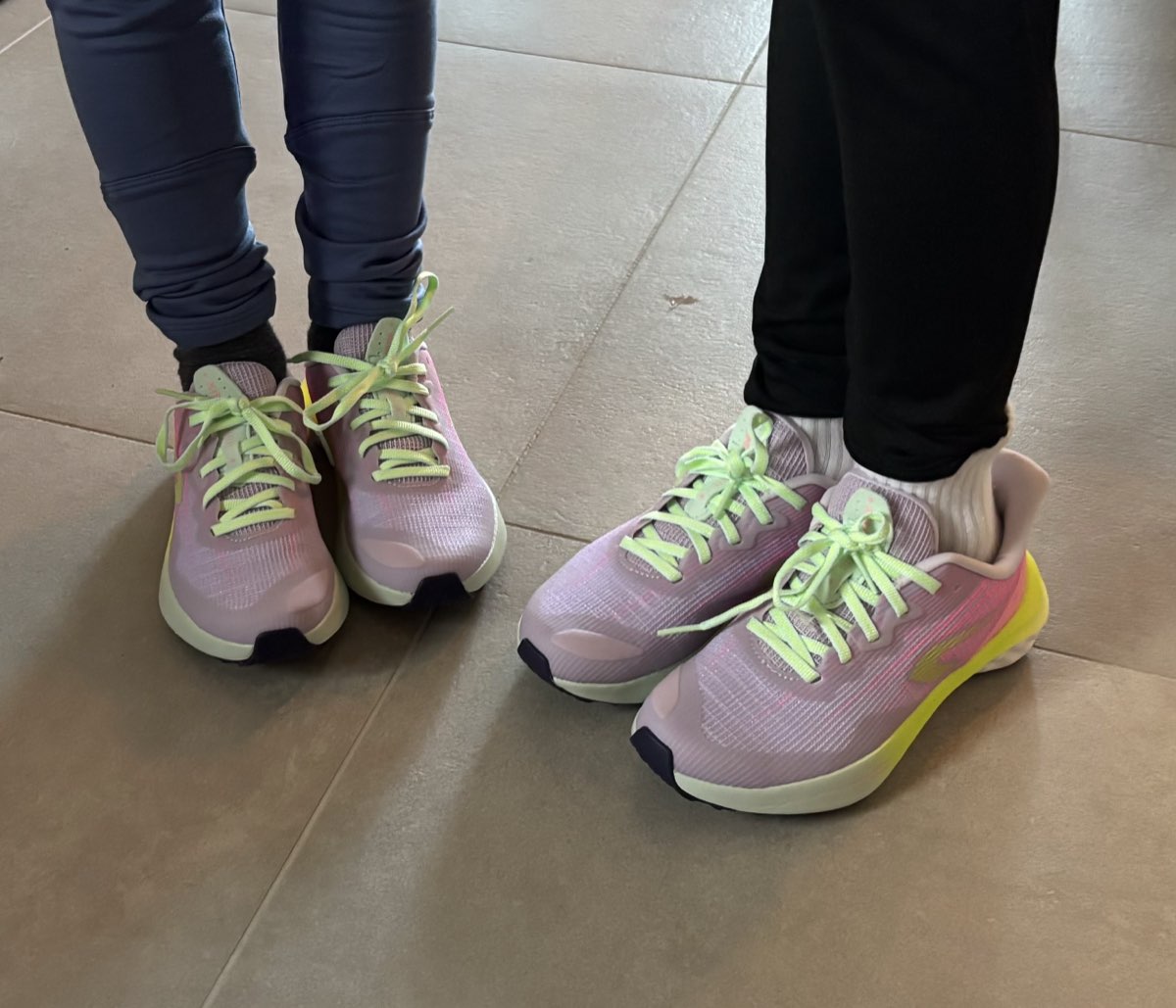
After researching kids’ running shoe options, I chose the Kiprun K500 Fast from Decathlon.
Price: EUR 35 Sizes: Availability varies by market and date Weight: Manufacturer-listed at 186 g in EU 35 Sole: Flexible with decent tread for mixed surfaces
Why this shoe specifically:
- Affordable. Kids outgrow shoes in 4-6 months. Spending EUR 35 versus EUR 80+ on brand-name kids’ shoes makes financial sense when the shoes have a 6-month shelf life regardless of mileage.
- Actually designed for running. Unlike many “athletic” kids’ shoes that are just styled to look sporty, the Kiprun has a flexible sole, reasonable cushioning, and a shape that allows natural foot movement.
- Available in store. Kids need to try shoes on. Online sizing is unpredictable at these ages. Decathlon stores have Kiprun stock you can test.
- Both kids liked them. This matters more than specs. If the child does not want to wear the shoe, nothing else matters.
Kiprun as a brand is Decathlon’s running-specific line. They focus on value-for-money running products. The K500 Fast is their kids’ performance model, and it punches well above its EUR 35 price point.
Sizing: Measure, Then Test the Fit
Kids’ feet grow fast. Between ages 5-10, expect half a size to a full size increase every 4-6 months. For running shoes specifically:
- Do not automatically size up. Measure both feet and use the brand’s size guidance, then judge the fit while the child is standing and moving.
- Check fit with the thumb test. One thumb-width of space between longest toe and end of shoe when standing.
- Afternoon shopping. Feet are largest in the afternoon after a day of activity. Buy shoes then.
- Ask the child. After trying them on, have them run 20 meters in the store. If they say it feels weird or tight anywhere, go up another half size.
Do not buy a deliberately loose shoe on the assumption that a child will grow into it. If you are unsure about fit, ask a qualified footwear fitter or an appropriate health professional, especially when a child reports recurring pain.
Motivation: What Actually Works
Games That Produce Running
These are the activities that got my kids running without calling it running:
Treasure hunts: I hide small items along a route. They sprint between clues. Total running time: 20-30 minutes. Perceived effort: zero (they are hunting, not exercising).
Animal runs: “Run like a cheetah to that bench! Now walk like a turtle to the fountain.” Intervals without calling them intervals.
Race challenges: “Who can run to that sign fastest?” Simple, works every time. Kids are naturally competitive with parents and siblings.
Explore loops: “Let’s find out where this path goes.” Curiosity drives them forward. The running happens because walking is too slow when you want to see what is around the corner.
Parkrun Junior (2km): If your local parkrun has a junior event, it is the perfect structured introduction. Other kids running alongside makes it social rather than exercise.
What Does Not Work
- “Come on, you need exercise.” Immediate resistance.
- Pace or distance targets. Kids are not small adults. They should never be thinking about pace.
- Running without a destination or game. Aimless jogging bores adults. It annoys kids even more.
- Criticism of form or speed. If they are running, they are doing great. Full stop.
- Forcing consistency. Some weeks they want to run three times. Some weeks zero. Both are fine.
What Age to Start
Play-based running can begin naturally at a young age, but children do not all regulate effort or communicate discomfort in the same way. Keep the activity child-led, age-appropriate and enjoyable, and stop when a child has pain or no longer wants to continue.
Ages 3-5: Keep it pure play. Under 5-10 minutes of actual running at a time. Never structured.
Ages 5-7: Can participate in short organized runs (500m-1km events). Can sustain 10-15 minutes of game-based running. Still fully play-oriented.
Ages 7-10: Can enjoy longer outings (20-30 minutes with walk breaks). May start wanting “real” running gear. Can understand and enjoy basic goals (“let’s try to run the full 1km without stopping”).
Ages 10+: Can follow gentle training concepts if they are interested. Still not about performance. But can handle progressive challenges and longer distances.
My 8-year-old currently runs 1-2km continuously with enthusiasm. My 6-year-old does 10-15 minutes of game-based running with lots of sprints and stops. Both are perfect for their ages.
The Gear That Actually Matters for Kids
Beyond shoes, here is what helps:
A light watch or timer: My 8-year-old loves checking “how long we ran.” Not for performance. For the achievement feeling. Even a basic digital watch creates engagement.
Matching outfit (optional but powerful): When my kid got a running shirt that “looks like daddy’s,” motivation increased significantly. Identity matters at these ages.
A reward system (short-term only): We use sticker charts for the first month of any new habit. After the habit is established, the activity itself provides the reward. Hot chocolate after winter runs is non-negotiable.
Proper socks: More important than expensive shoes. Cotton blisters. Synthetic or merino thin running socks prevent discomfort that kills motivation.
What NOT to Buy for Kids Running
- Expensive shoes over EUR 50. They will be outgrown in 4-6 months. The EUR 35 Kiprun is plenty.
- GPS watches. Absolutely not. Data and metrics have no place in kids’ running. Let them feel, not measure.
- Compression gear. Marketing nonsense for adults. Absurd for children.
- Any “performance” supplements or nutrition products. Water and their normal diet is all they need. Ever.
Building Toward Family Events
One of the best motivators for our family: signing up for events where everyone participates. Our local running calendar has multiple options where parents race a 10K or half marathon while kids do a 1km or 2km event on the same course.
The shared experience of racing, cheering each other on, and celebrating together creates lasting positive associations with running. My 8-year-old talks about “our race” for weeks afterward. That one morning generates more running enthusiasm than two months of backyard games.
For how we structure training around family events (both parents running, three kids to manage), I cover the full logistics in my family running pillar article.
The Long Game
I am not trying to produce competitive child runners. I am trying to build a positive relationship between my kids and physical activity. If they grow up associating running with fun family time, adventure, and personal achievement (rather than obligation, boredom, or pressure), I have won regardless of whether they ever run a 5K competitively.
The shoes help by removing discomfort. The games help by keeping it fun. But the biggest factor is attitude: running with my kids is family time, not training time. The moment I forget that, it stops working.
FAQ
At what age should kids get proper running shoes?
When they run regularly (2+ times per week for 15+ minutes) or when they participate in organized running events. For occasional playground running or once-weekly play sessions, regular flexible sneakers are fine. Most kids do not need dedicated running shoes until age 6-8 at the earliest, and only if they are consistently active runners.
How far should kids run at different ages?
Ages 5-7: up to 1km continuously, with walk breaks totally fine. Ages 7-9: up to 2km at their own pace. Ages 9-12: up to 3-5km if they enjoy it and show no signs of pain or excessive fatigue. These are loose guidelines. Let the child’s enthusiasm and comfort dictate distance, not adult expectations.
Is it bad for kids’ joints to run on pavement?
No. Research shows that children’s skeletal systems are highly adaptable to impact. Their growth plates actually respond positively to appropriate loading. The risk is overuse (too much volume or intensity), not the surface itself. For recreational kids’ running (under 30 minutes, 2-3 times per week), pavement is perfectly safe.
Should I correct my child’s running form?
No. Children naturally develop efficient movement patterns through play and practice. Formal coaching of running mechanics is unnecessary and counterproductive before age 12-14. The exception: if a child consistently complains of pain during running, see a pediatric physiotherapist. Otherwise, let them run however feels natural to them.
How do I motivate kids who say running is boring?
The problem is not the child’s attitude. The problem is the format. Pure running (go from A to B at steady pace) IS boring for most kids. Add games, competition, exploration, or social elements. Treasure hunts, races against a parent, exploring new paths, running with friends, or events with other kids. Change the format before labeling the child as “not interested in running.”