My First 5K Race: What I Learned (And What I'd Do Differently)
Last month I ran my first official 5K race. Not a parkrun (though those helped me get here). An actual race with a number bib, a timing chip, a start line, and a finisher medal. I trained for 12 weeks using a Couch to 5K program, graduated to running 5km three times a week, and then signed up for a local charity 5K because I wanted to prove to myself that I could do it.
I finished in 31:42. That time doesn’t matter much (any finishing time would have been a win), but I’m proud of it because I ran the entire distance without walking. What matters more is what I learned, because I made nearly every beginner mistake possible, and I want to save you from doing the same.
Here’s the honest story of my first race, the mistakes, the surprises, and the absolute euphoria of crossing that finish line.
Mistake 1: I Arrived Too Late
The race started at 9:30am. I arrived at 9:05. This was catastrophically insufficient time.
Here’s what I didn’t account for: the parking situation was a disaster. The race was in a park with limited parking, and every runner plus their families were arriving between 8:30 and 9:00. I circled for 10 minutes, eventually parked on a side street 800m from the start area, speed-walked to registration, joined a toilet queue of 40 people, and barely made it to the start corral with 3 minutes to spare.
I had no time to warm up. No time to settle my nerves. No time to find the pace group I wanted to start near. I was stressed, flustered, and my heart rate was already elevated before the gun went off. Not ideal.
What I’d do differently: Arrive a full hour before start time. That sounds excessive for a 5K, but between parking, registration, toilets, warm-up, and just calming down, you need it. Especially for your first race where everything is unfamiliar.
Mistake 2: I Went Out Way Too Fast
The starting gun goes off and suddenly 500 people are running. The energy is incredible. Everyone around you is running fast. Adrenaline floods your body. Your training pace of 6:30/km? Forgotten. You’re suddenly running 5:15/km and it feels amazing.
For about 800 meters.
Then your lungs catch fire. Your legs feel heavy. And you’re only 800m into a 5km race. I went from feeling invincible to feeling like I might have to walk within the first kilometer. I didn’t walk, but I slowed dramatically in km 2 and 3 (to 7:00/km) before settling back to my training pace for the last 2km.
My splits tell the story: 5:18, 6:52, 6:48, 6:23, 6:21. That first km was 90 seconds faster than my training pace. That’s not a “slightly fast start.” That’s a disaster.
What I’d do differently: Start conservatively. Deliberately. Even if everyone passes you in the first 500m. Your first km should be at or slightly slower than your goal pace. You’ll pass those same people at km 3 and 4 when they’re dying from their own fast start.
Mistake 3: I Wore New Shoes
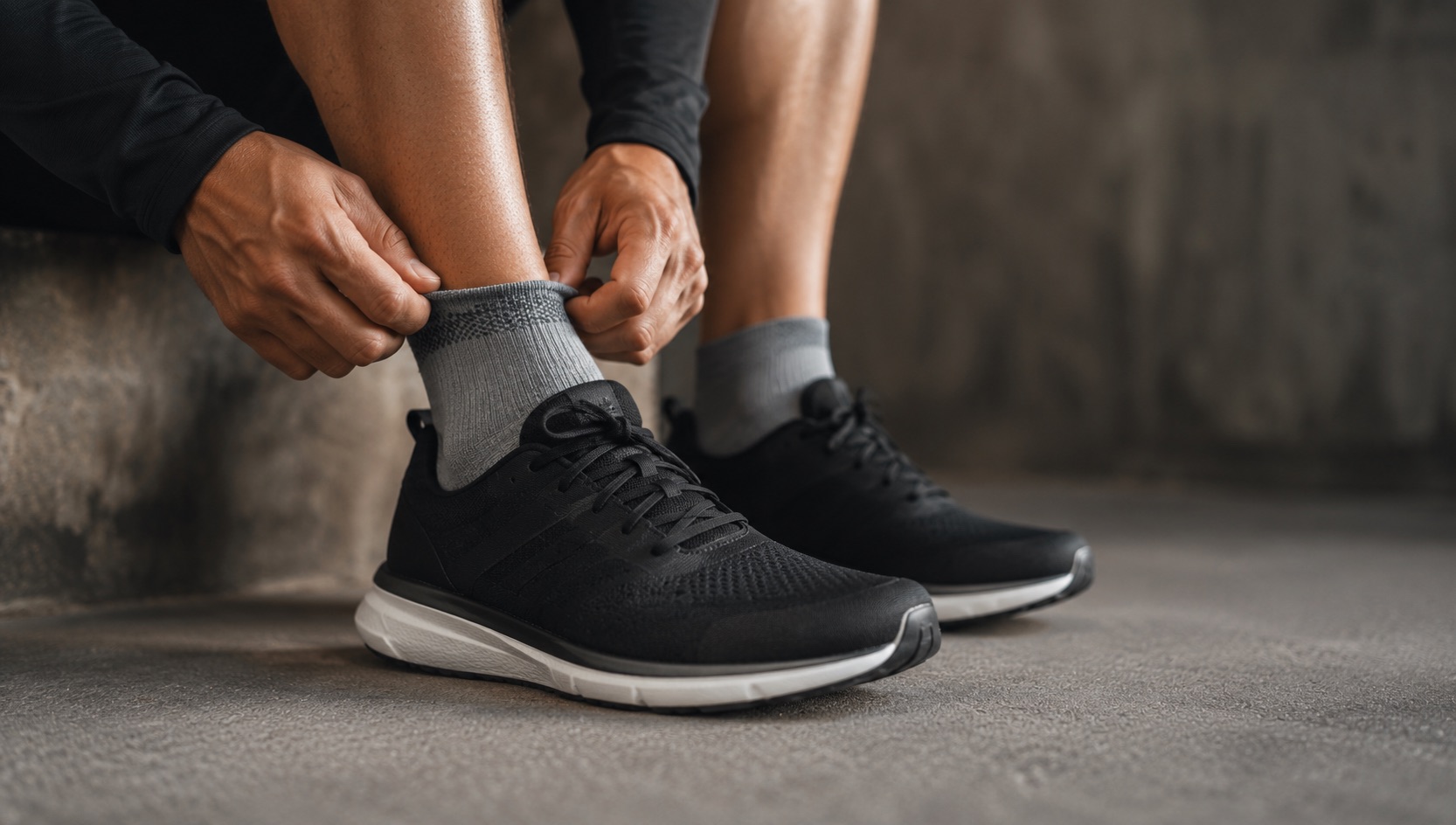
Two weeks before the race, I bought new running shoes. They felt great in the store. They felt fine on a 3km test run. So I figured they’d be perfect for race day.
They were not perfect. By km 3, I had a hot spot on my left heel. By km 4, it was a full blister. It wasn’t race-ending, but it was painful and distracting during what should have been my strongest finish.
The shoes weren’t bad shoes. They just hadn’t been broken in enough. The heel collar was slightly stiffer than my old pair, and over 5km of slightly altered race-day gait (faster pace, harder foot strikes), that stiffness created friction my training runs hadn’t exposed.
What I’d do differently: Race in shoes with at least 50km on them. The shoes you’ve trained in, that you know are comfortable over the distance, that have molded to your foot. Race day is not the time to debut new gear.
Mistake 4: I Didn’t Know Where to Stand at the Start
The start corral was a mass of people. Fast runners at the front, families with strollers at the back, and everything in between. I stood somewhere in the middle because I didn’t know where else to go.
This meant I spent the first 400m dodging slower runners, weaving around groups, and generally wasting energy on lateral movement. It also contributed to my too-fast start because the people immediately around me were faster runners who were being held back by the crowd, so when space opened up they surged and I surged with them.
What I’d do differently: Position yourself honestly. If your goal pace is 6:30/km, stand with the 6:00-6:30 group, not the 5:00 group. Many races have pace markers or estimated finish time signs. Use them. Starting too far forward means you’re in people’s way. Starting too far back means weaving.
Mistake 5: I Didn’t Bring Body Glide
I didn’t think I’d need anti-chafe for a 5K. Wrong. The combination of a new singlet (also a mistake, related to mistake 3), nervous sweating before the race, and a slightly faster pace than training meant I chafed under both arms and on my inner thighs. For 5km. It wasn’t terrible, but it was noticeable and completely preventable.
What I’d do differently: Body glide everywhere. Arms, thighs, anywhere fabric touches skin repeatedly. It takes 30 seconds and prevents hours of post-race stinging in the shower.
The Mistakes Table
| Mistake | What Happened | What To Do Instead |
|---|---|---|
| Arrived 25 minutes before start | No time for parking, toilets, warm-up. Started stressed | Arrive 60 minutes early. Account for parking chaos |
| Went out too fast (5:18 first km vs 6:30 goal) | Blew up at km 2, ran km 2-3 much slower than capability | Start 10-15 sec/km slower than goal pace. Speed up later if you feel good |
| Wore new shoes (only 3km on them) | Heel blister by km 3, painful last 2km | Race in shoes with 50+ km. Nothing new on race day |
| Stood in wrong position at start | Weaving, dodging, wasted energy, got pulled too fast | Position based on expected pace. Use pace markers if available |
| No body glide or anti-chafe | Under-arm and thigh chafing, painful post-race shower | Apply body glide to all friction zones regardless of distance |
| Didn’t warm up | Started with cold muscles, first km felt terrible mechanically | 5-10 min easy jog + dynamic stretches before entering corral |
| No race plan | Reacted to crowd instead of running my own pace | Write target splits on your arm or set watch alerts per km |
| Earbuds in (race disallowed them) | Had to stuff them in my pocket at the start, lost one | Check race rules for headphone policy, leave them in the car if banned |
What I Got Right
It wasn’t all mistakes. A few things worked:
I trained consistently. 12 weeks of following a program meant I had the fitness to finish. The race itself was hard, but I never doubted I could complete the distance.
I used my phone GPS. I don’t own a running watch, and I was worried that would be a problem. It wasn’t. My phone in an arm strap gave me pace data every km (via the app’s audio alerts). It wasn’t perfect (GPS was slightly off in the first km near tall buildings), but it was good enough. You don’t need an expensive watch for a 5K.
I ate breakfast early. Toast and banana, 2 hours before the start. No stomach issues during the race. This was advice from a friend who runs regularly, and it worked perfectly.
I had someone at the finish. My partner was at the finish line with a water bottle and a hug. Having someone to share the moment with made it ten times better. The endorphin rush of finishing your first race is genuinely one of the best feelings I’ve experienced.
Gear Lessons From My First Race
Here’s my honest assessment of what gear mattered and what didn’t:
Mattered more than expected:
- Body glide (didn’t use it, paid for it)
- Comfortable, broken-in shoes (see mistake 3)
- A watch or phone showing current pace (pacing yourself is impossible without feedback)
- Simple clothing you’ve run in before
Mattered less than expected:
- Fancy GPS watch (phone worked fine for my needs)
- Special race-day clothing (your training kit is your race kit)
- Energy gels (for a 5K, you don’t need them. Your glycogen stores handle 30 minutes easily)
- Expensive socks (my standard £8 running socks were perfectly fine)
Didn’t matter at all:
- What other people were wearing
- Whether my shoes looked new or old
- Having the “right” running brand
- Post-race recovery gear (I just needed water and a sit down)
Would I Do It Again?
Absolutely. Without hesitation. Despite every mistake, crossing that finish line was one of my proudest moments this year. The medal is on my bedside table (yes, really). I’m already signed up for another 5K in September, and I’m considering a 10K next spring.
For anyone thinking about their first race: just do it. You’ll make mistakes. You’ll learn from them. And you’ll get the incredible feeling of being a person who races, not just a person who runs.
For the gear I used during my Couch to 5K journey (what was worth buying and what wasn’t), see my C25K gear guide. For race-specific preparation tips, our how to run your first 5K guide covers the practical details I wish I’d read beforehand. And if you’re looking for a low-pressure way to try racing before committing to an event, our parkrun guide is perfect for beginners.
If you need shoes for your first race (and please, break them in first), our beginner running shoes guide has recommendations at every price point.
FAQ
Do I need a GPS watch for my first 5K race?
No. A phone with a running app in an armband works fine for pacing. The audio pace alerts every kilometer are enough to keep you honest. A GPS watch is nice to have (lighter, more accurate, easier to glance at), but it’s not necessary for a 5K. Spend that money on good shoes and a race entry instead.
What should I eat before a 5K race?
Something simple, familiar, and easily digestible, 2-3 hours before start. Toast with peanut butter, a banana, oatmeal, or a simple bagel. Nothing high in fiber, fat, or anything you haven’t eaten before a training run. You don’t need carb-loading for a 5K. Your normal glycogen stores are more than sufficient for 20-35 minutes of running.
Are headphones allowed in 5K races?
It depends on the race. Some races ban them entirely (for safety reasons on road courses). Some allow bone conduction headphones but not in-ear buds. Some don’t restrict them at all. Check the race rules before race day. I didn’t check, brought earbuds, and had to stuff them in my pocket at the last minute when I saw the “no headphones” sign.
How fast should I expect to run my first 5K race?
Expect to run roughly your training pace, maybe 10-20 seconds per km faster due to adrenaline and crowd energy. But don’t plan for a massive improvement. A realistic first-race goal: finish without walking, at or near your training pace. Any time is a good time for your first race. You can chase speed at your second, third, or tenth race.
What do I do if I need to walk during the race?
Walk. There is absolutely no shame in walking during a race, especially your first one. Move to the side so you don’t block runners behind you, take a minute to recover, then start running again when you feel ready. Many experienced runners use run-walk strategies intentionally. Nobody is judging you. Everyone is focused on their own race.