How to Choose Running Shoes - Complete Buyer's Guide 2026
Buying running shoes shouldn’t feel like solving a puzzle - but walk into any running store and you’re hit with walls of foam, acronyms, and price tags that make your head spin. Neutral? Stability? What’s a “drop”? And why does that salesperson keep asking about your arches?
Take a breath. This guide breaks it all down. Whether you’re lacing up for your first 5K or replacing a worn-out pair, you’ll walk away knowing exactly what to look for.
Understanding Your Foot Type
Your foot type determines which category of shoe will keep you running comfortably and injury-free. Two easy ways to figure it out:
The Wet Test
Step on a piece of cardboard or brown paper with a wet foot. Look at the imprint:
- Full footprint (no curve inward): You likely have flat feet / low arches and may overpronate. Check out our guide on the best running shoes for flat feet.
- Moderate curve on the inside: Normal arch. Most shoes will work for you.
- Very thin band connecting heel and forefoot: High arches. You likely underpronate (supinate).
Gait Analysis
The wet test is a starting point, but a proper gait analysis at a specialty running store gives you the full picture. A staff member will watch you run on a treadmill (sometimes with slow-motion video) to see how your foot strikes, rolls, and pushes off. It’s free at most stores and takes 10 minutes. Worth every second.
Shoe Type Decision Table
Once you know your foot type and pronation pattern, use this table to narrow down your category:
| Type | Pronation | Arch Height | Who It’s For | Example Shoes |
|---|---|---|---|---|
| Neutral | Neutral / mild supination | Normal to high | Runners with efficient gait, no correction needed | Nike Pegasus, Brooks Ghost, ASICS Gel-Nimbus |
| Stability | Mild to moderate overpronation | Low to normal | Most overpronators, runners wanting guidance without bulk | Brooks Adrenaline GTS, ASICS GT-2000, Saucony Guide |
| Motion Control | Severe overpronation | Very low / flat | Heavier runners or those with significant inward roll | Brooks Beast, ASICS Gel-Kayano, New Balance 860 |
| Minimalist | Neutral | Normal to high | Experienced runners seeking ground feel and natural stride | Merrell Vapor Glove, Altra Escalante, Vivobarefoot |
Not sure where you land? Our beginner shoe recommendations are a safe starting point for most new runners.
Cushion Levels Explained
Cushioning is about how much material sits between your foot and the ground. More isn’t always better - it depends on your body, mileage, and preference.
- Minimal (under 20mm stack height): Close-to-ground feel. Strengthens foot muscles but demands adaptation time. Best for short runs and experienced minimalist runners.
- Moderate (20–30mm): The sweet spot for most runners. Enough protection for daily miles without feeling disconnected from the road.
- Max cushion (30mm+): Plush, high-stack shoes like Hoka Bondi or Brooks Glycerin. Great for long runs, heavier runners, or anyone who wants maximum impact absorption. The tradeoff: slightly less ground feel and sometimes less stability on uneven surfaces.
For a deeper comparison of popular cushioned trainers, see our Hoka vs Brooks vs ASICS breakdown.
Drop Explained (Heel-to-Toe Offset)
“Drop” is the height difference in millimeters between the heel and forefoot of the shoe. It affects how your foot strikes the ground.
- 0–4mm (low drop): Encourages midfoot or forefoot striking. Popular with natural running enthusiasts. Requires calf and Achilles adaptation - transition slowly.
- 5–8mm (moderate drop): A balanced middle ground. Works for most running styles and doesn’t force a particular foot strike.
- 9–12mm (traditional drop): Encourages heel striking, which is fine for many runners. Most conventional trainers sit here. If you’ve always run in “regular” shoes, this is what you’re used to.
Important: Switching drop levels too quickly is a common injury trigger. If you currently run in 10mm-drop shoes, don’t jump to zero-drop overnight. Reduce by 2–4mm at a time and let your body adapt over weeks.
Road vs Trail Shoes
The surface you run on matters more than most people think.
Road shoes have smooth, flat outsoles optimized for pavement and treadmills. They prioritize cushioning and lightweight construction.
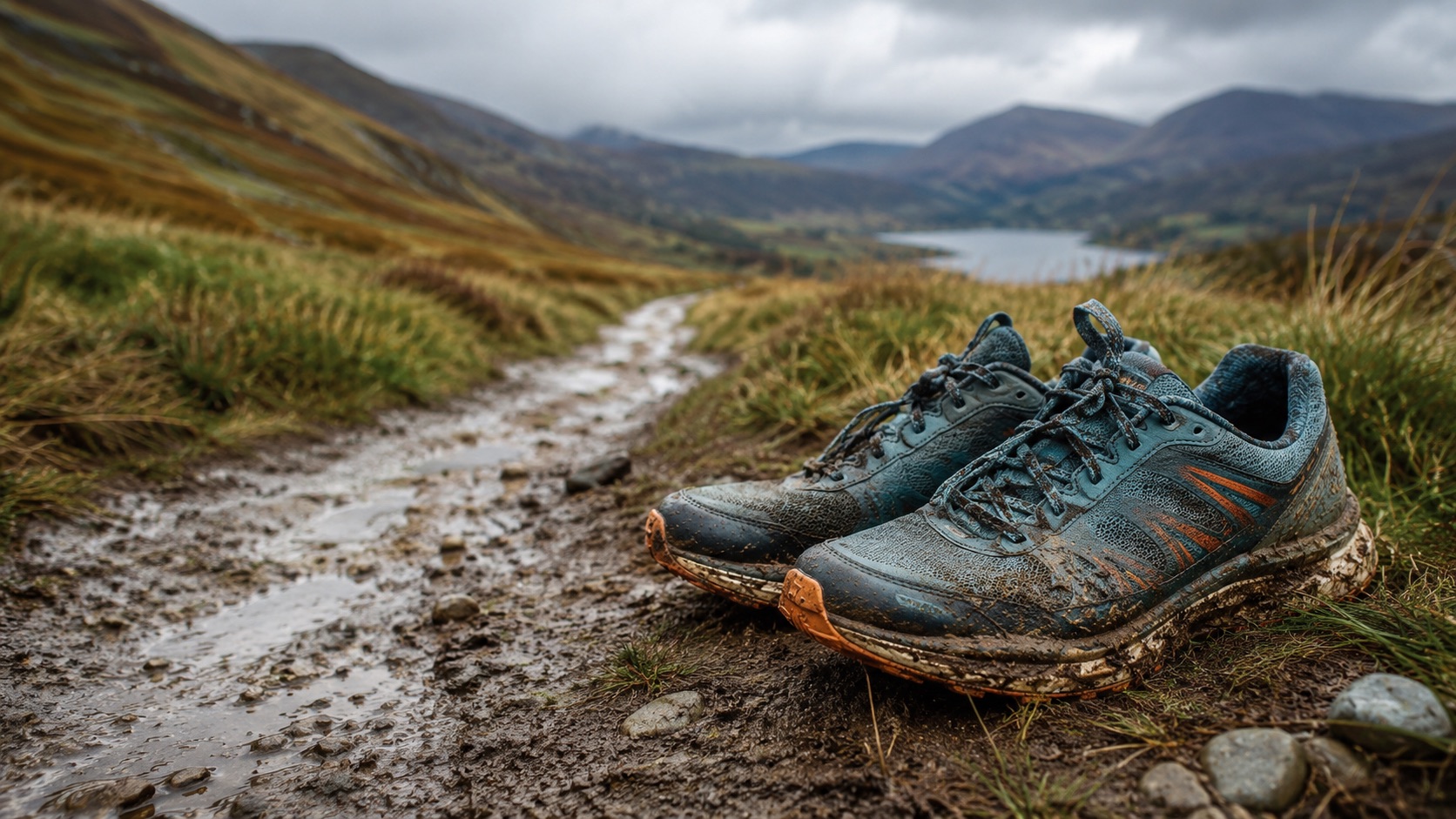
Trail shoes feature aggressive lugs for grip on dirt, mud, and rocks. They often have rock plates to protect against sharp surfaces and more durable uppers to handle debris. The tradeoff: they’re heavier and feel clunky on pavement.
The rule: If 80%+ of your runs are on roads or sidewalks, get road shoes. If you regularly run unpaved surfaces with loose terrain, invest in trail shoes as a second pair. Running road shoes on technical trails is asking for a twisted ankle.
How Running Shoes Should Fit
Fit is non-negotiable. A shoe with perfect specs but bad fit will cause blisters, black toenails, or worse. Here’s what to check:
Length - The Thumb Rule
You want about a thumb’s width (roughly half an inch) between your longest toe and the front of the shoe. Your feet swell during runs, and your toes need space to splay on the push-off. Too snug = lost toenails on long runs.
Heel Lock
Your heel should sit securely in the heel cup without slipping. If your heel lifts when you walk, the shoe is too big or the wrong shape for your foot. A little heel slip turns into a big blister at mile 8.
Width
Your forefoot shouldn’t feel squeezed or bulging over the midsole. Many brands offer wide (2E for men, D for women) options. Brands like Altra and New Balance tend to run wider naturally.
Midfoot
The shoe should wrap your midfoot securely - snug but not tight. This is where lacing technique matters. If you feel pressure points, try different lacing patterns before giving up on the shoe entirely.
When to Replace Your Running Shoes
Most running shoes last 300–500 miles. That’s roughly 4–6 months for someone running 20 miles per week.
Signs it’s time for a new pair:
- The midsole feels flat or “dead” - no bounce left
- You notice new aches in your knees, hips, or shins
- The outsole tread is worn smooth
- The shoe looks visibly compressed or tilts to one side on a flat surface
Pro tip: Track your shoe mileage in your running app (Strava, Garmin, Nike Run Club all support this). Don’t wait until something hurts. Rotate two pairs if possible - it extends the life of both and lets the foam recover between runs.
Looking for your next daily trainer? Here’s our list of the best daily training shoes for 2026.
Shopping Tips
A few practical things that make a real difference:
-
Go to a specialty running store. Not a general sports shop. Running stores have trained staff, gait analysis, and return policies designed for runners. The extra $10–20 you might spend over online is worth the expertise and fit check.
-
Shop in the afternoon or after a run. Your feet swell throughout the day. If you buy shoes at 9 AM with fresh feet, they’ll feel tight by your evening run.
-
Bring your old shoes. The wear pattern on your current shoes tells a trained eye a lot about your gait. Worn down on the inside heel? Outside edge? That’s useful data.
-
Wear the socks you run in. Thick cotton socks vs thin running socks create a noticeable fit difference.
-
Run in the store. Any decent running shop will let you jog around or hop on a treadmill. Walking in shoes tells you almost nothing about how they feel at pace.
-
Ignore color. Seriously. Buy the shoe that fits. You’ll forget what it looks like after the first mile.
Frequently Asked Questions
How much should I spend on running shoes?
Expect to pay $120–$180 for a quality pair in 2026. You can find deals on last-season models for $80–$120 that perform identically. Spending more than $200 rarely gets you a “better” shoe - just newer tech or carbon plates meant for racing.
Can I use running shoes for other workouts?
Running shoes are built for forward motion. For gym work, HIIT, or lateral movements, they’re too unstable. Use them for running and walking only. Cross-training shoes exist for a reason.
How many pairs of running shoes do I need?
One pair is fine for most beginners. As you build mileage, a rotation of 2–3 shoes (daily trainer, long run shoe, speed shoe) reduces injury risk and extends shoe lifespan. Start with one great daily trainer and add from there.
Should I buy online or in-store?
Buy your first pair in-store with a gait analysis. Once you know your size, brand, and model, reordering online is fine. Just be aware that sizing can vary between models, even within the same brand.
Do expensive shoes prevent injuries?
No. A $250 shoe doesn’t protect you more than a $130 shoe. What prevents injuries is correct fit, appropriate support for your gait, and replacing shoes on time. The best shoe is the one that fits your foot properly - regardless of price.
Still overwhelmed? Start with our best running shoes for beginners guide - we’ve narrowed it down to five shoes that work for almost everyone. And if you want a head-to-head comparison of the biggest brands, check out Hoka vs Brooks vs ASICS.
Happy running. Your feet will thank you.