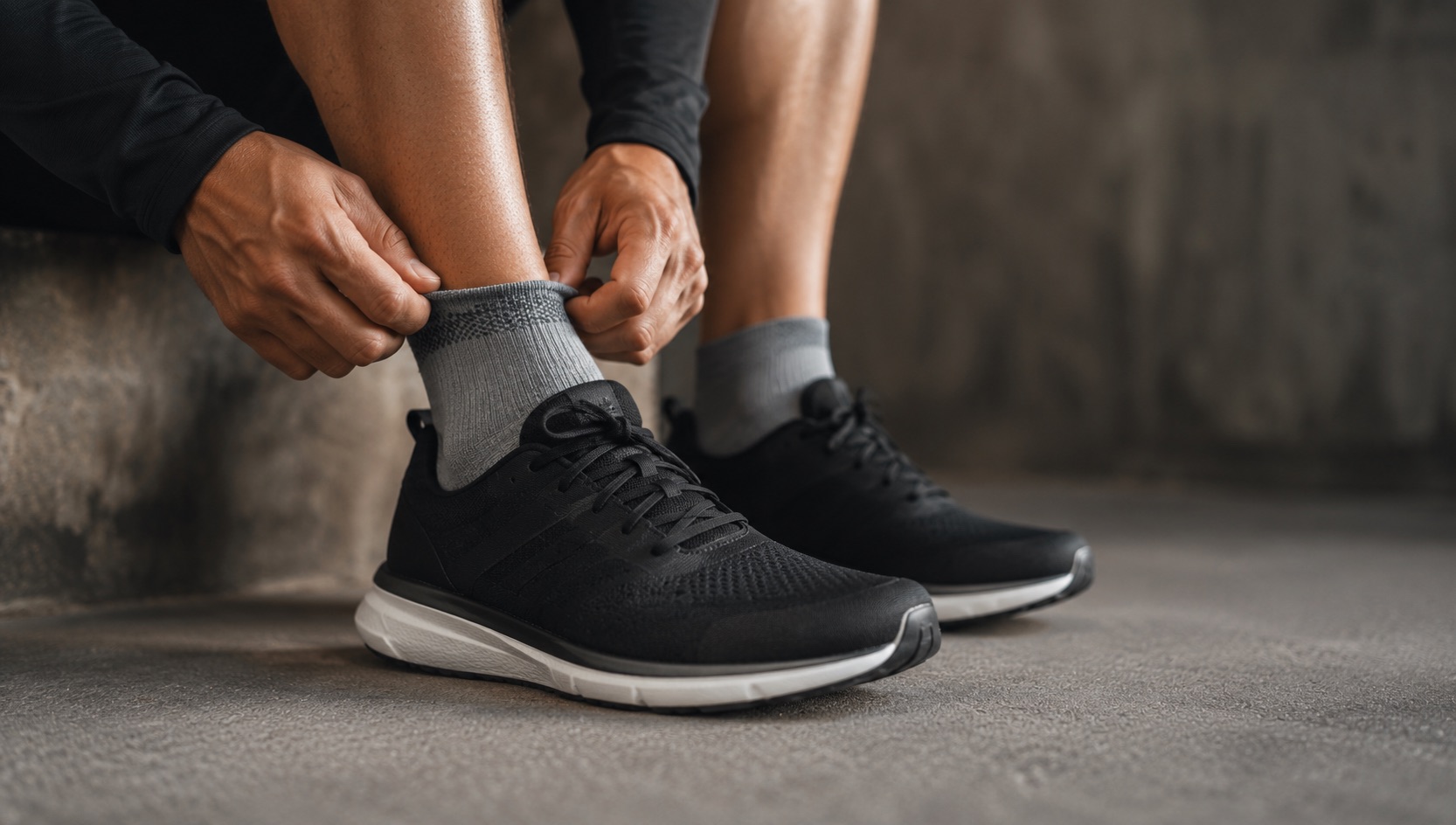
Best Budget Running Gear 2026 - Quality Kit Under $500 Total
Here’s a truth that running brands don’t want you to hear: you don’t need $300 shoes, a $600 watch, and $250 earbuds to run well. The gap between budget gear and premium gear has never been smaller. A runner with a $90 shoe and a $200 watch can train just as effectively as someone decked out in the latest everything.
I put together a complete running kit - shoes, watch, earbuds, shorts, shirt, socks, and accessories - for under $500 total. Not by cutting corners, but by finding the sweet spot where quality meets value. Every item here is something I’d actually use in training, and several items I already do.
The Budget Running Kit Philosophy
Before we get into specifics, let me explain the approach. There are three categories of running gear:
- Worth investing in: Shoes and GPS watch. These directly affect performance, comfort, and injury prevention.
- Good enough at budget prices: Earbuds, shorts, shirts, socks. The midrange options work nearly as well as premium for most runners.
- Skip entirely: Expensive recovery gadgets, brand-name everything, gear you don’t need yet.
The key is spending more on category 1, saving on category 2, and avoiding category 3. That’s how you build a quality kit without blowing your budget.
Complete Budget Running Kit Breakdown
| Item | Recommended Product | Price | Budget Alternative |
|---|---|---|---|
| Running Shoes | Saucony Kinvara 15 | $110 | Decathlon Kiprun KD500 ($65) |
| GPS Watch | COROS PACE 3 | $199 | Garmin Forerunner 165 ($200) |
| Earbuds | JLab Go Air Sport | $30 | Shokz OpenRun Mini ($80) |
| Shorts | BOA 5” Split Short | $42 | Decathlon Run Dry ($15) |
| Shirt | Nike Dri-FIT (outlet) | $25 | Decathlon Run Dry+ ($12) |
| Socks | Feetures High Performance (3-pack) | $42 | Balega Hidden Comfort ($16/pair) |
| Running Belt | FlipBelt Classic | $30 | SPIbelt ($20) |
| Water Bottle | Nathan SpeedDraw Plus | $30 | Handheld from Amazon ($12) |
| Total | $508 | $420 |
Both columns give you a complete, functional kit. The “recommended” column represents my pick for best value at each price point. The “alternative” column shows you can go even cheaper without sacrificing much.
Shoes: Where Your Money Matters Most
If you only splurge on one item, make it shoes. Bad shoes cause injuries. Good shoes make running comfortable. The Saucony Kinvara 15 at $110 is a phenomenal daily trainer - lightweight, responsive, and durable enough for 400+ miles.
If you’re looking for even better deals on running shoes under $100, last-year models are your friend. The Kinvara 14 often drops to $70–80 at outlet stores. The Brooks Ghost 15 (previous gen) regularly appears around $90. These shoes aren’t worse - they just aren’t new.
For runners needing more cushion, the ASICS Gel-Nimbus (previous model) at $100 is hard to beat. For speed work, the New Balance FuelCell Rebel v3 often hits $85 on sale.
What to avoid: Don’t buy shoes solely based on price. A $40 shoe with poor cushioning or wrong pronation support will cost you more in injuries than the savings. Try before you buy when possible.
GPS Watch: Your Training Computer
The COROS PACE 3 at $199 is the best value GPS watch available in 2026. It gives you:
- Multi-band GPS accuracy rivaling $500+ watches
- 38 hours GPS battery life
- Training load, recovery metrics, and structured workouts
- Running power (wrist-based)
- Lightweight (39g) and comfortable for sleep tracking
For $199, you’re getting watch capabilities that cost $400+ just two years ago. The Garmin Forerunner 165 is the other option at the same price, offering Garmin’s ecosystem and AMOLED display, but with slightly shorter battery life.
If you can stretch to $230–250, last-generation Garmin Forerunner 265 watches appear on sale frequently and offer even more features. Check our GPS watch guide under $200 for more options.
What to avoid: Don’t buy a basic fitness tracker and expect running-specific features. The $50 Fitbands of the world lack GPS accuracy, structured workout support, and the training metrics that actually help you improve.
Earbuds: Sound for Less
The JLab Go Air Sport at $30 is almost unfairly good for the price. They’re sweatproof, stay in place during runs, have 32-hour total battery life with the case, and sound perfectly adequate for podcasts and music.
Are they AirPods Pro quality? No. Do they work for 95% of running scenarios? Absolutely. They have a secure ear hook design that doesn’t bounce, IP55 water resistance, and a built-in microphone for calls.
If you prefer bone conduction (open-ear design for safety), the Shokz OpenRun Mini at $80 is worth the upgrade. You’ll hear traffic, other runners, and your surroundings while still enjoying audio. This is the safer choice for road running.
What to avoid: Don’t buy truly wireless earbuds without ear hooks for running. Standard AirPod-style earbuds bounce out with sweat and head movement. Secure fit matters more than sound quality when you’re running.
Shorts and Shirts: Function Over Fashion
Running apparel has the biggest markup in the sport. A $90 running shirt from a premium brand performs nearly identically to a $15 technical shirt from Decathlon. Both wick moisture, both dry quickly, both don’t chafe.
The BOA 5” split short at $42 is my pick because of the built-in brief liner and lightweight fabric, but Decathlon’s Run Dry short at $15 does the same job. Unless you’re extremely picky about fit and style, budget apparel works fine.
Where to save: Buy during end-of-season sales. Running apparel regularly drops 40–60% at outlets. Last year’s colors are this year’s deals.
Where not to save: Anti-chafe matters. If a budget shirt causes nipple chafe or inner-thigh irritation, it’s not a deal. Body Glide ($8) solves most chafing issues regardless of apparel quality.
Socks: The Underrated Essential
Bad socks cause blisters. Good socks prevent them. This is one area where spending $14–16 per pair is justified. Feetures High Performance and Balega Hidden Comfort are the gold standards - they have targeted cushioning, seamless toes, and moisture management that cheap cotton socks can’t match.
Buy three pairs and rotate them. They’ll last 500+ miles each. That’s less than $0.10 per run for blister-free feet.
Running Belt and Water Bottle
The FlipBelt Classic ($30) holds your phone, keys, gels, and cards without bouncing. It sits flat against your body and doesn’t ride up. The SPIbelt ($20) is slightly smaller but works for phone-and-keys runners.
The Nathan SpeedDraw Plus ($30) is comfortable for runs over 45 minutes where you need hydration access. Both eliminate friction from your running routine.
What You Don’t Need (Yet)
Save your money on these until you’ve been running consistently for 6+ months:
- Foam rollers and massage guns: A $5 lacrosse ball does 80% of the same work.
- Recovery boots: Stretching and sleep are more effective for most runners.
- Heart rate chest straps: Your wrist-based watch is accurate enough for general training.
- Multiple shoes for rotation: Start with one good pair. Add a second when you’re running 30+ miles per week.
- Race-day carbon shoes: Don’t buy $250 racing shoes until you’re racing frequently.
How to Save Even More
Buy Previous Generation
Running shoes get new models annually, but the previous version is 90% as good at 50% the price. Same for GPS watches - a Garmin FR255 does almost everything the FR265 does.
Use Cashback and Rewards
Running Warehouse, REI, and Dick’s all have loyalty programs. Running Warehouse gives 5% back. REI’s dividend is effectively 10%. Over a year of gear purchases, this adds up to $30–50 free.
Buy During Sales Events
- Black Friday/Cyber Monday: Best prices of the year
- Amazon Prime Day: Good for electronics (watches, earbuds)
- End of season: Running apparel clearance in January and July
- New model launches: Previous models drop when new ones release
Building Your Kit Over Time
You don’t need everything at once. Here’s a priority order if you’re getting started with running gear:
Month 1: Good shoes + moisture-wicking socks + any athletic clothes you already own.
Month 2: GPS watch (game-changer for training consistency and motivation).
Month 3: Proper running shorts/shirt + running belt.
Month 4: Earbuds + water bottle for longer runs.
This spreads the cost across $100–150 per month instead of $500 up front.
Frequently Asked Questions
Can I really run a marathon in $110 shoes?
Absolutely. The Saucony Kinvara, Brooks Ghost, and ASICS Gel-Nimbus are all used by marathon runners at every level. You don’t need carbon-plated super shoes for your first (or fifth) marathon. Save those for when you’re chasing a specific time goal.
Is a $200 watch actually good enough for serious training?
Yes. The COROS PACE 3 and Garmin FR165 offer training load tracking, GPS accuracy, structured workouts, and recovery metrics that are functionally identical to $400+ watches. The main things you miss are offline maps and a touchscreen display.
Should I buy gear online or in-store?
In-store for shoes (fit matters), online for everything else (better prices). If you already know your shoe size and model, online sales offer significant savings. Running Warehouse, REI, and brand outlets are reliable sources.
What’s the biggest waste of money in running?
Compression gear with unproven performance claims, expensive GPS watches used only to track distance, and buying new shoes before the old ones are worn out. Also: race-day outfits that cost more than the entry fee.
How do I know when to upgrade?
Upgrade shoes every 300–500 miles (track mileage in your watch). Upgrade your watch when you outgrow its features - if you need maps, training plans, or better battery life. Upgrade apparel when it chafes, loses elasticity, or smells permanently funky despite washing.
Final Thoughts
Running is one of the most accessible sports on the planet. A pair of shoes and an open road is all you technically need. But smart gear choices make training more enjoyable, more measurable, and more sustainable.
You don’t need the best of everything - you need good enough of the right things. This $500 kit gives you everything a runner needs to train effectively, track progress, and stay comfortable for years. Spend the rest of your budget on race entries. That’s where the real fun is.
Related reading: Couch to 5K - Best Apps and Plans for Beginners 2026