
Saucony Endorphin Speed 3 vs Speed 5: High-Mileage Comparison
Saucony Endorphin Speed 3 vs Speed 5: High-Mileage Comparison
The Saucony Endorphin Speed 3 is my highest-rated shoe ever. I gave it 9/10, ran 1481km across two pairs, and it handled everything from easy runs to tempo sessions to race day. When my wife moved from the Speed 3 to Speed 5, and I got a pair to test, the obvious question was: does the Speed 5 live up to the legacy?
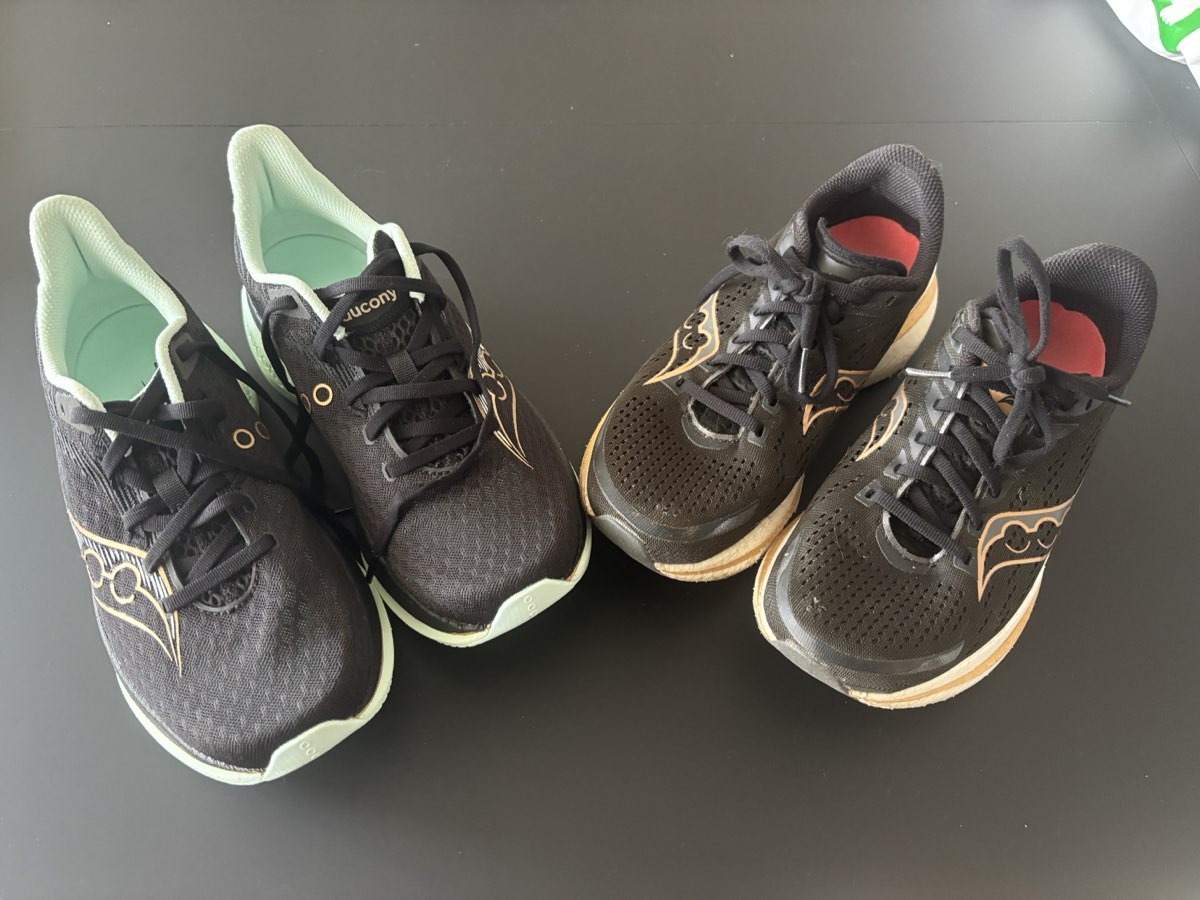
I have 100km on the Speed 5 now. Not enough for a final verdict on durability, but more than enough to compare the ride feel, fit, and overall experience against the Speed 3 I know intimately. Here is the honest comparison with real photos of both shoes.
The Speed 3: Why It Was My Favorite
Before comparing, context matters. Here is why the Speed 3 earned a 9/10 in my complete shoe ratings:
- Versatility: It handled everything. Easy runs at 5:00/km, tempo at 4:15/km, and race efforts at 3:50/km. All comfortable.
- PWRRUN PB foam: Bouncy, responsive, lightweight. The foam returned energy noticeably without being unstable.
- Nylon plate: Just enough structure to propel you forward without feeling stiff or race-shoe aggressive.
- Fit: Locked in without being tight. The engineered mesh upper hugged the midfoot perfectly.
- Durability: 740km on pair one, 741km on pair two. Both still functional at retirement. The foam held its properties far longer than expected.
The Speed 3 was the shoe I grabbed when I did not know what workout I was doing. It was the answer to every question. I looked for a reason to dislike it and never found one.
The Speed 5: First Impressions at 100km
Saucony skipped a generation in my rotation (I did not buy the Speed 4, though I reviewed it here). The Speed 5 represents two generations of evolution from my beloved 3.
Upper: Different Philosophy
The most immediately obvious change. The Speed 3 had a tightly woven engineered mesh that was structured and supportive. The Speed 5 uses a more open, breathable mesh that feels lighter and less structured.
On foot, the Speed 5 upper is softer and more flexible. It conforms to the foot rather than holding it in place. This is personal preference territory: some runners prefer the locked-in feeling (me), others prefer a softer, more accommodating wrap.
After 100km, I notice the Speed 5 upper allows slightly more internal foot movement on hard cornering. Not a problem for straight running, but noticeable on track curves and road turns. The Speed 3 never had this.
Foam: Evolution or Different Feel?
The Speed 5 uses an updated PWRRUN PB formulation. On paper, Saucony says it is lighter and more responsive. In practice, the difference is subtle but real.
The Speed 3 foam felt bouncy and even. Every footstrike returned energy predictably. The Speed 5 foam feels slightly softer on impact but equally propulsive on toe-off. The transition from heel to toe feels smoother, less “snappy” and more “rolling.”
I preferred the snappier Speed 3 feel for intervals. The Speed 5 feel is better for sustained tempo efforts where smooth matters more than pop. Neither is wrong. They just suit different things slightly better.
Plate: Still There, Slightly Different
Both shoes use a nylon plate (not carbon). The Speed 3 plate felt like a gentle guide. The Speed 5 plate feels slightly stiffer, which creates a more defined rocker effect. You notice the plate more in the Speed 5, for better or worse.
For speed work, the increased plate presence is actually nice. It gives a clearer sense of propulsion at faster paces. For easy days, it makes the shoe feel slightly more aggressive than necessary. The Speed 3 disappeared on easy days and showed up on fast days. The Speed 5 always reminds you it has a plate.
Weight
Speed 3 (US 10): 215g Speed 5 (US 10): 208g
Seven grams lighter. Noticeable? Honestly, no. Both feel light on foot. This is not a meaningful difference in real-world running.
Side-by-Side Photos and Visual Differences
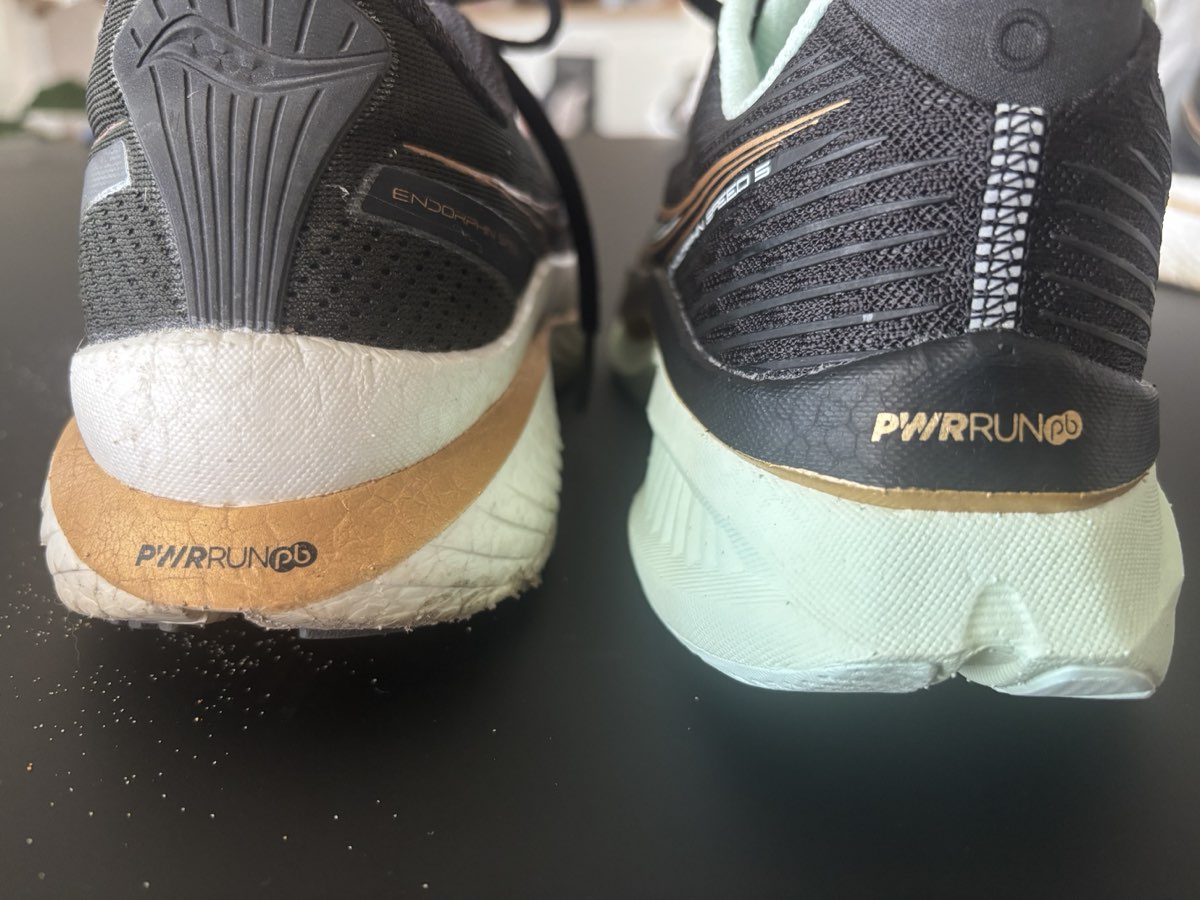
Key visual differences:
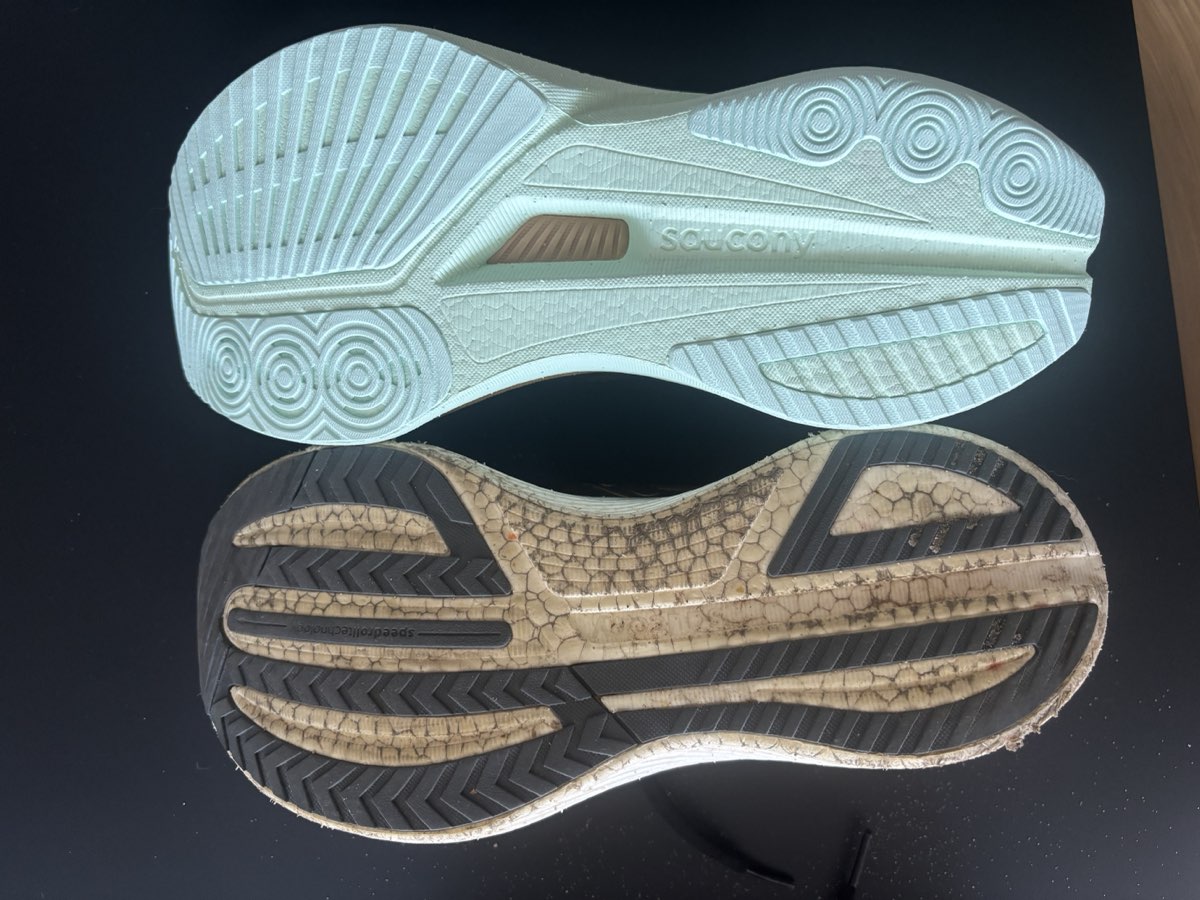
- Outsole pattern: Speed 5 has a redesigned tread that looks more durable (time will tell)
- Stack height: Speed 5 appears very slightly taller in the heel
- Heel counter: Speed 5 has a more sculpted, less structured heel piece
- Overall shape: Speed 5 is narrower through the midfoot, wider in the forefoot
How They Compare on Specific Runs
| Run Type | Speed 3 Feel | Speed 5 Feel |
|---|---|---|
| Easy (5:00+/km) | Comfortable, disappeared | Comfortable, slight plate presence |
| Tempo (4:00-4:20/km) | Snappy, energetic | Smooth, propulsive |
| Intervals (3:30-3:50/km) | Responsive, precise | Responsive, slightly less locked-in |
| Long run (90+ min) | Held up perfectly | Good so far (only tested once) |
| Racing | Excellent | TBD |
My Honest Take: Is the Speed 5 as Good?
After 100km, my answer is: it is a different shoe that is equally good, not a better version of the same shoe.
The Speed 3 was a 9/10 because it did everything well with no compromises. The Speed 5 changes the formula in ways that improve some aspects (smoother transitions, lighter) while giving up others (lockdown, that snappy feel I loved).
If I had never worn a Speed 3 and picked up the Speed 5 fresh, I would rate it 8.5/10 and be very happy. The fact that I keep comparing it to a shoe I loved creates a bias I am trying to separate from the objective experience.
For my current rotation, the Speed 5 slots in as a tempo and speed session shoe. But it will need to prove its versatility over the next 400-500km before I can say it replaces the Speed 3’s “everything shoe” role.
My Wife’s Progression: Speed 3 to Speed 5
Sarah went from the Speed 3 directly to the Speed 5. Her take is simpler than mine: she likes both, the Speed 5 is slightly more comfortable on longer runs, and she does not notice the reduced lockdown because her foot is narrower.
Her experience suggests that if you do not have 1400km of Speed 3 muscle memory, the Speed 5 feels natural and correct from the first run. My nostalgia for the Speed 3 might be clouding my comparison.
Durability Comparison (Early Prediction)
At 100km, the Speed 5 outsole shows zero wear. The foam has maintained its initial feel with no compression. The upper is pristine.
For reference, the Speed 3 outsole started showing meaningful wear around 400km and the foam began softening noticeably around 600km (but remained functional to 740km).
The Speed 5’s redesigned outsole rubber looks like it might be more durable. If it matches the Speed 3’s lifespan (700+ km), it will be an excellent value. I will update this review at 300km, 600km, and retirement.
Who Should Buy Which
Buy the Speed 3 (if you can still find it on clearance):
- You want the “classic” Endorphin Speed experience
- You prefer a locked-in, structured fit
- You like a snappy, bouncy foam feel
- You are buying on budget (clearance prices are incredible right now)
Buy the Speed 5:
- You want the latest foam technology
- You prefer a softer, more flexible upper
- You like smoother transitions over snappy pop
- You need a slightly wider forefoot
- You are building a new shoe rotation from scratch
Either way: Both are excellent tempo/speed shoes that can handle versatile duties. You are not making a bad choice with either option. The Speed line remains one of the best non-carbon plated performance shoes available.
The Verdict at 100km
The Speed 5 is a worthy successor to the Speed 3 lineage. It is not the same shoe updated, but it is the same philosophy: versatile, fast, affordable performance. I need another 400km before I can give it a final rating, but the early signs are positive.
If the Speed 3 was 9/10, the Speed 5 is tracking toward 8-8.5/10 in my usage. The small gap comes from personal preference for the Speed 3’s fit and foam character rather than any objective flaw in the Speed 5. For runners trying the Endorphin Speed line for the first time, the Speed 5 is excellent.
I will update this article at 500km with durability data and a final verdict.
FAQ
Is the Saucony Endorphin Speed 5 good for daily training?
Yes, but with a caveat. The nylon plate makes it slightly more aggressive than a pure daily trainer. For easy runs, it works fine but you might prefer something softer and less propulsive. For tempo days and speed sessions, it is ideal. If you only own one shoe, the Speed 5 can cover everything. If you have a rotation, use it for quality days.
How many kilometers do Saucony Endorphin Speed shoes last?
Based on my experience: 600-750km is realistic. The Speed 3 remained functional to 740km per pair. The foam starts softening around 500-600km, but the shoe does not “die” suddenly. I will track the Speed 5 lifespan specifically and update this article. Outsole durability appears improved in the Speed 5.
Should I skip the Speed 5 and wait for the Speed 6?
No. If you need a tempo shoe now, buy now. The Speed 5 is excellent and there is no guarantee the Speed 6 will be better. Saucony’s Endorphin line has been consistently good across generations. Waiting means months without a good training shoe for a hypothetical marginal improvement.
Is the Endorphin Speed 5 worth it over the cheaper Kinvara line?
Different shoes for different purposes. The Kinvara is a lightweight daily trainer without a plate. The Speed 5 is a performance tempo shoe with a plate and more responsive foam. If you run mostly easy miles, the Kinvara is fine. If you do speed work or race in it, the Speed 5 is significantly better for those efforts.
Can I race a half marathon in the Endorphin Speed 5?
Absolutely. The Speed line has always been a capable racer for half marathons and even marathons. It is less aggressive than a carbon plate shoe (like the Endorphin Pro or Elite), but for many runners, the Speed’s balance of cushion, propulsion, and stability is actually preferable over longer race distances. I raced multiple half marathons in the Speed 3 with great results.