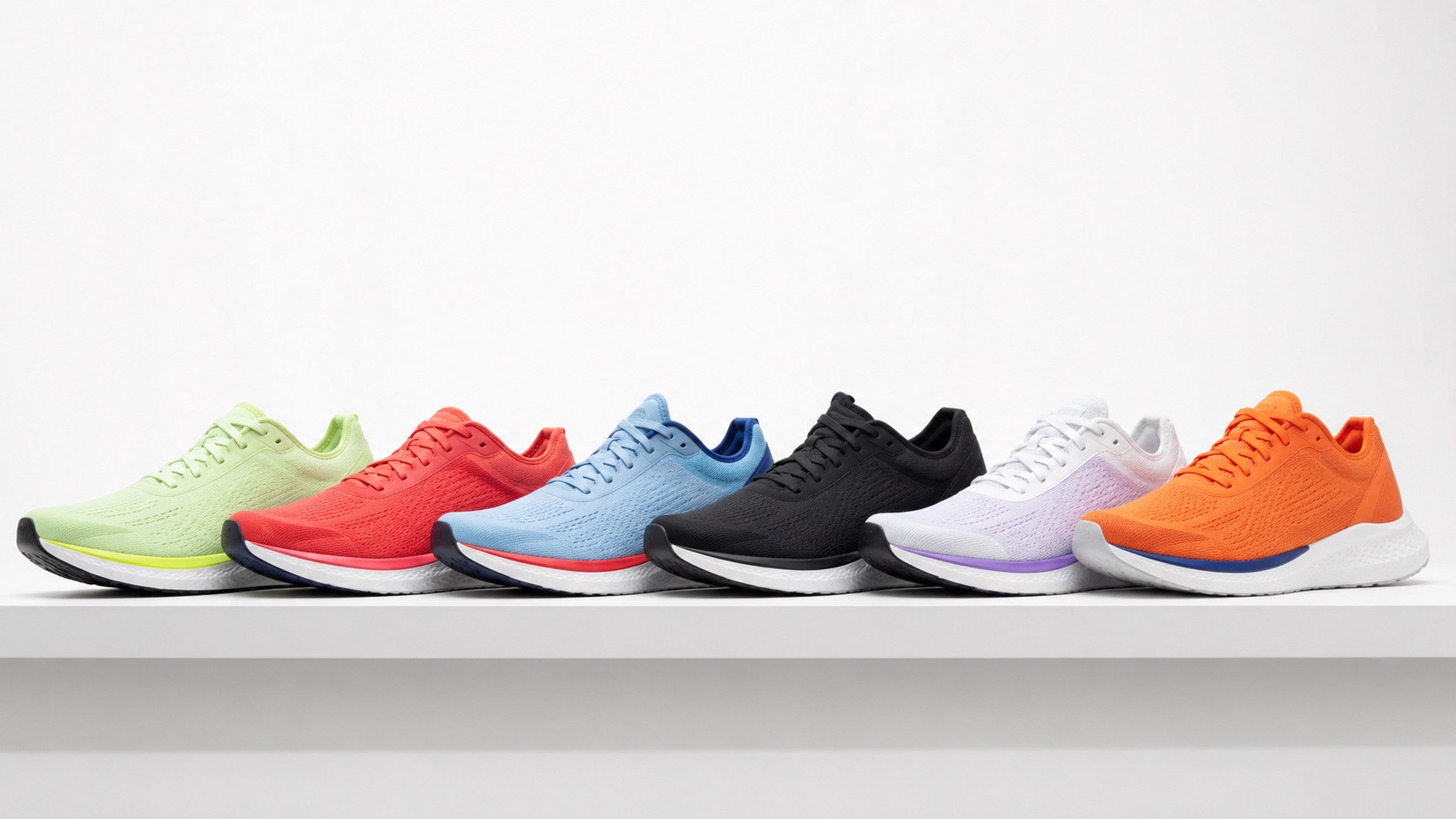
Kiprun's Smart Shoe Tells You When It's Worn Out: How It Works
Kiprun just put an electromagnetic sensor inside a running shoe’s midsole that monitors foam degradation in real time. It’s called the KIPNEXT CONNECT, and it solves a problem every runner has but nobody can see: your cushioning is dying long before the outsole shows wear.
The Problem: You Can’t See Midsole Degradation
Here’s something most runners don’t think about enough. The outsole of your shoe (the rubber on the bottom) wears visibly. You can flip your shoe over and see bald spots, worn treads, and exposed foam. That’s obvious. But the midsole, the thick foam layer between your foot and the ground that actually provides cushioning and energy return, degrades invisibly.
Midsole foam breaks down through repeated compression. Every step you take compresses the foam, and over hundreds of miles, the cellular structure collapses. The foam gets flatter, denser, and less responsive. But it looks exactly the same from the outside. You can’t poke it and tell the difference. The shoe feels “dead” gradually, so slowly that most runners don’t notice until they put on a fresh pair and realize how much cushioning they’d lost.
This invisible degradation matters because it’s linked to injury. Running on dead foam means more impact force transmitted to your joints with every step. Your knees, hips, and shins absorb what the foam no longer can. Most running injuries aren’t sudden trauma. They’re cumulative overload from thousands of under-cushioned impacts.
The traditional solution is tracking mileage. Run 300-500 miles in a shoe, then replace it. But that’s a rough estimate at best. A 120-pound runner on smooth pavement degrades foam much slower than a 200-pound runner on rocky trails. Temperature matters (foam stiffens in cold, softens in heat). Running style matters (heel strikers crush the rear foam faster). The 300-500 mile guideline is a guess that might be off by 30-40% for your specific situation.
How the KIPNEXT CONNECT Works
Kiprun’s approach is elegant. Instead of guessing when your foam is degraded, they measure it directly.
The KIPNEXT CONNECT uses an electromagnetic sensor embedded in the midsole, primarily positioned in the heel area where most foam degradation occurs first. The sensor monitors the foam’s compression characteristics at rest state, meaning it checks how much the foam has permanently deformed when you’re not standing on it.
Fresh foam springs back to its original thickness after each step. Degraded foam stays slightly compressed even at rest. Over time, this permanent compression accumulates. The electromagnetic sensor detects changes in the foam’s resting state by measuring the distance between sensor elements embedded at different layers of the midsole.
When the foam has degraded past a threshold where cushioning performance is meaningfully compromised, the shoe tells you. You get a notification through a companion app that your cushioning is worn and it’s time to consider replacement.
This is different from simple mileage tracking because it accounts for all the variables that affect foam lifespan: your weight, your running surface, temperature exposure, how you store the shoes, and individual foam batch variation. The sensor doesn’t care how many miles you’ve run. It cares about the actual physical state of the foam right now.
Multiple outlets have covered this technology, including marathons.com, t3.com, and marathonhandbook.com. The consensus is that it’s “a potential game-changer for runners who push their gear to the limit.”
Traditional Tracking vs Smart Sensor: Direct Comparison
| Factor | Traditional Mileage Tracking | KIPNEXT CONNECT Sensor |
|---|---|---|
| Accuracy | Low (300-500 mile general estimate) | High (direct foam measurement) |
| Personalization | None (same guideline for everyone) | Full (measures your specific wear pattern) |
| Effort Required | Manual logging in app or spreadsheet | Automatic, no user action needed |
| Variables Accounted For | None (just total miles) | Weight, surface, temperature, running style |
| Cost | Free | Included in shoe price |
| False Positives | Common (replacing shoes too early) | Low (measures actual degradation) |
| False Negatives | Common (running on dead foam) | Low (continuous monitoring) |
| Battery/Charging | N/A | Embedded (no charging needed) |
The accuracy advantage is the big one. If you’ve ever wondered whether your shoes are actually done at 350 miles or could go 450, the sensor answers that question definitively. You stop guessing and start knowing.
Who Actually Needs This?
Let’s be realistic about who benefits most from embedded wear sensors.
High-mileage runners (50+ miles/week) go through shoes fast and the difference between replacing at 350 vs 450 miles is significant both financially and for injury prevention. Knowing exactly when each pair is done means you’re never running on dead foam and never replacing shoes prematurely.
Injury-prone runners who suspect shoe wear contributes to their recurring issues. If you keep getting the same shin splints or knee pain and can’t figure out why, worn-out cushioning that you can’t visually detect could be the cause. A sensor that flags degradation before it causes problems is genuine injury prevention.
Heavier runners (180+ lbs) who degrade foam significantly faster than the “average” runner that mileage guidelines are based on. If you weigh 220 pounds, your shoes might be dead at 200 miles while the box says they’re good for 400. The sensor accounts for this automatically.
Runners who hate tracking mileage or who rotate multiple pairs and lose track of which shoe has how many miles. If you’re the kind of person who owns 4 pairs of shoes and can’t remember which ones are fresh, automatic degradation monitoring removes that mental overhead entirely.
For runners who already track mileage religiously, run at a consistent weight on consistent surfaces, and replace shoes on a regular schedule without injury issues, the sensor is less necessary. You’ve already solved this problem manually. The KIPNEXT CONNECT just automates it.
How It Connects to the Kiprun Ecosystem
The KIPNEXT CONNECT pairs with Kiprun’s app (available for iOS and Android) via Bluetooth. The sensor is passive most of the time and only communicates when you actively sync it, which preserves the embedded battery for years of use without charging.
This fits into Kiprun’s broader US launch strategy. They’re not just selling shoes, they’re building an ecosystem. With the KIPRIDE Max, KIPSTORM Elite, and KIPSUMMIT Max covering road daily training, racing, and trails respectively, the KIPNEXT CONNECT adds a technology layer that no other brand at this price point offers.
Whether this ecosystem approach works depends on execution. If the app is reliable, the sensor is accurate, and the degradation notifications are genuinely useful (not just marketing to sell more shoes), it’s a meaningful differentiator. If the app is buggy or the notifications are premature (telling you to buy new shoes when the old ones are fine), it’ll feel like a cash grab.
Skepticism: Is This Just Marketing to Sell More Shoes?
I have to address the elephant in the room. A shoe brand putting a sensor in their shoe that tells you to buy new shoes from them has an obvious conflict of interest. Kiprun benefits financially every time the sensor says “time to replace.”
That said, the electromagnetic measurement approach is physically grounded in real science. Foam degradation is measurable and does affect cushioning performance. The question isn’t whether degradation happens (it does) but whether Kiprun calibrates the threshold honestly.
If they set the “replace now” threshold at genuine performance loss (say, 30% reduction in energy return), that’s legitimate. If they set it at 10% degradation where you’d never notice the difference, that’s pushing unnecessary purchases. We’ll need independent testing over time to evaluate where they set the line.
For context on choosing shoes generally, including when traditional signs tell you it’s replacement time, see our how to choose running shoes guide. And for new runners still figuring out what shoe type works for them, our best running shoes for beginners covers the basics.
The Future of Smart Running Shoes
The KIPNEXT CONNECT isn’t the first attempt at smart running shoes. Nike had the Nike+ sensor back in 2006 (remember putting it in your shoe’s insole pocket?), and various insoles have tried to measure gait and impact forces. But most of those products focused on real-time running metrics (cadence, ground contact time) that GPS watches now handle better.
Kiprun’s approach is different because it solves a specific, narrow problem: when is my foam dead? It’s not trying to replace your watch or give you live coaching. It does one thing, and if it does it well, that’s enough to be useful.
The technology could expand to other measurements. Imagine a sensor that detects outsole wear patterns and suggests you need stability shoes, or one that flags asymmetric compression indicating a gait imbalance. For now, foam degradation monitoring is the starting point, and it’s the most universally relevant application.
If you want to track other running metrics without a shoe sensor, GPS pods that clip to your shoe offer cadence, ground contact time, and stride length data. We’ve covered those in our best GPS running pods roundup.
Verdict: Interesting Tech, Wait for Reviews
The KIPNEXT CONNECT is the most interesting piece of running shoe technology I’ve seen this year. The problem it solves is real, the approach is scientifically sound, and if the execution matches the concept, it could change how runners think about shoe replacement.
But I wouldn’t buy it on day one without independent validation. We need reviewers to wear these shoes for 500+ miles and confirm that the sensor’s “replace now” notification correlates with actual measured performance loss. If Kiprun publishes their degradation threshold methodology or if independent labs validate the sensor accuracy, my skepticism drops significantly.
For now, consider the KIPNEXT CONNECT if you’re already interested in Kiprun shoes for their performance and price, and view the sensor as a bonus feature rather than the primary reason to buy. If the sensor works as advertised, great. If not, you’ve still got a functional running shoe at a competitive price.
Frequently Asked Questions
Does the KIPNEXT CONNECT sensor need charging?
No. The electromagnetic sensor is passive and embedded in the midsole permanently. It only activates briefly during Bluetooth sync with the app and draws minimal power. The embedded battery is designed to last the lifetime of the shoe without any user charging or maintenance.
Can the sensor be transferred to another shoe?
No. The sensor is embedded within the midsole foam during manufacturing. It’s not removable or transferable. Each KIPNEXT CONNECT shoe has its own dedicated sensor that monitors that specific shoe’s foam degradation.
How accurate is the wear detection compared to just tracking miles?
Significantly more accurate for individual runners because it measures actual physical foam degradation rather than estimating based on generic mileage guidelines. A 130-pound runner on smooth roads and a 210-pound runner on rocky trails will get very different “replace” notifications even if they run identical mileage, which is correct because their foam degrades at different rates.
Does the sensor affect the feel or weight of the shoe?
The sensor components are minimal in size and weight (a few grams). They’re integrated into the heel area of the midsole during manufacturing, so they don’t create pressure points or alter the intended cushioning geometry. You won’t feel the sensor during running.
Is this just a way to sell more shoes faster?
It could be, which is why independent validation matters. The technology is physically sound (foam degradation is real and measurable), but the threshold at which Kiprun triggers a “replace” notification determines whether this is genuinely useful or just accelerated marketing. Wait for independent reviewers to test long-term accuracy before trusting it blindly.