My VO2Max Went From 48 to 56: What Changed (Gear + Training)
In January 2023, my Garmin showed a VO2Max of 48.7. By July 2024, it peaked at 56.3. That’s a 7.6 point increase in 18 months, taking me from “good” to “superior” on Garmin’s fitness scale. Here’s exactly what changed across three distinct training phases, including the apps I used, the gear I upgraded, and the training philosophy that actually worked.
The Starting Point
January 2023. I’d just started running with zero background in endurance sports. My first 5K took 28:25 (5:41/km pace), and I was completely gassed by the end. The Garmin Venu SQ on my wrist showed 48.7 for VO2Max, which honestly felt generous given how unfit I was.
I didn’t have a training plan. I didn’t know what intervals were. I just ran 3 times per week and tried not to die. The shoes were cheap Kiprun trainers from Decathlon. The “plan” was to run a bit further each week. Classic beginner stuff.
Phase 1: Garmin Coach Era (Jan-Jun 2023)
VO2Max: 48.7 to 53.4 (+4.7 points)
This is where the beginner gains hit hard. I started following Garmin Coach plans directly on my Venu SQ. The plans were simple: easy runs, one “speed” session (usually strides or fartlek), and a weekly long run. Nothing fancy, but it was structured, and structure beats randomness every time.
The key change was consistency. Three runs per week, every week, no exceptions. I wasn’t fast, but I was showing up. My body responded to this stimulus aggressively because it had never experienced regular aerobic training before.
Gear during this phase was minimal. The Venu SQ tracked my runs but didn’t give me much training insight beyond basic pace and heart rate. My shoes were those Kiprun trainers that needed insoles to feel remotely comfortable. I didn’t have a foam roller, didn’t use gels, didn’t think about recovery at all.
The VO2Max climbed almost linearly during this phase. Every month showed improvement, with the biggest single jump (1.5 points) in May-June when I added my first real interval sessions. That confirmed something important: speed work is the fastest lever for VO2Max improvement.
5K progress: 28:25 down to approximately 23:00 by June 2023.
Phase 2: Trenara App Era (Jul 2023-Jun 2024)
VO2Max: 53.4 to 56.0 (+2.6 points)
I outgrew Garmin Coach. The plans felt too easy, and I wanted more structure around my intervals. I switched to the Trenara app, which gave me proper periodized training with specific workout types: threshold runs, VO2Max intervals, tempo work, and programmed recovery.
This phase was slower in VO2Max gains (2.6 points over 12 months vs. 4.7 in 6 months), but that’s normal. The low-hanging fruit was gone. Every point from here required real work.
The training itself was noticeably harder. Instead of generic “run fast for 1 minute” intervals, I was doing specific sessions: 5x1000m at threshold pace, 8x400m with 90-second recovery, 20-minute tempo runs at half marathon pace. The structure mattered enormously.
I also increased my weekly mileage from around 30km to 40-45km. More aerobic volume plus quality speed sessions equals steady VO2Max improvement. Nothing revolutionary, just consistent application of training principles.
Gear upgrades during this phase: better shoes (moved from Kiprun to proper training shoes), bought a foam roller (game changer for recovery), and started using gels on runs over 90 minutes. Still on the Venu SQ watch.
5K progress: 23:00 down to 19:35 by the end of this phase.
Phase 3: Runna + Forerunner 570 Era (Jul 2024-Present)
VO2Max: 56.0 to 56.3 (peaked), current: 55.8
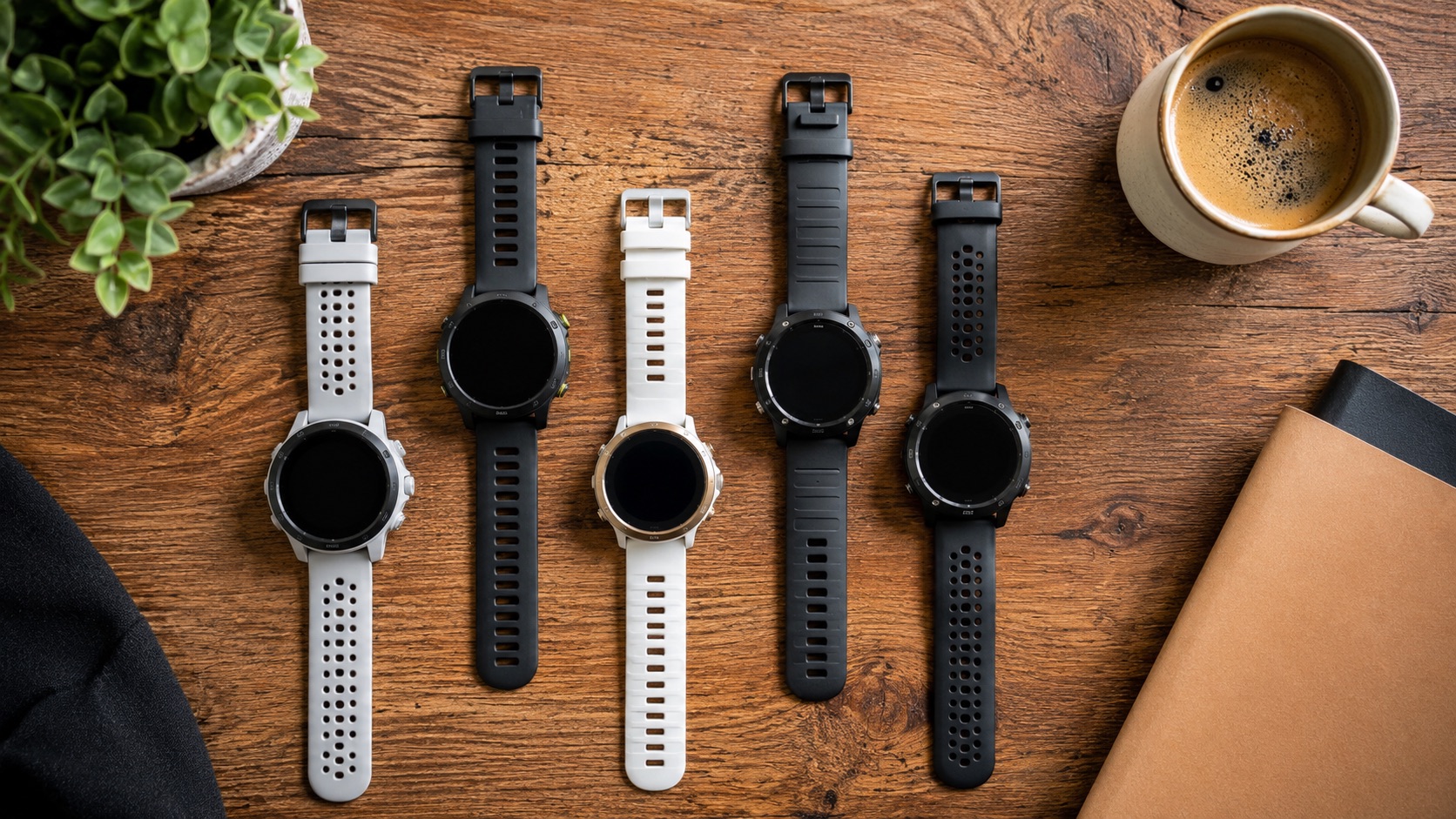
Two big changes happened simultaneously in mid-2024: I upgraded my watch to the Garmin Forerunner 570, and I switched training apps to Runna.
The FR570 upgrade didn’t directly increase my VO2Max. The number stayed in the same range. But it gave me dramatically better training data. The HRV monitoring, training readiness scores, and proper altitude correction meant I could train smarter. I pushed hard on days when my body was ready and backed off when it wasn’t. Over time, this precision translates to better fitness gains with less injury risk.
Runna was the other game changer. It’s an AI-adaptive coaching app that adjusts your plan based on completed sessions. If I nail a workout, the next one gets slightly harder. If I struggle, it pulls back. This constant micro-adjustment keeps me in the optimal training zone far more effectively than a static plan ever could.
During this phase, my VO2Max barely moved on paper (56.0 to 56.3). But my race times kept improving. My 10K dropped from 42:41 to 41:42. My half marathon went from 1:39:53 to 1:34:53. The performance gains came from running economy and race execution, not raw aerobic capacity. This is what the plateau looks like from the inside.
The Setback: Nov-Dec 2025
I have to include this because it’s real. In November 2025, I stopped training completely for about a month. Then I caught COVID. My VO2Max plummeted from 56.3 to 53.1. Six weeks undid over a year of work on paper.
The lesson: fitness is fragile at the top end. The difference between 48 and 53 is relatively stable (you won’t lose beginner gains easily). But the difference between 53 and 56 evaporates fast without consistent training. Illness accelerates the decline dramatically.
The Recovery: Jan-Jun 2026
Good news: regaining fitness is faster than building it from scratch. I went from 53.1 back to 55.8 in about 5 months. The muscle memory is real. My body remembered how to run fast, and the aerobic system rebuilt quickly once I resumed consistent training.
I’m currently at 55.8 and climbing. The goal is to get back to 56+ and then push beyond, which I believe will require either more weekly volume or a dedicated VO2Max interval block.
Training Phase Comparison Table
| Phase | Period | VO2Max Range | Training App | Watch | Training Focus | Weekly Volume |
|---|---|---|---|---|---|---|
| Phase 1 | Jan-Jun 2023 | 48.7 to 53.4 | Garmin Coach | Venu SQ | Base building, first intervals | 20-30km |
| Phase 2 | Jul 2023-Jun 2024 | 53.4 to 56.0 | Trenara | Venu SQ | Structured intervals, tempo | 35-45km |
| Phase 3 | Jul 2024-Oct 2025 | 56.0 to 56.3 | Runna | Forerunner 570 | AI-adaptive, race-specific | 40-55km |
| Setback | Nov-Dec 2025 | 56.3 to 53.1 | None | Forerunner 570 | No training + COVID | 0km |
| Recovery | Jan-Jun 2026 | 53.1 to 55.8 | Runna | Forerunner 570 | Rebuilding, progressive | 35-50km |
Gear That Actually Contributed
Let me be specific about what gear helped and what was irrelevant for VO2Max improvement.
Forerunner 570: The HRV and training readiness data helped me train at the right intensity on the right days. This is an indirect but real contribution. Better training decisions compound over months. Read the full comparison with COROS if you’re deciding between ecosystems.
Adidas Boston 12 (interval shoes): Making speed work more comfortable meant I could execute sessions better. When your feet feel good at 3:40/km, you’re more likely to complete all reps at target pace. Incomplete intervals don’t build VO2Max.
Foam roller: Recovery between hard sessions is where adaptation happens. The foam roller is a daily tool that keeps my legs fresh enough to actually absorb training load. Without it, I’d accumulate fatigue and either get injured or underperform in key sessions.
What didn’t matter for VO2Max: The specific watch brand (any decent GPS watch works), expensive race shoes (they help race times, not training adaptations), and supplements (I tried none that worked).
Key Lessons From 48 to 56
-
Speed work is the fastest VO2Max lever. Every major jump coincided with adding or intensifying interval sessions.
-
Consistency beats intensity. Showing up 3-4 times per week matters more than any single heroic workout.
-
Training apps make structure easy. Going from random running to Garmin Coach to Trenara to Runna, each step up in coaching quality produced better results.
-
The watch matters less than you think. I built most of my fitness on a Venu SQ. The FR570 upgrade helped me optimize, but the foundation was built with basic gear.
-
Recovery is training. The foam roller and rest days aren’t luxury. They’re when your body actually adapts to the stress you’ve applied.
For more context on my VO2Max journey, see my detailed accuracy analysis with monthly data points.
FAQ
How long does it take to increase VO2Max by 1 point on Garmin?
For beginners, you can gain 1 point per month easily. I gained 4.7 points in my first 6 months. As you get fitter, it slows dramatically. Going from 55 to 56 took me about 6 months of consistent training. The closer you get to your genetic ceiling, the slower the gains.
Does switching training apps actually help VO2Max?
It can, if the new app provides better structure for your current level. Moving from Garmin Coach to Trenara gave me proper interval prescriptions that directly boosted my VO2Max. The app itself doesn’t do anything magical. It’s the quality of programming that matters. A bad plan on an expensive app won’t help.
Will upgrading my Garmin watch change my VO2Max reading?
No. The VO2Max algorithm uses heart rate and pace data, which any Garmin running watch provides. Upgrading from Venu SQ to Forerunner 570 didn’t change my number at all. What it changed was the surrounding data (HRV, training load, recovery metrics) that helped me train smarter.
Can you get your VO2Max back after COVID?
Yes, but it takes time. I dropped 3.2 points after COVID plus time off, and it took about 5 months to recover most of it. The research suggests most runners regain their pre-illness fitness within 3-6 months with consistent training. Don’t rush it. Build back gradually.
What VO2Max do you need for a sub-40 10K?
Based on Garmin’s race predictor, a VO2Max around 55-57 should support a sub-40 10K. My current 55.8 predicts approximately 39:30, but my actual 10K PB is 41:42. The gap between predicted and actual comes down to race execution, pacing, and running economy. A high VO2Max is necessary but not sufficient for fast race times.