I Track Everything: Here's What Actually Makes Me Faster
Two years. 47 metrics tracked daily. Three wearables. One spreadsheet so complex it makes my accountant nervous. And four race PRs that let me finally answer the question: what actually correlates with running faster?
I’ve been obsessively tracking HRV, sleep quality, sleep duration, resting heart rate, training load, running power, VO2 Max estimates, body battery, recovery scores, step counts, active calories, and about 30 other metrics for over two years. I cross-reference this data against my race performances (8 races, 4 distances) to find what actually predicts faster running.
The answer surprised me. The boring stuff wins. Every time.
My Tracking Setup
For context, here’s what feeds data into my analysis:
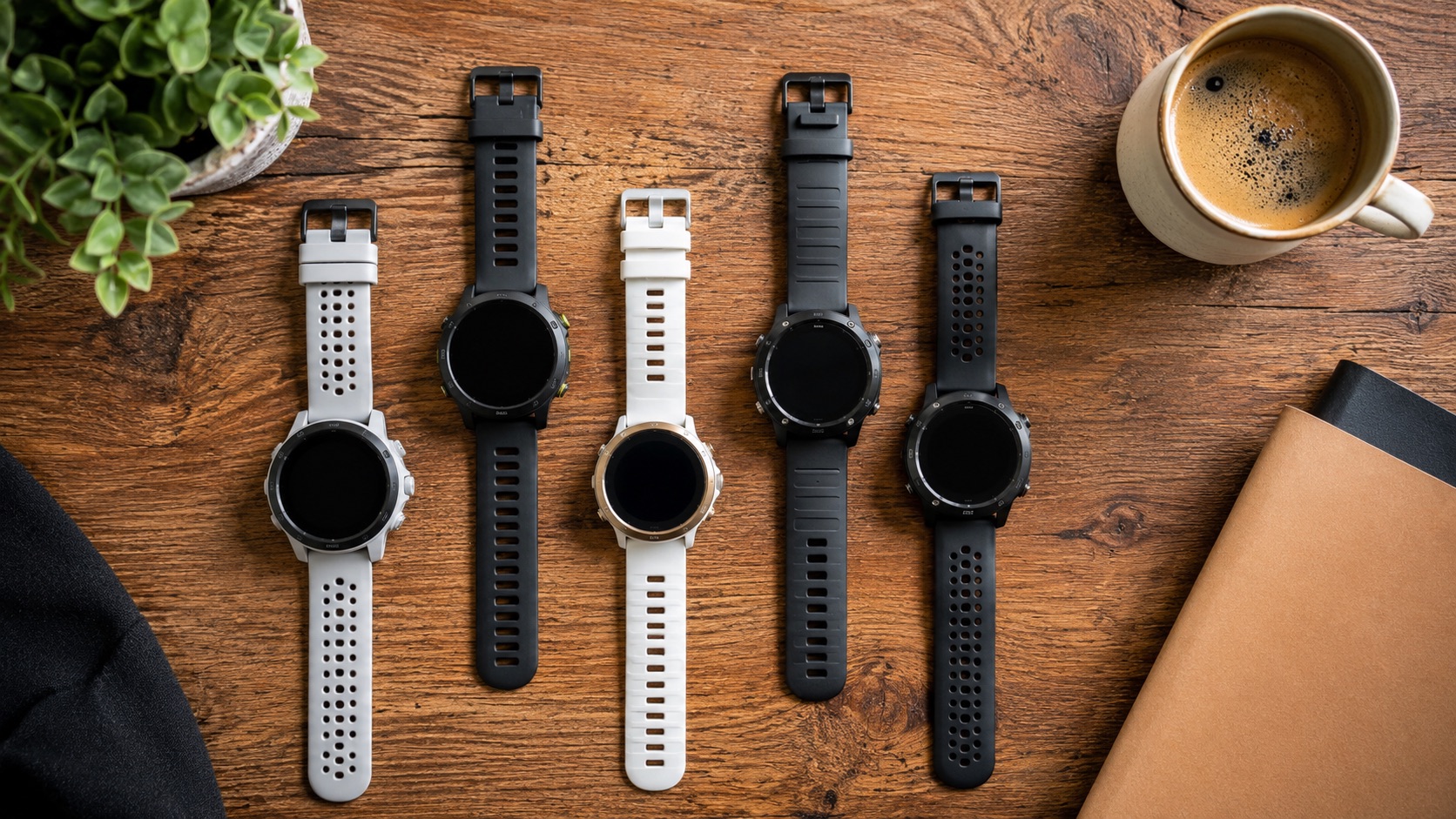
- Garmin Fenix 8: Training load, VO2 Max, body battery, sleep, running dynamics, pace, heart rate
- Whoop 5.0: HRV, recovery score, strain, sleep performance, respiratory rate
- Oura Ring 4: Readiness score, HRV, sleep stages, body temperature
- Stryd: Running power, leg spring stiffness, form power, power-to-weight ratio
- Manual tracking: Weekly mileage, workout type, perceived effort, life stress (1-10 scale)
I export everything monthly into a spreadsheet and look for correlations with race performance. Yes, I’m that person. My partner has asked me to seek help. I’ve chosen data analysis instead.
The Ranked Results: What Correlates With Faster Racing
After analyzing my data against 8 race results (two 5Ks, three 10Ks, two half marathons, one marathon), here’s what actually predicts performance, ranked by correlation strength:
| Rank | Metric | Correlation to Race Time | Source | Surprise Level |
|---|---|---|---|---|
| 1 | 8-week avg weekly mileage | Very Strong (negative: more km = faster) | Garmin/Strava | Low (boring) |
| 2 | % of runs at easy effort | Strong (more easy = faster racing) | Garmin HR zones | Medium |
| 3 | 4-week avg sleep duration | Strong (more sleep = faster) | Oura/Whoop | Low |
| 4 | 4-week avg HRV trend | Moderate-Strong (higher = faster) | Whoop | Medium |
| 5 | Training load balance (Garmin) | Moderate | Garmin | Low |
| 6 | Resting heart rate trend | Moderate (lower = faster) | Oura | Low |
| 7 | Pre-race week sleep quality | Moderate | Oura | Medium |
| 8 | Running power trend | Weak-Moderate | Stryd | High (expected more) |
| 9 | VO2 Max estimate | Weak (fluctuates too much) | Garmin | High |
| 10 | Body temperature deviation | Negligible | Oura | Expected |
Let me unpack the top four.
#1: Consistent Easy Mileage (The Boring Truth)
The single strongest predictor of my race performance is simply: how many kilometers did I run in the 8 weeks before the race, and were most of them easy?
That’s it. Not interval sessions per week. Not lactate threshold pace. Not recovery tool usage. Just: did I run consistently, and did I mostly run easy?
My best races came after 8-week blocks averaging 50-60 km/week with 80%+ at easy effort. My worst races came after inconsistent blocks (missed weeks due to travel, injury, or overtraining) or blocks where I ran too hard too often.
This aligns perfectly with what every coach says but no gadget company wants to advertise: consistent, mostly-easy running is the foundation. The Garmin training algorithms try to tell you this through Training Status, but a simple weekly mileage log does the same job.
#2: Sleep Quality and Duration
My Oura Ring and Whoop both track sleep, and they agree on one thing: the weeks where I average 7.5+ hours of sleep produce noticeably better running.
Specifically, I found:
- Below 6.5 hours average: running feels terrible, pace suffers, injury risk increases
- 6.5-7 hours: adequate, maintenance-level running
- 7-7.5 hours: good training quality, normal progression
- 7.5+ hours: best training quality, fastest recovery, best race performances
My marathon PR came after a 3-week block averaging 8.1 hours per night. My worst 10K followed a week of 5.5-hour nights (work stress).
The Oura Ring is the best sleep tracker I own for accuracy, but even Garmin’s built-in sleep tracking shows these trends. You don’t need a $350 ring to know you should sleep more. But having the data does guilt me into going to bed earlier.
#3: HRV Trends (Not Daily Readings)
Here’s an important distinction: a single day’s HRV reading means almost nothing. My HRV varies by 30-40ms day to day based on alcohol, stress, sleep position, and random noise. Checking Whoop every morning and adjusting training based on today’s number is overreacting.
But the 7-day and 30-day HRV trends are genuinely useful. When my 7-day average HRV is rising, I’m adapting well to training. When it’s dropping, I’m accumulating fatigue and need more rest.
My Whoop vs Oura vs Garmin comparison goes deeper on which device handles HRV trends best, but the short version: Whoop is best for training-specific HRV coaching, Oura is best for overall readiness trends.
#4: Training Load Balance
Garmin’s Training Status feature (which categorizes your recent training load as Productive, Maintaining, Detraining, Overreaching, etc.) actually proved moderately useful as a predictor.
My best races correlated with weeks of “Productive” or “Peaking” status. Races after “Overreaching” or “Unproductive” status were consistently slower.
The Garmin Training Status guide explains how to use this feature properly. The key insight: trust it when it says “Overreaching.” I ignored that warning twice and bonked at races both times.
What DOESN’T Correlate With Faster Running
Here’s the data that surprised me: metrics I expected to matter but found essentially uncorrelated with performance:
Daily Step Count
Whether I hit 8,000 or 15,000 steps in a day had zero correlation with running performance. Non-running activity just doesn’t seem to influence running fitness meaningfully once you’re already running 40-60 km/week.
Body Battery Single Readings
Garmin’s Body Battery (a 0-100 energy score) fluctuates wildly based on when you check it. A morning reading of 80 doesn’t predict a better run than a reading of 60. The metric is too noisy for single-day decisions.
Running Power Variability (Stryd)
I expected Stryd’s power metrics to strongly predict race performance. They didn’t. My power-to-weight ratio improved over time, yes, but it didn’t correlate with race times more than simple pace data already did. Power is useful for pacing in the moment but poor for predicting fitness.
VO2 Max Estimates
Garmin’s VO2 Max number jumps around by 2-3 ml/kg/min week to week based on temperature, sleep, and run conditions. The trend over months is directionally correct (going up = getting fitter), but the absolute number is too imprecise to predict race times. I’ve run PRs with a “lower” estimated VO2 Max than races where I bombed.
For more on what VO2 Max actually means (and doesn’t mean), check the VO2 Max explainer.
Fancy Recovery Protocols
Neither my Theragun usage frequency nor my Normatec session compliance correlated with better race performance. They feel good. They might reduce soreness. But in my data, they don’t predict faster running.
The Practical Takeaways
After $3,000+ in tracking devices and two years of data, here’s what I’d tell anyone trying to run faster:
- Run more, mostly easy. This is 60%+ of the performance equation. No gadget replaces volume.
- Sleep more. 7.5+ hours consistently matters more than any recovery gadget.
- Watch HRV trends (weekly, not daily). A declining 7-day HRV average means back off.
- Respect training load warnings. When Garmin says “Overreaching,” it’s usually right.
- Everything else is marginal. Interesting, fun, educational, but marginal.
My Revised Tracking Approach
Based on this analysis, I’ve simplified what I actually pay attention to:
Check daily: Sleep duration (Oura), Recovery score (Whoop), Training Status (Garmin) Check weekly: HRV trend, total mileage, easy/hard run ratio Check monthly: Resting HR trend, pace at same HR comparison, VO2 Max direction Ignore: Daily step count fluctuations, single Body Battery readings, individual power metrics
I still wear all three devices (I’m not cured of my gadget problem). But I’ve stopped making daily training decisions based on single data points and started looking at weekly and monthly trends instead.
Frequently Asked Questions
Do I need multiple wearables to track these metrics effectively?
No. A Garmin Forerunner 265 or similar mid-range watch tracks all the essential metrics: training load, sleep, HRV, resting heart rate, and running performance. Adding Whoop or Oura gives you slightly more detailed sleep and HRV data, but the Garmin alone covers 80-90% of useful information. I wear multiple devices because I enjoy comparing data and have a problem with buying things.
How long do I need to track before I see useful patterns?
At minimum, 8-12 weeks of consistent tracking to see meaningful trends. For race performance correlation, you need several races (4+) over 6-12 months with consistent tracking throughout. Single data points are noise. Patterns emerge over months. Start tracking now and be patient.
Is HRV actually reliable for training decisions?
Individual daily readings are noisy and unreliable for training decisions. But 7-day rolling averages are genuinely useful indicators of adaptation vs. fatigue. I use a simple rule: if my 7-day HRV average drops by 10%+ from baseline, I reduce intensity until it recovers. This has prevented overtraining at least three times that I can identify in my data.
Why doesn’t running power predict race performance better?
Power measures your mechanical output in the moment. It’s great for pacing (maintaining consistent effort on variable terrain). But it’s not a fitness predictor because it doesn’t account for efficiency improvements: as you get fitter, you can run the same pace at lower power (or faster pace at same power). Power and fitness aren’t the same thing, they just overlap.
What’s the biggest mistake runners make with data tracking?
Reacting to daily fluctuations instead of weekly trends. Your HRV drops 15ms one morning? Meaningless noise. Your 7-day average drops steadily for two weeks? Meaningful signal. The gadgets give you data every minute of every day, which creates an illusion that daily adjustments are necessary. They’re not. Look at trends, not snapshots.
Final Thought
The irony of spending $3,000 on tech to discover that sleep and easy mileage drive performance is not lost on me. The most expensive lesson I’ve learned is that the boring fundamentals work. The gadgets just let me watch the boring fundamentals working, in high resolution, with pretty graphs.
Worth it? For my curiosity, absolutely. For my race times? A $200 Garmin and a commitment to sleeping 8 hours would have gotten me 95% of the way there.
But the graphs are really pretty.