How to Start Running After 40 - Safe Guide for Older Beginners 2026
How to Start Running After 40 - Safe Guide for Older Beginners 2026
Starting to run after 40 is one of the best decisions you can make for your health. It’s also one that requires more patience and smarter planning than if you were 25. Your cardiovascular system will adapt quickly - often within a few weeks you’ll notice improved endurance. But your tendons, joints, and connective tissue need more time. They adapt on a timeline measured in months, not weeks.
The good news: there’s nothing about being over 40 that prevents you from becoming a strong, capable runner. Millions of masters runners prove this every day. The key is respecting the biological realities of your body while progressively building toward your goals.
I started running seriously at 42. I made every mistake in the book - too much too soon, ignoring pain signals, skipping rest days because I felt good. I spent more time injured than running for my first year. This guide is everything I wish someone had told me before that first run.
The 12-Week Walk-to-Run Progression
This plan is deliberately conservative. For runners over 40 starting from a sedentary or lightly active baseline, slow progression is the single most important factor in avoiding injury. Train 3-4 days per week with at least one rest day between running sessions.
| Week | Session Format | Weekly Frequency | Notes |
|---|---|---|---|
| 1-2 | Walk 30 min brisk pace | 4 days | Build walking habit, assess joint comfort |
| 3 | Walk 25 min, Run 1 min × 3 | 3 days | Run = barely faster than walk |
| 4 | Walk 3 min / Run 1 min × 7 | 3 days | Total: 28 min session |
| 5 | Walk 2 min / Run 2 min × 7 | 3 days | Equal walk/run time |
| 6 | Walk 2 min / Run 3 min × 6 | 3 days | More running than walking |
| 7 | Walk 1 min / Run 4 min × 6 | 3 days | Walk breaks becoming brief |
| 8 | Walk 1 min / Run 5 min × 5 | 3 days | 25 min running total |
| 9 | Walk 1 min / Run 7 min × 3-4 | 3 days | Approaching continuous |
| 10 | Run 10 min / Walk 1 min × 2-3 | 3 days | Long continuous segments |
| 11 | Run 15 min / Walk 1 min × 2 | 3 days | Almost there |
| 12 | Run 20-25 min continuous | 3 days | Celebrate - you’re a runner |
Critical rules for over-40 beginners:
- If anything hurts (beyond normal muscle fatigue), stop and take an extra rest day.
- Repeat any week that felt difficult. The plan works at your pace, not the calendar’s.
- Run on softer surfaces when possible - trails, grass, tracks - to reduce joint impact.
- Add strength training 2x per week from Week 1. More on that below.
Why Running After 40 Is Different
Let’s be honest about what changes in your body after 40. This isn’t discouraging - it’s useful information for training smarter.
Tendons and ligaments adapt more slowly. Your Achilles tendon, knee ligaments, and plantar fascia need longer to strengthen than when you were younger. This is why progressive overload over 12 weeks (not 6) is so important. Tendon injuries are the most common issue for older beginners.
Recovery takes longer. Where a 25-year-old might bounce back from a hard run in 24 hours, you may need 48-72 hours. This is normal and not a sign of weakness - it’s biology. Plan rest days accordingly.
Muscle mass decreases naturally. After 40, you lose approximately 1% of muscle mass per year without intervention. Running alone won’t prevent this - you need strength training. The good news: you can reverse this decline with consistent resistance work.
Bone density may be lower. Running actually helps here - it’s a weight-bearing exercise that stimulates bone growth. But start gradually to allow bones to adapt to the new loading.
None of this means you can’t run. It means you build differently. Slower, smarter, and with more support work.
Strength Training for Over-40 Runners
This is non-negotiable. Strength training 2x per week will dramatically reduce your injury risk, improve your running economy, and counteract age-related muscle loss. You don’t need a gym - bodyweight exercises work perfectly.
Essential exercises (2-3 sets, 10-15 reps each):
- Single-leg calf raises (Achilles and calf strength)
- Bodyweight squats progressing to single-leg squats
- Lunges (forward and lateral)
- Glute bridges progressing to single-leg bridges
- Planks (30-60 seconds) and side planks
- Step-ups on a chair or bench
Start with these from Day 1 of your running program. They take 15-20 minutes and they are as important as the running itself.
For more on preventing common running injuries, read our complete guide to preventing running injuries.
Setting Realistic Expectations
Month 1: You’ll feel slow, out of breath during run intervals, and possibly sore the next day. This is normal. Your cardiovascular system is adapting. Most people see noticeable improvement by the end of Week 4.
Month 2: Running starts feeling more natural. You’re covering more ground with less effort. You might start enjoying it (strange, right?). Walk breaks feel less necessary.
Month 3: You can likely run 20-25 minutes continuously. You feel like a runner. You start noticing other runners and feeling kinship with them. You consider signing up for a 5K.
Month 6: With consistent training, most over-40 beginners can comfortably run 30-45 minutes, complete a 5K, and start thinking about longer distances or faster paces.
Year 1: Many masters runners who started from zero can run 10K or even train for a half marathon by the end of their first year. Be patient - the long game pays off enormously.
Common Injuries and How to Avoid Them
Achilles tendinitis: The most common injury for older beginning runners. Prevention: calf raises daily, gradual mileage increases, proper heel-drop shoes. Don’t push through Achilles pain.
Knee pain (runner’s knee): Often caused by weak quadriceps and glutes rather than running itself. Prevention: squats, lunges, and hip-strengthening exercises. If your knees hurt, strengthen the muscles around them before adding mileage.
Plantar fasciitis: Heel pain, especially first thing in the morning. Prevention: calf stretches, toe curls, proper shoes with adequate arch support, and not increasing running volume too quickly.
Shin splints: Pain along the front of the lower leg. Almost always caused by too much too soon. Prevention: follow the 12-week plan religiously, run on softer surfaces, and ensure your shoes aren’t worn out.
The common thread: nearly all beginner injuries come from doing too much before your body is ready. Follow the plan, prioritize strength work, and listen to pain signals.
Gear Essentials for Over-40 Beginners
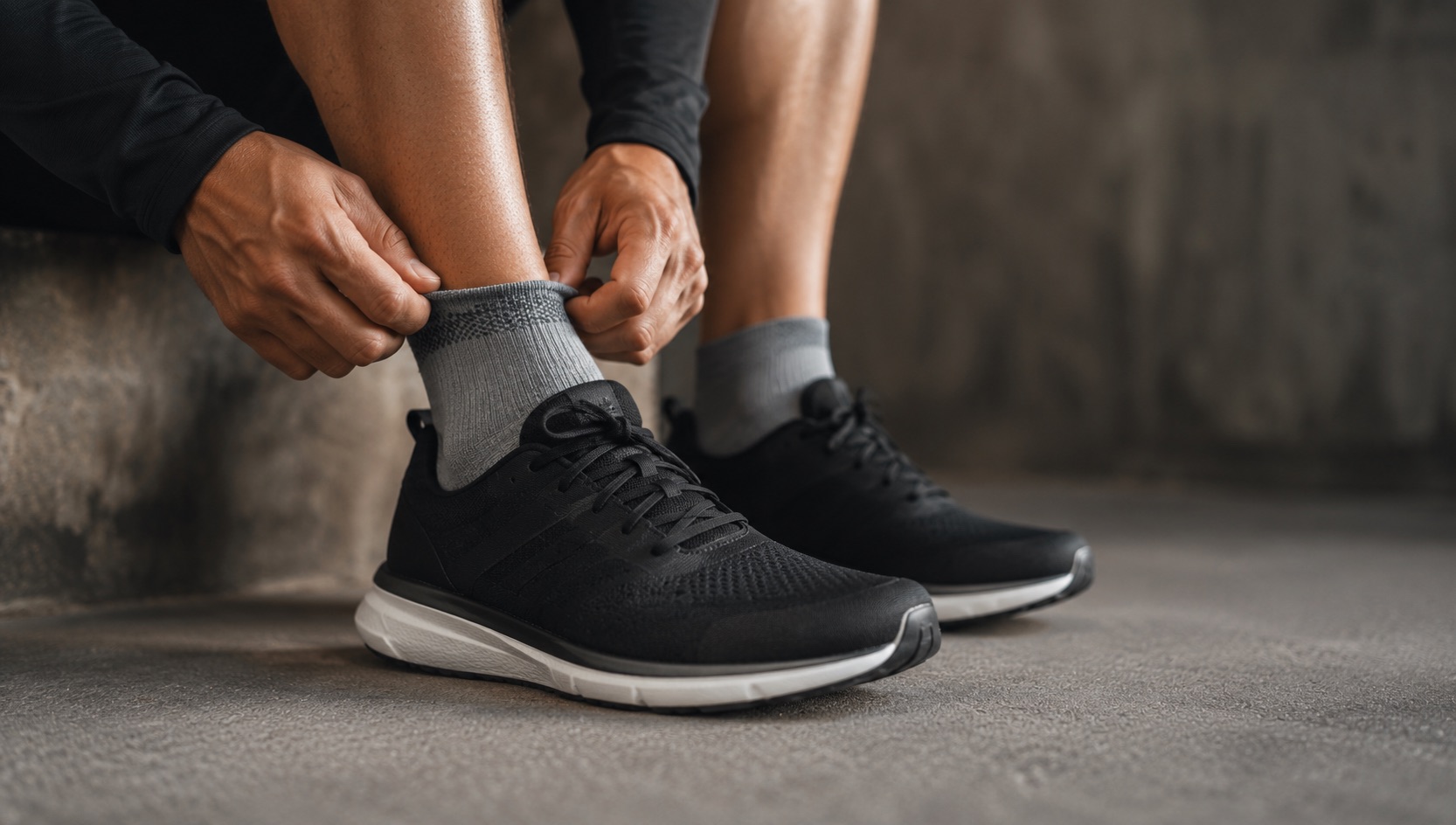
Shoes: Get fitted at a running store. Tell them you’re a new runner over 40. They’ll likely recommend shoes with moderate cushioning and support. Don’t buy minimalist shoes or racing flats - your body needs cushioning while it adapts. Expect to spend $130-160. See our best running shoes for beginners 2026 for specific recommendations.
Moisture-wicking clothes: Cotton causes chafing. Synthetic or merino wool fabrics are essential.
Supportive sports bra (if applicable): Proper support prevents discomfort that might discourage you from running.
Recovery tools: A foam roller ($25-40) is worth its weight in gold for managing post-run soreness. Use it for 5-10 minutes after every run.
For a full gear checklist, see our best running gear for beginners guide.
When to See a Doctor
See a doctor before starting if you:
- Have been completely sedentary for over 5 years
- Have any known heart condition or family history of heart disease
- Have diabetes, high blood pressure, or high cholesterol
- Are significantly overweight (BMI over 35)
- Experience chest pain, dizziness, or severe shortness of breath during mild exertion
- Have joint replacements or significant joint damage
For most healthy adults over 40 without the above conditions, starting a gentle walk/run program is safe without medical clearance. But when in doubt, a 15-minute doctor visit provides peace of mind.
Nutrition Considerations for Over-40 Runners
Your nutritional needs shift slightly as you age and add running:
Protein: Aim for 1.4-1.6g per kg of bodyweight daily to support muscle recovery and fight age-related muscle loss. This is higher than the standard recommendation but important for active adults over 40.
Calcium and Vitamin D: Critical for bone health. Dairy, leafy greens, and supplementation if needed.
Hydration: Thirst perception decreases with age. Drink consistently throughout the day, not just during runs.
Anti-inflammatory foods: Berries, fatty fish, turmeric, and green vegetables help manage the increased inflammation response that comes with age and exercise.
Related reading: Couch to 5K - Best Apps and Plans for Beginners 2026
FAQ
Is it safe to start running at 50 or even 60?
Yes, with appropriate medical clearance and an even more gradual progression. The same principles apply - start with walking, add brief running intervals, progress slowly, and prioritize strength training. Many people begin running in their 50s and 60s and compete in races well into their 70s and 80s. The key difference is patience: where a 40-year-old might follow a 12-week plan, a 60-year-old might extend that to 16-20 weeks. Your cardiovascular system will adapt beautifully at any age.
How often should I run per week when starting after 40?
Start with 3 days per week with at least one full rest day between each running session. This gives your tendons, joints, and muscles 48+ hours to recover and adapt between sessions. After 3-4 months of consistent injury-free running, you can consider adding a fourth day. Most masters runners thrive on 3-4 days of running supplemented by 2 days of strength training and 1-2 full rest days. More is not always better - quality and consistency trump volume.
Will running damage my knees?
Research consistently shows that recreational running does not increase the risk of knee osteoarthritis, and may actually be protective. Runners have lower rates of knee arthritis than sedentary people. However, if you already have significant knee damage or arthritis, consult your doctor before starting. For healthy knees, the forces of running stimulate cartilage maintenance and strengthen the muscles that protect the joint. The key is gradual progression - sudden spikes in mileage are what cause problems, not running itself.
How fast should I expect to improve?
Most over-40 beginners see dramatic cardiovascular improvement in the first 8-12 weeks. You’ll go from gasping after 1 minute of running to comfortably running 20+ minutes in about 3 months. After that initial rapid improvement, progress becomes more gradual. Expect to build toward 5K in 3-4 months, 10K in 6-8 months, and half marathon in 12+ months. Your absolute pace matters less than consistent improvement - focus on duration and comfort rather than speed for the first year.
Do I need different shoes than younger runners?
Not necessarily different, but your priorities may differ. Over-40 beginners generally benefit from shoes with moderate cushioning (not minimal), a supportive heel counter, and a heel-to-toe drop of 8-12mm (which reduces strain on the Achilles tendon). Avoid maximalist shoes with very high stack heights that can reduce stability, and avoid minimalist shoes that demand adaptation your tendons aren’t ready for. Get fitted at a specialty running store and mention your age and experience level - they’ll guide you well.
The Long View
Starting to run after 40 isn’t a sprint - it’s a long game that pays compound interest. Every week you stay consistent adds to a foundation that will serve you for decades. Runners who start in their 40s and train intelligently often peak in their late 40s or early 50s, running times they never imagined possible.
Be patient. Be consistent. Respect the rest days. Do the strength work. And remember that every runner - regardless of age - started exactly where you are now: at the beginning, wondering if they could actually do this.
You can. Start with Week 1.