Feeling vs Form: When Your Body Is Fitter Than Your Head Believes
Feeling vs Form: When Your Body Is Fitter Than Your Head Believes
I am fitter than I have ever been. My data proves it. My lactate threshold is higher, my heart rate at pace is lower, my long runs are longer and faster. Every single metric points in the right direction. And yet, most mornings I wake up feeling like I am still stuck in the chaos of 2025.
This is about the gap between perceived fitness and actual fitness. It is real, it is frustrating, and if you have gone through a disrupted training period, you probably know exactly what I am talking about.
The Data That Proves I Am Fitter
Let me start with cold hard numbers. I pulled two long runs from my Garmin history. One from earlier in my training cycle before things clicked. One from a few weeks ago.
Old long run:
- Distance: 20.01km
- Pace: 5:40/km
- Average heart rate: 140bpm
Recent long run:
- Distance: 23.01km
- Pace: 5:26/km
- Average heart rate: 135bpm
Read those numbers again. My recent long run was 3km further, 14 seconds per kilometer faster, and my heart rate was 5 beats per minute lower. That is not a marginal improvement. That is a significant aerobic base upgrade across every possible metric simultaneously.
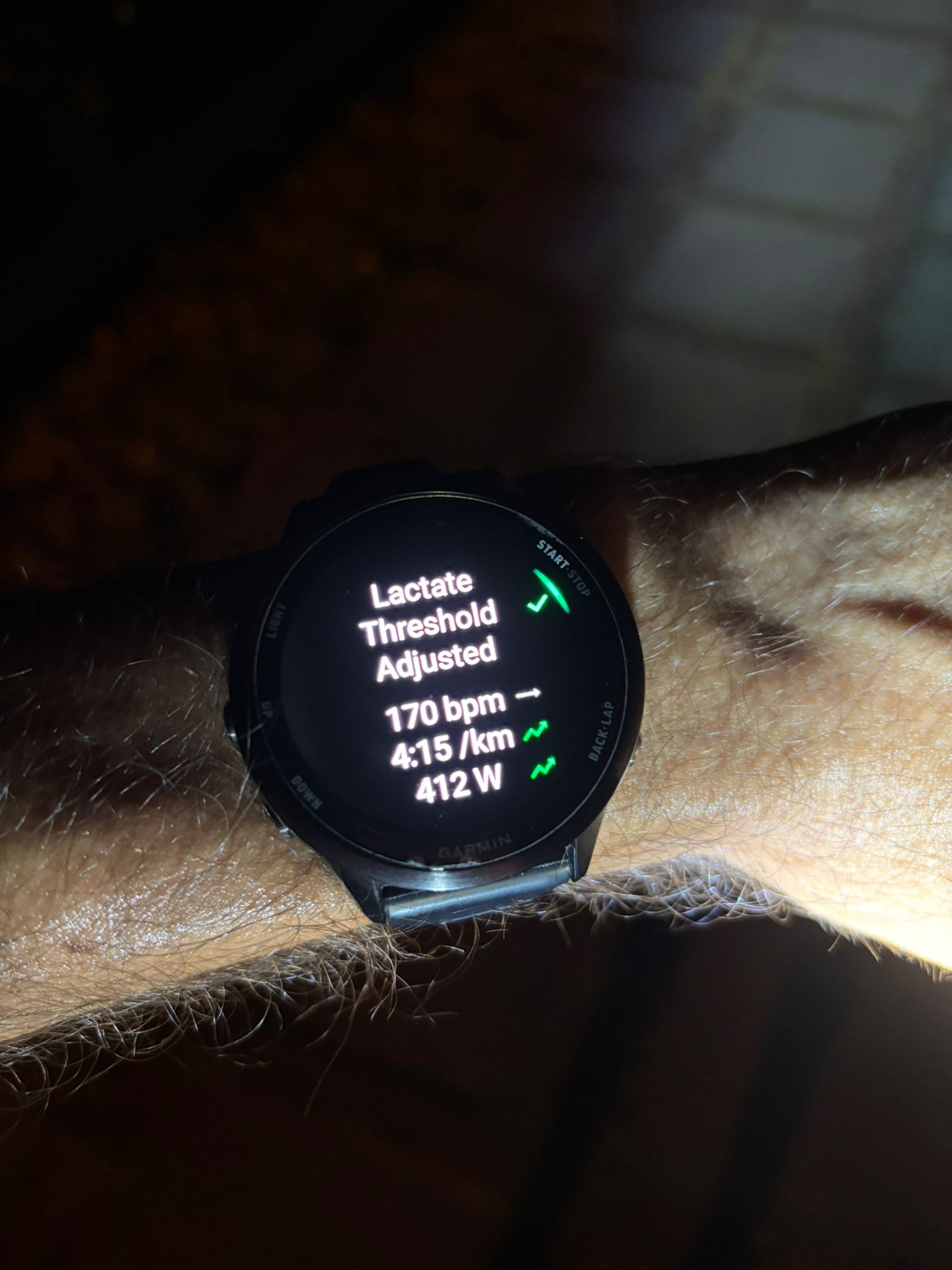
On top of that, my Forerunner 570 shows my lactate threshold sitting at 170bpm with a pace of 4:15/km. That number has been steadily climbing over the past months. The physiological adaptations are happening. The engine is bigger.
Why My Head Does Not Believe It
After the hardest running year I have experienced, my brain built a narrative. The narrative says: you lost fitness, you are behind, you are not the runner you were. That narrative was true in 2025. It is no longer true in 2026. But brains are slow to update their stories.
Every time I lace up, there is a voice that says “you are going to struggle today.” It says that even on days where I cruise through 23km at 5:26 pace feeling comfortable. The voice does not care about data. It cares about the emotional memory of struggling through inconsistent training blocks, missed weeks, and disappointing performances.
This is not unique to me. If you have ever come back from injury, illness, or a long break, you know this feeling. Your body adapts faster than your confidence. The fitness returns before the belief does.
How Garmin Data Helped Me Bridge the Gap
I would not have recognized this disconnect without my Garmin data. If I relied purely on how I feel, I would still think I am unfit. The numbers forced me to confront reality: I am running further, faster, and more efficiently than before my disrupted period.
Here is what I track on my Forerunner 570:
- Pace vs heart rate trends: The single most useful metric. Same pace at lower HR means genuine aerobic improvement.
- Lactate threshold estimates: Moving from 165bpm to 170bpm over three months shows real threshold development.
- Training load balance: Staying in the productive zone consistently, unlike 2025 where I bounced between detraining and overreaching.
- VO2 max trend: Steadily climbing, now matching or exceeding my pre-disruption peak.
The data does not lie. It does not have bad days emotionally. It simply records what happened. And what happened is that my body got fitter while my head stayed stuck in the past.
For a deeper look at how accurate Garmin VO2 max estimates actually are, see my two-year VO2 max accuracy analysis.
The Psychological Recovery Is Slower Than Physical Recovery
Here is what I have learned: physical fitness can return in weeks to months with consistent training. Psychological confidence takes longer. It requires accumulating evidence. Not one good run, but dozens. Not one strong workout, but a pattern that becomes undeniable.
I am in that accumulation phase right now. Every good long run adds a data point. Every tempo session where I hit paces I did not think I could hold chips away at the old narrative. Eventually, the weight of evidence breaks through and your brain updates its model.
But it takes patience. And it takes deliberately looking at the data rather than trusting how you feel on any given morning.
Practical Steps I Use to Trust the Numbers
Here is what works for me when the disconnect between feeling and form gets frustrating:
1. Compare structured data, not feelings. Pull up two comparable runs from different periods. Look at pace, heart rate, and distance. Numbers do not have emotional bias.
2. Track weekly averages, not daily fluctuations. A single bad run means nothing. A week of bad runs might mean something. A month of improving averages means everything.
3. Run by heart rate on easy days. When I run easy by heart rate, I inevitably end up running faster than I expect. That reinforces the reality that my aerobic base has improved. I wrote more about this approach in my easy run pace guide.
4. Accept that feeling unfit is not the same as being unfit. These are two separate things. One is an emotion. The other is a measurable physiological state. They often disagree after disrupted periods.
5. Let race results be the final arbiter. All the training data in the world is just a proxy. The race will tell you where you actually stand. I am building toward that moment with patience rather than rushing it.
The Bigger Lesson: Disruption Does Not Erase Years of Training
What 2025 taught me is that aerobic base is remarkably resilient. Yes, my training was inconsistent. Yes, I had weeks where I barely ran. But the years of consistent volume before that disruption created a foundation that did not disappear. It just went dormant.
When I started training consistently again in 2026, the fitness came back faster than I built it originally. Muscle memory is real. Cardiovascular adaptations persist longer than we think. The body remembers what it has done before and returns to that state more quickly the second time.
If you are coming back from your own disrupted period, give yourself grace. The fitness is probably there, hiding under a layer of doubt and deconditioning. Consistent training will bring it back to the surface. The data will prove it before your brain believes it.
Where I Go From Here
My plan is simple: keep stacking consistent weeks, keep tracking the data, and trust the process. My aerobic base is stronger than ever. My confidence will catch up eventually. And when it does, I am going to race fast.
The gap between feeling and form is closing with every session. Each long run that goes better than expected. Each tempo where I hit paces that surprise me. The evidence is piling up. My brain will get the memo eventually.
FAQ
How long does it take for confidence to match fitness after a break?
In my experience, physical fitness returns in 4 to 8 weeks of consistent training after a moderate break. Psychological confidence takes longer, often 2 to 3 months of accumulated positive sessions before you genuinely believe you are fit again. The key is patience and tracking data rather than relying on feelings.
Can Garmin data really show fitness improvement accurately?
Yes, with caveats. The most reliable metric is pace versus heart rate over time. If you are running the same pace at a lower heart rate, or faster at the same heart rate, you have genuinely improved aerobically. VO2 max estimates and lactate threshold numbers are useful trends but should not be treated as precise lab values.
What is the best way to rebuild after a disrupted training year?
Start with consistent easy volume. Do not try to pick up where you left off with intensity. Build your weekly mileage back gradually over 3 to 4 weeks, then reintroduce quality sessions. Your body will respond faster than you expect if you had a strong base before the disruption.
Should I trust how I feel or what the data says?
Trust the data for assessing fitness trends. Trust how you feel for day-to-day decisions like whether to push through a workout or back off. They serve different purposes. The data tells you what is happening physiologically. Feelings tell you what your body needs today.
How do I know if I am actually fitter and not just having good days?
Look for consistent patterns across multiple weeks, not individual sessions. If your average pace at a given heart rate is improving week over week, that is real fitness improvement. One great run could be weather, rest, or luck. Four weeks of improving averages is adaptation.