
Why 2025 Was My Hardest Running Year (And What the Data Shows)
2025 was supposed to be the year I consolidated my sub-20 5K fitness. Build volume. Stay consistent. Get faster.
Instead, I got a third kid, COVID, hospital visits with my daughter, surgery, and the most chaotic training log I’ve ever looked at. My weekly mileage looked like a heartbeat monitor during a panic attack. I lost months of progress in weeks.
But here’s the thing nobody told me: when I finally sat down and compared the actual data from before and after this chaos year, the numbers told a completely different story than what I felt.
The Timeline of Chaos
I’m going to keep this deliberately vague on exact dates because it involves my family’s health. But here’s what happened across 2025:
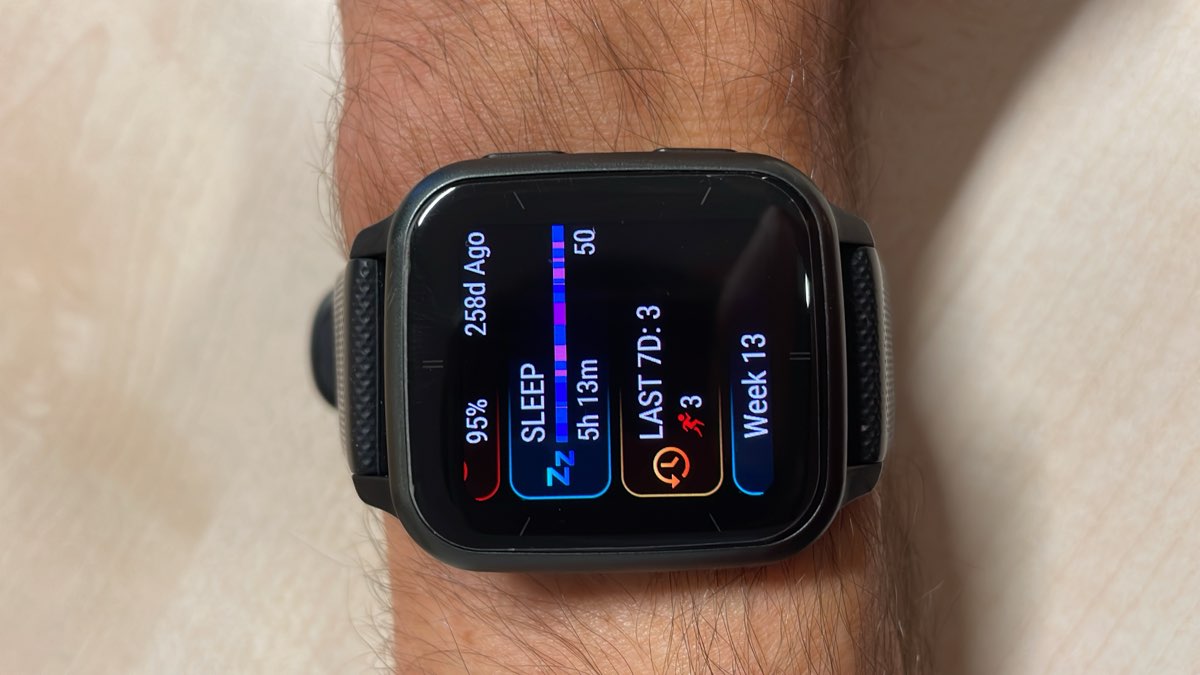
Summer period: Our third daughter was born. Beautiful, healthy, and completely destructive to my sleep. For months, I averaged maybe 4-5 hours of broken sleep per night. My Garmin Night Scores were consistently in the 30-50 range. That screenshot above? That was a typical week.
Running didn’t stop completely, but the quality collapsed. Easy runs felt hard. Intervals felt impossible. I shuffled through most sessions on autopilot.
Late autumn period: COVID hit our entire family. All five of us, one after another. Then our daughter needed hospital visits. I didn’t run for 4 straight weeks. Not by choice. There simply wasn’t time or energy. When you’re sleeping in hospital chairs and managing a sick household, running stops being a priority. Rightfully so.
Early winter period: I had surgery. I won’t go into details, but the recovery period meant another stretch of no running. By the time I was cleared to train again, I’d lost nearly two months of consistent work.
The Data Doesn’t Lie
Here’s my average weekly volume by month across the two disrupted years:
2024 (3rd daughter born late summer):
| Month | Avg Weekly Km |
|---|---|
| January | 47 |
| February | 55 |
| March | 43 |
| April | 33 |
| May | 35 |
| June | 52 |
| July | 37 |
| August | 31 |
| September | 12 |
| October | 32 |
| November | 47 |
| December | 55 |
September at 12km/week. That’s one or two jogs total. The newborn phase in full effect.
2025 (COVID, hospital, surgery):
| Month | Avg Weekly Km |
|---|---|
| January | 55 |
| February | 52 |
| March | 43 |
| April | 37 |
| May | 35 |
| June | 31 |
| July | 33 |
| August | 47 |
| September | 52 |
| October | 44 |
| November | 12 |
| December | 32 |
November at 12km/week. That’s the COVID + hospital stretch. And the weeks leading up to it weren’t much better because of a blocked back in summer and everything piling up.
Look at both years. Peaks and valleys everywhere. Compare that to a normal training block where you’d want to see a steady 45-55km with controlled variation.
My VO2Max reflected the chaos too. It dropped from 56.3 to 53.1 between November and December 2025. Three points gone. Months of work evaporated. I’ve tracked my VO2Max journey across two years and this was by far the sharpest decline.
I genuinely considered whether I’d ever get back to where I was. When you’re running 12km in a week and your watch keeps telling you your fitness is declining, the mental game gets hard.
The Surprise: What the Aerobic Base Actually Shows
Here’s where this story turns. Because I sat down last month and compared two long runs. One from early 2025 when I was “fit.” One from recent weeks in 2026.
Early 2025 long run:
- Distance: 20.01km
- Pace: 5:40/km
- Average HR: 140bpm
Recent 2026 long run:
- Distance: 23.01km
- Pace: 5:26/km
- Average HR: 135bpm
Read those numbers again. 3km further. 14 seconds per kilometer faster. 5 beats per minute lower heart rate.
Despite losing months of training. Despite my VO2Max crashing. Despite the most inconsistent year of my running life. My aerobic efficiency actually improved.
How? I have a theory.
What I Think Happened
The fitness I built in 2023 and 2024 through consistent easy running didn’t disappear. It went dormant. The mitochondrial density, the capillary networks, the cardiac adaptations from two years of aerobic work don’t vanish in a few months. They hold.
What crashed was my top-end fitness. Speed. Lactate tolerance. Race sharpness. That stuff is fragile and goes quickly without stimulus.
But the deep aerobic base? It survived. And when I came back and started easy running again in 2026, it came back fast. Faster than building it the first time.
This tracks with what I’ve read about the progression from beginner to sub-20. The early gains come from building that base. Once it’s built, it’s resilient.
2026: The Rebound
Compare 2025’s chaos to my 2026 weekly averages:
| Month | Avg Weekly Km |
|---|---|
| January | 49 |
| February | 46 |
| March | 48 |
| April | 37 |
| May | 51 |
| June | 56 |
Look at the stability. Aside from April (family holiday, deliberate reduction), the range is tight. 44-51km. That’s what consistent training looks like. No heroic weeks. No collapsed weeks. Just steady work.
My VO2Max is climbing back. My lactate threshold pace is improving. My long runs feel controlled and strong. The data says I’m approaching where I was before the chaos, and in some metrics I’m already past it.
The Lessons I Took From This
Consistency beats perfection
I used to think a missed week was a disaster. That if I couldn’t hit my planned volume, the week was wasted. 2025 taught me that it doesn’t matter. What matters is coming back. Every time. Even if “coming back” means a 20-minute jog at 6:30/km pace.
Your base is more resilient than you think
If you’ve spent 1-2 years building aerobic fitness, a few months off won’t destroy it. You’ll feel terrible. Your watch will show declining numbers. But the foundation holds. Trust it.
Life stress counts
The weeks where I ran through sleep deprivation and stress, those sessions might have done more harm than good. My body was already maxed out from life. Adding training stress on top wasn’t “discipline.” It was stupidity. I should have rested more.
If you’re wondering whether you should run every day during stressful periods, the answer is almost certainly no.
Data context matters
A VO2Max of 53.1 after what my body went through is actually remarkable. I was beating myself up about losing 3 points. But given that I basically took multiple months off, the fact that it only dropped 3 points means the years of base building paid off.
What I’d Tell You If You’re In The Chaos Now
You might be reading this in the middle of your own hard year. New parent. Injury. Life imploding. Training falling apart. Here’s what I want you to hear:
It’s temporary. You will come back. The fitness is still there, deeper than your watch can measure.
Don’t force it. If life is pulling you away from running, let it. Running will wait. Your family, your health, your recovery won’t.
Keep the minimum. Even in my worst weeks, I tried to run once. Just once. 20-30 minutes. It kept the habit alive without adding stress. Some weeks I couldn’t even do that, and that was fine too.
Trust the process on the other side. When you do come back, start easy. Stupidly easy. Your ego will hate it. Do it anyway. The fitness returns faster than you expect.
I looked at what gear and training changes mattered most in my 10K progression and the honest answer is: it was the consistency over years, not any single block of training.
The Bigger Picture
I started running seriously 3+ years ago. In that time I’ve gone from a 28-minute 5K to a 19:28. I’ve logged thousands of kilometers. And 2025 nearly broke my motivation entirely.
But the data proves something I wouldn’t have believed during those dark weeks in autumn: the work you put in doesn’t disappear. It waits. And when you’re ready to come back, it meets you halfway.
2025 was my hardest running year. But it might also be the year that taught me the most about what actually matters in this sport. It’s not PRs. It’s not weekly mileage totals. It’s showing up. Over and over. Especially when it’s hard.
FAQ
How long does it take to regain fitness after time off?
In my experience, about half the time you were off. I took roughly 8 weeks of very low or zero training and it took about 4-5 weeks of consistent easy running to feel normal again. The aerobic base returns faster than the speed.
Does VO2Max really drop that fast?
It can. I lost 3.2 points (56.3 to 53.1) over about 6-8 weeks of disrupted training. But context matters. Some of that drop might be measurement noise from poor sleep and stress affecting heart rate. The real aerobic fitness probably didn’t decline as sharply as the number suggests.
Should I train through illness and sleep deprivation?
No. I tried this and it made things worse. If your Night Score is below 50 and you’re sick or severely sleep-deprived, rest is more productive than running. You’re not building fitness in that state. You’re just accumulating stress.
How do you stay motivated when fitness is declining?
I won’t pretend I stayed motivated. There were weeks where I didn’t want to run at all. What kept me going wasn’t motivation. It was habit. The identity of “I’m a runner” meant that even one run per week felt like maintaining who I am. Motivation returned when the consistency returned.
What would you do differently if 2025 happened again?
I’d rest more during the chaos periods instead of trying to squeeze in junk miles on 4 hours of sleep. I’d also start rebuilding sooner with short, easy runs instead of waiting until I felt “ready.” You’re never going to feel ready. Just start with 15 minutes and build from there.