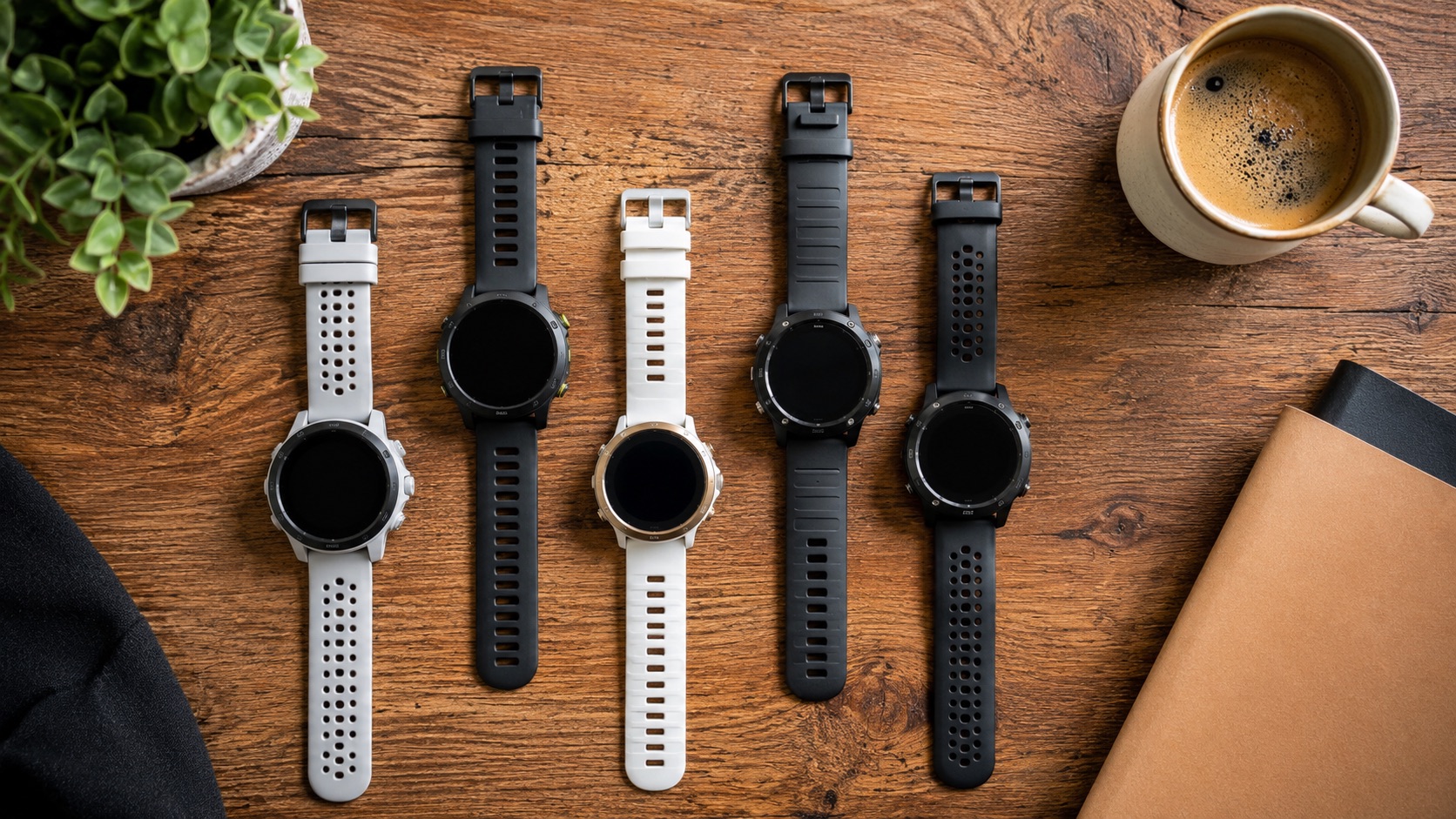
Garmin vs COROS Training Algorithms Explained (2026)
Both Garmin and COROS promise to make you a better runner by analyzing your training and telling you when to push harder or back off. But their approaches are fundamentally different - Garmin’s Firstbeat-powered system and COROS’s in-house EvoLab don’t just use different labels, they actually measure and interpret training load in distinct ways.
After running with both ecosystems for over a year, I’ve got opinions on which does what better. But let me explain how they actually work first, because understanding the algorithms helps you use them correctly - regardless of which watch is on your wrist.
The Core Comparison
| Algorithm Component | Garmin (Firstbeat) | COROS (EvoLab) | Key Difference |
|---|---|---|---|
| Training Load | 7-day load (EPOC-based), acute/chronic ratio | Base/Threshold/Interval load split, 6-week trend | COROS separates load by intensity zone; Garmin shows overall load |
| Training Status | Productive/Peaking/Detraining/Overreaching/Recovery/Unproductive | Optimal/High/Low/Maintaining | Garmin has more nuanced states |
| Recovery Time | Hours until next hard session (updates post-workout) | Recovery timer (hours) + recovery level percentage | Similar output, COROS adds percentage visualization |
| VO2max Estimate | Based on pace + HR during steady/tempo runs | Based on pace + HR with altitude and heat corrections | Both similar accuracy, ±2-3 ml/kg/min of lab values |
| Race Predictor | 5K/10K/HM/Marathon predictions | 5K/10K/HM/Marathon with confidence range | COROS shows confidence intervals |
| Threshold Detection | Lactate threshold (HR + pace), auto-detect during hard efforts | Threshold pace and HR, requires structured test or race effort | Garmin auto-detects more easily |
| Running Power | Optional (HRM-Pro required) | Built into wrist sensor | COROS includes power without extra hardware |
| HRV Analysis | HRV Status (sleep-based, 3-week baseline) | Morning HRV reading (requires alarm protocol) | Garmin’s sleep-based is more convenient |
| Stamina/Endurance | Real-time stamina gauge during activity | Effort Pace (shows effective pace with grade/wind) | Different approaches to the same pacing problem |
| Training Readiness | Daily score (0-100) combining sleep, HRV, recovery, stress | Fatigue level in training hub | Garmin is more holistic on daily readiness |
How Garmin’s System Works
Garmin licenses most of its training analytics from Firstbeat (now Garmin-owned). The system centers on EPOC - Excess Post-Exercise Oxygen Consumption - as the primary measure of training load. Essentially, it estimates how much physiological stress each workout creates based on your heart rate data and personal metrics.
From that foundation, Garmin builds several layers:
Training Load tracks your 7-day accumulated EPOC. It shows whether your load is low, optimal, or high relative to your recent history.
Training Status is the marquee feature. It compares your acute load trend against your fitness (VO2max) trend to determine if your training is actually making you fitter. “Productive” means load is up AND fitness is improving. “Unproductive” means you’re training hard but fitness is stagnating - often a sign of insufficient recovery or too much junk mileage.
Training Readiness (available on FR265+ and Fenix 7+) combines your sleep quality, HRV status, recovery time, stress, and sleep history into a single daily score. It’s basically answering “should I go hard today?” with a number from 0-100. Learn how to use these features effectively in our Garmin Training Status guide.
The system’s biggest strength is its interconnected nature - every metric feeds into others, creating a fairly comprehensive picture. The weakness? It sometimes labels productive training as “unproductive” during heat adaptation, altitude changes, or when GPS-derived pace is inaccurate.
How COROS EvoLab Works
COROS built their training analytics in-house, and the philosophy is different. Where Garmin gives you a single load number, COROS separates your training into three zones:
- Base Load - Easy running, aerobic development
- Threshold Load - Tempo and threshold work
- Interval Load - Hard intervals, VO2max sessions
This separation is genuinely useful for periodization. You can see at a glance whether you’re doing too much intensity and not enough base, or vice versa. It’s a more nuanced view that coaches would appreciate.
COROS’s Training Status is simpler - it tells you if your load is optimal, high, or low relative to your recent history. Less nuance than Garmin’s multiple states, but also fewer confusing or incorrect labels.
The Race Predictor on COROS deserves special mention. Instead of giving you a single time prediction, it provides a range with confidence intervals. Your marathon prediction might say “3:25-3:35 (moderate confidence)” rather than a single “3:30.” This is more honest - race predictions are estimates, and showing the uncertainty is better than false precision.
For a detailed look at how COROS and Garmin compare across the board, including hardware differences, check our full COROS vs Garmin 2026 comparison.
Where Garmin Wins
Daily readiness assessment. Training Readiness is genuinely useful. Waking up to a score of 42 after a bad night’s sleep confirms what your body is telling you - take it easy. COROS doesn’t have an equivalent single-score daily readiness metric.
Automatic threshold detection. Garmin can detect your lactate threshold pace and heart rate automatically during hard efforts. No structured test needed. COROS requires more intentional testing or uses race data.
HRV convenience. Garmin measures HRV during sleep automatically. COROS requires a morning reading with a specific wake-up protocol. Garmin’s approach means you get data even on mornings when you forget or don’t have time.
Training Status nuance. Having six possible states (Productive, Peaking, Recovering, Unproductive, Detraining, Overreaching) gives more specific guidance than COROS’s simpler system. When it’s accurate, it’s very useful.
Ecosystem depth. Garmin Connect has deeper analysis tools and wider third-party integration. Compare the platforms in our training hub comparison.
Where COROS Wins
Load zone separation. Seeing your training load broken into base, threshold, and interval categories is more actionable than a single number. It immediately tells you if your training is balanced.
Honest race predictions. Confidence intervals on predictions are more realistic and less likely to set you up for a bad race day. Garmin’s single-number predictions can feel overly precise.
Running power included. COROS includes wrist-based running power on every watch at no extra cost. Garmin requires an HRM-Pro chest strap for running power. The accuracy is debatable, but the accessibility isn’t.
Simpler interpretation. COROS’s system is easier to understand. There are fewer metrics, fewer possible states, and less conflicting information. For runners who don’t want a PhD in exercise science just to interpret their watch data, this matters.
Effort Pace. COROS’s Effort Pace adjusts your running pace for gradient and conditions, showing you the flat-equivalent effort. It’s a more practical approach to the pacing problem than Garmin’s stamina gauge for many runners.
Which Runners Should Choose Which
Choose Garmin’s algorithm if:
- You want maximum data depth and don’t mind complexity
- HRV tracking convenience matters (sleep-based)
- You like having a daily readiness score to guide decisions
- You run with a chest strap anyway (for power and dynamics data)
- You use multiple third-party platforms
Choose COROS’s algorithm if:
- You prefer simpler, less overwhelming analytics
- Periodization visibility (base/threshold/interval split) appeals to you
- You want running power without buying extra hardware
- You value honest uncertainty in predictions over false precision
- You train with a coach who uses COROS Training Hub
For a broader comparison that includes Apple Watch, see our three-way GPS watch comparison.
Common Mistakes With Both Systems
Regardless of which watch you use, these mistakes mess up your training analytics:
-
Inconsistent HR data. Wrist HR glitches during intervals will skew training load calculations. Use a chest strap for hard sessions on both platforms.
-
Ignoring the first 2-3 weeks. Both systems need baseline data. Don’t trust Training Status labels until you have 2-3 weeks of consistent data.
-
Chasing “Productive” status. Garmin’s Productive label doesn’t mean “doing it right.” Recovery phases deliberately show Recovering or Detraining - that’s fine during taper.
-
Not recording easy runs. Both systems need ALL your training data. If you run without recording, the load calculations are wrong.
-
Comparing VO2max numbers between platforms. They use different algorithms. Your Garmin VO2max and COROS VO2max won’t match. Track trends within one platform, don’t compare across them.
Frequently Asked Questions
Are these training algorithms actually accurate?
They’re useful approximations, not lab-grade measurements. VO2max estimates are typically within ±2-3 ml/kg/min of lab testing. Training load tracking is directionally correct - it reliably tells you if you’re doing more or less than usual. The value isn’t absolute accuracy; it’s trend tracking over weeks and months.
Can I use both Garmin and COROS simultaneously?
Technically yes - wear one on each wrist or alternate. But it defeats the purpose. Both algorithms need consistent data from the same device to build accurate baselines. Splitting your training between platforms gives both incomplete pictures.
Why does Garmin say I’m “Unproductive” when I feel fine?
Common causes: heat adaptation (higher HR for same pace makes the algorithm think you’re losing fitness), GPS inaccuracy in hilly/wooded terrain, or recovering from illness. It’s the most frustrating Garmin label and it’s wrong surprisingly often during environmental changes.
How long before the training algorithm is useful after switching watches?
About 2-3 weeks of consistent running with heart rate data. Both Garmin and COROS need this baseline to calibrate VO2max, set load norms, and establish your personal ranges. The first two weeks will show incomplete or inaccurate status labels.
Do I need a chest strap for accurate training metrics?
For easy runs, wrist HR is fine on both platforms. For interval sessions, tempo runs, and anything with rapid HR changes, a chest strap significantly improves data accuracy on both Garmin and COROS. This matters because training load calculations depend heavily on HR accuracy during hard efforts.
The Bottom Line
Neither system is objectively better - they have different strengths for different runners. Garmin gives you more data, more nuance, and deeper analysis tools but can feel overwhelming or occasionally inaccurate. COROS gives you cleaner, simpler insights with unique features like load zone separation and honest prediction ranges.
The most important thing isn’t which algorithm you use. It’s that you use one consistently, understand its limitations, and combine it with the most advanced training algorithm ever created: paying attention to how your body actually feels.