Race Day Flat Lay: Everything I Pack for a Half Marathon
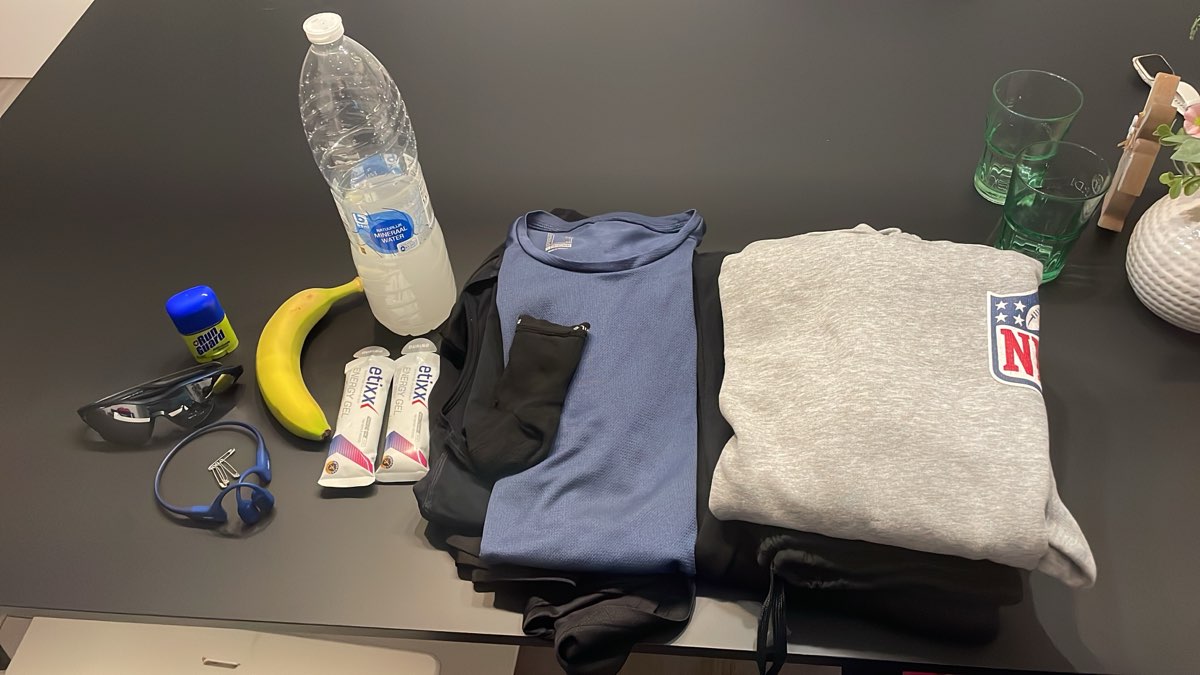
The night before a half marathon, I lay everything out. Every piece of gear, every gel, every accessory. Nothing gets left to morning-of decisions. Nothing gets forgotten in the rush.
I learned this habit the hard way. Forget one item and you either suffer through 21.1 km or scramble at the expo hoping they sell what you need. Neither is ideal when you have spent 12 weeks training for a specific goal time.
Here is my complete race day kit, laid out exactly as I prepare it the night before.
The Non-Negotiables
These are the items I will literally DNS (did not start) without:
RunGuard Anti-Chafe Balm
This goes on my nipples. Period. There is no discussion about this one.
I have run half marathons without anti-chafe protection exactly once. The blood stains on my white shirt at the finish line taught me everything I needed to know. Nipple chafing is not a discomfort problem, it is a genuine injury that gets worse with every kilometer and takes days to heal.
RunGuard specifically because it does not wash off with sweat like some cheaper alternatives. It stays put from start to finish, even on humid days when everything is soaked. I apply it generously to both nipples and also along the inner arms where my shirt seams sit.
Racing Shoes
Previously, my race shoe was the Adidas Adios Pro 3. It served me well for multiple half marathons and was the shoe I set my PB in.
Now I have switched to testing the Nike Vaporfly 4. The first impressions were excellent, and it has earned the race day slot. The combination of ZoomX foam and the carbon plate gives a propulsive feeling that genuinely makes holding pace easier over the full distance.
I always bring race shoes in a separate bag to avoid them getting dirty or wet before the start. These shoes only come out of the bag for racing and race-specific workouts.
My Watch: Forerunner 570 in Race Mode
The FR570 goes into race mode the night before. This means:
- Only race-relevant data fields showing (pace, heart rate, distance, elapsed time)
- GPS set to multi-band for maximum accuracy
- Auto lap set to 1 km
- Heart rate alerts configured (warning if I go above 175 bpm in the first half)
- No notification mirroring from phone
I do not want to be fiddling with settings at the start line. Everything is configured 12 hours in advance.
Nutrition: The Gel Situation
Gels are deeply personal. What works for one runner causes gastric distress for another. I have learned this the painful way.
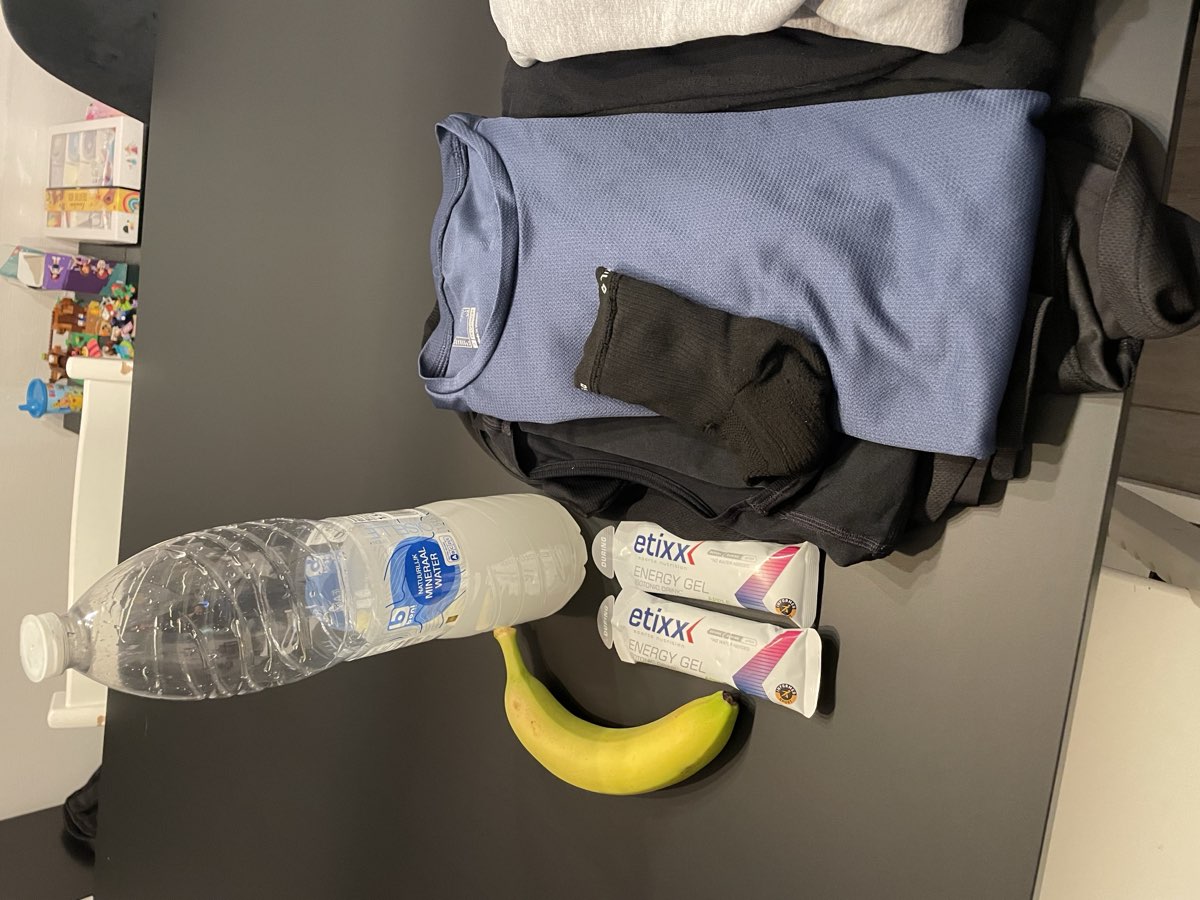
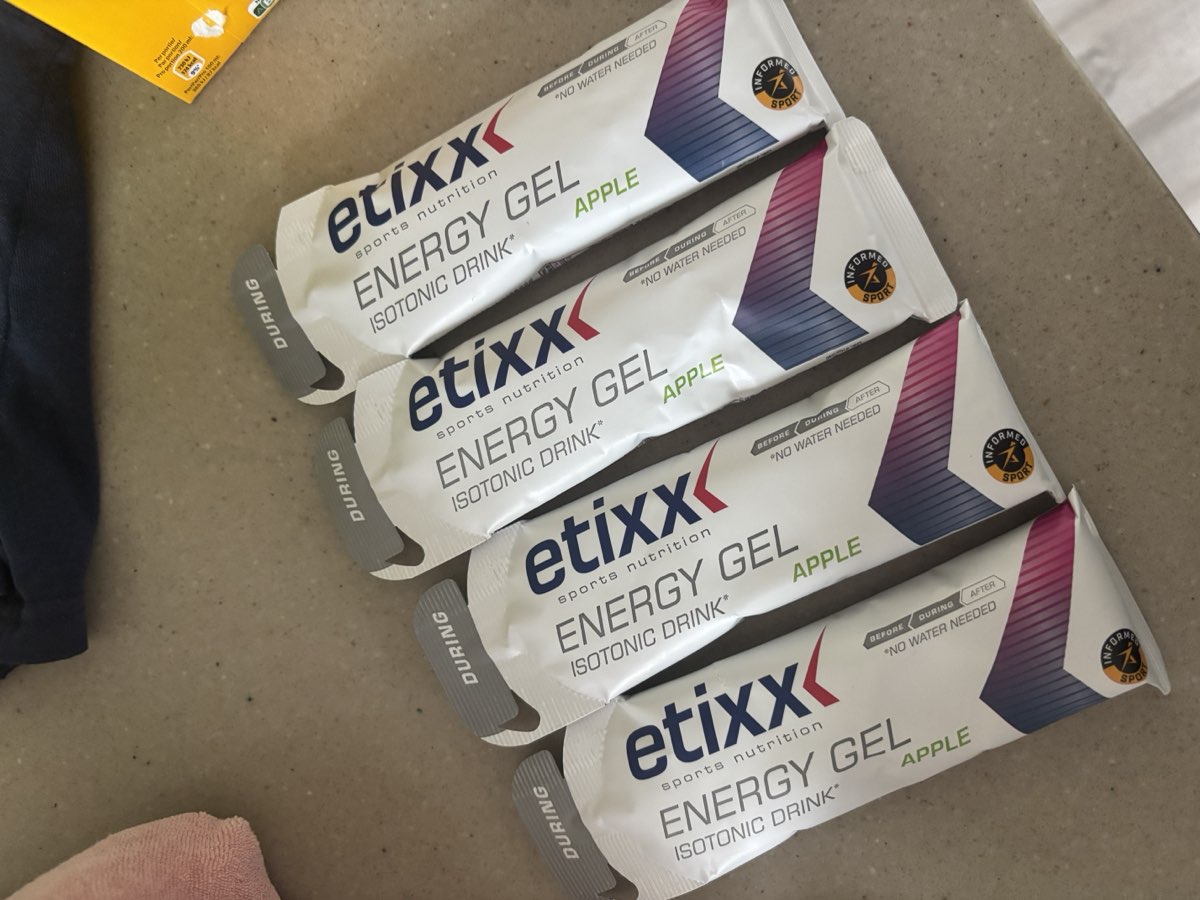
Previous Choice: Etixx Isotonic Apple
For a long time I used Etixx isotonic energy gels in the apple flavor. The big advantage was that they required no water to consume. Being isotonic, they absorb without additional fluid, which means you can take them between aid stations without issue.
They tasted fine and provided a noticeable energy boost. I used them successfully for several races.
Why I Switched: Stomach Issues
After my last race using Etixx gels, I had significant stomach and bowel issues. Not during the race itself, but in the hours afterward. Cramping, urgency, the whole unpleasant package. It happened consistently enough (two races in a row) that I made the connection.
The isotonic formula that makes them easy to consume during racing might also be what causes the post-race gut disruption. My theory is that the specific carbohydrate blend does not agree with my system under race-day stress.
Current Choice: 6D Ultra and Standard Sport Gels
I have now switched to 6D Ultra gels and regular sport gels. These do require water, which means I need to plan gel intake around aid stations. But the trade-off is worth it: zero stomach issues after races.
My gel strategy for a half marathon:
- One gel 15 minutes before the start
- One gel at approximately 8 km (with water at the aid station)
- One gel at approximately 15 km (with water)
- Optional fourth gel at 18 km if I feel I need it
The key lesson: type of gels is very personal. What works for your training partner might wreck your stomach. Test everything in training before racing with it. I covered this in more depth in my running gels guide.
Accessories
Sunglasses: Decathlon Sport Glasses
Nothing fancy. EUR 20 sport sunglasses from Decathlon. They are lightweight, do not bounce, and I do not care if they get sweaty or dropped.
I have tried expensive running sunglasses and found zero performance benefit over the Decathlon ones. The only thing that matters for race-day sunglasses is that they stay on your face and do not fog up. These do both.
Race Bib and Pins
Four safety pins, bib attached to the front of my race singlet the night before. I position it low on the torso so it does not interfere with arm swing or chafe against my chest.
Some people use bib magnets. I have tried them and found they pop off when the singlet gets sweaty and heavy. Pins are reliable. End of discussion.
Compression Socks or Calf Sleeves
I wear compression calf sleeves during half marathons. Not because the science is conclusive on performance benefits, but because they prevent calf cramping that I am prone to in the final 5 km. Whether that is compression benefit or placebo, it works for me.
Clothing
For half marathon racing, I wear the least possible:
- Racing singlet (lightweight, not cotton)
- Split shorts (shorter than training shorts, less fabric resistance)
- Thin no-show running socks
- Compression calf sleeves
That is it. No hat (I do not overheat from the head), no arm sleeves (unless below 8 degrees), no gloves (unless below 5 degrees). Everything is tested in training, nothing new on race day.
The “Drop Bag” Items
These are not race items, but things I bring to the venue:
- Warm jacket for pre-race warmup and post-race
- Old throwaway shirt I can wear in the corral and discard at the start
- Phone (for tracking and post-race photos)
- Recovery drink (chocolate milk, nothing fancy)
- Dry shirt and shorts to change into after
- Flip flops for the drive home
My Race Morning Routine
Having everything laid out the night before means race morning is pure execution:
- Wake up 3 hours before start time
- Eat my tested breakfast (overnight oats with banana and honey)
- Coffee (non-negotiable)
- Bathroom time (the 3-hour buffer ensures this happens at home, not in a porta-potty line)
- Get dressed in race kit
- Apply RunGuard
- Drive to venue (gear bag already packed in the car)
- 15-minute warmup jog at the venue
- Dynamic stretches
- Final bathroom visit
- Gel #1 at 15 minutes before start
- Walk to corral
Zero decisions. Zero improvisation. Everything was decided the night before.
What I Have Forgotten in the Past
The worst one: I once forgot my race bib at home. Had to drive back. Nearly missed the start. Now the bib goes into the shoe the night before, physically impossible to miss.
Other past mistakes:
- Forgot body glide (bloody nipples at km 15)
- Wore new socks on race day (blister at km 8)
- Did not test gels before race (stomach cramps from km 12 onward)
- Left watch uncharged (started race at 62% battery, spent the whole race anxious about it dying)
Every one of these mistakes is now prevented by the flat lay routine. If it is not laid out the night before, I notice it is missing before it matters.
For a more general race day checklist that covers full marathons and different weather conditions, I have a separate guide. This article is specifically what I personally use for half marathons.
The Shoe Decision
Choosing the right shoe for race day deserves its own section because it impacts everything.
I have reviewed every running shoe I own with photos and ratings. For racing specifically, the criteria are different from training:
- Maximum energy return (carbon plate or super foam)
- Light weight (under 220g for my size)
- Tested for the full race distance in training
- No break-in needed (should feel perfect immediately)
The Vaporfly 4 ticks all boxes. It is the lightest, most responsive shoe in my rotation, and after testing it on several 15 to 18 km training runs at race pace, I trust it completely for the full 21.1 km.
Final Thoughts
Race day preparation is not about being obsessive or anxious. It is about removing variables. Every decision made the night before is one less thing your tired, nervous, early-morning brain needs to handle.
The flat lay takes me 15 minutes. Laying out clothes, checking gear, positioning gels, charging the watch, pinning the bib. Those 15 minutes buy me a calm, confident race morning where I can focus entirely on execution rather than logistics.
Build your own routine. Make your own flat lay. And never race in anything you have not tested in training.
FAQ
How many gels should I carry for a half marathon?
Three to four is standard for most runners. I carry three and take an optional fourth. The exact number depends on your pace (faster means fewer gels because less time on course), your carbohydrate tolerance, and whether aid stations provide additional nutrition.
Should I wear new shoes on race day?
Never. Race shoes should have at least 30 to 50 km of training in them before race day. This confirms the fit, breaks in any stiff areas, and ensures no surprise blisters or hot spots at race distance. I use my Vaporfly for tempo runs and race-pace sessions to accumulate miles before racing in them.
What if it rains on race day?
My flat lay stays mostly the same. I add a light disposable poncho for the corral wait, a peaked cap to keep rain out of my eyes, and I apply extra anti-chafe to every potential friction point (wet fabric causes more chafing). I do not change shoes unless it is actively flooding.
How early should I arrive at a half marathon venue?
I aim for 90 minutes before the start. This gives time for parking, bathroom visits, bag drop, warmup jog, and walking to the corral without rushing. For bigger races with more logistics (transport to start line, long bag drop queues), add more buffer.
Is a race-specific watch setting really necessary?
Not strictly necessary, but very helpful. Having only race-relevant data visible eliminates distraction. You do not need to see your weekly mileage or stress score during km 18 of a half marathon. Simplify the display to pace, heart rate, distance, and time. Everything else is noise.