What I'd Buy Again (And What I Regret) After 5000km
I’ve run over 5000 kilometers since January 2023. In that time, I’ve spent a frankly embarrassing amount of money on running gear. Some of it was brilliant. Some of it sits in a drawer collecting dust. Here’s my honest verdict on every significant purchase, split into three categories: buy again in a heartbeat, regret completely, and surprisingly valuable things I didn’t expect to love.
Buy Again (No Hesitation)
Saucony Endorphin Speed 3
The best training shoe I’ve ever owned. I bought two pairs and put 1481km on them combined. The plate gives you a pop at tempo pace without being too aggressive for easy days. The foam stays responsive even after 700km. I’ve tried a lot of shoes since, and nothing has matched the Speed 3 for pure versatility.
If Saucony released an identical shoe tomorrow, I’d buy three pairs. It worked for intervals, tempo runs, and even some easy days when I wanted to feel quick. The only reason I stopped running in them is because 740km per pair is pushing it on the midsole. Check out my full shoe rotation to see how it fits alongside my other shoes.
Adidas Evo SL
My current daily favorite. It’s light, has just enough cushion, and rolls naturally through the gait cycle. I use it for easy runs and it makes 10km feel like nothing. Not every shoe needs a carbon plate. Sometimes you just want something comfortable and reliable that disappears on your feet.
Quality Sunglasses
I never thought I’d care about running sunglasses. I was wrong. On sunny long runs (anything over 15km in bright conditions), sunglasses eliminate squinting, reduce eye fatigue, and somehow make the whole run feel more comfortable. I went from thinking they were vanity gear to wearing them on every bright day. Don’t overspend, but don’t skip them either. Here’s my sunglasses guide.
Hydration Backpack
Essential for long runs in summer. When you’re running 20-26km in warm weather, a hydration backpack is the only comfortable way to carry enough water. I tried handheld bottles (hated them) and planning routes past fountains (unreliable). The backpack sits flat against your back, doesn’t bounce, and you forget it’s there after the first kilometer.
Good Running Socks
Very important are socks! I say this emphatically because I learned it the hard way. Cheap socks gave me blisters on anything over 15km. Good running socks (properly cushioned heel and toe, seamless construction) eliminated blisters completely. They’re not expensive compared to shoes, and they last hundreds of kilometers. Read my sock recommendations for specific picks.
RunGuard (Anti-Chafe for Nipples)
A 10 euro product that solved a problem I didn’t know I’d have. Nobody tells you that nipple chafing becomes an issue once your long runs exceed 90 minutes. RunGuard applies in seconds, lasts the entire run, and prevents painful chafing completely. I was genuinely surprised how much of a difference it made. See my full anti-chafe guide for more options.
Foam Roller
Daily use since I bought it. Best recovery tool for the money, period. I roll my calves, quads, IT bands, and glutes before and after every run. It costs maybe 30 euros and has probably prevented multiple injuries over 5000km. Here’s my foam roller guide with the one I use.
Regret (Wouldn’t Buy Again)
Brooks Ghost Max 2 (419km)
Mushy. Unstable. I feel like I’m running on marshmallows, and not in a good way. The platform is too wide and too soft, which makes my feet roll inward on turns and faster efforts. I’m still using it because I paid full price for it, but I actively dislike putting it on.
The irony is that I bought it as a “comfort” shoe for easy days. But comfort without stability isn’t comfortable at all. It makes my ankles and knees work harder to stay aligned. I’ll retire it at 500km and won’t replace it with another Ghost Max.
Saucony Triumph 22 (719km)
This one hurts because I loved the Triumph 21. The 22 is softer in a way that feels worse. It lost the structured feel of the 21 and became too squishy for my preference. The midsole compresses too much at pace, giving me a “sinking” sensation instead of a “bouncing” sensation.
I’ve put 719km on them because I refuse to waste money, but every run I wish I’d bought the 21 again instead. Shoe companies “improving” beloved models by making them softer is a plague on the industry. Sometimes the previous version was better. Just admit it.
Running Belt
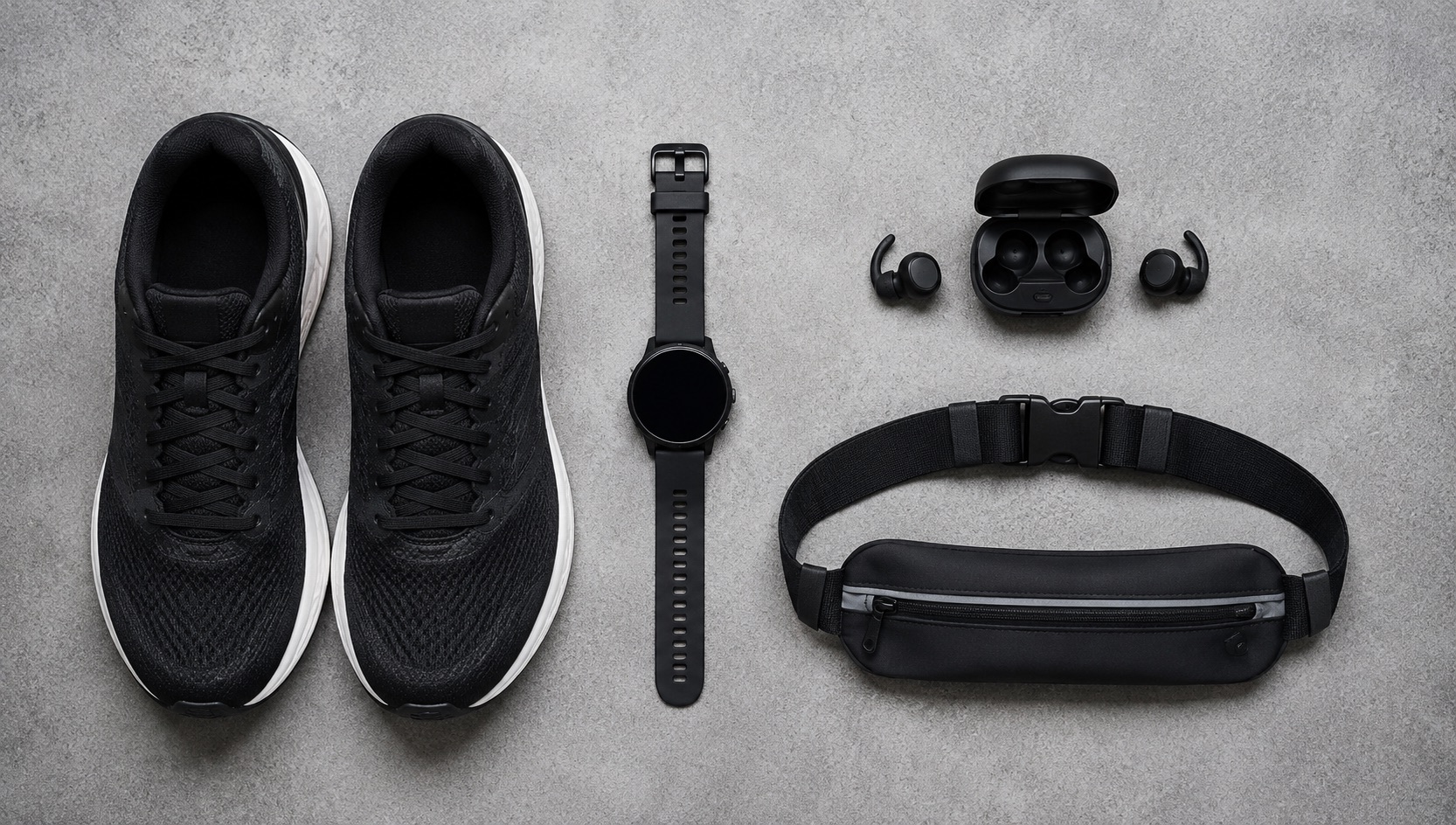
I bought a running belt to carry my phone and keys. Used it five times, maybe. It bounced. It rode up. It felt weird around my waist no matter how tight I cinched it. Some people love running belts. I’m not one of them. The phone goes in my shorts pocket or stays home. The belt lives in a drawer.
Cheap First Shoes (Kiprun from Decathlon)
My very first running shoes were cheap Kiprun trainers. They cost about 40 euros and I needed insoles to make them tolerable. They gave me knee pain, felt dead underfoot, and probably slowed my progress in the early months.
I understand the logic of “don’t spend much until you know you’ll stick with it.” But I’d revise that advice now. You don’t need 200 euro shoes, but spending 90-120 euros on a proper running shoe from the start would have made my first months significantly more comfortable. Bad shoes make running feel harder than it needs to be, which makes beginners more likely to quit.
Surprisingly Valuable (Didn’t Expect to Love)
RunGuard
I already mentioned it above, but it deserves the spotlight. A 10 euro product that I almost didn’t buy because I thought chafing was something only marathon runners dealt with. Wrong. At 90+ minutes of running, especially in summer, nipple chafing is brutal. RunGuard fixed it instantly. Best cost-to-value ratio of any purchase I’ve made.
Sunglasses
Same story. Bought them on a whim, expected to use them once and forget. Now they’re in my running kit every sunny day. The reduction in facial tension and eye fatigue is real. It’s one of those things you don’t notice until you’ve experienced a long run with proper eye protection, then you can’t go back.
The Full Verdict Table
| Item | Km Used | Verdict | Approx. Cost | Notes |
|---|---|---|---|---|
| Saucony Endorphin Speed 3 (x2) | 1481km | Buy again | 160 euros/pair | Best training shoe I’ve owned |
| Adidas Evo SL | 300km+ | Buy again | 130 euros | Current daily favorite |
| Sunglasses | 2000km+ | Buy again | 80 euros | Game changer for sunny runs |
| Hydration backpack | 1500km+ | Buy again | 60 euros | Essential for summer long runs |
| Good running socks (multiple) | 5000km+ | Buy again | 15 euros/pair | Prevents all blisters |
| RunGuard | 3000km+ | Buy again | 10 euros | Cheap, solves a painful problem |
| Foam roller | Daily use | Buy again | 30 euros | Best value recovery tool |
| Brooks Ghost Max 2 | 419km | Regret | 160 euros | Mushy and unstable |
| Saucony Triumph 22 | 719km | Regret | 160 euros | Worse than the 21 |
| Running belt | ~50km | Regret | 25 euros | Bounced, uncomfortable |
| Kiprun first shoes | ~300km | Regret | 40 euros | Should’ve spent more |
What I Learned About Buying Running Gear
After 5000km and too many purchases, here’s what I actually believe about spending money on running:
Shoes matter more than anything else. Get this right and everything else is secondary. A good shoe makes running enjoyable. A bad shoe makes every step worse. Don’t settle for uncomfortable shoes just because they were expensive.
Recovery tools are underrated. A 30 euro foam roller has done more for my running longevity than any 200 euro shoe. Invest in recovery early. Don’t wait until you’re injured to start taking it seriously.
Cheap solutions often beat expensive ones. RunGuard for 10 euros. Basic running socks for 15 euros. These inexpensive items solve real problems just as effectively as premium alternatives.
Don’t trust “version 2” of shoes you loved. The Triumph 22 taught me this painfully. Just because you loved a shoe doesn’t mean the next version will be the same. Try before you commit, or at least buy from a retailer with a good return policy.
Ignore what you think you need and pay attention to what you actually use. I thought I needed a running belt. I actually needed RunGuard and sunglasses. Your real needs reveal themselves through training, not through shopping lists.
FAQ
How many kilometers should you get from a running shoe?
Most shoes last 600-800km before the midsole loses its cushioning properties. I’ve pushed some to 740km (Endorphin Speed 3) and felt fine. Others felt dead at 400km (looking at you, Kiprun). Higher-quality foam generally means longer shoe life. If your knees or shins start aching and the shoes have 500+ km, it’s probably time for new ones.
Are expensive running socks worth it?
Good running socks, yes. “Expensive” running socks, not necessarily. You need seamless construction, proper cushioning in the heel and toe, and moisture-wicking fabric. You can get all that for 12-15 euros per pair. Going beyond that to 25-30 euro “performance” socks didn’t give me any additional benefit for speed work.
What’s the best first running shoe for beginners?
Something with moderate cushioning from a reputable brand, in the 90-120 euro range. Don’t go cheap (below 60 euros). Don’t go too expensive (above 170 euros for your first pair). Get fitted at a running store if possible. My biggest regret is starting with a 40 euro shoe that needed insoles. Starting with a proper shoe makes running feel better, which makes you more likely to keep going.
Is a hydration backpack better than a handheld bottle?
For me, absolutely. The backpack distributes weight evenly, doesn’t affect your arm swing, and carries way more water. A handheld bottle bounced in my hand, felt awkward, and only held 500ml. For runs under 60 minutes, you probably don’t need either. For anything over 90 minutes in summer, the backpack wins decisively.
How often should you replace your foam roller?
A quality foam roller lasts years. Mine has been used daily for over two years and shows no degradation. Unlike shoes, there’s no midsole to compress or foam to break down (ironically). Buy one good roller and it’ll outlast dozens of pairs of shoes. Firm density is better than soft for most runners. You’ll hate it at first, but firm rollers actually release tight muscles effectively.