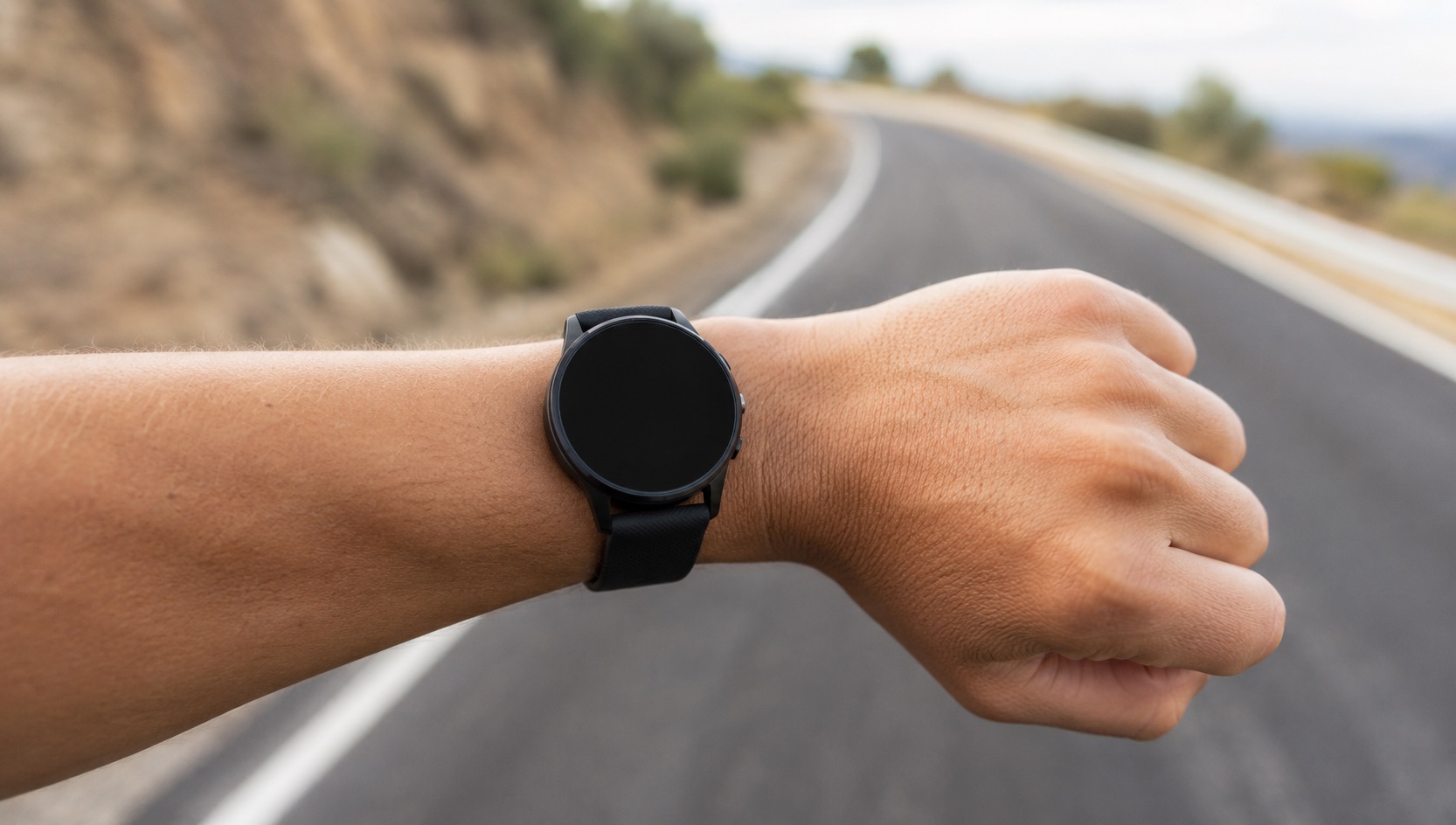
Best GPS Watch for CrossFit and Running 2026
Finding a GPS watch that handles both CrossFit and running well is surprisingly tricky. Most running watches excel at tracking pace and distance but completely fumble when you’re doing AMRAPs, EMOMs, or heavy deadlifts. And most fitness trackers that do great in the gym have mediocre GPS and zero running dynamics. You need something that does both - without compromise.
I’ve worn these watches through box sessions, track workouts, long runs, and everything in between. Here’s what actually works for the CrossFit runner in 2026.
What CrossFit Runners Need From a Watch
Before diving into specific models, let’s talk about what makes a watch good for this combo:
For CrossFit: You need a durable screen (you’ll bang it on barbells), a WOD timer or customizable interval mode, rep counting, heart rate accuracy during high-intensity intervals, and ideally some form of strength tracking that logs exercises and sets.
For running: You need accurate GPS, pace/distance metrics, running dynamics (if you care about cadence and ground contact time), and route mapping for longer efforts.
For both: Recovery tracking matters hugely when you’re stacking a heavy lifting day with a tempo run. Sleep data, HRV, and training load metrics help you avoid overtraining.
The challenge is that very few watches nail all of these. Some get close. Here’s how the top options stack up.
Comparison Table
| Watch | Price | GPS Accuracy | WOD/HIIT Mode | Strength Tracking | Battery Life | Best For |
|---|---|---|---|---|---|---|
| Garmin Venu 3 | $450 | Very Good | Yes (HIIT mode) | Yes (auto-detect) | 5 days / 26h GPS | Best all-rounder |
| Apple Watch Ultra 3 | $799 | Excellent | Yes (via apps) | Yes (auto-detect) | 3 days / 17h GPS | Best ecosystem integration |
| COROS Pace 4 | $350 | Excellent | Yes (custom workouts) | Basic | 19 days / 41h All Systems GPS | Best value for runners |
| Garmin FR265 | $450 | Excellent | Yes (HIIT mode) | Yes (auto-detect) | 13 days / 20h GPS | Best running metrics |
| Whoop 5.0 | $239/yr | No GPS | Auto-detect activity | No | 5 days | Best for recovery/strain data |
Garmin Venu 3 - Best Overall for CrossFit and Running
The Venu 3 is Garmin’s lifestyle-meets-fitness watch, and it hits the sweet spot for CrossFit runners better than anything else on the market. Here’s why:
The HIIT activity profile lets you set up AMRAP, EMOM, Tabata, and custom interval timers directly on the watch. No phone needed. When you’re doing strength work, it auto-detects exercises and counts reps with solid accuracy (around 85–90% based on available data). It logs sets, reps, and rest periods, then pushes everything to Garmin Connect where you can review and correct if needed.
On the running side, you get all the GPS metrics you’d expect from Garmin: pace, cadence, stride length, training effect, VO2 max estimation, and race predictor. GPS accuracy is very good, though not quite at the level of the Forerunner line. For most runs, you won’t notice a difference.
The AMOLED display is gorgeous and easy to read mid-WOD. Battery life is the main trade-off - 5 days smartwatch, about 26 hours in GPS mode. Fine for most people, but ultrarunners or people who forget to charge should look elsewhere.
The catch: It doesn’t have running dynamics (ground contact time, vertical oscillation) without an external pod. If those metrics matter to you, the FR265 is the better choice.
Apple Watch Ultra 3 - Best if You’re All-In on Apple
At $799, this is the most expensive option, but if you’re already using an iPhone, AirPods, and Apple Health, the integration is unbeatable. The Ultra 3 brings dual-frequency GPS (excellent accuracy), a titanium case that handles barbell contact better than the standard Apple Watch, and a bigger battery than previous versions.
For CrossFit, you’ll rely on third-party apps like SmartWOD or WODProof for proper HIIT timers and workout tracking. The native Workout app has improved its strength tracking significantly - auto-detecting exercises and counting reps - but purpose-built CrossFit apps still do it better.
Running metrics are strong: pace, cadence, stride length, ground contact time, vertical oscillation, and running power. Apple’s GPS accuracy matches or beats dedicated running watches in most environments.
The catch: Battery life is still the weakest link. Three days of smartwatch use, and GPS mode drains it fast. If you’re doing a morning WOD and an evening run, you might need a mid-day top-up. Also, no native WOD timer without third-party apps.
COROS Pace 4 - Best Value for Runners Who Also CrossFit
At $350, the COROS Pace 4 is the budget king with flagship GPS performance. The dual-frequency GPS is genuinely excellent - on par with watches costing twice as much. For running, you get everything: pace, distance, running power (wrist-based), training load, race predictor, and interval workouts.
For CrossFit, COROS has a custom workout mode where you can build EMOMs and AMRAPs on the app and push them to the watch. It works, but it’s not as seamless as Garmin’s dedicated HIIT mode. Strength tracking is basic - it’ll log “strength” as an activity and track heart rate/duration, but it won’t count reps or identify exercises automatically.
COROS rates battery life at up to 19 days of daily use and 41 hours in All Systems (High) GPS mode. Actual charging intervals depend on display, GPS and sensor use.
The catch: Strength and HIIT tracking are clearly secondary to running features. If you spend more time in the box than on the road, you’ll feel the limitations.
Garmin FR265 - Best Running Metrics With Decent CrossFit Support
The Forerunner 265 is primarily a running watch, but its HIIT mode and strength tracking make it surprisingly competent for CrossFit. You get the same AMRAP/EMOM/Tabata timers as the Venu 3, plus auto-detect strength exercises and rep counting.
Where it shines over the Venu 3 is running features: built-in running dynamics from the wrist (no pod needed), training readiness score, morning report, and the most accurate race predictor in Garmin’s lineup. GPS accuracy is top-tier with multi-band support.
Battery life is excellent at 13 days smartwatch and 20 hours GPS - much better than the Venu 3’s AMOLED-draining display.
The catch: The watch is thicker and sportier-looking than the Venu 3. If you want something that looks good outside the gym, the Venu wins on aesthetics. Also, the display, while still AMOLED, is slightly smaller.
Whoop 5.0 - Best for Recovery Data (But Not a Standalone Watch)
Whoop is different. It has no GPS, no screen, and no watch face. It’s a strain and recovery tracker, period. You wear it 24/7, and it tells you how recovered you are each morning based on HRV, resting heart rate, respiratory rate, and sleep quality.
For CrossFit runners, this data is gold. It helps you decide whether to push hard or scale back. When you’re stacking strength days with running, Whoop’s strain coach and recovery score prevent you from digging a hole you can’t climb out of.
The 5.0 version auto-detects activities and estimates strain without any input. Heart rate accuracy has improved significantly with the new sensor. But you’ll still need a phone for GPS tracking on runs.
The catch: It’s a subscription ($239/year), not a one-time purchase. And it’s not a watch - no time display, no notifications, no music. You’ll need to pair it with a GPS watch for run tracking. Think of it as an add-on, not a replacement. For a deeper comparison, check out our Whoop vs Oura Ring vs Garmin breakdown.
How to Choose
Pick the Garmin Venu 3 if: You split time evenly between CrossFit and running and want one watch that handles both without needing apps or accessories.
Pick the Apple Watch Ultra 3 if: You’re deep in the Apple ecosystem, want the best display and build quality, and don’t mind charging every 2–3 days.
Pick the COROS Pace 4 if: Running is your primary sport, CrossFit is supplemental, and you want the best GPS and battery for the price.
Pick the Garmin FR265 if: You’re a serious runner who also does CrossFit and wants the best running metrics in a watch that still tracks WODs.
Pick Whoop 5.0 if: Recovery optimization is your priority and you’re willing to pair it with another device for GPS.
For a broader comparison of running watches, check out our full best GPS running watches 2026 roundup. And if you’re mainly deciding between brands, our Garmin vs COROS vs Apple Watch head-to-head might help.
Tips for CrossFit Runners Using GPS Watches
-
Use separate activity profiles. Don’t track your WOD as a “run.” Create dedicated profiles for HIIT, strength, and running so your training load data stays accurate.
-
Wear it higher on your wrist during lifting. Moving the watch an inch up from your wrist bone during strength work improves heart rate accuracy and reduces the chance of smashing it on a barbell.
-
Calibrate your max HR. Most CrossFit runners have a higher true max HR than what the watch estimates. Do a proper max HR test so your zone data is accurate across both activities.
-
Check training load weekly. The combination of running volume and CrossFit intensity adds up fast. Use your watch’s training load or strain metric to catch overtraining before it becomes an injury.
-
Consider a screen protector. Barbells, kettlebells, and pull-up bars will scratch your watch. A tempered glass protector costs $10 and saves your investment.
See how we compare products for our full research methodology.
Frequently Asked Questions
Can I track CrossFit WODs on a running watch?
Yes, most modern GPS watches from Garmin and COROS have HIIT or custom workout modes that handle AMRAPs, EMOMs, and Tabata intervals. You won’t get CrossFit-specific features like movement standards or leaderboard scores, but you can time intervals, track heart rate, and log the workout. Garmin’s watches also auto-detect common strength exercises.
Is heart rate accuracy good enough during CrossFit?
Wrist-based heart rate during high-intensity, constantly-varied movements has improved a lot but still isn’t perfect. Expect 90–95% accuracy during most WODs. The biggest issues come during barbell movements where the watch shifts on your wrist. If you need perfect data, pair with a chest strap like the Garmin HRM-Pro Plus or Polar H10 for WOD sessions.
Do I really need a separate watch for CrossFit and running?
No. Any of the watches in this guide (except Whoop, which isn’t a watch) handle both activities in a single device. The Garmin Venu 3 and FR265 are particularly good at tracking both without compromises. Five years ago, you might have needed separate devices; in 2026, one good watch covers both.
Is Whoop worth it if I already have a Garmin?
It depends on how much you value recovery data. Garmin’s Body Battery and Training Readiness features cover similar ground, and for most people, that’s enough. Whoop goes deeper on sleep staging, HRV trends, and strain management, but the subscription cost adds up. If you’re prone to overtraining or recovering from injury, Whoop adds value. Otherwise, your Garmin probably has you covered.
What about Pixel Watch or Samsung watches for CrossFit and running?
Google’s Pixel Watch 5 materially improves the GPS side of that equation. Independent testing by DC Rainmaker found exceptionally strong post-processed route accuracy, including in difficult urban conditions. It can suit an Android user who combines casual running, gym work and smartwatch features. It remains a weaker CrossFit or race-training choice than Garmin and COROS when you need manual laps, native external heart-rate-sensor pairing or deeply configurable workout screens. Samsung’s Galaxy Watch line is similarly smartwatch-first; verify the exact workout and sensor support of the model you are considering.
Related reading: Best GPS Watch Under $300 for Marathon Training