COROS Pace 4 Review for Runners 2026
COROS Pace 4 Review for Runners 2026
The COROS Pace 4 is the lightest GPS running watch I’ve ever tested. At 33 grams, it genuinely disappears on your wrist - which sounds like marketing fluff until you’ve actually worn it through a 20-mile long run and forgotten it was there. Combined with a bright AMOLED display, dual-frequency GPS, and 41 hours of battery life, this thing punches absurdly above its $350 price point.
I’ve been running with the Pace 4 for three months now. Track sessions, easy runs, long runs, even a couple of races. Here’s the full breakdown of what works, what doesn’t, and who should buy this watch.
COROS Pace 4 Specifications
| Spec | Detail |
|---|---|
| Price | $350 |
| Weight | 33g |
| Case Size | 43mm |
| Display | 1.2” AMOLED, always-on option |
| GPS Battery | 41 hours |
| Smartwatch Battery | 17 days |
| GPS Chipset | Dual-frequency (all satellites) |
| Heart Rate | Optical (wrist-based) |
| Music | No onboard music storage |
| Training Platform | EvoLab metrics |
| Water Resistance | 5 ATM |
| Navigation | Breadcrumb/back-to-start |
| Connectivity | Bluetooth, ANT+ |
First Impressions and Build Quality
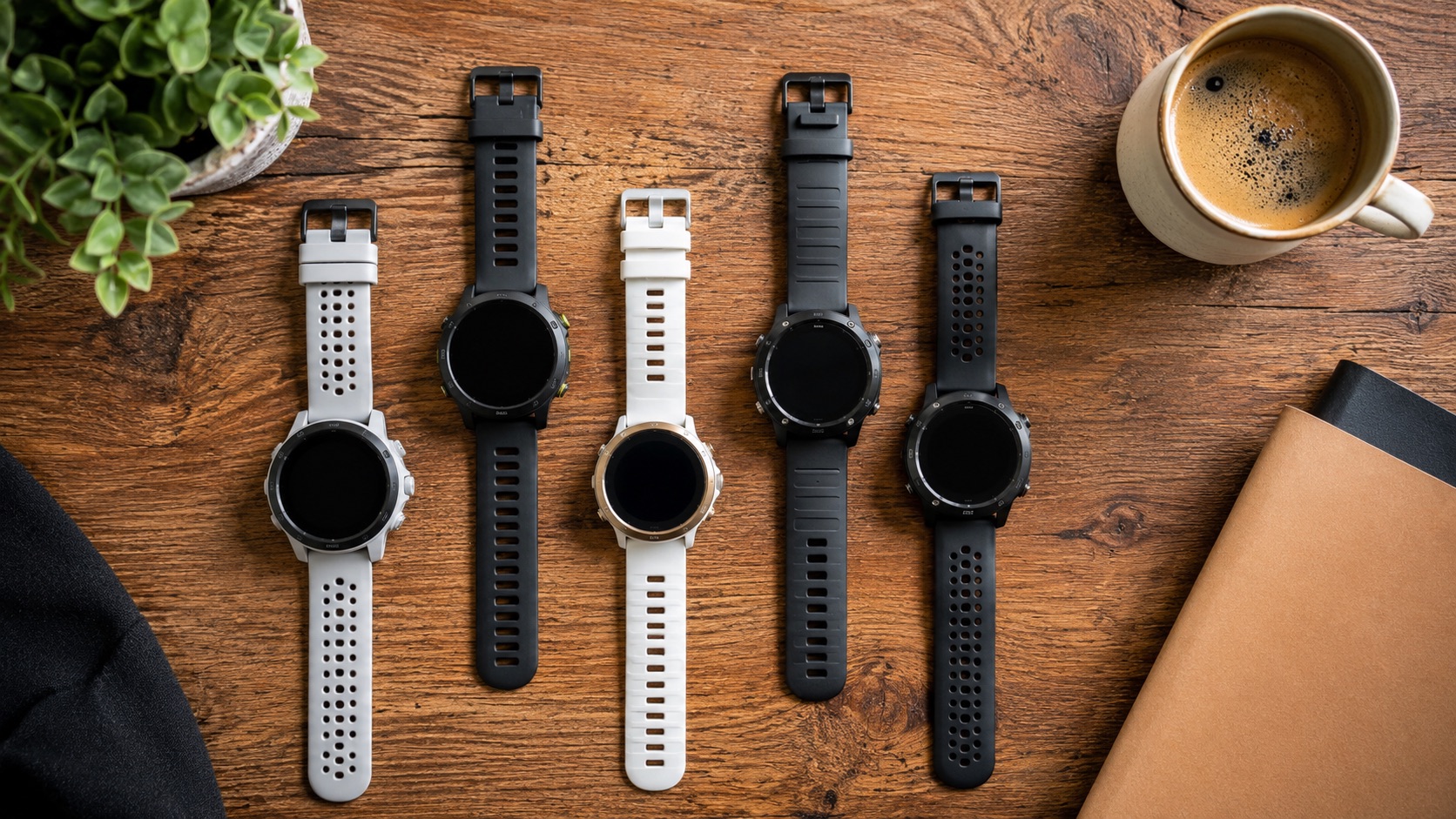
When you unbox the Pace 4, the first thing you notice is how thin and light it is. COROS shaved off every possible gram without making it feel cheap. The silicone band is comfortable, the button (COROS uses a digital dial plus one button) is tactile, and the watch sits flat against smaller wrists without that top-heavy wobble you get from heavier watches.
The AMOLED display is a massive upgrade over previous Pace models. It’s vibrant in all lighting conditions, and the always-on mode is genuinely readable - unlike some watches where the AOD is dim to the point of uselessness. In direct sunlight it performs well, though a transflective display (like the COROS Vertix line) is still technically more readable in harsh glare.
Build materials are a nylon fiber-reinforced polymer with a mineral glass lens. It won’t win any luxury awards, but it’s durable enough for daily training. I’ve banged it against doorframes and treadmill handles with no scratches so far.
GPS Accuracy
Let’s get to the important stuff. The Pace 4 uses a dual-frequency GNSS chipset with access to all major satellite systems. In my testing, accuracy was excellent - and I mean genuinely excellent, not just “good enough.”
On measured track sessions, distance accuracy was within 1% over 5K and 10K intervals. On roads with good sky view, it tracked almost identically to my Garmin Forerunner 265. In wooded trail sections, the dual-frequency antenna gave it an edge over single-band watches, maintaining a clean track where older GPS watches would show jagged lines.
The one place it occasionally hiccupped was in dense urban environments with tall buildings on both sides. But honestly, every watch struggles there, and the Pace 4 handled it better than I expected.
Pace data was smooth and responsive. No wild spikes during intervals, no lag at the start of reps. For track work, it locked onto pace quickly and held steady - something I can’t always say about watches twice its price.
Heart Rate Accuracy
Wrist-based HR on the Pace 4 is solid for steady-state running. Easy runs and tempo runs tracked within a few beats of my chest strap consistently. However - and this is true of virtually every optical wrist sensor - it struggles with sharp interval transitions. If you’re doing 200m repeats with full rest, expect some lag on the HR response.
For most runners doing most training, the wrist HR is perfectly adequate. If you’re doing serious HR-zone training with lots of interval work, pair a chest strap. COROS supports ANT+ and Bluetooth external sensors, so you have options.
Training Features and EvoLab
COROS’s EvoLab training platform is where this watch gets interesting. You get Training Load tracking for overall stress, Base Fitness as a rolling fitness metric, Running Performance for race predictions, Fatigue and Recovery for daily readiness, and auto-detected Threshold Pace and HR from workout data.
The August 2026 software update adds Live Tracking to the PACE 4. It shares location plus live heart-rate and pace/speed data through a link during supported outdoor activities, but it needs the watch to remain connected to a phone running the COROS app in the background. The same update adds a revised sleep score, bedtime-consistency and sleep-stress context, plus tools to add, merge, crop and edit sleep records.
The September 2026 update adds three PACE 4-specific features confirmed in COROS’s compatibility table: Adventure Journal Timeline, cycling Climb Alerts and expanded Voice Control commands during activities. The Timeline can include photos and videos taken just before or after an activity and can be shared through a non-expiring link. Voice commands can adjust activity alerts, open navigation and set timers. The app and firmware are rolling out in stages, so install the current COROS app and then check the watch firmware if these controls are not visible yet. COROS September 2026 update.
The metrics are genuinely useful and presented clearly in the COROS app. I’ve found the Training Load tracking to be accurate - it correctly flagged me as overreaching during a heavy training block and suggested backing off. The race predictions are slightly optimistic compared to Garmin’s, but they’re in the ballpark.
What I appreciate most is COROS’s approach to simplicity. There’s no subscription, no paywall, no premium tier. All training features are free, forever. Your data syncs to the COROS app and the COROS Training Hub web platform, and you get full access to structured workout creation, training plans, and analysis.
Structured Workouts
Creating and pushing structured workouts is straightforward. You build them in the app or web platform, sync to the watch, and get real-time guidance during your run. The AMOLED display makes interval screens easy to read - target pace, current pace, time remaining, and rep count are all visible at a glance.
The watch vibrates at interval transitions and gives you a clear visual cue when it’s time to go or rest. This worked flawlessly based on available data. No missed transitions, no confusion about what rep I was on.
What’s Missing: Music and Maps
Here’s where you have to decide what matters to you. The Pace 4 has no onboard music storage. You can’t load Spotify playlists or MP3 files onto it. If you want to run without your phone and still have music, this isn’t your watch.
It also lacks full map navigation. You get breadcrumb trails and back-to-start functionality, but no topographic maps or turn-by-turn directions. For road runners and track runners, this is a non-issue. For trail runners exploring new routes, it’s a limitation worth noting.
COROS’s reasoning is clear: keeping the watch light and the battery long means cutting features that add weight and drain power. It’s a legitimate trade-off, and for the target audience - performance-focused road and track runners - I think it’s the right call.
Battery Life
The claimed 41 hours of GPS life is accurate based on available data with dual-frequency enabled. I got about 38-40 hours in real-world use, which is exceptional for an AMOLED watch this light. For context, the Garmin Forerunner 265 gives you about 20 hours of GPS - the Pace 4 nearly doubles that.
In daily smartwatch mode, I got 14-16 days with always-on display off, and about 5-6 days with AOD enabled. With AOD off and raise-to-wake on, I settled at around 12-13 days between charges - more than enough that I only charged it weekly.
Comfort During Runs
I keep coming back to the weight. At 33 grams, this is the most comfortable GPS watch I’ve worn. Period. During track intervals, there’s no bouncing. During long runs, there’s no wrist fatigue. It wears like a fitness band but delivers GPS watch performance.
The band width is standard 20mm, so you can swap in aftermarket options if you prefer. The stock silicone band is breathable and doesn’t trap sweat.
Who Should Buy the COROS Pace 4
The Pace 4 is ideal for road runners who want accuracy without weight, track runners who need precise pace and interval tracking, runners on a budget who want premium features below $400, minimalists who don’t need music or maps on-wrist, and high-mileage runners who value battery life and comfort.
It’s NOT ideal for runners who need onboard music, trail runners who need maps and navigation, or runners who want a full smartwatch experience.
If you’re choosing between this and the Garmin Forerunner 265, check out our detailed COROS Pace 4 vs Garmin Forerunner 265 comparison for a full breakdown. You can also find the Pace 4 in our best GPS running watches roundup for broader context, or see how COROS stacks up against other brands in our Garmin vs COROS vs Apple Watch comparison.
The Verdict
The COROS Pace 4 is the best lightweight GPS running watch available in 2026. It delivers exceptional GPS accuracy, useful training metrics, incredible battery life, and a bright AMOLED display - all in a 33g package that costs $350 with no subscription fees.
The sacrifices (no music, no maps) are deliberate and appropriate for the target user. If those features aren’t deal-breakers for you, the Pace 4 is the best value in running watches right now.
Related reading: Best GPS Watch Under $300 for Marathon Training
FAQ
Is the COROS Pace 4 good for marathon training? Yes. The GPS accuracy, structured workout support, EvoLab training load metrics, and exceptional battery life make it an excellent marathon training tool. You’ll never worry about the watch dying mid-long-run, and the interval tracking is precise enough for tempo work and race simulations.
Does the COROS Pace 4 have a touchscreen? Yes, it has a touchscreen combined with the COROS digital dial and button. You can use touch for scrolling through menus and the dial for precision input. During runs, the dial is easier to use with sweaty fingers than a touchscreen alone.
Can I use the COROS Pace 4 for triathlon? Yes. It has a multisport mode that supports swim-bike-run transitions. It’s swim-proof to 5 ATM, tracks open water and pool swimming, and can pair with cycling power meters and speed sensors via ANT+.
How does the COROS Pace 4 compare to the Garmin Forerunner 265? The Pace 4 is lighter (33g vs 47g), has longer battery life (41h vs 20h GPS), and costs less ($350 vs $400). The Forerunner 265 has onboard music, a slightly more mature training ecosystem, and wider third-party app support. Both have AMOLED displays and dual-frequency GPS.
Is the COROS app free or subscription-based? Completely free. All training metrics, workout creation, training plans, and data analysis are included at no extra cost. There is no premium tier or paywall. Your data is accessible on the mobile app and the COROS Training Hub web platform indefinitely.