Adidas Evo SL After 400km: Still My Favorite Daily Trainer
Adidas Evo SL After 400km: Still My Favorite Daily Trainer
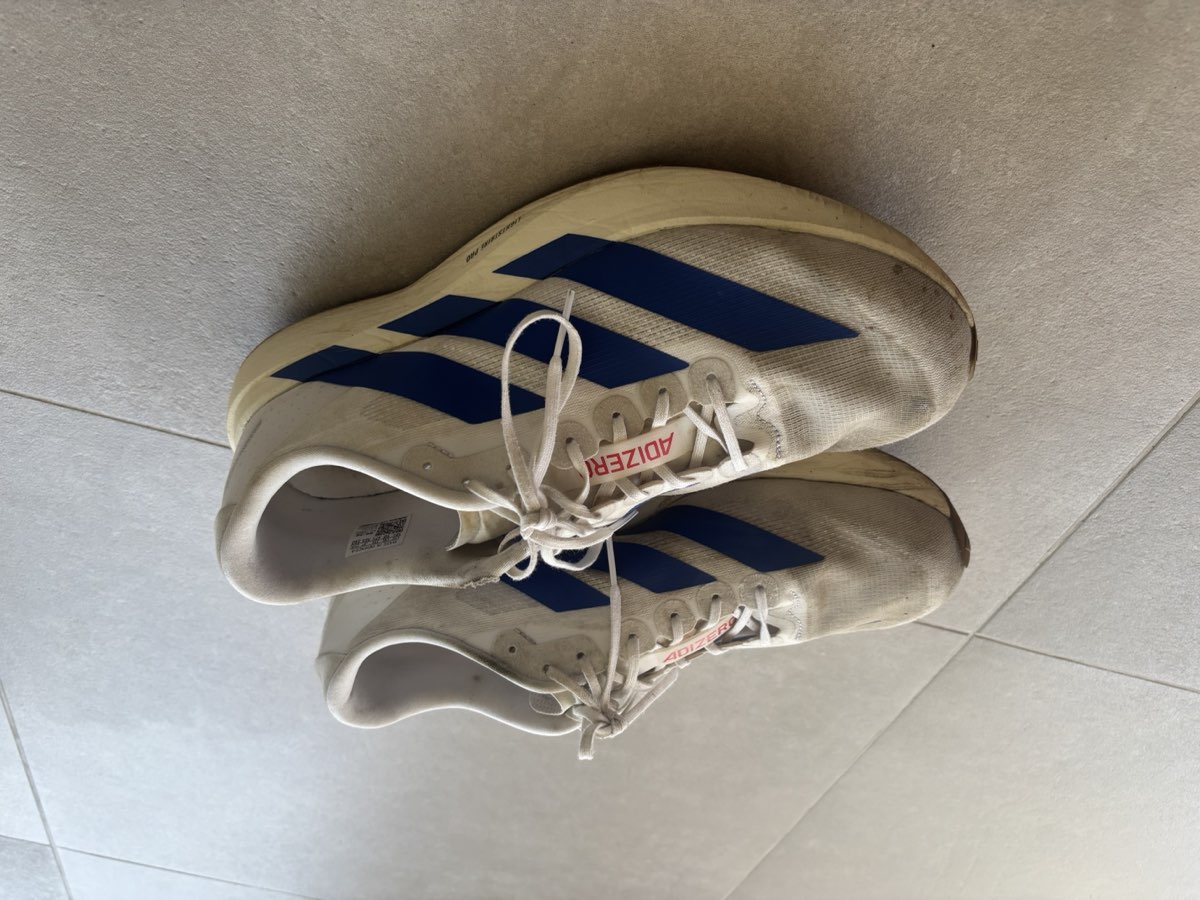
Four hundred kilometers into my Adidas Evo SL and I reach for this shoe more than any other in my rotation. It has become the default. The shoe I grab when the plan says “easy run,” when I have a tempo session that is not quite hard enough for a plated shoe, when I just want to run without thinking about what is on my feet.
I rate this shoe 9/10. The highest score in my current daily trainer category. Here is why it earned that rating and how it is holding up at the midpoint of its expected lifespan.
Why 9/10: What Makes It Special
The Evo SL does something rare in the daily trainer space: it feels fast without being aggressive. Most daily trainers sit in one of two camps. Either they are soft and protective (great for recovery, boring for anything faster) or they are responsive and light (great for tempo, too harsh for easy days). The Evo SL sits in the middle and handles both well.
The Lightstrike foam is not the premium Lightstrike Pro from the Boston 12 or Adios Pro. It is the standard version. But Adidas tuned it perfectly for this shoe: firm enough to feel responsive, soft enough to cushion easy miles. There is a slight bounce on each stride that makes even slow runs feel dynamic.
At 215g (US 10), it is light for a daily trainer. Noticeably lighter than the Novablast 4, the Pegasus, or most Brooks shoes in this category. That lightness contributes to the “fast” feeling even at easy paces.
The 400km State: Photos and Assessment
Overall Condition
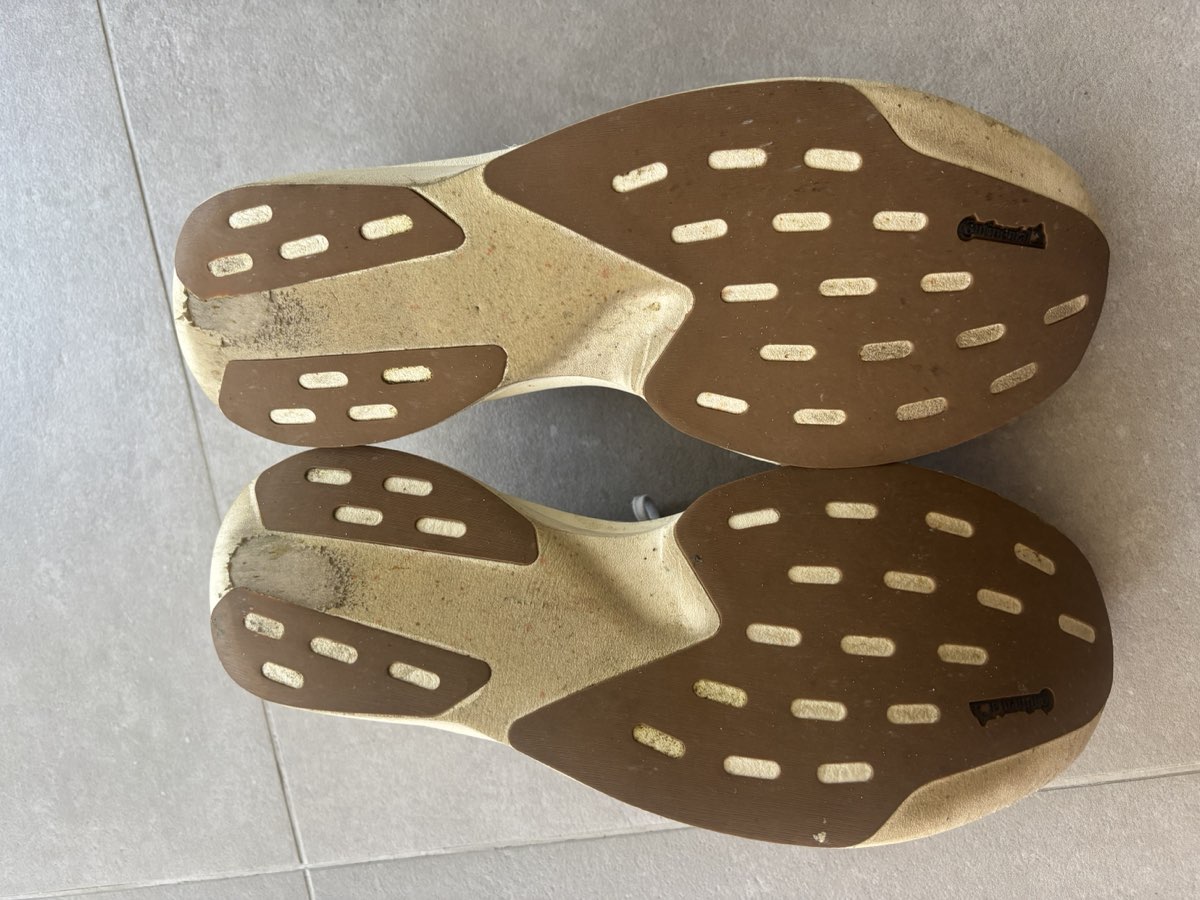
The outsole shows wear in the expected places (lateral heel, medial forefoot) but has substantial life remaining. Continental rubber doing its job. The tread pattern is still visible across 80% of the surface. At this rate, I am projecting 700-800km total lifespan, which is excellent for a shoe this light.
Upper
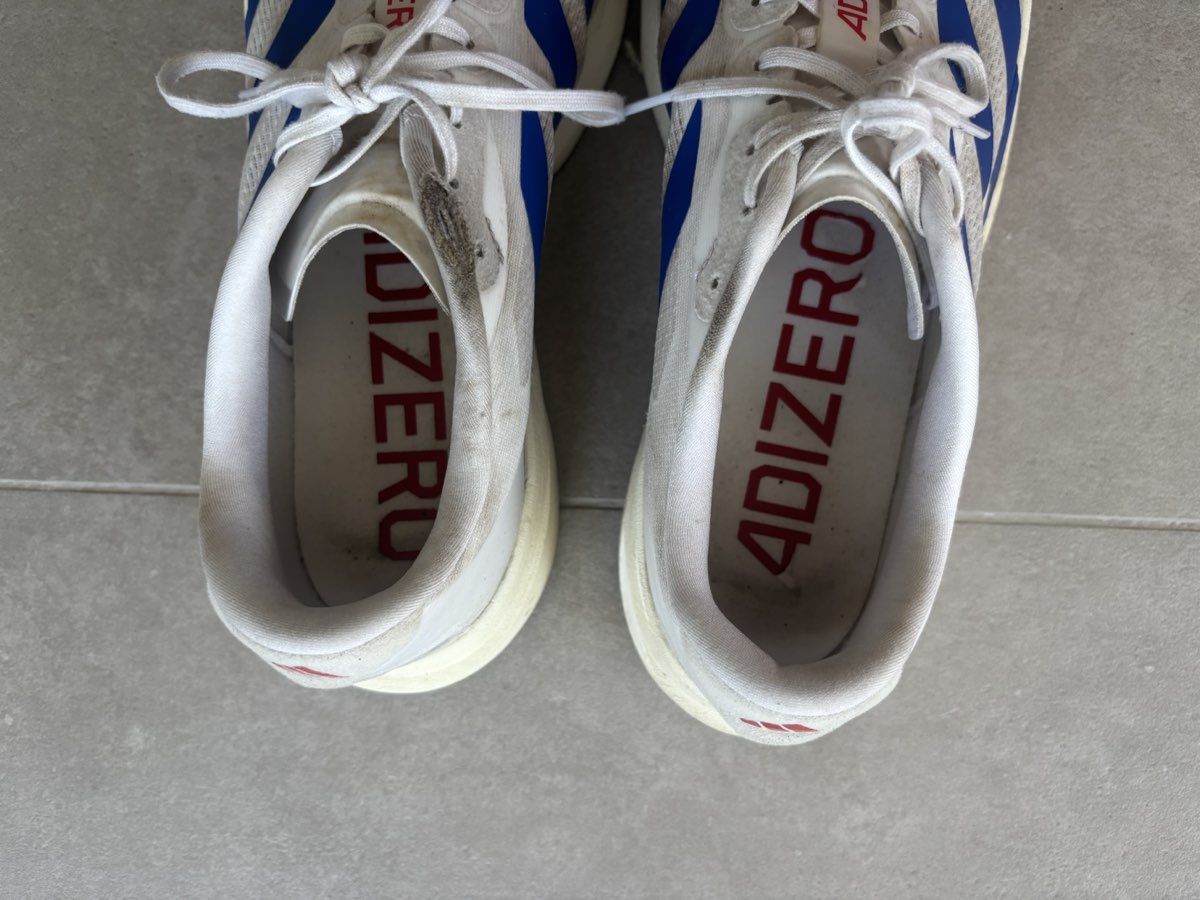
The mesh upper is holding up well. No holes, no stretching, no loss of structure. The material Adidas used here is more robust than the Boston 12’s upper (which holed at 300km). The heel counter maintains its shape and there is no sign of breakdown at the collar.
Foam Condition
At 400km, the Lightstrike foam still feels very close to its 100km peak. The bounce is there. The energy return is there. I have not noticed the progressive deadening that hit my Boston 12 by this mileage. Standard Lightstrike is more durable than Lightstrike Pro because it is a denser formulation with less air content. The trade-off is less maximum responsiveness, but the longevity is clearly better.
What I Use It For
My Evo SL handles:
- Easy runs (5:00-5:30/km): comfortable, smooth, not boring
- Moderate runs (4:30-5:00/km): still responsive enough to feel good at pace
- Short tempo efforts (4:10-4:30/km): handles it, though my Boston 12/Speed is better here
- Strides: light enough to feel quick for short accelerations
- Recovery runs: cushioned enough for tired legs
What it does NOT do:
- Long runs over 90 minutes (I find it slightly too light/firm for extended easy running)
- Hard interval sessions (better tools exist in my speed rotation)
- Racing (not enough foam for race-day efficiency)
The one caveat I have with this shoe: it might be too light for very long easy runs. After 75-80 minutes, I start wanting more cushion underfoot. The foam is protective enough for shorter efforts but does not have the stack height to absorb 20km of impact the way a Novablast or Invincible would. For long runs over 16km, I use a different shoe.
How It Compares to Other Daily Trainers I Have Owned
| Shoe | Rating | Weight | Best For | Lifespan |
|---|---|---|---|---|
| Adidas Evo SL | 9/10 | 215g | Everything under 90min | 700km (projected) |
| ASICS Novablast 4 | 7/10 | 268g | Pure easy days | 1000km |
| Saucony Endorphin Speed 3 | 9/10 | 215g | Tempo + race versatility | 740km |
| Adidas Boston 12 | 8/10 | 225g | Intervals + tempo | 600km |
| Nike Pegasus 40 | 6/10 | 260g | Nothing specific | 700km |
The Evo SL wins on versatility-to-weight ratio. It is as light as the Speed 3 but without a plate, making it more appropriate for genuine easy days. It is faster-feeling than the Novablast while being adequate for the same easy efforts.
The “Top Daily Trainer” Claim
When I say it is my top daily trainer, I mean it in a specific way. It is not my top shoe overall (that remains the Endorphin Speed 3 for its race day capability). It is the best shoe for the highest-frequency run type: the standard 8-12km training run at moderate effort.
Most runners do 60-70% of their training at easy to moderate intensity. The shoe that handles that majority of your running best is, by definition, the most important shoe in your rotation. For me, that is the Evo SL.
I could build an entire rotation around just this shoe plus a race day option. If you asked me “what one daily trainer should I buy?” my answer today is the Evo SL, assuming it fits your foot (which is the wildcard with any recommendation).
Why It Might Not Work for You
If you are a heavier runner (85kg+): The foam might bottom out on you. It is firm and thin relative to max-cushion options. Heavier runners often prefer more stack (Novablast, Glycerin, Invincible).
If you want maximum cushion for injury prevention: This is not a high-stack protective shoe. It is a responsive lightweight trainer. If you need maximum impact absorption, look at thicker options.
If you run primarily 90+ minute long runs: The lack of deep cushion becomes fatiguing over extended durations. You will want something with more foam for your longest efforts.
If you need wide toe box: The Evo SL runs slightly narrow in the forefoot. My normal-width feet fit well, but wider-footed runners report tightness.
Value Assessment
I bought the Evo SL at an outlet store for approximately EUR 65 (60% off retail). At that price, with a projected 700km lifespan, the cost per kilometer is approximately EUR 0.09/km. That is exceptional value for a shoe I rate 9/10 in my full shoe collection.
Even at full retail (around EUR 130), the value is strong. A shoe that handles 80% of your training well and lasts 700km is worth paying for. I would buy this shoe again without hesitation, and I am already tracking prices on a backup pair.
Projected End of Life
At 400km, I estimate 300km remaining of peak performance. The outsole has life. The foam shows no concerning degradation. The upper is intact. I expect:
- 400-600km: continued strong performance
- 600-700km: slight foam softening, still usable
- 700-800km: end of meaningful training use
When it retires, it will become a casual shoe. The design is clean enough that nobody will look at them and think “running shoe.” That second life is a bonus that chunkier trainers do not offer.
The Shoe I Would Replace It With
If the Evo SL died tomorrow and was discontinued, I would look at:
- Adidas Evo SL 2 (if it exists by then): same philosophy, updated foam
- Saucony Kinvara 15: similar lightweight responsive daily trainer concept
- New Balance FuelCell Rebel: bouncy, light, versatile
But honestly, I would just buy another Evo SL. When something works this well, chasing novelty is a trap. I know exactly what I am getting: a light, responsive, durable shoe that makes every regular run slightly more enjoyable than it needs to be.
FAQ
Is the Adidas Evo SL good for beginners?
It depends on the beginner. If you are lightweight (under 75kg), have reasonable form, and plan to run 3-5 times per week, the Evo SL is excellent. If you are heavier, new to impact activity, or injury-prone, a more cushioned option (Novablast, Brooks Ghost, ASICS Gel-Nimbus) is safer for the adaptation phase.
How does the Evo SL compare to the Adidas Supernova?
The Supernova is softer, heavier, and more cushioned. It is designed for easy miles and longer runs. The Evo SL is lighter, firmer, and more responsive. Choose the Supernova if comfort is priority one. Choose the Evo SL if you want a shoe that feels quick and handles moderate pace work alongside easy days.
Can I do speed work in the Adidas Evo SL?
For strides and short fartleks, yes. For dedicated interval sessions at near-max effort, a plated shoe (Endorphin Speed, Boston 12) is more appropriate. The Evo SL can handle paces down to about 4:00/km comfortably, but it is not designed to maximize performance at those speeds. It is a versatile trainer, not a speed tool.
Is the Continental outsole on the Evo SL durable?
Yes. Continental rubber (same company that makes car tires) is consistently among the most durable outsole compounds in running. My Evo SL at 400km still has 80%+ tread remaining. Wet grip is also excellent thanks to Continental’s rubber compound. This is one of Adidas’s key advantages over competitors.
Should I buy two pairs of Evo SL to rotate?
If you found them on sale, buying two identical pairs to alternate between is one of the best moves you can make. Rotating gives each shoe 48 hours to recover between uses, extending both pairs’ lives. Plus, if one gets wet, you have a dry backup. I am actively looking for a second pair on clearance.