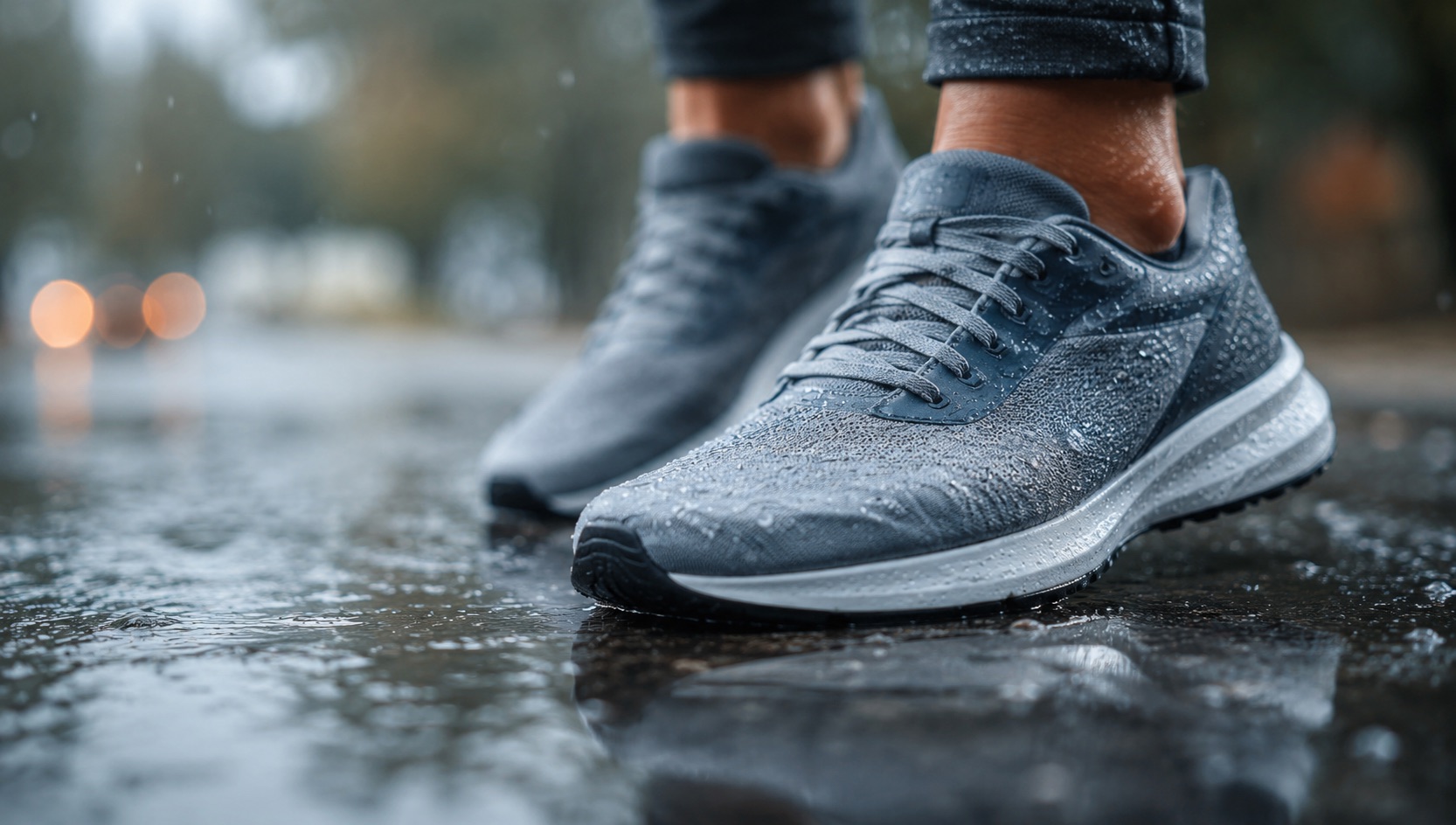
Carbon Plate Shoes for Training: When It Makes Sense
The debate around training in carbon plate shoes has become one of the most polarizing topics in the running community. On one side, coaches who insist carbon plates should be reserved exclusively for race day. On the other, elite athletes who log significant training volume in plated shoes. After three years of running 80-100km per week with strategic carbon plate usage, I have formed a clear position: carbon plates belong in training, but only in specific sessions and for specific reasons.
I currently use carbon plate shoes twice per week during marathon training. Tuesday intervals get the Nike Vaporfly 4, and Saturday long runs (when they include marathon-pace segments) get the Adidas Adios Pro 3. That represents roughly 40-46km per week in plated shoes, or about 40-45% of my total volume. The remaining 55-60% is in conventional trainers.
This ratio did not happen by accident. It is the result of testing different approaches and tracking the outcomes in terms of performance, fatigue, and injury risk.
The Case For Carbon in Training
Let me start with why I use carbon plates during training at all, since the conservative position is to never train in them.
Neuromuscular specificity. If you race in a carbon plate shoe, your body needs to be adapted to its unique geometry. The aggressive rocker, the plate-driven propulsion, the altered ground contact mechanics. These are different from conventional shoes. Racing in carbon plates without training in them is like practicing free throws in sneakers and then playing the game in boots. The motor patterns need rehearsal.
Pace accuracy. My Tuesday intervals are at race pace (3:30-3:35/km for 1000m repeats). If I want these sessions to accurately simulate the neuromuscular demands of the race, I should be in the shoes I will race in. Running race pace in training flats gives a different proprioceptive experience and slightly different mechanical load.
Long run simulation. Saturday long runs with marathon-pace finish segments are complete dress rehearsals. Same shoes, same fueling, same pacing strategy. The more variables you can hold constant between training and racing, the fewer surprises on race day.
The Case Against (And When I Agree)
The anti-carbon-in-training camp makes valid points that I respect:
Calf and Achilles loading. Carbon plates alter the lever mechanics of your foot, increasing the moment arm at the ankle. This means more load on the calf complex and Achilles tendon. In high volumes, this can lead to overuse injuries. I agree, which is why I limit plated shoe usage to approximately 40% of weekly volume.
Masking muscular weaknesses. If you always run with carbon plate assistance, your foot and lower leg muscles may not develop the strength to maintain form without that assistance. Valid concern, addressed by running 55-60% of my volume in non-plated shoes.
Cost and durability. Carbon plate shoes degrade faster than conventional trainers. My Vaporfly lasts about 300km before the foam loses meaningful responsiveness. At 14km per week, that is about 21 weeks per pair. Expensive, but I view it as a training investment.
The Decision Framework
Here is my system for deciding when to use carbon plates and when to leave them in the closet:
| Session Type | Carbon Plate? | Reasoning | Alternative Shoe |
|---|---|---|---|
| Intervals at race pace | Yes | Neuromuscular specificity | Endorphin Speed (nylon plate) |
| Long run with MP segments | Yes | Full race rehearsal | Endorphin Speed for easier long runs |
| Easy runs | No | Unnecessary assistance, excess calf load | Hoka Clifton 9 |
| Recovery runs | No | Maximum cushion priority, zero performance need | Hoka Bondi 9 |
| Tempo runs (MP+15-30s) | No | Nylon plate sufficient at sub-race pace | Saucony Endorphin Speed 4 |
| Base building phase | No | Volume focus, not speed focus | Rotate easy day shoes |
| Tune-up races (5K-10K) | Yes | Race simulation, confidence building | None needed |
| Shakeout runs (pre-race) | No | Easy effort, save the carbon for race day | Any easy day shoe |
The key distinction: I use carbon plates when the session demands race-specific neuromuscular patterns. For everything else, conventional shoes provide adequate stimulus while reducing mechanical risk.
What Happens When You Overdo It
I learned this lesson personally. During one training cycle, I experimented with using the Vaporfly for both Tuesday intervals and Thursday tempo runs. Within four weeks, I developed persistent Achilles tendon irritation in my left leg. Not a full injury, but enough to force me to drop the tempo session for two weeks.
The issue was clear: too many kilometers in a shoe that loads the Achilles aggressively. The carbon plate’s rocker geometry shifts your contact point forward, increasing dorsiflexion at the ankle and lengthening the Achilles under load. Twice a week was fine. Three times a week pushed past my tissue tolerance.
Since reverting to carbon plates only on Tuesdays and Saturdays (with the nylon-plated Endorphin Speed for Thursdays), I have had zero Achilles issues across two full marathon training cycles.
Nylon Plates as the Middle Ground
The Saucony Endorphin Speed 4 deserves special mention because it occupies the space between conventional trainers and full carbon racers. Its nylon plate is more flexible and less aggressive than carbon fiber. It provides some propulsive assistance without the extreme load shifting.
I use the Speed for Thursday tempo runs specifically because of this middle-ground character. It helps me hold marathon pace +15 seconds with good efficiency while being significantly gentler on my Achilles and calves than a Vaporfly or Adios Pro would be.
If you are considering adding plated shoes to your training but worry about injury risk, starting with a nylon plate shoe for uptempo work is a sensible bridge. Once your tissues adapt over 8-12 weeks, you can introduce carbon plates for one weekly session.
For more on the differences between specific carbon plate models, see my Vaporfly vs Adios Pro vs Endorphin Pro comparison.
How Carbon Plates Affect Training Paces
A fair question: does running intervals in carbon plates make your training paces artificially easy? Am I actually working as hard if the shoe is giving me a 4% energy return advantage?
My answer: yes, the shoe helps. But the goal of interval sessions is not to maximize physiological stress per kilometer. It is to rehearse race pace mechanics. If my race pace is 4:06/km and I can hit that in training with slightly less effort because of the shoe, that is fine. The neuromuscular patterning is what matters.
Where this becomes a problem is if you use carbon plates for easy runs and inflate your training pace beyond what is actually easy for your body. This is why I never wear carbon for easy days. The risk of inadvertently running too fast (because the shoe makes it feel easy) undermines the purpose of easy running.
Carbon Plate Shoes I Have Trained In
Over three years, I have trained in four different carbon plate models:
Nike Vaporfly Next% 2 (retired): My first carbon trainer. Excellent for intervals, felt unstable on long runs. Too narrow for my foot at fatigue.
Nike Vaporfly 4 (current): Wider platform than the Next% 2, same ZoomX foam, improved upper. My interval shoe.
Adidas Adios Pro 3 (current): Five-rod plate system, Lightstrike Pro foam. More stable and supportive than the Vaporfly over long distances. My long run and race day shoe.
Saucony Endorphin Pro 3 (tried, returned to Speed): Full carbon version of the Endorphin Speed. I found it redundant with the Vaporfly in my rotation and preferred the Speed’s nylon plate for tempo work.
If you are looking for alternatives to the premium carbon options, check out my article on fast carbon shoes under 200 euros.
The Budget Concern
Running in carbon plates during training is expensive. Let me be transparent about the numbers:
- Nike Vaporfly 4: approximately 250 euros, replaced every 300km (21 weeks at my usage)
- Adidas Adios Pro 3: approximately 230 euros, replaced every 350km (11-12 weeks at my usage)
That means I spend roughly 600-700 euros per year just on carbon plate training shoes. Combined with my four non-plated shoes, my total annual shoe budget is around 1,000-1,200 euros. This is significant, and I understand it is not feasible for everyone.
If budget is a constraint, prioritize one carbon plate pair for intervals and use a nylon plate shoe (like the Endorphin Speed at 160 euros, lasting 500km) for everything else. You get 80% of the benefit at 40% of the cost.
Progression for Introducing Carbon to Training
If you currently train exclusively in conventional shoes and want to add carbon plates, here is the progression I recommend:
Weeks 1-4: One session per week in carbon plates. Choose your fastest session (intervals or race-pace long run segments). Keep total carbon-plated volume under 15km per week.
Weeks 5-8: If no issues, maintain one session but extend the carbon-plated portion. For example, if you started with 6x400m in carbon, progress to 6x800m or 6x1000m.
Weeks 9-12: Consider adding a second session (long run marathon-pace segments). Total carbon-plated volume can reach 30-40km per week for advanced runners.
Throughout this progression, pay attention to your calves and Achilles. Mild tightness after the first few sessions is normal. Persistent soreness that worsens from week to week is a signal to back off.
For more on shoes suited to speed work, see my best shoes for speed work roundup.
FAQ
Will training in carbon plates make me dependent on them?
No, if you maintain a mixed rotation. My easy runs in the Clifton and Pegasus ensure my legs maintain the strength to propel themselves without plate assistance. The key is that carbon plates supplement your training, not replace the muscular work that builds your foundation.
How do I know if my carbon plate shoes are worn out?
The foam degrades before the plate breaks. Signs: the shoe feels less “bouncy” during strides, your perceived effort at the same pace increases, or you notice the ride quality becoming inconsistent left-to-right. I test with a standardized interval (4x400m at a set pace) and if my heart rate is notably higher in the same shoe and same conditions, the foam has degraded.
Should beginners train in carbon plates?
Generally no. Beginners benefit more from developing their own muscular running economy before adding external assistance. Additionally, the altered mechanics of carbon plates require tissue adaptation that is risky for runners whose connective tissues are still adapting to running itself. Build a base in conventional shoes first.
Are nylon plate shoes better than carbon for daily training?
For most sessions, yes. Nylon plates provide some propulsive benefit with less aggressive geometry and lower injury risk. They are also more durable and significantly cheaper per kilometer. I consider nylon plate shoes the ideal tempo and threshold shoe for the majority of runners.
Does the 4% energy savings from carbon plates show up in training times?
It depends on the session. For time trials and interval repeats, yes, you can measure 2-4% faster times at the same effort. For easy runs, the savings are irrelevant because you are not trying to run fast. This is precisely why carbon plates only make sense in speed-focused sessions where the performance benefit translates to meaningful training stimulus.
Conclusion
Carbon plate shoes in training are a tool, not a crutch and not a gimmick. Used strategically for race-specific sessions, they enhance neuromuscular preparation and provide accurate pace simulation. Used carelessly for every run, they increase injury risk and mask fundamental weaknesses. The dose makes the medicine. For me, that dose is twice per week, 40-46km, in sessions that demand race-specific mechanics.